
Legal Options After a Wrongful Death Caused by Police
Understand what constitutes wrongful death by police, who can sue, what compensation may be available, and how families can navigate complex civil rights and state law claims.
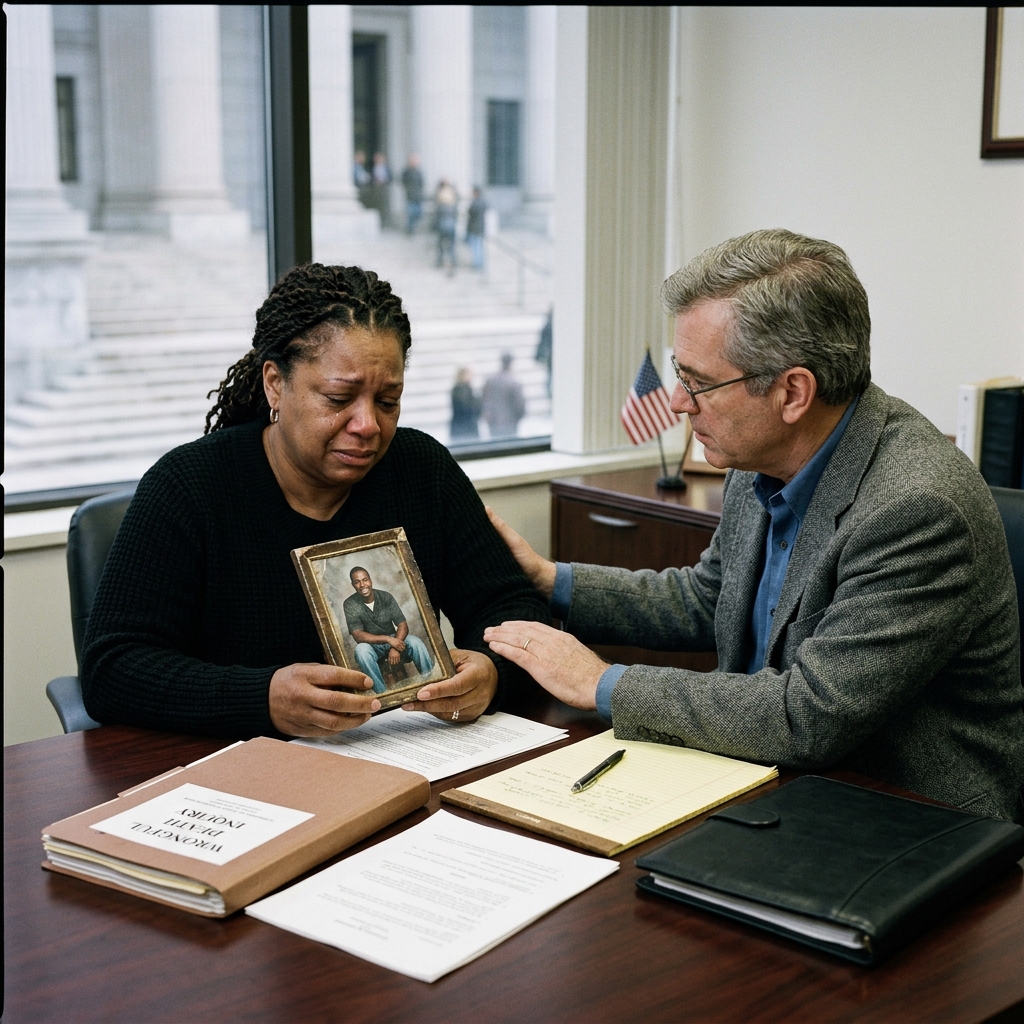
Losing a loved one because of police action is devastating on every level. In addition to grief, families often face confusion and anger, especially when they believe the death could have been avoided. This guide explains how wrongful death caused by police is treated under civil law, what legal rights surviving family members may have, and how to begin the process of seeking accountability and compensation.
Understanding Wrongful Death in Police Encounters
In general, a wrongful death claim is a civil lawsuit brought when a person dies due to another party’s negligence, misconduct, or violation of legal duties. When the party at fault is a law enforcement officer or police department, the claim may involve both state wrongful death law and federal civil rights law.
Wrongful death by police often arises from situations such as:
- Use of excessive or unreasonable force during arrest or detention
- Shootings that are unjustified or inconsistent with departmental policies
- Deaths in custody related to denial of medical care or unsafe restraint methods
- Fatal injuries resulting from reckless vehicle pursuits or collisions
The central legal question is whether the officer or department violated a duty of care, a constitutional right, or both. A death can be considered wrongful even if the officer did not intend to kill, provided their actions were negligent, reckless, or constitutionally unreasonable.
Key Legal Foundations: State Wrongful Death vs. Federal Civil Rights
Families confronting a police-related fatality need to understand that their case may involve two overlapping legal frameworks:
| Type of Claim | Main Legal Basis | Typical Defendants | Primary Goal |
|---|---|---|---|
| State Wrongful Death Claim | State wrongful death statute and negligence/misconduct standards | Individual officers, municipalities, police departments | Compensation for the losses suffered by survivors and the estate |
| Federal Civil Rights Claim | 42 U.S.C. § 1983 (Section 1983) for violations of constitutional rights | Individual officers; in some cases cities or departments if policies contributed to the violation | Accountability for constitutional violations and monetary relief |
A single incident may give rise to both types of claims. For example, a fatal shooting that violates the Fourth Amendment protection against unreasonable seizures can support a Section 1983 action, while simultaneously forming the basis for a state wrongful death suit alleging negligence or wrongful conduct.
What Makes a Police-Related Death Legally Actionable?
Not every tragic outcome involving law enforcement automatically creates a viable lawsuit. To pursue compensation, the family (usually through a representative) must show that legally recognized wrongdoing contributed to the death.
Common legal theories include:
- Excessive force: force that is unreasonable in light of the circumstances, such as shooting an unarmed person who does not pose an immediate threat.
- Negligence or recklessness: failure to act with reasonable care, such as ignoring clear signs that a person needs urgent medical attention.
- Deliberate indifference: a civil rights concept describing conscious disregard for a serious risk to a person’s health or safety, particularly in custody situations.
- Policy or training failures: in some cases, evidence shows that a department’s policies or lack of training contributed to the constitutional violation, potentially exposing the municipality to liability.
These legal theories must be supported by evidence, such as video footage, eyewitness accounts, medical records, internal investigations, and expert analysis.
Who Can File a Wrongful Death Claim After a Police Killing?
Each state has its own rules about who may bring a wrongful death action, but several common patterns appear across jurisdictions. Typically, the lawsuit is filed either by a personal representative of the deceased’s estate or by specific family members identified in state law.
Common eligible parties may include:
- Spouse or domestic partner
- Children (including adopted children and, in some states, stepchildren)
- Parents or legal guardians
- Siblings and, in certain jurisdictions, grandparents or other heirs
Many states require that a personal representative of the estate bring the claim, with close family members designated as beneficiaries who share in any recovery. Because these rules differ significantly, it is important to consult a lawyer familiar with wrongful death law in the relevant state.
Evidence and Investigation: Building the Case
Successful wrongful death litigation against police almost always depends on a careful and thorough factual investigation. Families and their attorneys may use both public and private avenues to uncover what happened and why.
Important early steps commonly include:
- Obtaining incident and investigative reports from the police department or relevant agencies
- Requesting body-camera and dash-camera footage, radio communications, and 911 call recordings
- Interviewing eyewitnesses and collecting personal videos taken at the scene
- Securing medical records, autopsy reports, and toxicology results
- Filing public records or freedom of information requests where permitted by state law
- Hiring independent investigators or experts in use-of-force, forensics, or police procedures
Evidence not only helps determine whether a viable claim exists but also shapes the legal strategy: whether to focus on individual officer misconduct, departmental policies, or both.
Damages: What Compensation May Be Available?
While no amount of money can erase the loss of a family member, civil law provides for financial compensation to address both economic and non-economic harms resulting from a wrongful death. The specific types and limits of damages depend on state statutes and federal civil rights law.
Potential categories of damages include:
- Economic losses
- Loss of the deceased’s expected income and benefits
- Medical expenses incurred before death
- Funeral and burial costs
- Non-economic losses
- Loss of companionship, care, guidance, and emotional support
- Pain and suffering experienced by the deceased before death
- Emotional distress of surviving family members, where allowed by law
- Punitive damages
- Available in some jurisdictions when conduct was particularly egregious or reckless
- Intended to punish and deter future misconduct rather than to compensate directly
Settlements and verdicts can vary widely depending on factors such as the strength of the evidence, the degree of fault, the age and earning potential of the deceased, and local laws governing damage caps and immunity.
Time Limits: Statutes of Limitations and Notice Requirements
Every wrongful death claim is subject to legal deadlines known as statutes of limitations. These laws determine how long families have to file a lawsuit after a death occurs. Section 1983 claims generally borrow the statute of limitations from the state where the incident occurred, which may range from one to several years.
Key timing issues include:
- State wrongful death statutes often specify a fixed period (for example, two or three years) within which the case must be filed
- Civil rights claims follow the state’s personal injury limitations period, even though they are filed in federal court
- Some jurisdictions require early notices or claims to be filed against government entities before a full lawsuit is allowed
- Missing these deadlines can permanently bar the claim, regardless of its merits
Because timing rules can be complex and unforgiving, families are generally advised to seek legal counsel as soon as they suspect wrongful conduct.
Role of Civil Rights and Wrongful Death Attorneys
Police-related wrongful death cases sit at the intersection of tort law, constitutional law, and governmental immunity. Navigating this combination typically requires experience in both personal injury and civil rights litigation. Specialized attorneys evaluate potential claims, guide the investigation, and represent families in negotiations and court.
Among other tasks, an attorney may:
- Analyze whether the facts support a claim of excessive force, negligence, or constitutional violations
- Identify appropriate defendants, such as individual officers, supervisors, or municipalities
- Handle communications with law enforcement agencies and insurers
- Retain experts to reconstruct events, interpret medical evidence, or assess department policies
- Advise on whether to pursue settlement negotiations or a jury trial
Because these cases can affect public trust and may draw media attention, attorneys also help families understand the broader implications of their decisions, including whether to speak publicly about the case.
Common Challenges in Suing Police for Wrongful Death
Wrongful death claims involving law enforcement present unique obstacles compared to ordinary negligence cases. Families and their lawyers often confront issues such as:
- Qualified immunity for individual officers in federal civil rights claims, which can limit liability unless clearly established rights were violated
- Governmental immunity and damage caps under state law, reducing or restricting compensation against public entities
- Access to records, including delays or refusals to release videos and internal reports, requiring formal legal processes to obtain evidence
- Conflicting witness accounts or incomplete footage that complicate factual reconstruction
- Emotional strain of prolonged litigation on families who are already grieving
Despite these challenges, many families decide to move forward with legal action to seek answers about what happened, promote accountability, and secure resources needed to rebuild their lives.
Practical Steps for Families After a Suspected Wrongful Death by Police
In the days and weeks following a fatal incident, surviving family members face both emotional and practical decisions. Beyond immediate arrangements, certain actions can help preserve rights and evidence.
Consider the following practical steps:
- Document everything you know about the incident, including times, locations, and names of witnesses
- Preserve any text messages, videos, or photographs related to the event
- Request copies of available reports and public records where possible
- Avoid public statements that could be misinterpreted later; consider consulting a lawyer before speaking to the media
- Contact a civil rights or wrongful death attorney for an initial case evaluation
Taking these steps early can significantly strengthen any eventual legal claim and improve the chances of obtaining full and accurate information about the circumstances of the death.
FAQs: Wrongful Death Lawsuits Involving Police
Do I need clear proof of misconduct before speaking to a lawyer?
No. Many families initially have only partial information or suspicions. Attorneys routinely help investigate and determine whether a wrongful death claim is viable.
Can I sue both the officer and the police department?
In many cases, yes. State law wrongful death claims and federal Section 1983 actions may be directed at individual officers and at municipalities, depending on evidence of policy failures or systemic issues.
What if my loved one was not the intended target of police action?
A wrongful death claim may exist even when the deceased was a bystander or another person affected by police conduct. The key question is whether the officer acted negligently, recklessly, or in violation of constitutional rights.
Does a criminal investigation or prosecution affect the civil case?
Criminal proceedings can influence public perception and provide additional facts, but a civil wrongful death lawsuit is separate. Families may pursue civil remedies regardless of whether criminal charges are filed or result in conviction.
How long does a wrongful death case against police typically take?
Timelines vary widely. Some cases settle within a year or two; others proceed through discovery, motions, and trial over several years. Complex evidence and legal issues, such as qualified immunity, can lengthen the process.
Is it possible to reach a settlement without going to trial?
Yes. Many wrongful death cases involving police end in negotiated settlements that provide compensation while avoiding the risks and emotional burdens of trial.
References
- Wrongful Death by Police: Filing a Lawsuit — Police Brutality Center. 2023-05-10. https://policebrutalitycenter.org/police-brutality/wrongful-death/
- Police Killing Lawsuit Lawyers | Police Shooting Settlements — Buckfire Law. 2022-11-01. https://buckfirelaw.com/case-types/police-misconduct/police-killing/
- New Mexico Police Wrongful Death Attorneys — Kennedy Law Firm. 2022-09-15. https://civilrightslaw.com/police-misconduct/police-wrongful-death/
- Wrongful Death and Police Shootings — MacDonald Hoague & Bayless. 2021-06-30. https://www.mhb.com/news/wrongful-death-and-police-shootings
- Wrongful Death by Police — The Law Office of Zorislav R. Leyderman. 2020-08-20. https://civilrightsmn.com/excessive-force-by-police/
Similar Articles








Read full bio of medha deb




