
Legal Marriage Limbo: Defending Matrimonial Rights in PA
Discover how unexpected legal rulings challenge your marriage's validity.
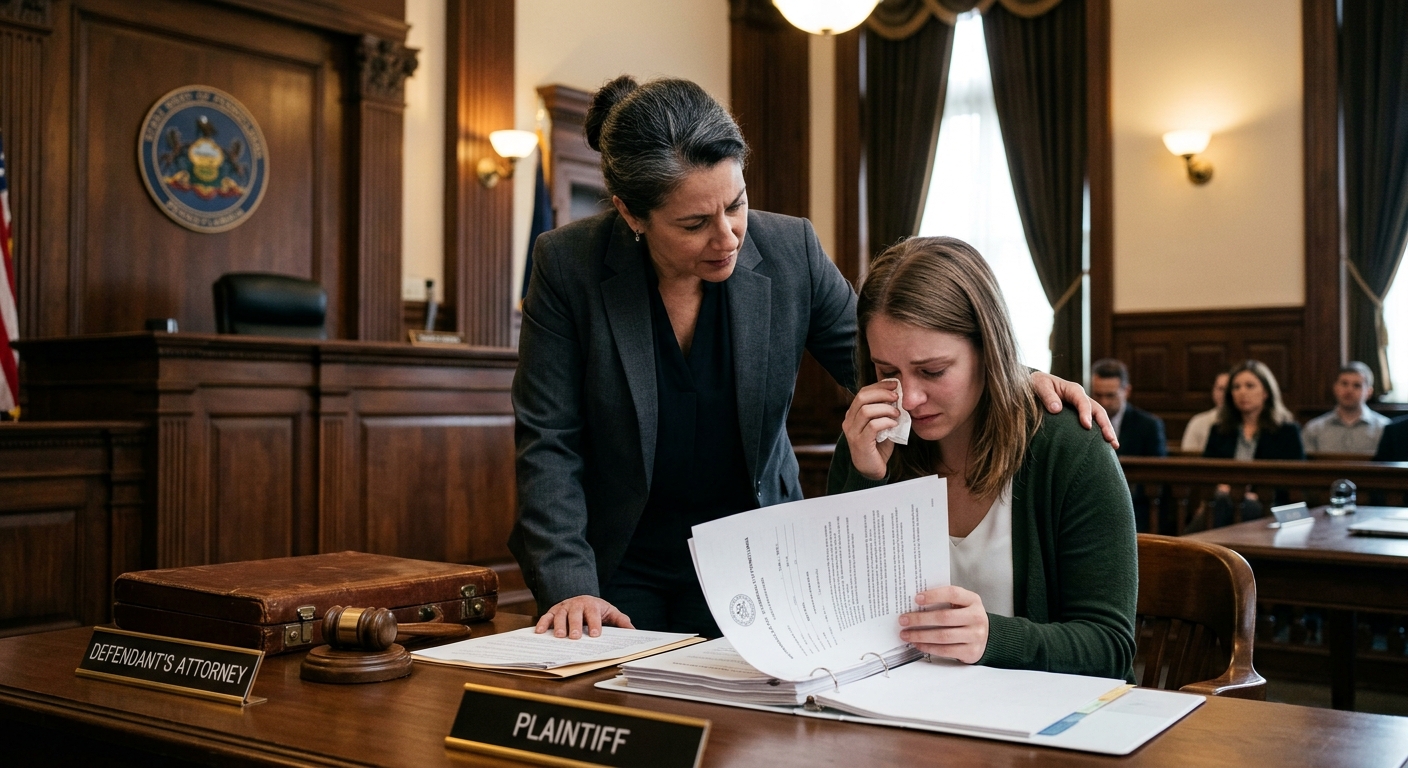
The Illusion of the Altar: When Vows Meet Bureaucracy
Imagine standing at the altar, surrounded by your closest friends and family, exchanging heartfelt vows with the love of your life. The ceremony is deeply personal, officiated by a close friend or family member who recently became ordained online specifically to marry you. You joyfully file the paperwork with the local clerk, receive your official marriage certificate, and spend the next few years building a beautiful life together. You purchase a family home, file joint income taxes, combine your finances, and share employer-sponsored health insurance. Then, out of nowhere, an unexpected and chilling letter from a local government official arrives in your mailbox. The letter politely but firmly suggests that your marriage might not be legally valid after all.
This jarring scenario is not a dystopian work of fiction. It has been a harsh and terrifying reality for countless couples, highlighting a profound and ongoing conflict between archaic state laws and modern civil liberties. When local county registries begin aggressively auditing the religious credentials of wedding officiants, it throws perfectly happy households into an unprecedented state of legal limbo. The core question becomes: who actually holds the absolute authority to declare a marriage legitimate, and how far can the government overreach in defining what constitutes a “valid” religion or ministry?
The Evolution of the Modern Officiant
For generations, the standard American wedding was heavily institutionalized and predictable. Couples were generally married by a recognized religious leader—such as a Catholic priest, a Jewish rabbi, or an established Protestant minister—inside a physical, brick-and-mortar house of worship, or alternatively, by a judge in a sterile municipal courthouse. However, societal norms regarding matrimony have shifted dramatically over the past two decades. A rapidly growing number of couples are opting for secular, interfaith, or highly personalized ceremonies that take place far outside of traditional religious confines, such as on beaches, in rustic barns, or in private backyards.
To achieve this personalized and intimate experience, many couples naturally turn to trusted friends or family members to perform the ceremony. Organizations such as the Universal Life Church and American Marriage Ministries have emerged to fill this immense cultural demand, offering rapid, online ordinations that allow everyday laypeople to legally solemnize marriages. These organizations operate on the inclusive philosophical bedrock that anyone has the inherent right to minister and officiate spiritual rites of passage. While millions of couples have successfully married using online-ordained officiants, this modern practice frequently collides with centuries-old state statutes. These outdated legal codes often fail entirely to account for the digital age, leaving massive legal loopholes for aggressive interpretation by local clerks and conservative judges who remain fiercely loyal to traditional definitions of the clergy.
Navigating Pennsylvania’s Marriage Statutes
The battleground for this specific civil liberties clash is perfectly illustrated by the legal landscape in the Commonwealth of Pennsylvania. The state’s domestic relations code, specifically 23 Pennsylvania Consolidated Statutes § 1503, outlines exactly who is legally authorized to solemnize a marriage within the state. The statute provides a specific, enumerated list, including active and retired judges, local mayors, and crucially, “a minister, priest or rabbi of any regularly established church or congregation.”
It is that final, ambiguous clause—”regularly established church or congregation”—that has sparked fierce, ongoing legal debate. Historically, some county judges have strictly interpreted this to mean a physical building with a regular, active congregation meeting on a weekly basis. Under this incredibly rigid interpretation, an online ministry that exists primarily in the digital space simply does not qualify. This ambiguity reached a severe boiling point when a York County judge ruled in the notorious case of Heyer v. Hollerbush that a marriage officiated by a minister ordained online was completely void from its very inception.
The ripple effects of this single judicial ruling were absolutely staggering. Inspired by the York County decision, other jurisdictions, notably the Bucks County Register of Wills, began retroactively scrutinizing hundreds of previously issued marriage licenses. Officials started mailing letters to couples whose officiants did not fit the traditional mold, advising them that their marriages might be legally unrecognized and callously suggesting they “remarry” to be safe. This bureaucratic overreach transformed a minor statutory ambiguity into a widespread, agonizing crisis, thrusting the deeply private lives of hundreds of couples into the public legal spotlight.
The Staggering Consequences of a Voided Union
Being told by the state that your marriage is invalid is not merely an emotional blow; it is a full-scale administrative and financial catastrophe. The entire legal framework of a family relies entirely on the assumption of a valid, unbreakable marriage contract. If a state retroactively voids a union, the collateral damage spans across multiple crucial domains:
- Tax Liabilities and Fraud Allegations: Married couples typically file joint federal and state tax returns to benefit from specific marital deductions. If a marriage is deemed invalid from its inception, years of joint tax filings instantly become legally inaccurate. This could theoretically trigger devastating IRS audits, massive back taxes, and steep financial penalties for unintentional tax fraud.
- Health Insurance Complications: Adding a spouse to an employer-sponsored health insurance plan is a standard, fundamental marital benefit. An invalidated marriage means that the individual was never legally a spouse, potentially turning years of expensive insurance claims into accidental insurance fraud and leaving one partner abruptly uninsured in a moment of crisis.
- Medical Proxy and Decision-Making: In times of sudden medical emergency, a legally recognized spouse has the inherent, unquestioned right to make critical healthcare decisions and enjoy immediate hospital visitation rights. Without a legally recognized union, a life partner could be tragically locked out of the intensive care unit during a life-or-death situation.
- Inheritance and Spousal Privilege: Valid marriages provide automatic, unchallengeable inheritance rights and spousal privilege in the court of law (the right to refuse to testify against your partner). Voiding the marriage instantly dissolves these intrinsic protections, leaving surviving partners incredibly vulnerable during the probate process if a spouse passes away unexpectedly.
While some local government officials callously suggested that affected couples simply “go to the courthouse and get remarried,” this proposed solution is actually a dangerous legal trap. Willingly agreeing to a new marriage ceremony is effectively a tacit admission that the previous years of marriage were entirely invalid, permanently cementing the immense legal and financial vulnerabilities mentioned above.
The Establishment Clause: A Constitutional Shield
The aggressive assertion that a county clerk or a local municipal judge can dictate what constitutes a “valid” church or a “real” minister strikes at the very heart of the United States Constitution. Prominent legal advocates and civil rights groups argue that such actions are a blatant, indefensible violation of the First Amendment’s Establishment Clause. This vital constitutional bedrock unequivocally prohibits the government from making any law “respecting an establishment of religion.”
According to decades of established constitutional doctrine, the government must maintain strict, unwavering neutrality toward religion. It cannot legally endorse one specific religion over another, nor can it show preference for traditional, brick-and-mortar congregations over modern, digital, or non-denominational ministries. When a local register of wills decides that a Catholic priest is a valid officiant but a minister ordained by the Universal Life Church is not, the government is improperly and illegally acting as a theological arbiter.
Civil liberties organizations have consistently and fiercely pushed back against these governmental overreaches. In various federal lawsuits across the country, courts have generally sided with the constitutional principle of religious freedom. Federal judges have repeatedly issued binding orders affirming that discouraging or denying online-ordained ministers from solemnizing legal marriages violates both the First and Fourteenth Amendments. The consensus among civil rights litigators is crystal clear: the state has absolutely no business invalidating a family’s legal foundation simply because a bureaucrat disapproves of the religious credentials of the person who stood at the altar.
Safeguarding Your Marriage: Practical Alternatives
Couples planning their weddings today must navigate this complex, sometimes hostile legal landscape with open eyes and careful preparation. While the constitutional arguments heavily favor the legal validity of online ordinations, the practical reality is that fighting a stubborn local bureaucracy in federal court is expensive, stressful, and exhausting. Fortunately, there are highly proactive steps you can take to ensure your union is legally watertight from day one.
First, it is imperative to thoroughly research the local ordinances and policies of the specific county where you plan to file your marriage license. Some counties explicitly post “Officiant Disclaimers of Liability” on their official websites, warning couples that the burden of proof regarding the officiant’s legality rests entirely on their own shoulders. If your chosen county is known to be hostile toward online-ordained ministers, consider alternative licensing methods to protect your union.
In Pennsylvania, couples have access to a uniquely beautiful historical loophole: the self-uniting marriage license, colloquially known as a Quaker license. Rooted deeply in the state’s rich Quaker heritage, this special license allows a couple to marry without any third-party officiant at all. The couple simply signs the legal document in the presence of two adult witnesses. This completely circumvents the entire exhausting debate over the officiant’s religious credentials, making it a highly popular, stress-free option for secular, modern, and non-traditional weddings.
Alternatively, many practical couples choose to quietly sign the legal paperwork at a local municipal courthouse with a judge a few days before their actual wedding ceremony. This cleanly separates the binding legal contract of marriage from the emotional, ceremonial celebration. By securing the legal union through an unquestionable state authority first, you completely free yourself to have absolutely anyone you choose officiate your beautiful public ceremony without any lingering fear of future bureaucratic interference.
Officiant Recognition Across Different Jurisdictions
The legal status of non-traditional and online-ordained officiants varies wildly depending on your exact geographical location. Below is a generalized breakdown of how different types of states approach the authorization of wedding officiants.
| Jurisdiction Stance | Description | Example States (General Trends) |
|---|---|---|
| Highly Permissive | State laws broadly accept any ordained minister, including those ordained online, with minimal to absolutely no government registration requirements. | California, Washington, Colorado |
| Moderate Oversight | Online ordinations are generally accepted, but the officiant must formally pre-register with the city or county clerk and present their credentials before the wedding. | New York, Ohio, Massachusetts |
| Strict Interpretation | State laws or local county clerks frequently challenge online ordinations, requiring proof of an active, physical congregation or strictly limiting officiants to traditional clergy and sitting judges. | Pennsylvania (some counties), Tennessee, Virginia |
Frequently Asked Questions (FAQ)
Are marriages performed by online-ordained ministers legally binding?
In the vast majority of jurisdictions across the United States, yes. However, legality can depend heavily on specific state laws and exactly how local county clerks choose to interpret them. It is always best practice to check directly with the specific government office issuing your marriage license prior to the ceremony to ensure your officiant’s digital credentials will be accepted without any legal friction.
What should I do if I receive a government letter questioning the validity of my marriage?
Do not panic, but absolutely do not ignore it. Seek immediate, professional legal counsel from a qualified family law attorney or a reputable civil liberties organization. Do not rush to the courthouse to get remarried without legal advice, as doing so might unintentionally validate the state’s dangerous claim that your initial marriage was void, which can massively complicate your taxes, shared assets, and legal standing.
What exactly is a self-uniting marriage license?
A self-uniting license is a fully legally binding marriage document that does not require a third-party officiant (like a judge or ordained minister) to solemnize the vows. The couple legally marries themselves by declaring their union in front of two witnesses who then sign the document. It is widely available in Pennsylvania and a select few other states with strong historical Quaker roots.
Does the government have the legal right to define what a “real” religion is?
Under the First Amendment’s Establishment Clause, the government is strictly prohibited from establishing a state religion or unduly favoring one religious group over another. Leading constitutional legal experts firmly argue that when the state dictates that only brick-and-mortar churches are valid for performing marriages, it is unconstitutionally infringing on fundamental religious freedom.
What happens to the legal status of children if a marriage is ultimately invalidated?
In most modern legal jurisdictions, the legitimacy of children and the parental obligations of child support and custody remain fully intact regardless of the parents’ official marital status. However, the lack of a formal, recognized marriage can occasionally complicate the initial legal presumption of paternity in some states, meaning additional legal steps might be required to firmly establish equal parental rights.
Can we just have a friend perform the ceremony without them getting ordained at all?
If you want the ceremony itself to be the legally binding event, the person performing it must have legal authority (either civil or recognized religious) to solemnize marriages in that specific state. If you handle the legal paperwork separately at a courthouse beforehand, your friend can perform the emotional, ceremonial aspect without needing any formal ordination whatsoever.
References
- 23 Pennsylvania Consolidated Statutes § 1503 – Persons qualified to solemnize marriages — Pennsylvania General Assembly. 2024-01-01. https://www.legis.state.pa.us/cfdocs/legis/LI/consCheck.cfm?txtType=HTM&ttl=23&div=0&chpt=15&sctn=3&subsctn=0
- Marriage Licenses and Officiant Disclaimer — York County, PA Official Website. 2024-01-01. https://yorkcountypa.gov/1004/Marriage-Licenses
- Establishment Clause Overview — Legal Information Institute, Cornell Law School. 2023-08-01. https://www.law.cornell.edu/wex/establishment_clause
- U.S. District Court Order Case No. 2:21-cv-618 — United States District Court for the Western District of Pennsylvania. 2022-06-06. https://www.pawd.uscourts.gov/
Similar Articles








Read full bio of Sneha Tete


