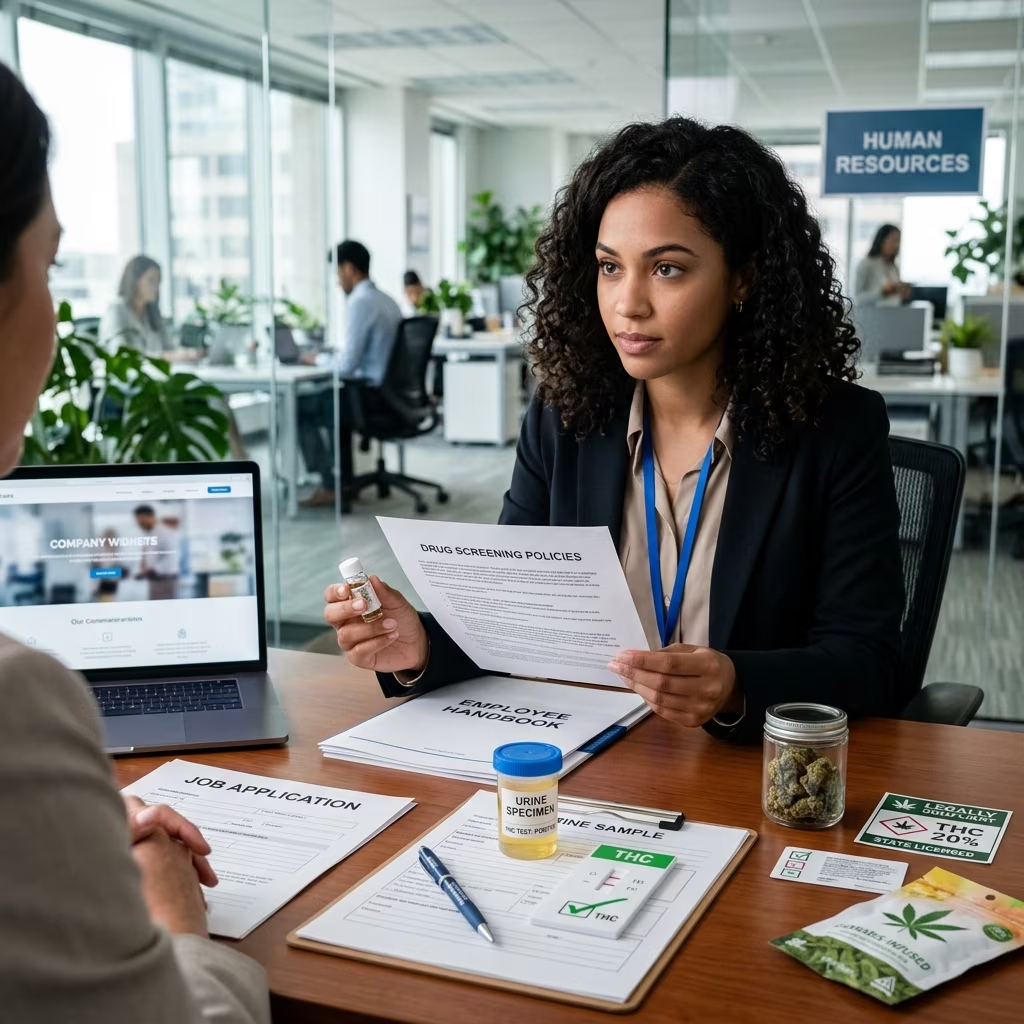
As more states legalize cannabis for medical and recreational use, job applicants are facing a complicated reality: marijuana may be lawful in their personal lives, yet it can still affect whether they get hired. This article explains how legal marijuana use interacts with pre-employment drug testing, highlights key legal trends, and offers practical guidance for navigating the hiring process.
Why Legal Cannabis Still Matters in Hiring Decisions
Marijuana remains classified as a Schedule I substance under federal law, even though many states allow its medical or adult use. Employers often rely on federal standards, particularly when they receive federal funding or operate in regulated industries. As a result, legal cannabis use can show up on a drug screen and trigger employment decisions even where state law has changed.
At the same time, several states have begun to restrict how employers can use marijuana test results, especially when the test only shows prior use rather than current impairment. This growing patchwork of laws means your rights as an applicant depend heavily on where you live and the type of job you are seeking.
Understanding How Marijuana Drug Tests Work
Pre-employment drug tests can use different biological samples and detection methods. Most traditional tests for cannabis look for non‑psychoactive metabolites—chemical byproducts that remain in your system long after the intoxicating effects have subsided.
- Urine tests: Common in hiring; can detect cannabis metabolites for days to weeks depending on frequency of use.
- Blood tests: More likely to show recent or current use; detection window is shorter.
- Saliva tests: Generally indicate very recent use, often within hours to a couple of days.
Because metabolites persist after intoxication, someone who uses marijuana legally on a weekend may still test positive days later, even though they are sober at the time of testing. This distinction between past use and current impairment is central to recent legal reforms.
Key Legal Trends Affecting Applicants
States are adopting different approaches to reconcile legalization with workplace concerns. Three major trends are emerging:
1. Limits on Pre-Employment Cannabis Testing
Some legalization states restrict or ban pre-employment testing for marijuana in many roles. For example, New Jersey has proposed rules limiting cannabis testing in hiring, subject to specific exceptions for certain safety‑critical positions. Other jurisdictions, such as Nevada and Washington, have moved to prohibit rejecting applicants solely for off‑duty cannabis use or positive tests for non‑psychoactive metabolites.
These laws often still allow testing in roles classified as safety‑sensitive—jobs where impairment could pose a significant risk to health or safety, such as transportation, heavy machinery, or emergency services.
2. Protection for Off-Duty, Off-Site Use
Several states now protect applicants and employees who use cannabis legally during non‑working hours and away from the workplace. California’s Assembly Bill 2188, effective 2024, makes it unlawful for employers to discriminate based on off‑duty marijuana use or test results that only show non‑psychoactive metabolites. Similar protections exist in other legalization states, including New York and Washington, with varying details.
These protections do not allow on‑the‑job impairment. Employers remain free to ban possession or use of cannabis in the workplace and may act when there are observable signs of intoxication while a person is working.
3. Shift Toward Impairment-Based Testing
Because metabolite tests say little about whether someone is impaired at work, a few states are pushing employers toward methods that detect current impairment or active psychoactive compounds. In California, for example, employers are advised to avoid pre‑employment tests that only screen for non‑psychoactive metabolites and instead consider tests that show present effects or focus on real‑time performance and behavior.
Typical Exceptions: When Employers Can Still Test or Refuse to Hire
Even in states that restrict cannabis‑related hiring decisions, exceptions are common. Applicants need to be aware of conditions under which marijuana use may still affect job prospects.
| Situation | Why Testing or Adverse Action May Be Allowed |
|---|---|
| Safety‑sensitive positions | Roles where impairment could endanger workers, the public, or property, such as driving, operating heavy equipment, or certain healthcare duties. |
| Federal contractor or regulated employer | Employers subject to federal mandates or licensing may follow federal drug‑free workplace rules even in legalization states. |
| Building and construction trades (in some states) | California, for example, exempts certain construction employers from new cannabis protections, allowing broader testing and employment decisions. |
| Positions requiring federal clearance | Jobs needing federal security clearances or background investigations often require adherence to strict federal drug policies. |
In these contexts, an employer may lawfully test for cannabis and rely on positive results when deciding whether to hire, regardless of state legalization.
Medical Marijuana versus Adult-Use: Does It Change Your Rights?
Many states distinguish between medical cannabis patients and adult‑use consumers. Medical users may receive additional legal protection, but those safeguards vary.
- In some medical cannabis states, employers cannot refuse to hire someone solely because they have a medical marijuana card or use cannabis under medical supervision.
- However, employers can still prohibit on‑the‑job impairment and may take action if medical use creates safety risks or conflicts with federal requirements.
- Some states with adult‑use legalization also provide general employment protections that apply to all legal users, not only medical patients.
Applicants who rely on cannabis to treat health conditions should review both disability laws and state‑specific medical marijuana statutes, as they may intersect in complex ways.
How Long Legal Use Can Affect a Pre-Employment Test
The impact of legal marijuana on pre‑employment testing partly depends on how long THC and its metabolites remain detectable. According to clinical guidance, detection windows usually follow this pattern:
- Occasional use: Metabolites may be detectable for several days in urine.
- Regular use: Detection can extend to weeks, sometimes up to 30 days or more.
- Heavy or chronic use: In some cases, metabolites remain detectable for more than a month.
Because of these long windows, an applicant who uses marijuana legally but infrequently may still face a positive test result during hiring, even if they have been abstinent for multiple days at the time of screening.
Practical Steps for Job Seekers Who Use Marijuana Legally
Although you cannot control every aspect of an employer’s testing policy, there are strategies that can reduce risk and help you make informed decisions.
Research Local Law and Industry Norms
- Check your state’s employment and cannabis laws to see whether pre‑employment THC testing is restricted, allowed, or subject to special rules.
- Look at industry practices; safety‑sensitive sectors such as transportation and construction often have stricter policies than office‑based roles.
- Review job postings carefully for references to required drug screening.
Understand the Employer’s Policy
- Many employers set out drug‑testing requirements in their application materials or employee handbooks.
- If appropriate, you can ask the recruiter whether testing includes cannabis and how results are used, especially in states that limit the use of metabolite‑based tests.
- Be cautious about volunteering details of your cannabis use—some jurisdictions now expressly restrict employers from asking about prior cannabis use in applications or interviews.
Consider Timing and Abstinence
- If you anticipate a pre‑employment drug test, abstaining from cannabis in advance can reduce the likelihood of a positive result, particularly if you are an occasional user.
- For regular users, detection may persist longer; planning ahead is important if you do not have legal employment protections in your state.
Evaluate Risk in Safety-Sensitive or Federally Regulated Roles
- Applicants for roles involving transportation, emergency services, or hazardous work should assume that testing policies may be strict and that legal cannabis use could be disqualifying.
- If a job requires a federal clearance or is funded under federal contracts with drug‑free workplace clauses, employers may need to treat marijuana similarly to other illegal drugs.
Applicant Rights and Employer Responsibilities
In states with employment protections for cannabis users, laws generally aim to balance personal liberty with workplace safety. Typical elements include:
- Non‑discrimination rules: Many jurisdictions prohibit adverse action against applicants solely for lawful off‑duty cannabis use or for tests showing non‑psychoactive metabolites.
- Impairment standard: Employers may act if there are articulable symptoms or observable signs of impairment at work, sometimes supported by an impairment evaluation or targeted testing.
- Limits on questions about prior use: Some states now bar employers from asking about past cannabis use during hiring or using such information from criminal background checks, unless another law requires it.
However, these protections are not universal. In many states, employers retain broad discretion to test for cannabis and make hiring decisions based on positive results, even when adult‑use marijuana is legal. Applicants should not assume that legalization automatically shields them from consequences in the hiring process.
Frequently Asked Questions
Can I be denied a job for legal marijuana use?
It depends on your state and the job. In some legalization states, employers cannot refuse to hire you solely because of lawful off‑duty cannabis use or metabolite‑only test results. Elsewhere, employers may still impose zero‑tolerance policies and decline to hire applicants who test positive.
Are pre-employment marijuana tests banned everywhere cannabis is legal?
No. While a few states limit or ban pre‑employment THC testing in many roles, others still allow it, and federal law has not changed. The only reliable way to know is to review your local employment statutes and, if needed, seek legal advice.
Does having a medical marijuana card protect me from a failed test?
In some states, medical cannabis patients have specific employment protections that prevent automatic denial of a job based solely on their status or lawful medical use. Nonetheless, employers may impose restrictions where safety, federal regulations, or essential job functions are affected.
Can employers still maintain a drug-free workplace?
Yes. Even in states that protect cannabis users, employers generally may prohibit on‑the‑job impairment and possession, and they can respond to reasonable suspicion of drug use at work or following workplace accidents.
What should I do if I think a hiring decision violated cannabis protection laws?
If you suspect that an employer’s pre‑employment test or decision violated your state’s cannabis employment protections, consider consulting an employment attorney or contacting the relevant state labor agency. Documentation of communications, test results, and job requirements can be helpful in assessing your options.
References
- Bill S2628 — Cannabis Employment Protections — New Jersey Legislature. 2024-01-22. https://pub.njleg.gov/Bills/2024/S3000/2628_I1.HTM
- FAQ: What Arizona’s Marijuana Law Means for Employers — The Mahoney Group. 2021-11-02. https://www.mahoneygroup.com/marijuana-workplace/
- New Rules for California Employers Testing for Marijuana Use Are Approaching Fast — CDF Labor Law LLP. 2023-09-11. https://www.cdflaborlaw.com/blog/new-rules-for-california-employers-testing-for-marijuana-use-are-approaching-fast
- How Long Does Marijuana (Weed) Stay in Your System? — GoodRx Health. 2024-03-19. https://www.goodrx.com/well-being/substance-use/marijuana-drug-test
- How State Cannabis Laws Affect Testing, Questions About Use — CalChamber. 2024-02-16. https://calchamberalert.com/2024/02/16/how-state-cannabis-laws-affect-testing-questions-about-use/
- Cannabis Legalization and Employment Protections — Marijuana Policy Project. 2023-08-15. https://www.mpp.org/issues/legalization/cannabis-legalization-and-employment-protections/
- Adult Use Cannabis and the Workplace, New York Labor Law 201-d — New York State Department of Labor. 2021-10-21. https://dol.ny.gov/adult-use-cannabis-and-workplace-p420