
Driving High: Legal THC Limits Explained
Understand THC blood limits, state laws, and impairment challenges for safe cannabis driving in legalized states.
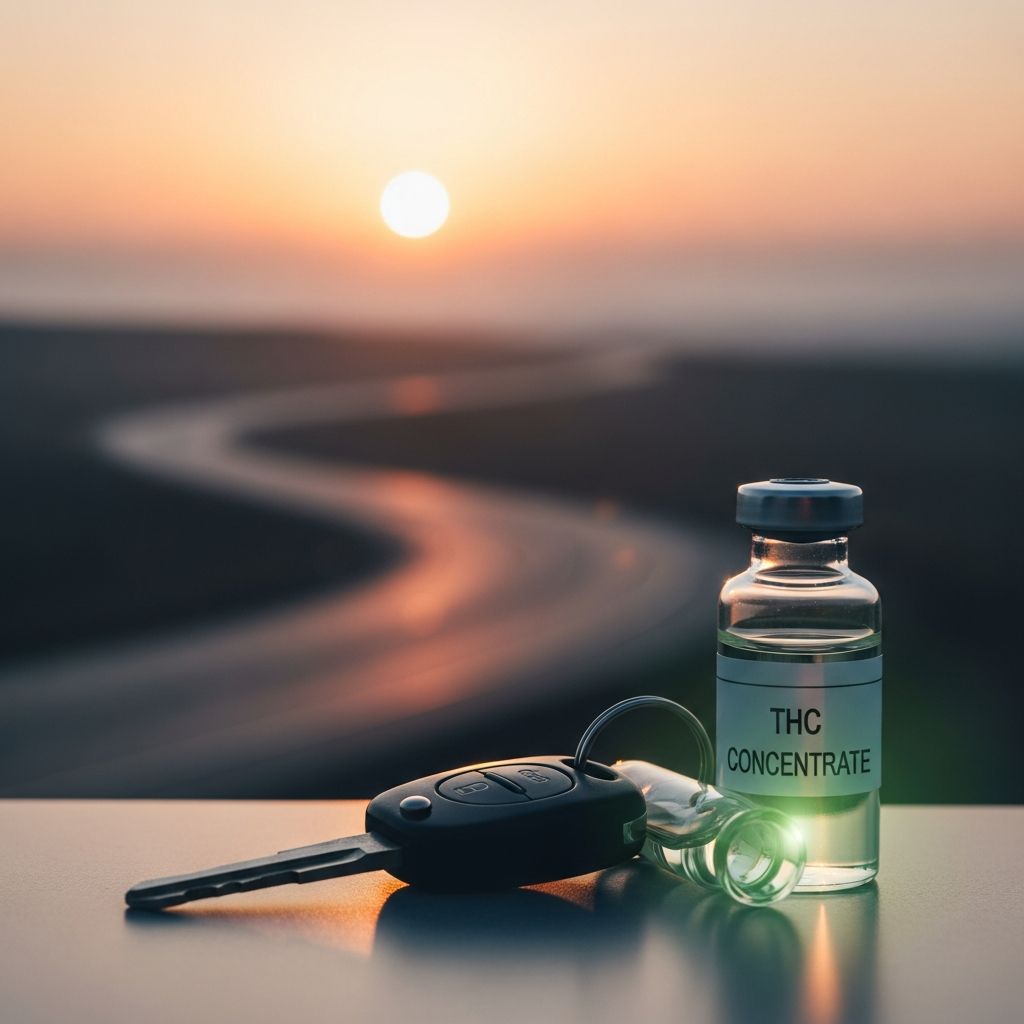
Cannabis legalization has reshaped roadways, prompting states to define boundaries for driving under its influence. Unlike alcohol’s clear 0.08% BAC threshold, THC limits vary widely, blending science, policy, and enforcement challenges. This article breaks down U.S. laws, testing realities, and safety tips.
Understanding THC and Driving Impairment
Delta-9-tetrahydrocannabinol (THC), cannabis’s psychoactive compound, affects reaction time, attention, and judgment—key skills for driving. Studies confirm elevated crash risks post-use, yet THC lingers in the body long after effects fade, complicating ‘impairment’ definitions.
Unlike alcohol, which peaks quickly and clears predictably, THC blood levels rise during use, drop sharply, then persist via fat-stored metabolites. This mismatch fuels debates: a 5 ng/mL limit may miss 70% of impaired drivers while flagging sober ones.
Categories of Cannabis Driving Laws Across States
All 50 states ban drug-impaired driving, categorized into four types:
- Zero Tolerance: Any detectable THC or metabolites trigger violations. Suited for illicit drugs, these ensnare post-use drivers hours later. 16 states apply to drugs generally; 18 target cannabis specifically.
- Per Se Limits: Specific THC thresholds presume impairment. Five states (e.g., Nevada, Ohio) set 2-5 ng/mL blood levels.
- Impairment-Based: Prosecutors prove actual unsafe driving via behavior, field tests. Most states default here without numeric limits.
- Permissible Inference: THC above a level (e.g., Colorado’s 5 ng/mL) allows assuming impairment, easing prosecution.
Post-legalization, 18 states enforce zero tolerance or per se cannabis rules: 10 for THC/metabolites, 4 THC-only, 4 per se THC limits, 1 inference.
State-by-State THC Driving Limits
Limits differ by specimen (blood, urine, saliva) and substance (THC vs. metabolites like THC-COOH). Urine detects past use longer but weakly correlates with impairment.
| State | THC Limit (Blood) | Metabolite Limit (Blood/Urine) | Specimen | Year |
|---|---|---|---|---|
| Nevada | 2 ng/mL THC | 5 ng/mL 11-OH-THC | Blood/Urine | 2017 |
| Ohio | 2 ng/mL THC | 5 ng/mL THC-COOH (with alcohol/drugs); 50 ng/mL otherwise | Blood/Urine | 2006 |
| Washington | 5 ng/mL THC (within 2 hrs) | N/A | Blood | 2013 |
| Colorado | 5 ng/mL (inference) | N/A | Blood/Urine/Saliva | 2013 |
| Montana | 5 ng/mL THC | N/A | Blood | 2021 |
Zero tolerance examples: Delaware bans any amount from unlawful use within 4 hours. New York relies solely on observed impairment, no numeric limit.
How THC Levels Are Tested and Detected
Enforcement starts with observational cues: erratic driving, odor, eyes. Field sobriety tests (FSTs) mimic alcohol checks but falter for cannabis, as drugs affect balance differently.
Chemical confirmation uses:
- Blood: Gold standard for active THC; 2-5 ng/mL common limits.
- Urine: Detects metabolites weeks later (e.g., Ohio’s 10 ng/mL THC).
- Oral Fluid/Saliva: Rising for roadside; U.S. DOT sets 4 ng/mL for commercial drivers. Alabama, Michigan use it.
Challenges: Passive smoke can yield positives; labs distinguish active THC from inert metabolites.
International Perspectives on Cannabis Driving Limits
Europe often uses lower 1-2 ng/mL blood serum thresholds with two-tier penalties.
| Country | THC Limit | Type |
|---|---|---|
| Canada | 2 ng/mL (warn); 5 ng/mL (severe) | Per Se |
| Belgium/France | 1 ng/mL serum | Two-Tier |
| Germany | 1 ng/mL serum | Two-Tier |
Canada’s 2018 model ties penalties to levels, but studies question correlation.
Science Behind THC Impairment Thresholds
No consensus ‘safe’ THC level exists. AAA research: 5 ng/mL misses most impaired drivers, catches sober ones. Unlike BAC’s linear impairment, THC’s biphasic curve peaks early, then fat-releases slowly.
Crash data: Marijuana-positive drivers show 1.5-2x risk, but causation vs. polydrug use debated. A 2023 AAA survey: Only 70% view post-cannabis driving as dangerous vs. 94% for alcohol.
Penalties for Violating Cannabis Driving Laws
Consequences mirror DUI: fines ($500-$5,000), license suspension (6-12 months), jail (days to years), ignition interlocks. Per se violations often treated as strict liability—no impairment defense.
Aggravated cases (crashes, repeats): Felonies, years imprisonment. Commercial drivers face DOT bans.
Safe Driving Tips After Cannabis Use
Wait 4-6 hours post-use; effects last 3-4 hours smoked, longer edibles. Arrange rideshares; store cannabis locked, out-of-reach.
- Never drive if feeling altered.
- Avoid polydrug/alcohol mixes.
- Know your state’s limit—apps track laws.
Legal Defenses Against THC DUI Charges
Contest via:
- Chain-of-custody errors in testing.
- Passive exposure proofs.
- Medical use with low impairment evidence.
- Expert testimony on metabolite irrelevance.
Colorado inference laws allow rebuttal with sobriety proof.
Frequently Asked Questions
Is there a universal THC limit for driving?
No; states vary from zero tolerance to 5 ng/mL per se. Impairment-based states eye behavior.
How long does THC stay detectable?
THC: hours-days in blood; metabolites: weeks in urine. Impairment fades quicker.
Can medical cannabis users drive?
Yes, if not impaired—same laws apply.
Does secondhand smoke cause positives?
Rarely above limits in controlled exposure; possible in extreme cases.
Are saliva tests reliable?
Good for recent use; DOT approves for trucking at 4 ng/mL.
State laws evolve with legalization—consult attorneys/local statutes. Prioritize safety: don’t drive high.
References
- Cannabis and impaired driving — Wikipedia. 2023. https://en.wikipedia.org/wiki/Cannabis_and_impaired_driving
- Marijuana and DUI Laws — Marijuana Policy Project. 2023. https://www.mpp.org/issues/criminal-justice/marijuana-and-dui-laws/
- How are marijuana and THC levels measured among drivers? — Journalist’s Resource. 2023-05-01. https://journalistsresource.org/health/marijuana-driving/
- Establishing legal limits for driving under the influence of marijuana — PMC/NCBI. 2016-08-25. https://pmc.ncbi.nlm.nih.gov/articles/PMC5005632/
- Cannabis and Driving — NY Traffic Safety (NY.Gov). 2023-05. https://trafficsafety.ny.gov/system/files/documents/2023/05/draft-revised-cannabis-slide-deck-v-4.0.pdf
- Drug-Impaired Driving — Governors Highway Safety Association. 2023. https://www.ghsa.org/state-laws-issues/drug-impaired-driving
- Drugged Driving | Marijuana-Impaired Driving — NCSL. 2023. https://www.ncsl.org/transportation/drugged-driving-marijuana-impaired-driving
Similar Articles








Read full bio of Sneha Tete




