Legal Laughter: Fun, Trivia, and Quirky Facts from the Law
Discover the playful side of the legal world with humor, trivia, and surprising stories that show lawyers really do have a sense of fun.
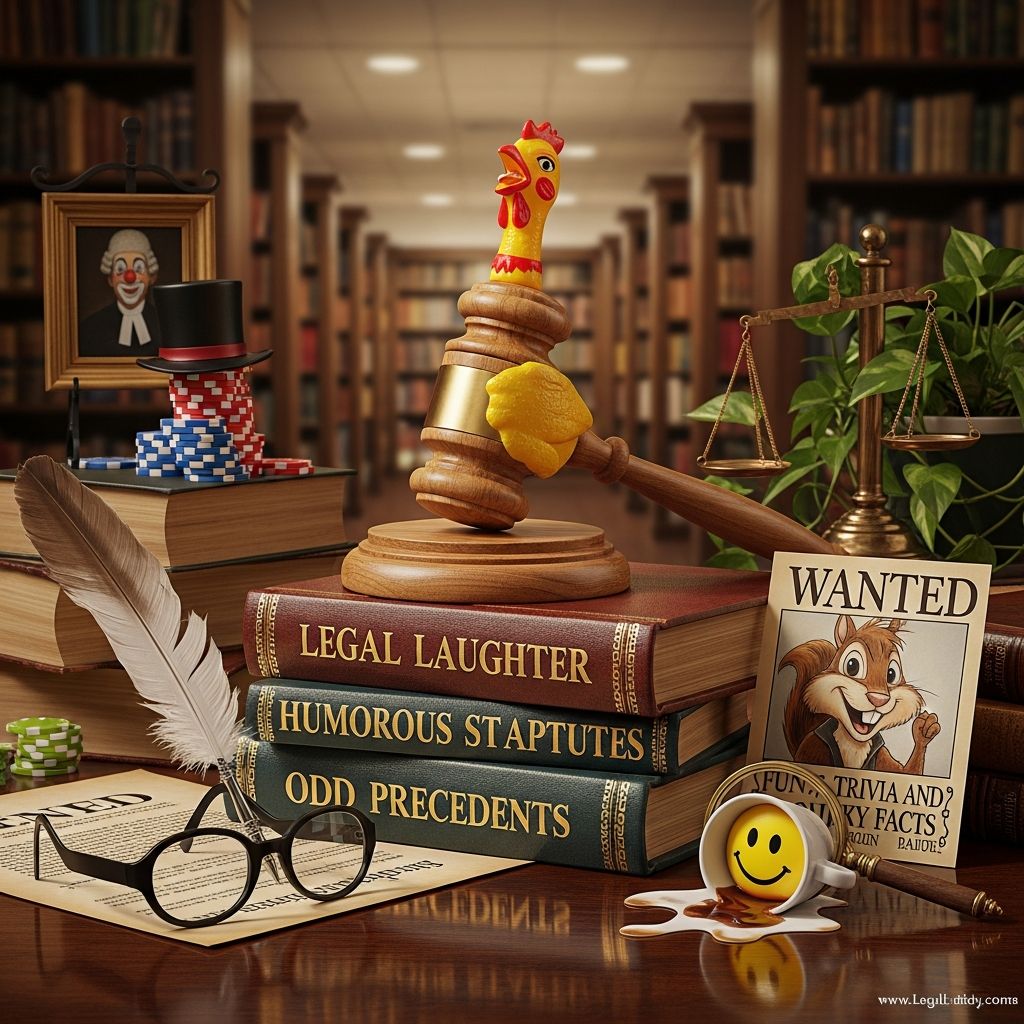
Legal Laughter: The Surprisingly Fun Side of Law
Law is often associated with tension, deadlines, and high stakes, but there is also a vibrant world of humor, games, traditions, and trivia that helps legal professionals stay balanced and human. Legal fun is not about mocking justice; it is about using lighthearted moments to manage stress, build connection, and make an intense profession more sustainable.
This guide explores the playful side of the legal world, from classic jokes and courtroom mishaps to law-themed games, holidays, and pop culture. If you work in the legal field or simply enjoy legal dramas, you will find ideas here to bring a bit more laughter into your day.
Why Humor Belongs in the Legal Profession
Practicing law involves chronic exposure to conflict, deadlines, and emotional situations, all of which increase stress. Research in occupational health and psychology shows that positive humor can act as a protective factor for mental well-being:
- Studies link laughter and positive affect with reduced stress hormones and better overall health.
- Job stress in law and related professions has been associated with burnout, anxiety, and depression, making coping strategies critical.
- Workplace research finds that light, appropriate humor can improve team cohesion and communication when used thoughtfully.
Used with respect and good judgment, legal humor can:
- Relieve pressure during long trials or deal-heavy weeks
- Support camaraderie within law firms and legal departments
- Make complex legal concepts more memorable when teaching or training
- Humanize judges, lawyers, and court staff in the eyes of clients and the public
Types of Legal Fun: From Subtle Smiles to Big Laughs
Not all humor in law looks the same. Some is quiet and dry; some is playful and obvious. Here are several common forms of legal fun and how they show up in everyday practice.
1. Classic Lawyer Humor
Lawyer jokes are a genre of their own, ranging from gentle teasing to sharp satire. While they have a reputation for being harsh, the best ones are self-aware and good-natured, poking fun at familiar stereotypes without attacking individuals.
Common themes include:
- Wordplay about contracts, briefs, appeals, and trials
- Exaggerated billing jokes about hourly rates and time entries
- Courtroom mix-ups involving misunderstandings between lawyers and witnesses
- Law school memories about cold calls, exams, and endless reading
Many firms and bar associations share lighthearted jokes in newsletters or internal messages around holidays or firm events as a way to bring people together.
2. Unintentional Courtroom Comedy
Real-life hearings and trials sometimes produce genuinely funny exchanges, especially when lawyers, witnesses, or judges misunderstand each other. Collections of verbatim courtroom transcripts often highlight:
- Overly literal answers to poorly phrased questions
- Witnesses correcting lawyers in unexpected ways
- Lawyers realizing mid-question that they trapped themselves linguistically
While these moments can be hilarious, they also illustrate why clear questioning and active listening are critical advocacy skills.
3. Lighthearted Law Office Culture
Legal workplaces are not all solemn conference rooms. Many offices cultivate their own in-jokes, traditions, and playful rituals, such as:
- Funny labels on file cabinets or office supplies
- Nickname plaques for printers or conference rooms
- Holiday “mock awards” for coworkers (e.g., fastest drafter, most color-coded notes)
- Informal theme days tied to famous cases or legal anniversaries
These small touches signal that it is possible to take the work seriously without taking oneself too seriously.
4. Games and Trivia with a Legal Twist
Law-themed games are popular for firm events, law school orientations, and bar association socials. They are fun and also reinforce core skills such as analytical thinking and communication.
- Legal trivia nights featuring questions about landmark cases, constitutional history, or famous advocates
- Mock trials based on fictional scenarios from books, films, or hypotheticals
- Board and card games that incorporate negotiation, rulemaking, or strategy
- Word games built from legal terms, Latin maxims, or procedural jargon
These activities can break the ice at networking events and give newer lawyers and law students a lower-pressure way to practice speaking up.
Legal Holidays, Traditions, and Celebrations
The law has its own calendar of observances and holidays that often serve as anchors for fun activities and public education.
| Occasion | Typical Focus | Fun Ideas |
|---|---|---|
| Law Day (U.S.) | Rule of law and civic education | Trivia contests, public debates, school visits |
| Constitution anniversaries | Foundational legal texts | Constitution-themed quizzes, mock conventions |
| Bar admission ceremonies | New lawyers joining the profession | Welcome videos, humorous gifts, speeches |
| Firm anniversaries | History of a practice or office | Photo walls, “then and now” presentations |
Legal organizations use these days to blend education and entertainment: hosting community events, mock trials for students, or law-themed scavenger hunts that lead participants through key legal landmarks and ideas.
Law in Pop Culture: Finding the Fun On-Screen
Legal fun extends far beyond offices and courtrooms. Popular culture has turned lawyers and trials into central characters and storylines in comedies, dramas, and satires. Scholars have noted that media portrayals of law shape public understanding of justice systems and legal roles.
Legal shows and films provide a shared reference point for jokes and discussions among legal professionals and non-lawyers alike. They may:
- Exaggerate courtroom drama for comic or emotional effect
- Highlight quirky judges, unusual clients, or bizarre fact patterns
- Compress timelines in a way that makes real practitioners smile knowingly
Lawyers often use scenes from well-known movies or shows as teaching tools in law school classrooms or continuing education sessions to illustrate both good and bad advocacy techniques, while also keeping the room engaged.
Ethical and Professional Boundaries for Legal Humor
Even when the goal is fun, lawyers remain bound by rules of professional conduct and ethical standards. Bar associations around the world emphasize that lawyers must protect client confidences, avoid conduct that undermines the administration of justice, and uphold the dignity of the legal system.
To keep legal humor professional and respectful, many offices follow informal guidelines such as:
- Avoiding jokes that target particular clients, witnesses, or opposing parties
- Never using humor to belittle vulnerable groups or exploit confidential information
- Keeping public-facing posts and marketing consistent with rules on advertising and professionalism
- Separating genuine training or policy discussions from satire so there is no confusion
Inside a firm, partners and managers set the tone. When leaders demonstrate that they can laugh at themselves, while still modeling respect for everyone involved in the justice system, they invite a healthy culture rather than a cynical one.
Ideas to Bring More Fun into Your Legal Day
If you want to add some legally themed fun to your routine, consider low-cost, low-risk ideas that help people relax without distracting from client work.
Daily or Weekly Micro-Moments
- Humor boards: Keep a whiteboard or digital channel where colleagues can share a clean, respectful law-related joke or cartoon.
- “Case of the week” quiz: Share a short description of a famous or unusual case and let coworkers guess the outcome before revealing the result.
- Word-of-the-day: Highlight a legal term (Latin or otherwise) with a simple explanation and a playful example sentence.
Monthly or Quarterly Events
- Trivia lunch: Host a casual lunch featuring mixed questions about law, geography, history, and pop culture so everyone can contribute.
- Legal-themed game night: Use strategy, negotiation, or storytelling board games that reward persuasive argument and teamwork.
- Mock client pitch competition: Teams invent fictional clients and pitch humorous but plausible strategies, judged on creativity and clarity.
Connecting with the Community
- Student mock trials: Partner with schools to run simplified, fun trials that teach students about courts and civic responsibility.
- Open house tours: Create interactive stations in your office explaining how cases move from client intake to resolution, with friendly, light explanations instead of dense legalese.
- Public Q&A events: Offer basic legal information sessions that mix clear explanations with approachable stories and analogies.
Constructive humor and accessible explanations can reduce intimidation, making it easier for people to seek legal help when they need it.
Balancing Humor with Sensitivity and Inclusion
Law often deals with people’s worst days: injury, loss, family conflict, or criminal charges. That reality makes it especially important to use humor responsibly. Inclusive humor pays attention to context, audience, and impact.
Consider asking yourself:
- Would this joke still feel acceptable if the client, judge, or opposing party heard it?
- Does it punch down at someone with less power, or does it gently poke fun at common experiences and institutions?
- Is the setting private among colleagues, or public where it might be misunderstood?
Firms that consciously build inclusive cultures often provide training on communication, bias, and professionalism, which can help staff recognize where good intentions might still create harm. Those same skills support more thoughtful, empathetic humor.
Why Legal Fun Matters for Long-Term Careers
Law is frequently ranked among professions with high levels of stress and burnout. Healthy coping strategies, including appropriate humor, can support resilience over years of practice. Benefits include:
- Reduced perceived stress: Laughing with others can lower tension in the moment and make difficult tasks feel more manageable.
- Stronger peer networks: Shared jokes, games, and traditions help colleagues feel connected, which research links to better well-being at work.
- Improved learning: Memorable stories and humorous examples can help new lawyers and students retain complex concepts and procedures.
- Humanized profession: When the public sees that legal professionals are approachable and relatable, it can slowly build trust in legal institutions.
Far from being frivolous, legal fun—when practiced with ethics and empathy—can be one pillar of a sustainable legal career.
Frequently Asked Questions (FAQs)
Q: Is it ever appropriate to use humor in court?
A: Yes, but very carefully. Brief, respectful moments of levity can ease tension, yet judges control decorum and may disapprove of anything that appears to trivialize proceedings. Many advocates reserve humor for light comments, never for substantive arguments or at another party’s expense.
Q: Can law firms safely share jokes or fun content on social media?
A: They can, provided they respect confidentiality, avoid giving specific legal advice, and comply with advertising and professional conduct rules set by their jurisdiction’s bar authority. Many firms focus on general legal trivia, holidays, or office culture rather than case-related humor.
Q: Do bar associations support legal-themed games or trivia events?
A: Many bar associations and law schools host trivia nights, mock trials, and other lighthearted events as part of member engagement and continuing education, so long as they align with the broader goal of public education, networking, or skill-building.
Q: How can solo practitioners bring more fun into their work?
A: Solo lawyers can join bar sections, online communities, or local meetups, participate in trivia or discussion groups, and create personal rituals—like sharing a weekly legal fact or cartoon with contacts—that keep some lightness in their routines.
Q: Is laughing about law disrespectful to clients or the justice system?
A: It depends on focus and context. Laughing at human quirks, confusing jargon, or fictional scenarios can be compatible with deep respect for law. Laughing at people in crisis or treating serious cases as entertainment is not. Responsible legal fun keeps that boundary clear.
References
- Martin RA. Humor, laughter, and physical health: methodological issues and research findings. — Psychological Bulletin. 2001-07-01. https://doi.org/10.1037/0033-2909.127.4.504
- Krill PR, Johnson R, Albert L. The Prevalence of Substance Use and Other Mental Health Concerns Among American Attorneys. — Journal of Addiction Medicine. 2016-01-01. https://doi.org/10.1097/ADM.0000000000000182
- Mesmer-Magnus JR, Glew DJ, Viswesvaran C. A meta-analysis of positive humor in the workplace. — Journal of Managerial Psychology. 2012-01-01. https://doi.org/10.1108/02683941211199554
- Machura S. Law in film: globalizing the Hollywood courtroom drama. — Journal of Law and Society. 2005-03-01. https://doi.org/10.1111/j.1467-6478.2005.00317.x
- American Bar Association. Model Rules of Professional Conduct. — American Bar Association. 2020-08-01. https://www.americanbar.org/groups/professional_responsibility/publications/model_rules_of_professional_conduct/
Similar Articles








Read full bio of medha deb