
Legal Issues That Can Change Visa Status
Understand how criminal matters, overstays, and paperwork errors can put a visa at risk.
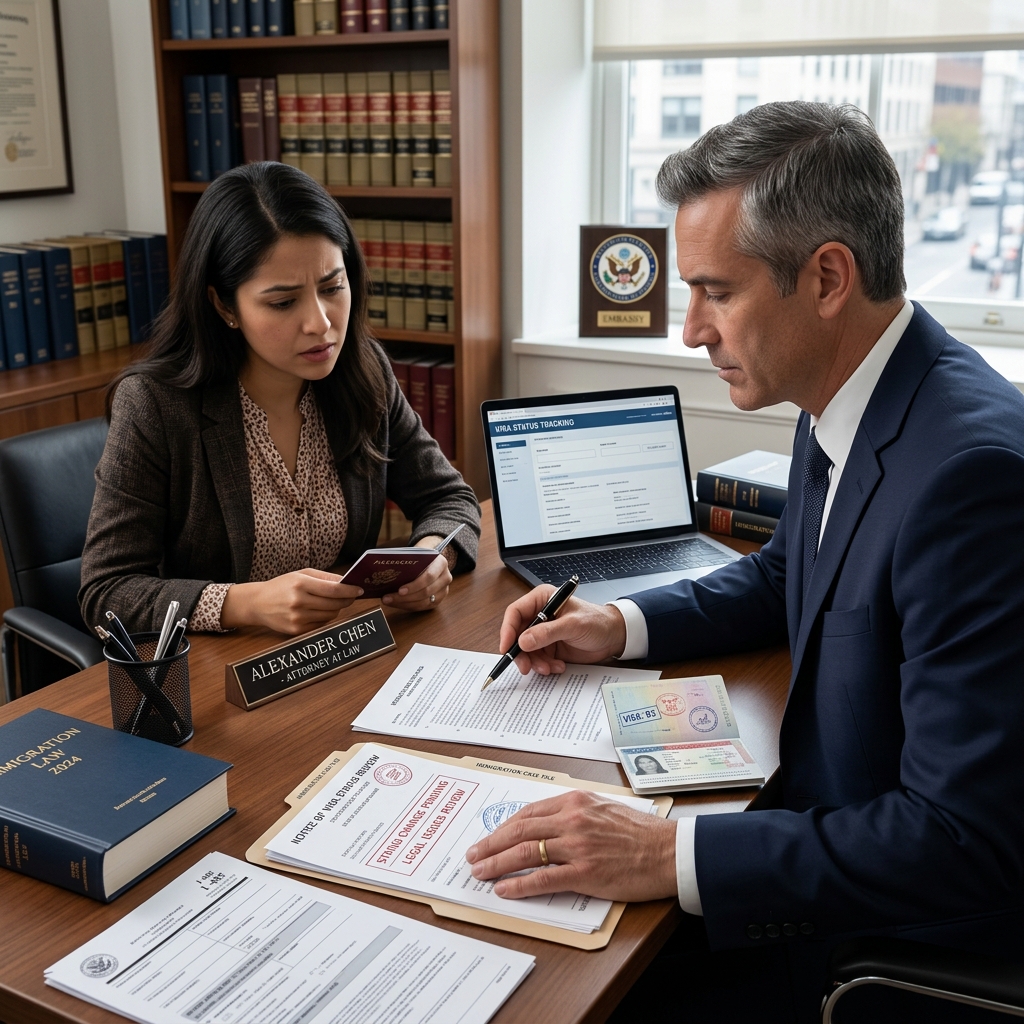
Visa status in the United States can be disrupted by more than just expired paperwork. Criminal charges, prior immigration violations, and periods of unlawful presence can all create serious consequences, including denial of a new visa, loss of current status, removal, or a future bar to reentry. The rules are strict because visa eligibility depends not only on the purpose of travel, but also on whether the applicant remains admissible under immigration law.
This article explains the main legal problems that can affect visa status, how those problems are evaluated, and why some people may need a waiver before they can proceed with an immigration application.
How visa status can be lost or limited
In U.S. immigration law, a visa is not the same thing as lawful status. A person may hold a visa stamp, but still fall out of status if they violate the conditions attached to the visa or become inadmissible for another reason. That distinction matters because immigration authorities look at both the visa itself and the person’s conduct after entry.
Common problems include overstaying the authorized period, working without permission, failing to keep a required address updated, or being arrested or convicted of certain offenses. Even if a person later tries to correct the issue, the earlier violation can still follow them in a future visa application.
Criminal history and visa eligibility
Criminal issues are among the most important factors that immigration authorities review. The State Department explains that visa ineligibilities are found in the Immigration and Nationality Act and related laws, and many criminal grounds can make a person inadmissible. That means a visa may be denied even if the applicant otherwise meets the basic requirements for travel or residence.
Criminal convictions can raise different concerns depending on the nature of the offense, the number of convictions, and the sentence imposed. Certain offenses linked to moral turpitude, controlled substances, trafficking, or multiple convictions can trigger inadmissibility or other visa problems. In practice, immigration officers look at the complete record, not just the final court outcome.
- A single arrest may lead to extra screening and delays.
- Some convictions can make a person permanently inadmissible.
- Multiple convictions can create a separate ground of inadmissibility.
- Even conduct that does not result in a conviction can still affect discretion in some cases.
For people seeking humanitarian visas, including the U visa, criminal history still matters. USCIS states that U visa applicants must be admissible to the United States, and those who are not admissible may need to file Form I-192 to ask for a waiver. That requirement shows how criminal and immigration issues often overlap in visa cases.
Immigration violations that can cause problems
A separate category of risk comes from immigration violations themselves. These include entering without inspection, ignoring the terms of a prior admission, reentering after removal without permission, or otherwise failing to comply with the rules tied to a visa or immigration benefit. Once an immigration violation occurs, it can affect later applications even if the person eventually leaves the United States.
One especially serious issue is unlawful reentry after removal. The law treats some reentries after a removal order as inadmissibility grounds, which can block future admission. These violations may also complicate requests for a new visa abroad because consular officers evaluate whether the applicant can lawfully return.
Another common issue is using a visa for a purpose different from the one originally approved. A tourist visa is not a substitute for a student or work visa, and changing purpose without authorization can create compliance problems. The safer course is to pursue the correct immigration classification before the change occurs.
Unlawful presence and the three- and ten-year bars
Unlawful presence is one of the most consequential issues in visa law. Federal immigration rules impose bars on reentry for people who remain in the United States without authorization for significant periods. These bars are designed to penalize long overstays and affect future admissibility.
According to the State Department, a person who was unlawfully present in the United States for more than 180 days but less than one year may be inadmissible for three years after departure or removal. If the unlawful presence reaches one year or more, the inadmissibility period can extend to ten years. These bars can apply even when the person later seeks a visa from abroad.
| Length of unlawful presence | Typical consequence |
|---|---|
| More than 180 days but less than 1 year | Three-year inadmissibility period after departure or removal |
| 1 year or more | Ten-year inadmissibility period after departure or removal |
These rules make timing extremely important. A person who has overstayed may think that leaving the United States solves the problem, but departure can actually trigger a bar that blocks future travel or visa approval.
When a waiver may be available
Not every visa problem ends the process permanently. In some cases, a person can ask the government to forgive a ground of inadmissibility through a waiver. Whether a waiver exists depends on the type of violation and the visa category involved.
For example, USCIS notes that some U visa applicants who are inadmissible may request advance permission to enter by filing Form I-192. That waiver request allows the agency to review the individual circumstances rather than applying the inadmissibility rule automatically.
Waivers are not guaranteed. The applicant usually must show a legal basis for the waiver and provide supporting evidence. In many cases, the government will weigh the severity of the violation, the applicant’s background, and the reasons for seeking entry.
- Some grounds of inadmissibility may be waivable.
- Other grounds may be difficult or impossible to overcome.
- The required form and procedure depend on the visa type.
- Approval often depends on the facts of the case, not just eligibility on paper.
Practical steps that help protect status
Keeping visa status intact usually requires consistent attention to small details. Academic and government guidance emphasizes carrying registration documents, reporting address changes when required, and tracking expiration dates carefully. Missing these obligations can create avoidable compliance issues.
People in nonimmigrant status should also keep copies of important records such as passports, I-94 forms, and approval notices. If a passport is lost or stolen, it should be reported promptly so replacement documents can be issued without unnecessary delay.
- Check the expiration date on the visa and the authorized stay period.
- Report address changes when your visa category requires it.
- Keep copies of immigration documents in a safe place.
- Do not assume a visa stamp alone guarantees continued lawful status.
- Get legal advice before leaving the United States if you may have accrued unlawful presence.
Why timing matters in immigration cases
Timing can determine whether a small mistake becomes a major immigration problem. Someone who acts before overstaying, before a criminal matter becomes final, or before travel creates a bar may have more options than someone who waits until after the violation is complete. Once the government treats the person as inadmissible, the available remedies may narrow.
This is especially important for applicants who are pursuing family-based, work-based, student, or humanitarian visas. Each category has different eligibility rules, but all of them depend on the applicant remaining within the legal boundaries set by immigration law.
Frequently asked questions
Can a visa be denied because of a past arrest?
Yes. A past arrest can trigger further review, and if the underlying conduct or conviction fits a ground of inadmissibility, the visa can be denied.
Does overstaying always lead to a reentry bar?
Not always, but long periods of unlawful presence can trigger three-year or ten-year inadmissibility periods after departure or removal.
Can I use one type of visa for a different purpose?
No. Using a visa for a purpose different from the one originally approved can create immigration violations and jeopardize future applications.
Is a waiver available for every immigration problem?
No. Some grounds of inadmissibility may be waived, but others are much harder to overcome, and the available relief depends on the visa category and the facts of the case.
What documents should I keep to maintain status?
It is wise to keep your passport, I-94 record, approval notices, and any other documents tied to your immigration status, along with copies in case originals are lost.
References
- Visa Maintenance: Legal Issues That Will Affect Your Visa Status — FindLaw. 2026-07-09. https://www.findlaw.com/immigration/immigration-overview/legal-issues-that-will-affect-your-visa-status.html
- Victims of Criminal Activity: U Nonimmigrant Status — U.S. Citizenship and Immigration Services. 2026-07-09. https://www.uscis.gov/humanitarian/victims-of-criminal-activity-u-nonimmigrant-status
- Ineligibilities and Waivers: Laws — U.S. Department of State, Travel.gov. 2026-07-09. https://travel.state.gov/content/travel/en/us-visas/visa-information-resources/waivers.html
- Why the Legal Immigration System Is Broken: A Short List of Problems — Cato Institute. 2024-03-01. https://www.cato.org/blog/why-legal-immigration-system-broken-short-list-problems
- Know Your Rights: U Visa Bona Fide Determination — Immigrant Justice. 2025-01-15. https://immigrantjustice.org/for-immigrants/know-your-rights/u-visa-bona-fide-determination/
- Maintaining Legal Status in the U.S. — Academic Personnel & Faculty, University of Washington. 2025-08-12. https://ap.washington.edu/ahr/visas/scholar-resources/maintaining-status/


Read full bio of Sneha Tete




