Hiring your first employees is a milestone for any small business, but it also triggers a range of legal responsibilities. Federal hiring laws govern what you can ask applicants, how you must verify their eligibility to work, and how you use background information when making employment decisions. Understanding these rules helps you avoid costly disputes and build a fair, compliant hiring process.
This guide explains the core U.S. hiring requirements that most small employers face. It focuses on federal rules that apply nationally; your state or local government may impose additional requirements. Whenever possible, confirm details with official agency guidance or a qualified attorney.
1. Building a Legally Compliant Hiring Process
A lawful hiring process starts long before the interview. From designing the job description to making an offer, employers must follow basic principles that protect applicants from discrimination and safeguard their privacy.
1.1 Core legal principles in hiring
Most small employers must follow federal anti-discrimination laws such as Title VII of the Civil Rights Act, the Age Discrimination in Employment Act (ADEA), and the Americans with Disabilities Act (ADA). These laws affect every stage of hiring.
- Equal opportunity: You cannot treat applicants differently because of protected characteristics such as race, color, religion, sex, national origin, age (40 or older), disability, or genetic information.
- Job-related decisions: Employment policies that negatively impact a protected group must be directly related to the job and necessary for the operation of the business.
- Consistency: Apply the same standards, questions, and evaluation criteria to applicants competing for the same role to reduce the risk of bias.
- Documentation: Keep applications, interview notes, and hiring records for the periods required by federal law, and be prepared to show that decisions were based on legitimate job-related factors.
1.2 Determining who is covered by federal hiring laws
Coverage depends partly on your workforce size. According to the Equal Employment Opportunity Commission (EEOC):
| Number of Employees | Key Federal Requirements |
|---|---|
| 1 or more | Equal Pay Act (equal pay for equal work by men and women). |
| 15 or more | Title VII, ADA, and federal pregnancy and sex discrimination rules. |
| 20 or more | Age Discrimination in Employment Act (ADEA). |
| Varies | FLSA (minimum wage, youth labor), immigration documentation, and background check laws generally apply regardless of size. |
Even the smallest employer must comply with rules governing pay, work authorization, and certain recordkeeping requirements.
2. Verifying Employment Eligibility with Form I-9
Federal immigration law requires employers to confirm that every employee is authorized to work in the United States. This is done through the Form I-9, Employment Eligibility Verification, administered by U.S. Citizenship and Immigration Services.
2.1 Timing and steps for Form I-9
For each new hire, employers must follow strict timelines:
- The employee completes Section 1 of Form I-9 by their first day of work.
- You review their documents and complete Section 2 no later than the third business day after they begin work.
- You must keep the form on file for three years after the hire date or one year after employment ends, whichever is later.
Applicants can choose from a list of acceptable documents to prove their identity and work authorization. You must examine those documents to determine whether they reasonably appear genuine and relate to the person presenting them.
2.2 Avoiding citizenship and national origin discrimination
Title VII and related federal laws make it illegal to discriminate against applicants because of their national origin or citizenship status. This affects how you discuss work authorization.
- Do not ask where an applicant is from or what country they were born in, as this can suggest national origin bias.
- Instead, ask: “Are you legally authorized to work in the United States on a full-time basis?”
- Do not require a specific document (such as a passport) if the Form I-9 list allows alternatives. Let the employee choose which valid documents to present.
- Apply documentation rules consistently for all new hires to avoid discriminatory treatment.
Employers may use E-Verify in addition to Form I-9 in some situations, but participation is voluntary or required only for certain federal contractors and state-law programs. Always follow federal guidance when using electronic verification systems.
3. Anti-Discrimination Rules in Hiring
Federal civil rights laws prohibit discrimination at every stage of the hiring process—from job postings to interviews and final selection. These rules are enforced primarily by the EEOC.
3.1 Protected characteristics
Under federal law, you generally may not base hiring decisions on the following protected traits:
- Race or color
- Religion
- Sex (including pregnancy, sexual orientation, and gender identity)
- National origin
- Age (40 or older)
- Disability
- Genetic information, including family medical history
Many state and local laws add protections—for example, marital status or additional sexual orientation and gender identity provisions.[10] Check your local rules for a complete list.
3.2 Interview and application do’s and don’ts
To remain compliant, structure interviews and job applications around job-related qualifications, not personal characteristics.
Safer topics:
- Skills, experience, education, and licenses required for the role
- Ability to meet specific work schedules or travel requirements
- Physical or mental ability to perform essential job functions, with or without reasonable accommodation
- Past work performance, references, and professional achievements
Risky or generally prohibited topics:
- Questions about birthplace, native language, or immigration history (instead, focus on work authorization).
- Religious practices, holidays, or affiliations.
- Family planning, pregnancy, childcare arrangements, or marital status.
- Age-related questions such as date of high school graduation or retirement plans for older applicants.
- Disability-related questions before a conditional job offer, except in limited situations allowed by the ADA.
Train anyone involved in hiring—owners, managers, and HR staff—to avoid questions that could be interpreted as discriminatory and to focus on the essential duties of the job.
4. Hiring People with Disabilities
The Americans with Disabilities Act (ADA) bars employers from discriminating against qualified applicants with disabilities and requires certain employers to provide reasonable accommodations.
4.1 Who must comply with the ADA
In general, the ADA applies to private employers with 15 or more employees. Covered employers must treat qualified applicants with disabilities fairly during hiring and may need to make adjustments that enable them to perform essential job functions.
4.2 Reasonable accommodations in hiring
A reasonable accommodation is a change to the work environment or job requirements that allows an individual with a disability to perform key duties, as long as it does not impose an undue hardship on the business.
Examples in the hiring context include:
- Providing sign language interpretation for an interview.
- Offering written materials in accessible formats, such as large print or electronic files compatible with screen readers.
- Adjusting the interview schedule or location to accommodate mobility or medical needs.
Under the ADA, employers generally cannot request medical or genetic information from job applicants and may only ask disability-related questions or require medical exams after a conditional job offer, and even then must follow strict rules.
5. Hiring Minors and Youth Labor Rules
When hiring workers under 18, employers must follow the federal Fair Labor Standards Act (FLSA) and any state youth labor laws. These rules govern minimum wages, hours, and types of work minors can perform.
5.1 Age-based categories and limits
Under federal law, minor workers are commonly divided into two age groups:
- 14–15-year-olds: Generally limited to part-time work, with restrictions on hours and the times of day they can work.
- 16–17-year-olds: May work more hours but are still barred from certain hazardous occupations.
FLSA rules set nationwide minimum standards, but states often impose stricter requirements, such as work permits, specific hour limits, or bans on certain industries.
5.2 State-specific requirements
Many states require employers to obtain work permits for younger minors and follow additional safety and scheduling rules.[10] For example, one state may prohibit employing minors under 11 at any time and require a work permit for most workers under 16, with limited exceptions. Always check your state labor department or law library for details before hiring a minor.
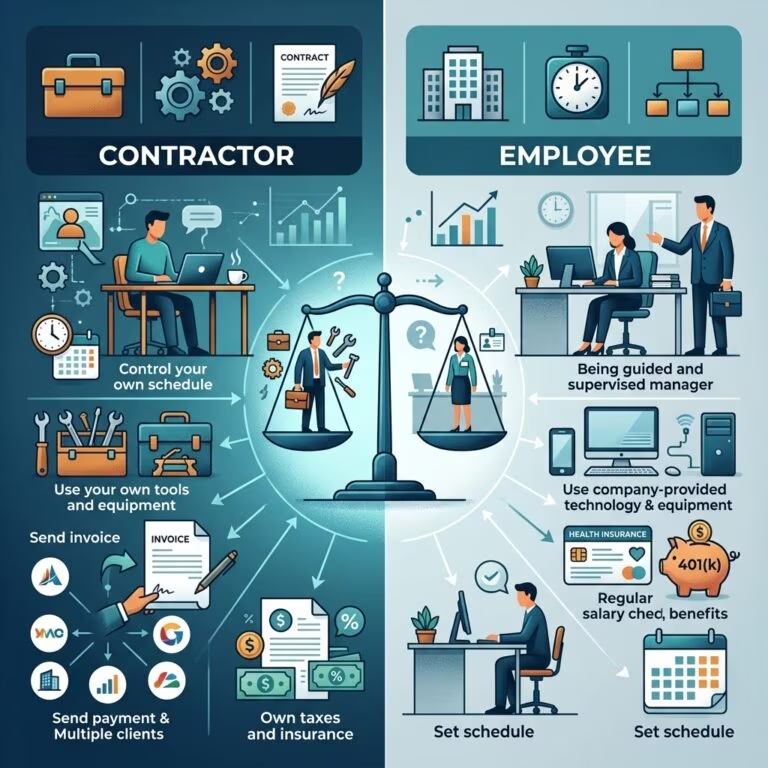
6. Independent Contractors vs. Employees
Small businesses often rely on independent contractors, but misclassifying workers can create tax and legal problems. Federal law treats employees and independent contractors differently for purposes such as taxation, wage and hour protections, and some discrimination rules.
6.1 Key distinctions
Government agencies look at several factors to determine whether a worker is an employee or independent contractor:
- Control: Employees are typically subject to the employer’s detailed direction regarding how, when, and where work is performed.
- Financial arrangement: Independent contractors usually invoice for services, bear their own expenses, and can profit or lose based on their efficiency.
- Relationship nature: Long-term, integral roles in daily operations more often indicate an employment relationship.
The IRS and Department of Labor each provide tests and guidance for worker classification. Improperly treating employees as contractors can lead to back taxes, penalties, and wage claims.
7. Using Credit Reports and Other Background Checks
Many employers review background information—such as criminal records, driving history, or credit reports—before hiring. Federal law regulates how you obtain and use consumer reports, including credit histories, through the Fair Credit Reporting Act (FCRA).
7.1 Getting consent under FCRA
If you use a third-party consumer reporting agency to obtain a credit report or similar background check, FCRA requires:
- Written permission: You must obtain the applicant’s written consent before requesting a consumer report.
- Disclosure: The authorization form must clearly state that a report may be used for employment purposes, typically in a document separate from the job application.
7.2 Taking adverse action based on a report
When you decide not to hire or promote an applicant because of information in a consumer report, FCRA imposes specific steps:
- Pre-adverse action notice: Provide the individual with a copy of the report and a summary of their rights under FCRA before making a final decision.
- Opportunity to respond: Allow the applicant time to review and dispute inaccurate information with the reporting agency.
- Adverse action notice: Once the decision is final, send a notice explaining that the report contributed to the decision, along with contact details for the reporting agency and an explanation of FCRA rights.
Some states limit the use of credit reports in hiring even further. Review your state laws to see whether you may use credit histories and, if so, under what circumstances.[10]
8. Recordkeeping, Posters, and Ongoing Compliance
Hiring compliance does not end when you choose a candidate. Employers must retain certain records, post mandated notices, and avoid retaliation against applicants or employees who assert their rights.
8.1 Required records and retention
Federal rules require employers to maintain employment records, including applications, personnel files, payroll records, and benefits information, for specified periods. In the hiring context, this often includes:
- Job applications and resumes.
- Interview notes and evaluation forms.
- Form I-9 and any immigration verification documents.
- Background check authorizations and related communications.
Proper recordkeeping helps defend hiring decisions if they are later challenged and demonstrates a commitment to compliance.
8.2 Required workplace posters
Most employers must display federal employment law posters in a location where employees can readily see them. These posters summarize rights under laws such as anti-discrimination statutes and minimum wage rules. Updated posters are available from federal agencies like the Department of Labor and the EEOC.
8.3 Retaliation is prohibited
Federal law forbids employers from punishing applicants, employees, or former employees who report discrimination, participate in investigations, or oppose unlawful practices. Retaliation can include refusing to hire, withdrawing job offers, or giving negative references because someone exercised their rights.
Small businesses should build clear procedures for handling complaints and ensure that hiring decisions are based only on legitimate business criteria.
9. Frequently Asked Questions About Hiring Laws
9.1 Do I need a written employment contract to hire someone?
U.S. law does not generally require small businesses to use written employment contracts for every hire. Many workers are employed “at will,” meaning either party can end the relationship for lawful reasons. However, written agreements can be helpful when defining duties, compensation, confidentiality, or noncompetition obligations, especially for key roles. State law may impose specific requirements in certain industries.
9.2 Can I ask applicants whether they are citizens?
Direct questions about citizenship can raise national origin and immigration discrimination concerns. Instead of asking if someone is a U.S. citizen, ask whether they are legally authorized to work in the United States and whether they will need sponsorship now or in the future. Always apply the same questions to all applicants for the same job.
9.3 Are background checks always allowed?
Background checks are common in hiring, but employers must follow federal and state rules. If you use a third-party agency to obtain credit or other consumer reports, FCRA requires written consent and specific notices. Some states restrict the use of criminal records or credit histories in hiring decisions, so review local law before implementing blanket policies.[10]
9.4 What happens if I ignore youth labor rules?
Violating federal or state child labor laws can result in fines, penalties, and, in serious cases, legal action from government agencies. Noncompliant practices—such as allowing minors to work excessive hours or in hazardous jobs—also increase safety risks and potential liability. Always confirm age limits and permitted job duties before hiring minor workers.
9.5 How often do hiring laws change?
Employment law is an active area of policymaking. Congress, federal agencies, and state legislatures regularly update rules related to discrimination, pay, family leave, and workplace safety.[10] Small business owners should periodically review official guidance from the Department of Labor, EEOC, and relevant state agencies, or consult counsel, to ensure their hiring procedures remain current.
References
- Small Business Requirements — U.S. Equal Employment Opportunity Commission. 2023-06-01. https://www.eeoc.gov/employers/small-business/small-business-requirements
- Hiring Laws: Frequently Asked Questions — FindLaw. 2022-05-10. https://www.findlaw.com/smallbusiness/employment-law-and-human-resources/frequently-asked-questions-regarding-hiring-laws.html
- New and Small Businesses — U.S. Department of Labor, Wage and Hour Division. 2023-03-15. https://www.dol.gov/agencies/whd/compliance-assistance/small-business
- Federal Employment Law Basics for Small Businesses — National Federation of Independent Business. 2023-08-10. https://www.nfib.com/news/legal-blog/federal-employment-law-basics-for-small-businesses/
- Employment Law Information Center — Alan C. Olson & Associates, S.C. 2021-11-05. https://employee-advocates.com/employment-law-information-center/
- Employment Law — Wisconsin State Law Library. 2022-09-20. https://wilawlibrary.gov/topics/laborlaw/index.php
- Wisconsin Civil Rights and Labor Standards Laws — Wisconsin Department of Workforce Development. 2023-02-01. https://dwd.wisconsin.gov/er/laws.htm