
Legal Guide to Eloping: How to Make Your Elopement Valid
Understand the legal steps, documents, and requirements that turn your intimate elopement into a fully valid and recognized marriage.
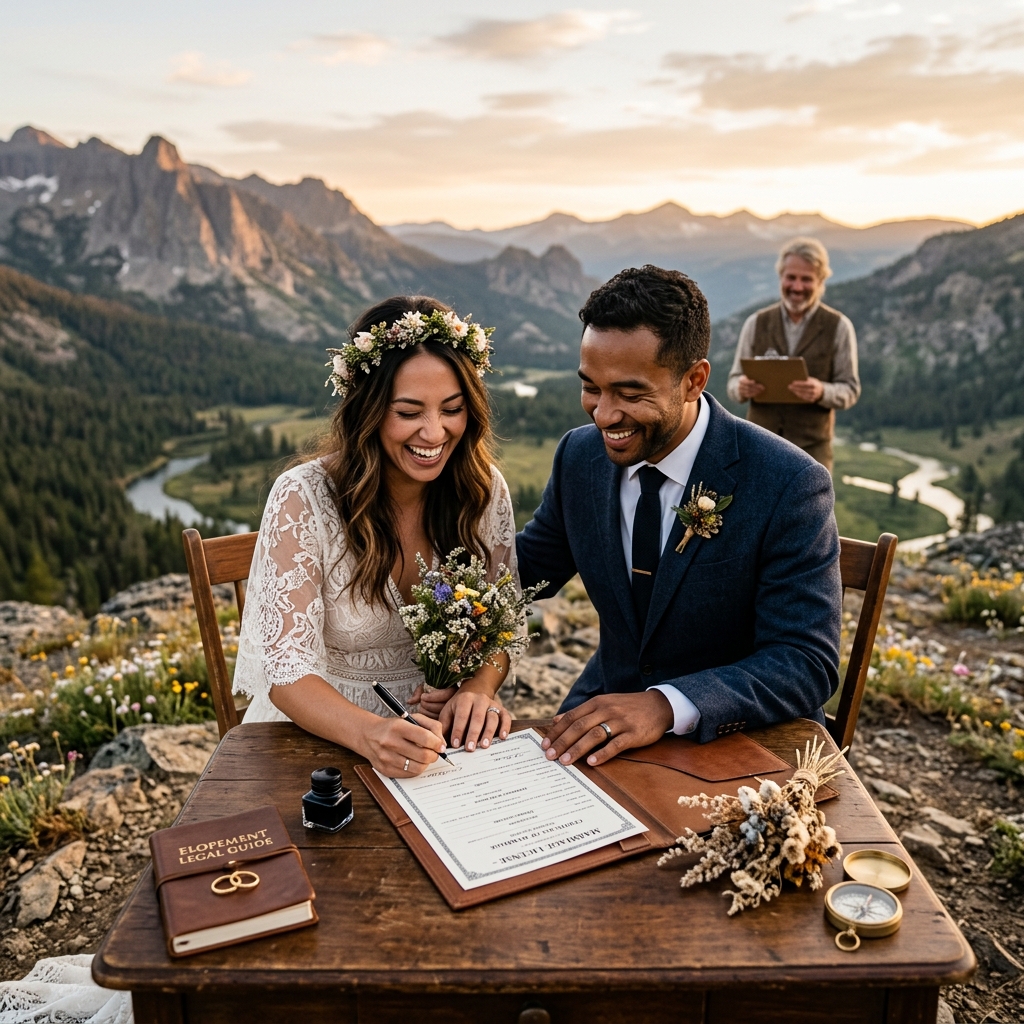
Eloping has evolved from a secretive escape to an intentional, intimate way to get married. Couples choose elopement to avoid the stress, cost, and expectations of a large wedding, but there is one area where you cannot cut corners: the legal requirements for marriage. An elopement can absolutely be a fully valid and recognized marriage, as long as you follow the rules that apply where you are getting married.
This guide explains, in practical detail, how to make sure your elopement is legally binding, what paperwork you need, how officiants and witnesses work, and how to avoid common pitfalls when you say “I do” in your own way.
What Is an Elopement, Legally Speaking?
Socially, “eloping” usually means having a small, often private wedding with few or no guests. Legally, however, an elopement is just a marriage that meets the same legal criteria as any other wedding ceremony.
The law does not treat eloping as a separate type of marriage. If you comply with the relevant marriage laws—such as getting a proper license, using an authorized officiant where required, and filing signed paperwork—your elopement is a standard, fully recognized marriage.
- Elopement is legal in every U.S. state, provided you meet that state’s marriage requirements.
- There is no additional “elopement permit” or special legal status you must obtain.
- What makes a marriage valid is paperwork and procedure, not the size or style of your ceremony.
Core Legal Elements Every Eloping Couple Must Address
Although details vary by location, almost every legally valid elopement revolves around five core components:
- Marriage license
- Eligibility requirements (age, marital status, etc.)
- Officiant rules
- Witness rules
- Post‑ceremony filing of the license
Thinking about your elopement in terms of these components will help you design a day that fits your values and results in a legally recognized marriage.
Marriage Licenses: The Foundation of a Legal Elopement
The marriage license is the legal authorization from a government office that allows you to marry. Without it, most states will not recognize your elopement as a legal marriage.
Where to Get a Marriage License
In the U.S., marriage licenses are typically issued by a county clerk or similar local government office and must come from the jurisdiction where your ceremony will take place.
- If you are eloping out of state, you usually must apply in the state and county where you will actually say your vows.
- International couples eloping in the U.S. must apply locally in the U.S. jurisdiction where they plan to marry.
Common Documents and Information Required
Requirements differ from place to place, but many jurisdictions ask for similar information when you apply for a license.
- Government‑issued photo identification (such as a driver’s license or passport)
- Social Security number, if you have one
- Birth information (city and state or country)
- Parents’ names and birthplaces
- Proof of divorce or death certificate if previously married
Many counties charge a fee for the license, and some only charge for certified copies of the finalized marriage record.
Waiting Periods and License Expiration
Two key timing rules can affect your elopement date:
- Waiting period to receive or use the license: Some states impose a delay between applying for the license and when you can pick it up or hold the ceremony.
- Expiration date: Licenses are often valid only for a limited period—anywhere from days to months—so your ceremony must occur before the license expires.
For example, certain states require a one‑ to three‑day waiting period before the ceremony, and others specify that the wedding must take place within a set number of days after issuance. This makes it important to check local rules early and align your travel and elopement schedule with those time frames.
Eligibility Rules: Who Can Legally Elope?
Even if your plans are simple and private, you still must satisfy basic legal conditions to marry. Although details differ among jurisdictions, general eligibility rules commonly include:
- Minimum age: Often 18, with special procedures or parental or judicial consent required below that age.
- Unmarried status: You cannot already be legally married to someone else.
- Capacity to consent: Both partners must be mentally able to understand and agree to the marriage.
- Compliance with local relationship restrictions: Close relatives are barred from marrying under state law.
Some states historically required blood tests for certain conditions as part of the license process, and though many have eliminated these requirements, a few still have medical or documentary conditions attached to licensing.
Officiants: Who Can Legally Conduct Your Elopement?
In many jurisdictions, a legally valid marriage requires an authorized officiant to conduct the ceremony and sign the license. Some places, however, allow couples to marry with alternative mechanisms or to officiate their own ceremony.
Licensed or Authorized Officiants
Where an officiant is required, they usually must be recognized by the state or locality. Commonly acceptable officiants include:
- Judges or magistrates
- Religious ministers or leaders authorized to perform marriages
- Civil marriage commissioners or similar officials
In these jurisdictions, a marriage may not be legally recognized if the ceremony is conducted by someone who is not authorized, even if the couple believes the person is officiating.
Self‑Solemnization and Alternative Models
Some locations offer more flexibility. For example, certain jurisdictions allow self‑solemnization, meaning couples can legally marry themselves without an officiant, or use special licenses that do not require a traditional ceremony officiant.
- One U.S. state widely recognizes self‑solemnization, allowing couples to marry without an officiant and still be legally married.
- Some areas provide self‑uniting or similar licenses where couples may sign and record their own marriage under specified rules.
Digital and remote ceremonies have also become possible in limited jurisdictions, with certain counties providing fully digital marriage licenses and legally valid online ceremonies conducted via video platforms.
Witnesses: Do You Need Other People at Your Elopement?
Witness requirements can significantly shape how private your elopement can be. Many states require at least one or two witnesses to sign the marriage license; others do not require any witnesses.
Typical Witness Rules
In jurisdictions that require witnesses, they are usually asked to:
- Be present at the ceremony or at the time the couple signs the license
- Sign the marriage license as witnesses to the marriage event
- Meet minimum age requirements, often 18 or older
Some states mandate two witnesses, while others accept one, and some impose no witness requirement at all.
Designing a Private Elopement with Witness Rules in Mind
If witnesses are required where you are marrying, you still have creative options:
- Invite friends or family to act as witnesses and then give you privacy for the rest of the day.
- Ask your photographer and another vendor or local contact to serve as witnesses.
- Hold a brief legal signing with witnesses and have a separate, fully private symbolic ceremony.
If you are set on a “just us” elopement, consider choosing a jurisdiction that does not require witnesses or that allows self‑solemnization, thereby enabling a truly private experience while keeping your marriage fully legal.
Paperwork After the Ceremony: Making Your Marriage Official
The ceremony itself is only part of the legal story. To be recorded as married, you must ensure that your signed marriage license is properly returned and filed with the relevant government office.
Completing and Returning the License
Typically, after the ceremony:
- The couple, officiant, and any required witnesses sign the marriage license.
- The signed license is returned to the issuing office, often by mail or by in‑person drop‑off.
- The office records the marriage and may issue certified copies upon request.
Each jurisdiction sets its own deadlines for when the license must be returned. Missing these timelines can cause administrative complications or require additional steps to confirm the marriage.
Marriage Licenses vs. Ceremony Permits
Many scenic elopement locations—national parks, forests, public beaches—have their own rules about events held on public land. A key distinction is that a marriage license and a ceremony permit are not the same thing.
| Item | Purpose | Issued By | Effect on Marriage |
|---|---|---|---|
| Marriage license | Legal authorization to marry | Local government (such as a county clerk) | Required for a legally recognized marriage in most places |
| Ceremony permit | Permission to hold an event at a specific location | Land manager (such as a national park or city agency) | Does not itself create a marriage; affects location access and compliance |
For many public lands, couples must obtain a special use or event permit to hold any wedding ceremony, including an elopement. However, these permits do not replace the need for a marriage license from the appropriate civil authority.
Cross‑Border and Out‑of‑State Elopements
Eloping away from home can be romantic and logistically straightforward if you understand how cross‑border rules work.
Out‑of‑State Elopements
If you travel to another state to elope:
- You usually apply for the marriage license in that state and county.
- You comply with that state’s waiting periods, witness requirements, and officiant rules.
- After returning home, your marriage is generally recognized, but you may later request certified copies for name changes or other legal processes.
International Couples Eloping in the U.S.
Couples visiting from abroad can typically marry in the U.S. if they meet the same requirements as residents, including age and identity documentation. They will later use certified copies from the issuing authority as proof of marriage in their home country, subject to that country’s recognition rules.
Designing Your Elopement Around Legal Requirements
Legal steps do not have to overshadow the romance of eloping. Many couples separate the legal act of marrying from the emotional experience of their elopement day.
- Legal ceremony first, adventure later: Some couples complete the license signing with an officiant and witnesses at home, then travel for a symbolic elopement ceremony without legal constraints.
- Elopement day as legal wedding: Others structure their elopement so that the ceremony and paperwork occur on the same day at their chosen destination.
- Post‑elopement paperwork: A minority may hold a personal ceremony first and complete the legal steps later, though they should be clear about which date is their legal marriage date.
Whichever approach you choose, the crucial point is to align your paperwork, officiant, and witness decisions with the laws of the place where the legal marriage will occur.
Practical Checklist for a Legally Sound Elopement
Because regulations vary widely, treat this checklist as a framework and verify each item with local authorities or reliable legal information sources.
- Confirm eligibility: age, marital status, and any location‑specific rules.
- Research marriage license requirements and fees in the jurisdiction of your ceremony.
- Check waiting periods and license expiration dates before scheduling travel.
- Determine whether an officiant is required and what credentials they need.
- Identify witness requirements and who will serve as your witnesses, if needed.
- Ask whether you need permits for your chosen location on public land.
- Plan how the signed license will be returned and how you will obtain certified copies.
Frequently Asked Questions About Legal Elopements
Is eloping really legal everywhere?
Yes, eloping is legal throughout the U.S. as long as you follow the legal requirements for marriage in the state or jurisdiction where you are getting married. The term “elopement” describes the style of your wedding, not a separate legal category.
Do we need a marriage license if we elope?
In almost all cases, yes. A marriage license is the document that authorizes your marriage under state law, and it is typically required whether you have a large wedding or a private elopement.
Can we elope without an officiant?
In many jurisdictions, a legally recognized officiant is required to perform the ceremony and sign the license. However, a few places allow self‑solemnization or special licenses that do not require a traditional officiant, so the answer depends entirely on where you are marrying.
Can we have an elopement with no witnesses?
Some states require witnesses; others do not. If you want a completely private “just us” elopement, consider choosing a jurisdiction that has no witness requirement or allows self‑solemnization.
What happens if we do a ceremony without a license?
A ceremony alone generally does not create a legally recognized marriage if your jurisdiction requires a license. You might be emotionally married in your own eyes, but the law will not treat you as married until the proper paperwork is completed and recorded.
Is an online or virtual elopement legally valid?
Only a limited number of jurisdictions currently allow digital licenses and legally valid online ceremonies. Where permitted, these processes follow specific rules issued by local governments, so you must confirm directly with the relevant authority before planning a virtual elopement.
How early should we start the legal process for an elopement?
It is wise to begin researching legal requirements several months before your planned elopement date, especially if you are traveling or marrying in a popular destination. This timeline gives you room to address waiting periods, documentation, and permits without last‑minute surprises.
References
- Marriage Laws — Cornell Law School Legal Information Institute. 2024-01-10. https://www.law.cornell.edu/wex/marriage
- Getting Married: Marriage Licenses — U.S. Census Bureau (using official state guidance overview). 2023-06-15. https://www.census.gov/library/stories/2023/06/getting-married-marriage-licenses.html
- National Park Service Special Use Permits — National Park Service. 2023-05-01. https://www.nps.gov/articles/special-use-permits.htm
- Colorado Marriage & Civil Union Licenses — Colorado Department of Public Health & Environment. 2024-02-20. https://cdphe.colorado.gov/marriage-civil-union
- Utah County Online Marriage License & Ceremony — Utah County Government. 2024-03-05. https://www.utahcounty.gov/dept/clerk/auditors/marriage.html
Similar Articles








Read full bio of Sneha Tete


