
Essential Legal Guide: Teaching Teens Safe Driving
Navigate state laws, build safe habits, and minimize risks while preparing your teen for the road ahead with proven strategies.
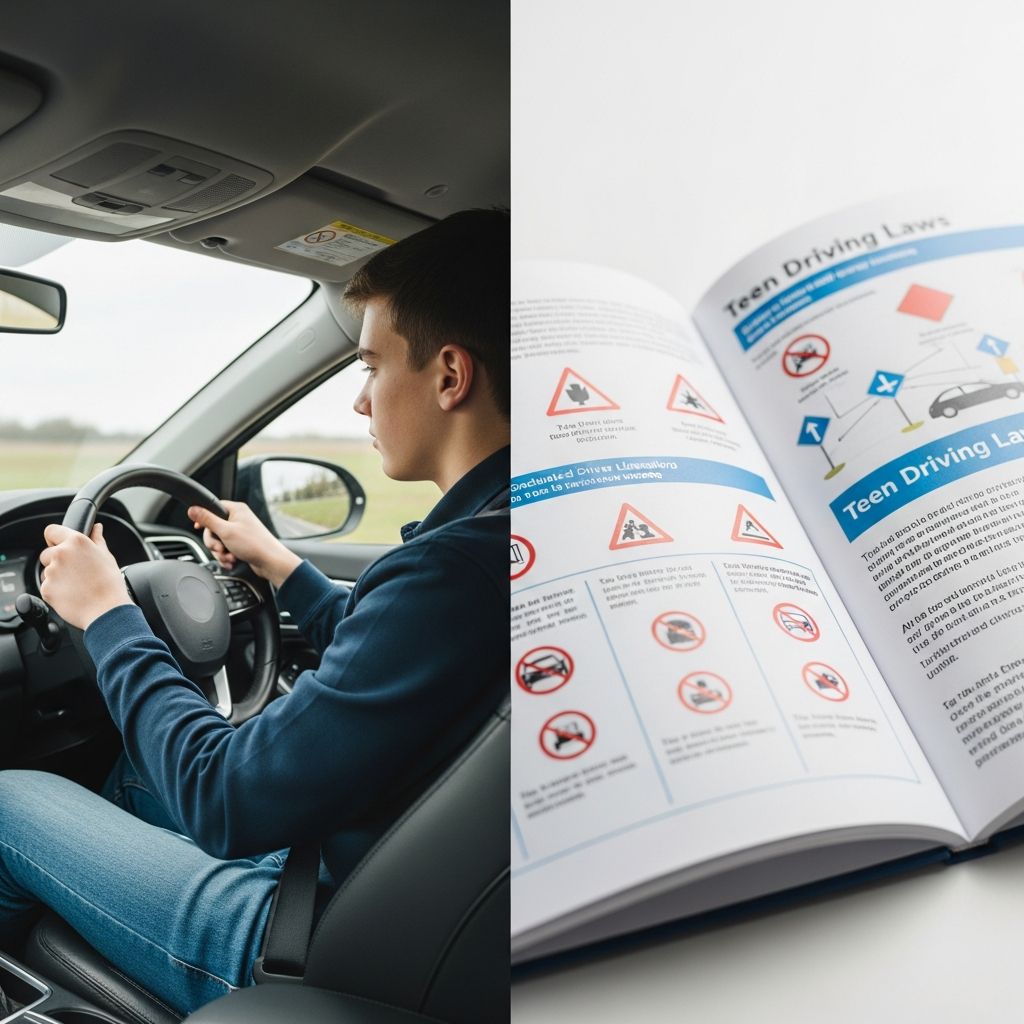
Preparing a teenager for the road involves more than just handing over the keys—it’s a process governed by strict state laws, safety protocols, and parental guidance. Parents play a pivotal role in shaping responsible drivers, but understanding legal boundaries is crucial to avoid violations and accidents. This guide explores key strategies grounded in regulations and expert advice to foster confident, law-abiding drivers.
Understanding State-Specific Licensing Requirements
Every state enforces unique rules for teen drivers, often through Graduated Driver Licensing (GDL) programs designed to build experience gradually. For instance, in California, teens cannot rely solely on parental training; they must complete professional driver education and training before obtaining a learner’s permit at age 15½. This includes 30 hours of classroom instruction and six hours with a certified instructor, typically available through high school or DMV-approved schools.
In contrast, states like Wisconsin require an adult sponsor, usually a parent, to sign the license application, introducing vicarious liability where parents can be held responsible for damages caused by their teen’s negligence. Parents should verify local DMV guidelines early, as requirements differ: some mandate minimum supervised hours (e.g., 50 hours with 10 at night in California), while others emphasize behind-the-wheel training.
- Check age eligibility: Most states allow permits at 15–16, but full licenses come later after probationary periods.
- Enroll in approved programs: Professional instruction is non-negotiable in many areas to ensure standardized safety knowledge.
- Document practice: Log all supervised miles to meet GDL benchmarks, often requiring a licensed adult over 25.
Pre-Driving Preparation: Building Foundational Knowledge
Before your teen touches the steering wheel, instill core road rules through everyday observation. Narrate your drives: explain speed limits, traffic signals, road signs, and right-of-way etiquette. This passive learning demystifies the road, preparing teens for formal driver’s education.
Discuss vehicle familiarization off-road. Demonstrate seat and mirror adjustments, control locations (wipers, lights, signals), and emergency features like hazards and airbags. Use a parked car for hands-on practice: have your teen adjust settings for optimal visibility and comfort, reducing on-road stress.
| Vehicle Component | Purpose | Teaching Tip |
|---|---|---|
| Seat Adjustment | Full pedal reach and airbag alignment | Ensure backrest supports spine without slouch |
| Mirrors | Maximize rear view, minimize blind spots | Adjust so body is just visible in side mirrors |
| Controls Review | Quick access during maneuvers | Quiz teen verbally before starting engine |
Selecting Safe Practice Locations and Progression
Initial lessons must occur legally: on private property or empty lots with permission, never public roads without a permit. Progress to low-traffic areas like residential streets under 35 mph, focusing on straight-line driving, stopping, and basic turns.
Gradually introduce complexities: lane changes, merging, intersections, and night driving. Always prioritize clear weather and familiar routes to build confidence without overwhelm. Enforce the ‘scan, signal, shoulder check’ routine for every maneuver to ingrain habits.
- Empty parking lots: Perfect for acceleration, braking, and parking.
- Quiet roads: Teach speed control and pedestrian awareness.
- Moderate traffic: Practice yielding, merging, and emergency stops.
- Highway simulations: Once proficient, tackle on-ramps and speed maintenance.
Mastering Defensive Driving Fundamentals
Defensive driving anticipates hazards. Teach maintaining a three-second following distance (or four in poor conditions), adjusting for speed and weather. Emphasize mirror scans every 5–8 seconds and head checks for blind spots—mirrors alone miss 20–30% of views.
Model calm responses to aggressive drivers: no tailgating, honking, or gestures, as teens mimic parental road rage. Cover sharing roads with cyclists, pedestrians, and school buses, especially in zones requiring 25 mph limits.
- Speed Management: Posted limits are maxima; reduce for rain, fog, or crowds.
- Hazard Scanning: Look 10–15 seconds ahead to spot braking cars or obstacles.
- Emergency Response: Practice swerving or stopping safely away from home.
Eliminating Distractions and Enforcing Discipline
Distractions cause most teen crashes; ban phones, eating, and passengers initially. Use apps or rules to lock devices while driving. Stress that even hands-free calls divide attention.
Establish a contract: Outline privileges, consequences (e.g., suspension for violations), and rewards for safe milestones. Parents bear legal liability, so consistent enforcement protects everyone.
Insurance Considerations and Financial Responsibilities
Adding a teen skyrockets premiums due to high-risk profiles. Shop providers offering GDL discounts or safe-driver programs like State Farm’s Steer Clear. Disclose all details accurately to avoid claim denials. Some states hold parents vicariously liable up to certain damage limits.
Teach budgeting: gas, maintenance, tickets. Require contributions to instill ownership.
Advanced Skills: Weather, Night, and Emergencies
Once basics solidify, simulate challenges. In rain, increase following distance and gentle braking. Night driving demands low beams and slower speeds. For emergencies: pull over for sirens, change tires safely, handle skids by steering into the slide.
Frequently Asked Questions (FAQs)
Can parents legally teach driving without a professional course?
It depends on the state. In California, no—professional instruction is required first. Other states allow supervised practice post-permit.
What if my teen gets a ticket during practice?
Parents may face liability; use it as a teaching moment and report to insurance.
How many supervised hours are typically needed?
Varies; California mandates 50, including night hours. Check your DMV.
Are automatic or manual cars better for beginners?
Automatics reduce complexity, aiding focus on road awareness.
What about passenger restrictions for new drivers?
GDL often limits teens under 21 initially to minimize distractions.
Long-Term Success: From Learner to Lifelong Driver
Transition to independence with ongoing dialogue. Use ‘new driver’ magnets for visibility. Celebrate provisional license achievements while reinforcing rules. Statistics show parent-taught skills cut crash risks by 20–40% when combined with formal training.
Revisit lessons periodically; driving evolves with experience. By blending legal compliance, hands-on practice, and defensive mindsets, parents equip teens not just to drive, but to survive the roads.
References
- Can I Teach My Child to Drive in California? — Maison Law. 2023. https://maisonlaw.com/personal-injury/car-accidents/driver-ed/teach-my-child/
- How to Teach Your Tween Safe Driving Skills — Before Driver’s Ed — Farm Bureau Financial Services. 2024. https://www.fbfs.com/learning-center/prepare-your-tween-driver
- Seven Tips to Help Teach Your Teen to Drive — Gruber Law Offices. 2023. https://www.gruber-law.com/blog/teach-your-teen-to-drive/
- Teen Driving 101: A Step-by-Step Test of Essential Driving Skills — State Farm. 2025. https://www.statefarm.com/simple-insights/auto-and-vehicles/teen-driving-101-a-stepbystep-test-of-essential-skills
- 5 Driving Tips To Teach Your Kids BEFORE They Get Their License — Ulmer’s Auto Care. 2024. https://www.ulmersautocare.com/5-driving-tips-to-teach-your-kids-before-they-get-their-license/
- Teen Driver Tips — California DMV. 2025. https://www.dmv.ca.gov/portal/driver-education-and-safety/special-interest-driver-guides/teen-drivers/
Similar Articles








Read full bio of Sneha Tete


