
Legal Guide to Subdividing Residential Property
Learn the legal, practical, and financial steps required to safely subdivide residential land and create new lots without risking violations.
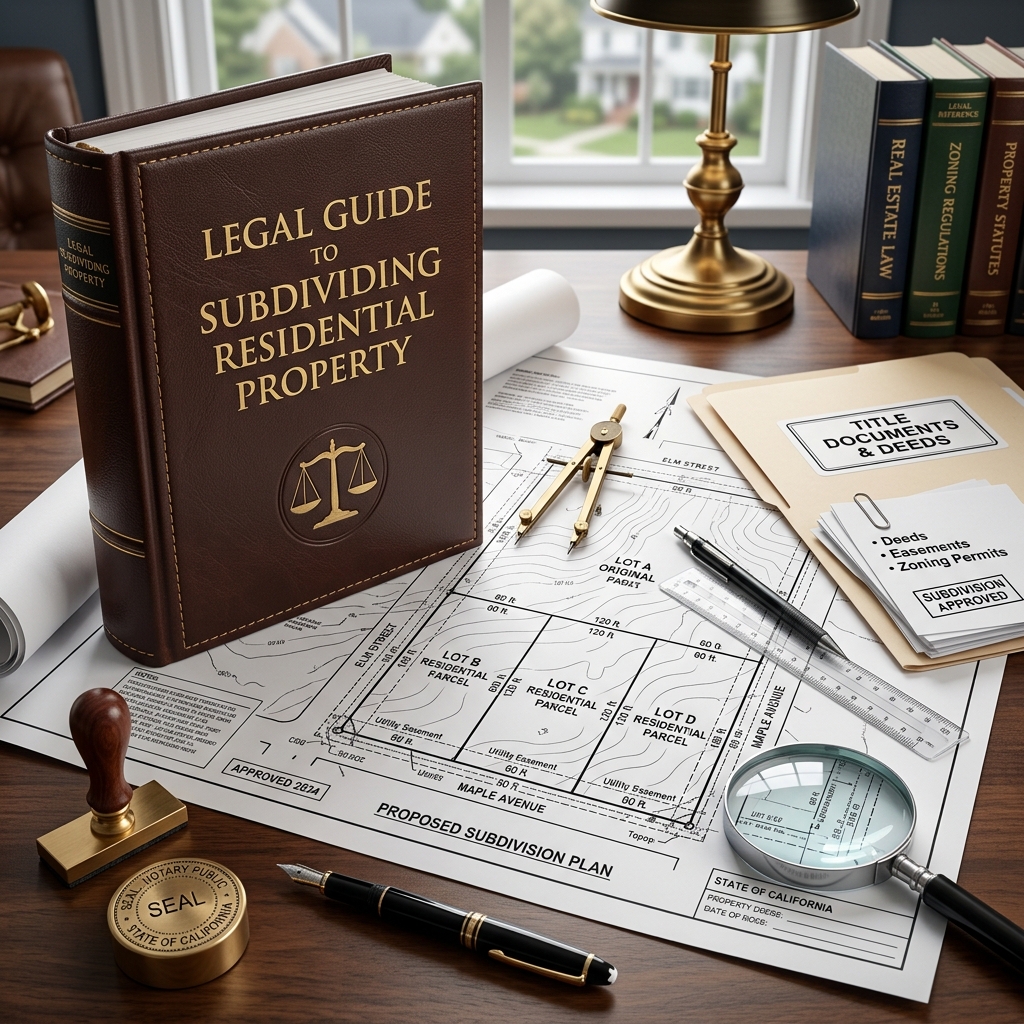
Subdividing your residential property can unlock value, create additional home sites, or prepare land for development. However, the process is highly regulated and involves far more than simply drawing a line on a map. To legally create new lots, you must comply with zoning rules, subdivision regulations, and recording requirements set by local and sometimes state authorities. This guide walks through the key legal and practical steps so you can plan a subdivision project with fewer surprises.
Understanding What a Legal Subdivision Really Is
Before you begin, it is crucial to understand how the law defines a subdivision. In many jurisdictions, a subdivision is created when a single tract of land is divided into two or more lots, sites, or parcels for sale, lease, or building development. This can apply even when only one new lot is created, and even if the division is for future rather than immediate development.
- Number of lots: Typically, dividing into two or more lots can trigger subdivision regulations.
- Purpose of the division: Subdivision rules often apply when the land will be sold, leased, or built upon, now or in the future.
- Infrastructure changes: Creating new roads, utility lines, or easements for multiple lots almost always brings the project within subdivision control.
- Lot size thresholds: Some states exclude divisions where each resulting lot is over a certain size (for example, five acres) and no new road or utility construction is needed.
In short, you cannot assume a small, informal split of your backyard is exempt. Even modest changes in lot layout may trigger formal review requirements under local subdivision ordinances.
Core Legal Framework: Zoning, Subdivision Ordinances, and Plat Approval
Most subdivision projects must satisfy three tightly linked legal frameworks: zoning regulations, subdivision ordinances, and plat recording rules. These work together to ensure that new lots are suitable for long-term development and compatible with surrounding land uses.
Zoning Regulations
Zoning laws establish how land in different districts can be used—for example, single-family residential, multi-family, commercial, or industrial. They also control lot size, building height, setbacks, and density. Before any subdivision plan is drawn, you must confirm that the proposed new lots will comply with applicable zoning standards.
- Minimum lot area and width for each new parcel.
- Required road frontage or access to public streets.
- Setbacks from property lines and rights-of-way.
- Limitations on number and type of dwelling units.
Subdivision Ordinances
Subdivision ordinances provide detailed rules for how land may be divided, including requirements for plats, infrastructure, drainage, open space, and other design standards. These rules are typically administered by a municipal or regional planning commission.
- Standards for street layout, sidewalks, and connectivity.
- Requirements for water, sewer, and other utilities serving each lot.
- Stormwater management and grading standards.
- Procedures for submitting and reviewing subdivision plats.
Plat Approval and Recording
A plat is a detailed map prepared by a licensed land surveyor that shows lot boundaries, easements, streets, and other key features. In many states, the plat must be submitted to the planning commission for approval before it can be recorded, and the owner generally cannot sell lots by reference to an unapproved plat.
Common legal requirements include:
- Submission of a preliminary or final plat showing all proposed lots.
- Planning commission review and formal approval or disapproval within a specific timeframe, often 30 days.
- Recording the approved plat with the county recorder or register of deeds.
- Prohibitions on selling, offering, or advertising lots using an unapproved plat, sometimes backed by fines or misdemeanor penalties.
Step‑by‑Step Roadmap for Subdividing Residential Property
While exact procedures differ by state and municipality, most lawful subdivision projects follow a similar sequence. The table below offers a high‑level overview.
| Phase | Main Actions | Key Decision Maker |
|---|---|---|
| Initial Feasibility | Check zoning, lot size rules, market demand, and basic costs. | Owner with surveyor or planner |
| Technical Design | Survey property, design lot layout, plan roads and utilities. | Surveyor and engineer |
| Regulatory Review | Submit plat, obtain planning commission and agency approvals. | Planning commission, utilities, other agencies |
| Recording & Implementation | Record plat, construct required infrastructure, sell or develop lots. | Owner/developer, county recorder |
1. Conduct a Legal and Market Feasibility Review
A feasibility review helps you determine whether your subdivision concept is realistic, profitable, and legally viable before you commit to professional fees and application costs. It should include:
- Zoning and subdivision checks: Review local ordinances and state statutes, often available through municipal websites or planning departments.
- Site analysis: Evaluate topography, access, floodplain issues, and existing structures with your surveyor or engineer.
- Market analysis: Determine whether there is demand for additional lots at prices that justify the cost of subdivision.
- Preliminary cost estimate: Consider surveying, plat preparation, application fees, utility extensions, and road construction. Some projects can range from tens of thousands of dollars upward depending on scale and complexity.
2. Engage Qualified Professionals
Subdividing land is rarely a do‑it‑yourself undertaking. To comply with legal and technical standards, you will likely need to retain several professionals:
- Licensed land surveyor: Prepares the official boundary survey and subdivision plat, including dimensions, easements, and legal descriptions.
- Civil engineer: Designs roads, drainage, and utility infrastructure to meet local technical specifications.
- Land use or real estate attorney: Interprets zoning and subdivision regulations, negotiates with agencies, and helps avoid legal pitfalls.
- Planner or development consultant: Coordinates the subdivision layout with long‑term development goals and local planning policies.
3. Design the Lot Layout and Access Plan
The physical design of the subdivision must satisfy both market needs and regulatory standards. Key design questions include:
- How many lots will be created, and what lot sizes best fit local zoning rules and buyer expectations?
- Will new roads be needed, or can each lot gain legally acceptable access from existing public streets?
- Where will utility lines (water, sewer, electricity) run, and are easements required?
- How will stormwater be managed to avoid erosion or flooding downstream?
Many jurisdictions require that all newly created lots have adequate frontage on a public road or an approved private road, and may prohibit “landlocked” parcels without access. Some state laws specify minimum frontage standards, while others leave these details to local ordinances.
4. Prepare and Submit the Subdivision Plat
Once the layout is refined, your surveyor will prepare a formal subdivision plat. This document typically includes:
- Precise lot boundaries and dimensions.
- Location of roads, rights‑of‑way, and access easements.
- Placement of utilities and any common areas.
- Certification by the surveyor and signature blocks for owners and approving agencies.
The plat is submitted to the planning commission or other designated body, often accompanied by application forms, fees, and supporting engineering plans. The commission then reviews the proposal and either approves, conditions, or disapproves it within a statutory time frame, such as thirty days in some states.
5. Obtain Required Approvals and Permits
In addition to planning commission approval, you may need clearances from several agencies:
- State or regional planning authorities: In some counties, regional commissions must sign off on plats before recording.
- Utility providers: Water, sewer, and electric utilities often review connection plans and capacity.
- Highway or transportation departments: If new driveways or streets access existing roads, transportation officials may evaluate safety and design.
- Environmental agencies: Larger or sensitive projects may trigger state environmental permits, especially when wetlands, streams, or protected habitats are involved.
Failure to obtain these approvals can delay recording and may require redesign of the subdivision.
6. Record the Approved Plat and Implement the Plan
Once all approvals are secured, the final step is to record the plat with the county recorder or register of deeds. Recording makes the new lot boundaries part of the official land records and is typically required before you can transfer lots using their new legal descriptions.
- Ensure the plat includes deed book and page references for prior land records where required by state law.
- Pay recording fees and obtain the book and page numbers of the plat for use in future deeds.
- Only after recording should you execute and deliver deeds to buyers referencing the newly created lots.
Depending on local rules, you may also need to construct roads, utilities, and drainage improvements before selling lots or building homes. Some jurisdictions allow phased development with bonding or financial guarantees to ensure infrastructure is completed.
Common Legal Pitfalls and How to Avoid Them
Many subdivision problems arise not from complex engineering issues but from misunderstandings of basic legal requirements. Being aware of common pitfalls can help you avoid costly delays and penalties.
- Selling lots before plat approval: In several states, owners are prohibited from selling, transferring, or even advertising lots by reference to a plat that has not yet been approved and recorded, sometimes subject to fines or misdemeanor penalties.
- Ignoring planning commission jurisdiction: Attempting to subdivide land without submitting a plat to the relevant planning authority can be unlawful even if lot sizes appear to meet statutory thresholds.
- Creating landlocked parcels: Failing to provide legal access to each lot can render those properties unusable or unmarketable and may violate subdivision standards.
- Overlooking HOA or private covenants: For property within a homeowners association, subdivision may be restricted or subject to additional approval requirements beyond public regulations.
- Assuming rules won’t change: While recorded subdivisions are generally governed by regulations in place at the time of approval, future construction may be subject to new zoning or building requirements.
Financial and Practical Considerations
From a financial perspective, subdividing land is an investment project that should be evaluated like any other. A clear understanding of costs, timelines, and expected returns is essential.
- Upfront costs: Surveying, engineering, legal fees, application and recording fees, utility tap fees, and road construction can be substantial.
- Time horizon: Regulatory review, plat approval, and infrastructure installation may take months or even years depending on complexity and local workload.
- Return on investment (ROI): Estimating ROI involves comparing the total cost of subdivision and development against the anticipated sale prices or rental income from the new lots.
- Risk management: Changes in market conditions, regulatory requirements, or unforeseen engineering challenges can affect profitability.
Careful planning and professional guidance help manage these risks and align your subdivision project with long‑term financial goals.
Frequently Asked Questions (FAQs)
Do I always need planning commission approval to subdivide my property?
In many jurisdictions, yes. State laws or local ordinances often require that any subdivision within the commission’s territory be submitted for review and approved before the plat is recorded. Some exceptions exist, such as divisions into larger lots that do not require new roads or utilities, but these rules are highly location‑specific. Always verify local requirements before proceeding.
Is a survey required for a legal subdivision?
Almost always. A licensed land surveyor must prepare the subdivision plat that shows precise lot boundaries, dimensions, and easements. Without a survey, the planning commission usually cannot approve the plat, and the recorder cannot accept it for filing.
Can I sell part of my land using a simple description in the deed and avoid subdivision rules?
Not if the transaction meets the legal definition of a subdivision. Many statutes focus on intent and purpose; if you divide land into multiple parcels for sale or development, you may be subject to subdivision regulations regardless of how you describe the land in the deed. Attempting to avoid formal review can result in penalties or problems with title.
How do minimum lot size rules affect my subdivision plan?
Minimum lot size rules in zoning or subdivision ordinances determine the smallest permissible area for each new lot. If your proposed lots are smaller than the required minimums, you may need to seek a variance or adjust the design. In some states, lots above a specified acreage may fall outside certain subdivision controls, but still must comply with zoning.
What happens if I subdivide without following the law?
Consequences can include fines, criminal charges, denial of future approvals, difficulty selling non‑compliant lots, and potential civil liability to buyers. Some statutes explicitly make unauthorized subdivision a misdemeanor offense and prohibit recording plats that lack planning commission approval.
Practical Tips for a Smooth Subdivision Process
- Start with a meeting at your local planning department to clarify specific requirements and timelines.
- Obtain written copies of relevant ordinances and state statutes and review them with a real estate attorney.
- Retain qualified professionals early, especially a surveyor and civil engineer, to avoid costly redesigns.
- Maintain clear communication with utilities and transportation agencies about access and service needs.
- Plan for contingencies in your budget and timeline, particularly if environmental assessments or infrastructure upgrades are likely.
References
- Regulation of Subdivisions — Alabama League of Municipalities. 2025-08-08. https://almonline.org/Assets/Files/LegalSelectedReadings/55.Regulation-of-Subdivisions_REVISED-08-08-2025.pdf
- Defining Subdivisions in Tennessee — Southeast Tennessee Development District. 2017-10-01. https://www.sedev.org/wp-content/uploads/2017/10/Subdivisions-Presentation.pdf
- Subdividing Property — Tennessee Land Development Services. 2023-01-01. https://www.tnlds.com/subdividing-property/
- Five Steps to Subdivide Land — REALTORS Land Institute. 2020-06-15. https://www.rliland.com/Voices/The-Voices-of-Land-blog/ArticleID/399/Five-Steps-to-Subdivide-Land
- Subdivision Regulations — City of Decatur, Alabama Planning Department. 2013-05-01. https://www.cityofdecatural.com/wp-content/uploads/2017/02/PlanDept_Subdivision_Regs_rev_May_2013.pdf
- Subdivision Regulations — City of Hartselle, Alabama. 2017-02-01. https://www.hartselle.org/DocumentCenter/View/134/Subdivision-Regulations-PDF
- Subdivision: Understanding Its Legal Definition and Importance — US Legal Forms Legal Resources. 2022-01-01. https://legal-resources.uslegalforms.com/s/subdivision
Similar Articles








Read full bio of medha deb


