
Legal Essentials for Residential Swimming Pools and Spas
Understand permits, safety rules, and liability before adding a swimming pool or spa to your home.
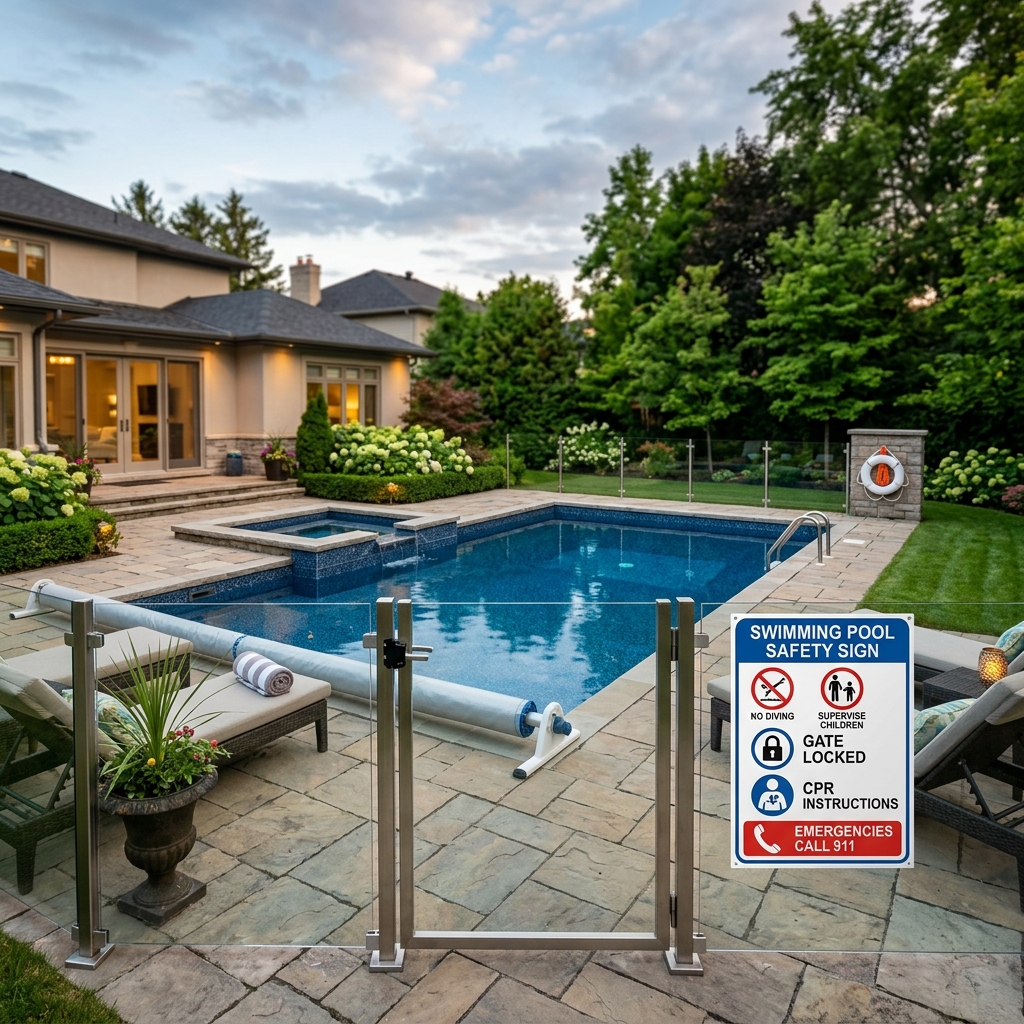
Adding a swimming pool or spa to a home can dramatically improve comfort, recreation, and property appeal, but it also introduces a complex mix of legal responsibilities. Before construction begins—or even before you sign a contract with a builder—homeowners need to understand how permits, zoning rules, safety statutes, and liability law apply to aquatic features on private property.
This guide explains the most important legal and safety issues that affect residential pools and spas, drawing on key public health rules, federal safety laws, and typical local regulations. It is not legal advice; it is a roadmap to the questions you should raise with your local building department, health authority, and insurance provider.
1. Why Pools and Spas Have Special Legal Rules
From a legal standpoint, a backyard pool or spa is more than a recreational amenity—it is a structure that can pose serious risks if not properly designed and managed. Governments treat these features differently from ordinary home improvements for several reasons:
- Drowning risk for children and non-swimmers.
- Entrapment hazards caused by suction from drains and circulation systems.
- Electrical and mechanical dangers around pumps, lighting, and heaters.
- Public health concerns related to waterborne illness when disinfection and filtration are inadequate.
Because these risks can affect neighbors, guests, tenants, and the general public, many layers of regulation exist—federal statutes, state health codes, local ordinances, and sometimes homeowners association rules. Understanding where your property fits within these frameworks is the foundation of responsible ownership.
2. Permits and Approvals: The First Legal Step
Most jurisdictions treat pools and spas as accessory structures that require permits before construction or major modification. Even if you own your home outright, you generally cannot install a new pool or alter an existing one without formal approval.
2.1 Common Types of Required Permits
- Building or construction permit for excavation, structural work, and installation of the shell, decking, and fencing.
- Electrical permit for lighting, pumps, bonding, and grounded circuits.
- Plumbing or mechanical permit for circulation systems, heaters, and gas lines where applicable.
For public or semi-public facilities—such as community pools in homeowner associations—health authorities may require separate operating permits and inspections before the pool is opened to users.
2.2 Typical Permit Process
While details vary by locality, many permit processes follow a similar pattern:
- Submission of a site plan showing the proposed pool or spa, distances to property lines, buildings, and utilities.
- Review of structural design, materials, drainage, and safety features by the building department or health authority.
- Payment of fees and issuance of permits before construction can legally begin.
- Progress and final inspections to confirm compliance with code requirements.
Operating a pool or spa without required permits can result in fines, orders to cease use, and potentially higher liability exposure if an incident occurs.
3. Zoning, Location, and Setback Controls
A pool cannot simply be placed anywhere on a lot. Zoning ordinances and local codes regulate where these structures may be located to reduce nuisance and safety concerns for neighbors.
3.1 Typical Location Restrictions
| Issue | Common Rule (Example) | Legal Purpose |
|---|---|---|
| Distance to property lines | Minimum of about 5 feet from any fence line. | Prevents encroachment and reduces risk of water runoff or structural impact on neighboring land. |
| Overhead utilities | At least 10 feet laterally from overhead power lines. | Reduces electrocution risk and ensures safe access for utility maintenance. |
| Front yard placement | Pools often prohibited in front yards; limited or controlled use in side yards. | Preserves streetscape and limits public access to potentially hazardous areas. |
These examples show how local rules seek to balance homeowner preferences with neighborhood safety and aesthetics. Violating setback or use restrictions can lead to enforcement actions, and in serious cases, orders to modify or remove noncompliant structures.
4. Safety Barriers, Fencing, and Access Control
One of the most visible legal requirements for residential pools and spas is the obligation to install barriers that prevent unsupervised access, particularly by children. Many jurisdictions mandate fences, walls, or other enclosures of a specified height and construction.
4.1 Typical Barrier Requirements
- Minimum enclosure height around 5 feet for residential pools in some ordinances.
- Limited openings between fence slats and beneath the barrier to prevent small children from squeezing through.
- Self-closing, self-latching gates with latches placed high enough to be out of easy reach of young children.
Even if a particular statute does not specify exact dimensions for private pools, many building departments and homeowner associations adopt similar standards based on established safety guidance.
4.2 Pool Alarms and Additional Controls
Some states have gone further by requiring pool alarms in certain residential settings. These devices are designed to detect when someone enters the water or opens a protected door leading to the pool area.
- Surface disturbance alarms detect waves or motion in the pool.
- Gate and door alarms trigger when access points are opened.
- Integrated systems may combine alarms with self-latching hardware and automatic resets.
While alarms do not replace fencing or supervision, they provide an added layer of protection and may be required by law in some jurisdictions, particularly where a pool is close to the house or used by tenants.
5. Federal Pool and Spa Safety Laws
In addition to local codes, U.S. homeowners are affected by federal safety laws that target specific hazards. The principal national statute focuses on preventing drowning and entrapment incidents in pools and spas.
5.1 Entrapment Protection and Drain Standards
The leading federal rules require that pool and spa suction outlets be designed and equipped to reduce the risk of a person being trapped by suction.
- All suction drain covers must comply with specific performance standards (for example, the ASME/ANSI A112.19.8-2007 standard adopted for entrapment protection).
- Public pools and many semi-public facilities must install anti-entrapment drain systems, which can include dual drains, vented systems, or other engineered solutions.
- Existing pools that were built before certain compliance dates may need retrofits to meet updated law.
Although residential backyard pools are not always subject to the same enforcement mechanisms as public facilities, using compliant drain covers and circulation designs is strongly encouraged and may be required when pools are renovated or newly built.
5.2 Public Education and Owner Responsibilities
Federal pool and spa safety law also emphasizes education for manufacturers, service providers, and pool owners. The intent is to ensure that everyone involved understands fundamental precautions, including:
- Maintaining drain covers and circulation equipment in good condition.
- Supervising children near pools and using appropriate barriers.
- Following safe chemical handling and disinfection practices.
While enforcement often focuses on public and commercial settings, homeowners who ignore widely recognized safety standards may face increased civil liability if serious injuries occur.
6. ADA and Accessibility Considerations
Accessibility requirements under the Americans with Disabilities Act (ADA) apply primarily to pools and spas that are provided by public entities or in places of public accommodation. Purely private residential pools used only by the owner and family are typically outside the ADA framework, but many community or shared facilities must comply.
6.1 When ADA Applies
- Title II facilities operated by state or local governments, such as municipal pools or school district pools.
- Title III facilities that serve the public, including hotels, health clubs, and similar businesses.
- Some community pools in residential developments may be treated as places of public accommodation, depending on how they are used and who can access them.
ADA rules generally do not apply to a single-family homeowner’s private backyard pool, but they can apply to pools offered as amenities in commercial lodging or membership-based facilities.
6.2 Accessible Means of Entry
Where ADA applies, regulations specify how many accessible entries must be provided and what forms they may take.
- Larger pools must have at least two accessible means of entry; smaller pools must have at least one.
- Acceptable access methods include pool lifts, sloped entries, transfer walls, transfer systems, and stairs that meet defined accessibility criteria.
- Wading pools must provide a sloped entry extending to their deepest point.
- Spas must offer at least one accessible entry; where multiple spas are clustered, a single accessible entry may sometimes serve the group.
Although ADA compliance is primarily a concern for public and commercial pool operators, homeowners who rent out properties with pools (for example, as short-term rentals) should understand when accessibility rules may be implicated.
7. Water Quality, Testing, and Public Health
Improperly maintained pools can facilitate the spread of gastrointestinal and skin infections. As a result, many jurisdictions impose stricter water quality rules on pools that are considered public, including those operated by residential associations.
7.1 Enhanced Standards for Community and Shared Pools
- Higher minimum disinfectant concentrations (such as chlorine levels) than typical backyard use.
- Daily water testing, with records kept on site, for facilities classified as public pools.
- Obligations to report outbreaks in which multiple pool users experience symptoms (for example, diarrhea) within a short timeframe.
By contrast, single-family residential pools are usually not subject to daily reporting or inspection requirements. However, homeowners are still expected to maintain safe water conditions, and failure to do so may increase liability exposure if guests become ill.
8. Electrical and Mechanical Safety
Pools and spas require electrical power and mechanical systems that must be installed and maintained with care. Codes often require specific protective measures to reduce the risk of shock and equipment failure.
8.1 Typical Electrical Requirements
- Use of ground-fault circuit interrupters (GFCIs) for lighting and outlets near water.
- Bonding of all nearby metal parts to reduce voltage differences around the pool.
- Prohibition of extension cords for permanent equipment.
- Compliance with local building codes and, where applicable, national electrical standards.
Homeowners should ensure that any pool wiring is performed by a properly licensed electrical contractor, both for safety and to avoid code violations.
9. Liability, Insurance, and Risk Management
Legal rules around pools and spas exist not only to protect public health and safety but also to define responsibilities when something goes wrong. Homeowners who operate pools or spas can face significant civil liability if guests or neighbors are injured.
9.1 Premises Liability and Attractive Nuisance
Although details vary by jurisdiction, pools are often treated as an attractive nuisance—a feature that may lure children into danger. Courts may find homeowners liable for injuries even when the injured child did not have explicit permission to be on the property, especially if the owner failed to install reasonable safety measures such as fencing and locked gates.
Compliance with pool safety statutes does not guarantee immunity from lawsuits, but noncompliance can be powerful evidence of negligence. Conversely, thorough adherence to codes, documented inspections, and prompt remediation of hazards can reduce legal exposure.
9.2 Insurance Considerations
Many insurers treat pools and spas as risk-enhancing features. Homeowners should:
- Notify their insurer before or immediately after installing a pool or spa.
- Review whether coverage limits are adequate in light of increased risk.
- Confirm that liability coverage extends to injuries that may occur in or around the pool.
- Ask whether the insurer requires specific safety devices—such as fences, covers, or alarms—as a condition of coverage.
Failing to disclose a pool or spa may complicate claims after an incident and could affect policy terms.
10. Practical Compliance Checklist for Homeowners
To assist homeowners in navigating these requirements, the following checklist highlights common steps for legal and safe pool or spa ownership. Always confirm details with local authorities, because rules vary by location.
- Confirm zoning and placement: Verify setbacks, front yard restrictions, and distances from utilities.
- Obtain necessary permits: Secure building, electrical, and any applicable health permits before construction.
- Design compliant barriers: Install fencing or walls of adequate height with self-closing, self-latching gates.
- Use compliant drain covers: Ensure suction outlets meet current entrapment protection standards.
- Address accessibility when required: For community or commercial pools, evaluate ADA obligations for accessible entry.
- Maintain water quality: Follow recommended disinfection and filtration practices; perform testing especially in shared pools.
- Verify electrical safety: Use GFCIs, bonding, and proper wiring by licensed professionals.
- Update insurance: Inform your insurer and review liability coverage limits and conditions.
- Document compliance: Keep records of permits, inspections, upgrades, and maintenance.
11. Frequently Asked Questions (FAQs)
Does every residential pool need a permit?
In most jurisdictions, any new in-ground pool and many above-ground pools require permits for construction and electrical work. Some small, temporary pools may be exempt, but you should always check with your local building department, because operating a pool without required permits can be unlawful.
Are backyard pools subject to federal pool safety law?
Federal pool and spa safety statutes primarily target public and semi-public facilities, but they establish widely accepted standards for entrapment protection and drain design. Homeowners are strongly encouraged—and in some cases required—to use compliant drain covers, particularly when building or renovating pools.
Does ADA apply to my private home pool?
The ADA generally applies to public entities and places of public accommodation, such as municipal pools or hotel facilities. A pool used exclusively by the homeowner and family is usually outside ADA coverage. However, pools in rental properties or membership-based facilities may need to meet ADA accessibility requirements.
What fencing is usually required around a residential pool?
Local rules differ, but many ordinances require fences or other barriers around residential pools, often at least about five feet high with limited gaps and self-closing, self-latching gates. Some jurisdictions also require alarms on doors or gates that lead directly to the pool area.
Do homeowner associations face stricter rules?
Yes. Pools operated by associations are frequently classified as public or semi-public and must comply with heightened requirements for fencing, signage, water testing, chemical levels, and entrapment protection. Associations may also have reporting obligations when illness outbreaks occur among pool users.
References
- Subject 511-3-5 Public Swimming Pools, Spas, and Recreational Water Parks — Georgia Rules and Regulations, Secretary of State. 2012-09-04. https://rules.sos.ga.gov/gac/511-3-5
- ADA Requirements: Accessible Pools – Accessibility Guidelines — U.S. Department of Justice / U.S. Access Board. 2012-01-31. https://midsouthpoolbuilders.com/ada-requires-public-and-private-entities-to-be-compliant-with-new-swimming-pool-wading-pool-and-spa-law/
- Pool and Spa Safety Act Overview — Office of Environmental Health Services, West Virginia Department of Health and Human Resources. 2010-12-19. https://oehs.wvdhhr.org/phs/general-environmental-health/recreational-water-facilities/
- Swimming Pools & Spas — Davis-Stirling Common Interest Development Law Resource Center. 2016-07-01. https://www.davis-stirling.com/HOME/S/Swimming-Pools-Spas
- Are There Specific Location Requirements for My Pool, Hot Tub or Spa? — City of Munford Building and Zoning Department. 2020-06-01. https://www.munford.com/question/are-there-specific-location-requirements-for-my-pool-hot-tub-or-spa/
- Public Swimming Pools Code — City of Paris, Tennessee Municipal Code §4-602. 2019-01-01. https://codelibrary.amlegal.com/codes/paristn/latest/paris_tn/0-0-0-8577
Similar Articles








Read full bio of medha deb


