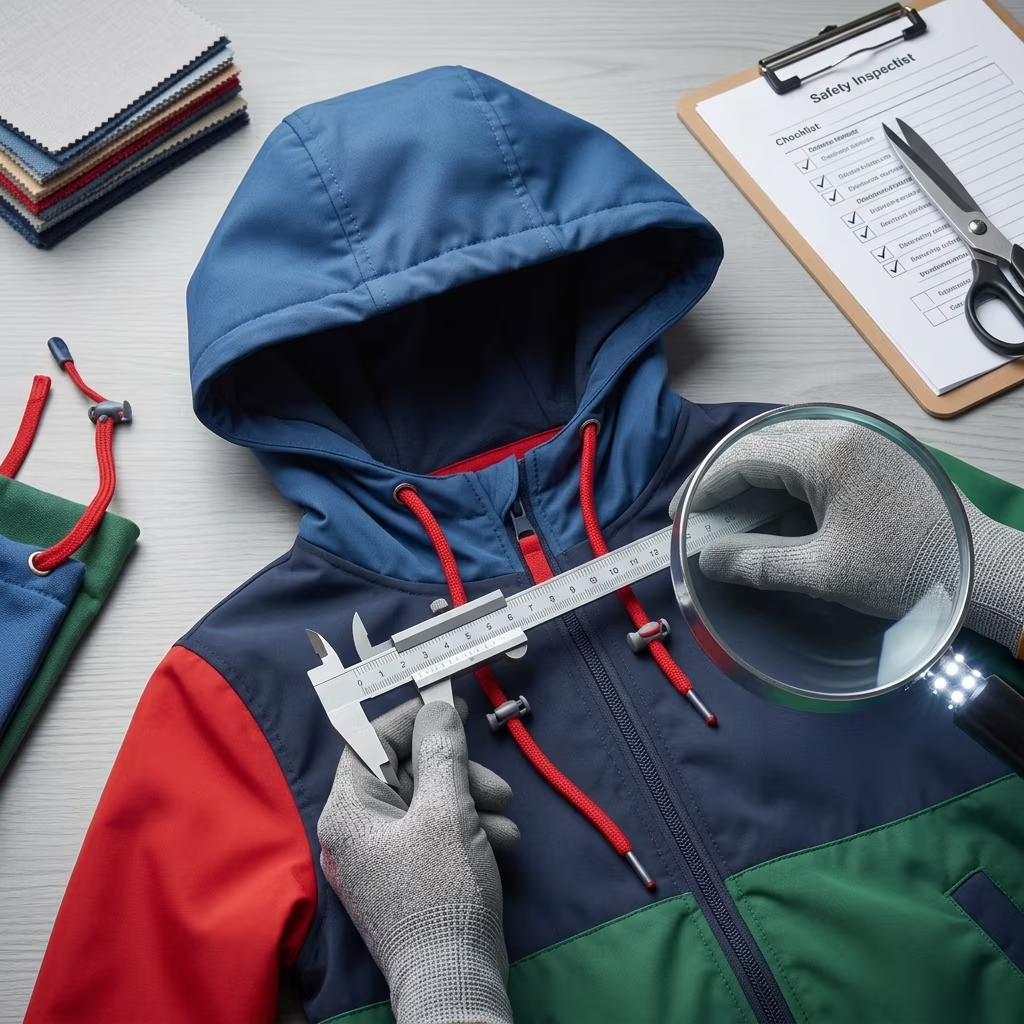
Drawstrings on children’s jackets, sweatshirts, and coats may look harmless, but they have been linked to tragic strangulation and entrapment incidents on playground equipment, school buses, and other everyday environments. To reduce these risks, U.S. safety regulators have turned long-standing voluntary guidance into enforceable rules that directly affect how children’s outerwear may be designed, manufactured, imported, and sold.
This article explains the core legal requirements for drawstrings on children’s upper outerwear in the United States, why those rules exist, and what parents, retailers, and manufacturers should know to stay safe and compliant.
Why Drawstrings on Kids’ Clothing Became a Legal Issue
Starting in the 1980s and 1990s, incident reports began to document children being strangled or dragged when hood or neck drawstrings caught on slides, cribs, and bus doors. In response, the U.S. Consumer Product Safety Commission (CPSC) collected data and concluded that certain design features in children’s outerwear created unreasonable risks of serious injury or death.
Several developments followed:
- Voluntary standard created: In 1997, ASTM International published ASTM F1816-97, Standard Safety Specification for Drawstrings on Children’s Upper Outerwear, setting out recommendations to remove or limit drawstrings in specified areas and sizes.
- CPSC guidance issued: The CPSC endorsed ASTM F1816-97 and urged industry to follow it, but compliance remained voluntary for a number of years.
- State-level actions: States such as New York adopted laws and regulations declaring noncompliant drawstrings a safety hazard, often mirroring or tightening the ASTM standard.
- Mandatory federal rule: The CPSC later designated certain children’s upper outerwear with drawstrings as a
substantial product hazard
under 16 CFR Part 1120, effectively making the ASTM criteria enforceable nationwide.
Because the rule is now mandatory, noncompliant outerwear can trigger recalls, enforcement actions, and seizure at the border.
Key Definitions: What Counts Under the Rule?
The legal rules use technical terms that determine which garments and features are covered. Understanding these definitions is crucial for compliance.
Children’s Upper Outerwear
Children’s upper outerwear generally includes garments worn over other clothing for protection or warmth, such as:
- Jackets and winter coats
- Hooded sweatshirts and fleece tops
- Ski jackets and snowsuits (upper portion)
- Windbreakers and raincoats
The rules apply to sizes 2T through 16, which roughly correspond to early toddler years through young teens.
Drawstrings Covered by the Rules
The focus is on drawstrings that can create loops or free ends long enough to snag on an object.
Key distinctions:
- Hood and neck drawstrings: Cords, ties, or strings intended to tighten the hood or neckline area.
- Waist and bottom drawstrings: Cords at the waistline or lower edge of upper outerwear that adjust the fit.
- One continuous string: A single drawstring that passes through both sides of a channel and can be pulled from either end.
Internal elastic, sewn-down decorative elements, or closures such as snaps, buttons, and Velcro are generally not treated as drawstrings
under the safety standard.
Core U.S. Safety Requirements for Drawstrings
The CPSC’s rule references ASTM F1816-97 and identifies certain noncompliant drawstrings as a substantial product hazard under 16 CFR Part 1120. For practical purposes, that means the ASTM safety criteria now carry legal consequences.
| Garment Feature | Size Range | Requirement |
|---|---|---|
| Hood and neck drawstrings | 2T–12 | No drawstrings allowed; alternate closures must be used. |
| Waist and bottom drawstrings | 2T–16 | Length must not exceed 3 inches outside the channel when garment is fully extended. |
| Waist/bottom continuous drawstrings | 2T–16 | Must be bartacked or stitched to prevent pulling through. |
| Waist/bottom drawstring ends | 2T–16 | No toggles, knots, or bulky attachments that can catch. |
Hood and Neck: Absolute Prohibition for Younger Sizes
For children’s upper outerwear in sizes 2T through 12, drawstrings in the hood or neck area are prohibited altogether. Instead, manufacturers must use safer closure methods such as:
- Snaps
- Buttons
- Hook-and-loop fasteners (e.g., Velcro)
- Elasticized openings
This requirement is based on injury data showing that hood and neck drawstrings pose a particularly high strangulation risk when caught on fixed objects.
Waist and Bottom Drawstrings: Strict Limits
For waist or bottom drawstrings on children’s upper outerwear in sizes 2T through 16, several design rules must be met.
- Maximum extension: When the garment is fully spread out, no more than 3 inches of drawstring may extend outside the channel on either side.
- Bartacking: If the drawstring is one continuous cord, it must be
bartacked
(firmly stitched through the fabric channel) at least once so the entire cord cannot slide out and become much longer on one side. - No hazardous attachments: Knots, toggles, cord locks, and similar components that create a catch hazard at the free ends are not permitted.
These rules are designed to reduce the chance that a child’s waist drawstring will snag on playground equipment, vehicle doors, or other protrusions.
Why the Rules Became Mandatory
For many years, the ASTM standard and related CPSC guidance were technically voluntary. Over time, however, the CPSC observed continued incidents and noncompliant garments entering the marketplace.
The agency ultimately used its authority under the Consumer Product Safety Act to list certain children’s upper outerwear with noncompliant drawstrings as a substantial product hazard in 16 CFR Part 1120. When a product is placed on this list:
- The CPSC can more easily seek mandatory recalls.
- U.S. Customs and Border Protection can stop noncompliant imports at the border.
- Manufacturers, importers, and retailers face increased legal and financial risk if they continue to sell covered products.
States such as New York had already taken similar steps, expressly declaring noncompliant children’s outerwear hazardous and subject to enforcement actions under state law, which helped pave the way for broader federal action.
How These Rules Affect Businesses
Any company involved in designing, producing, importing, or selling children’s upper outerwear in the U.S. market needs a basic compliance plan focused on drawstrings.
Manufacturers and Designers
Key action items for garment manufacturers and designers include:
- Eliminate hood/neck drawstrings entirely in sizes 2T–12.
- Redesign waist drawstrings so that any exposed length is at or under 3 inches when fully extended.
- Incorporate bartacking or equivalent stitching for continuous waist cords.
- Remove toggles and knots or replace them with compliant features that sit flush and do not create catching points.
- Document compliance with ASTM F1816-97 and internal testing or inspection procedures.
Because the rules are now clearly formulated and widely publicized, continued production of noncompliant garments substantially increases liability exposure.
Importers, Distributors, and Retailers
Businesses that did not design the product still share responsibility for ensuring what they sell is compliant. Practical steps include:
- Requiring suppliers to certify compliance with drawstring rules.
- Visually inspecting samples for prohibited hood and neck drawstrings in sizes 2T–12.
- Measuring exposed waist drawstrings to confirm they do not exceed 3 inches.
- Checking for toggles, knots, and other noncompliant cord-end attachments.
- Maintaining records of supplier attestations and any lab testing performed.
If noncompliant products are discovered, retailers should work with legal counsel and regulators on appropriate corrective actions, which may include product removal, consumer notification, and coordination with the CPSC on recalls when necessary.
Practical Guidance for Parents and Caregivers
Even with strict regulations, some older garments or imported items may still contain risky drawstrings. Parents and caregivers can reduce hazards by examining their children’s outerwear and making simple modifications.
Quick Safety Checklist for Home
- Check the size labels: For sizes 2T–12, inspect hood and neck areas; for sizes 2T–16, inspect waist and bottom edges.
- Look for hood/neck drawstrings: If present, consider removing them entirely or replacing them with elastic or snaps.
- Measure exposed waist drawstrings: Spread the garment fully and ensure that no more than about 3 inches of string protrude from each side; if longer, shorten or remove them.
- Remove bulky cord ends: Cut off toggles, knots, or decorative beads that could catch on playground equipment.
- Inspect hand-me-downs: Older garments may predate current standards and warrant careful review.
International authorities such as the Australian Competition and Consumer Commission similarly recommend sewing drawstrings at their midpoint and avoiding toggles or knots to reduce snagging risks, aligning with the underlying safety rationale of U.S. rules.
How U.S. Rules Compare With International Approaches
The United States is not alone in regulating drawstrings on children’s clothing; however, technical details vary across jurisdictions.
- European and U.K. standards: European norms restrict drawstrings for children up to 14 years and include specific length limits and placement rules; the U.K. historically banned hood drawstrings for garments below a certain chest size.
- Australia: Australian guidelines advise that waist or lower-hem drawstrings extend no more than 75 mm (about 3 inches) and recommend eliminating toggles or knots where possible.
- U.S.: U.S. rules are particularly strict on hood and neck drawstrings, prohibiting them entirely in sizes 2T–12, and limiting waist drawstrings to 3 inches with no hazardous end attachments.
For brands selling globally, the safest strategy is often to design garments to meet or exceed the most stringent overlapping requirements.
Frequently Asked Questions (FAQ)
1. Are all drawstrings on children’s clothing illegal?
No. U.S. rules specifically target drawstrings on children’s upper outerwear (such as jackets and hooded sweatshirts) in specified size ranges. Hood and neck drawstrings are prohibited in sizes 2T–12, and waist/bottom drawstrings are heavily restricted in sizes 2T–16. Other types of clothing may have different risk profiles, but similar safety principles are recommended.
2. What happens if a manufacturer ignores these drawstring rules?
Because certain noncompliant garments are now classified as a substantial product hazard, the CPSC can seek recalls, civil penalties, and other enforcement actions. U.S. Customs and Border Protection may also refuse entry of noncompliant imports. Companies risk reputational damage and potential civil liability for injuries.
3. How can small businesses or home-based sellers comply?
Small-scale sellers who make or resell children’s outerwear should familiarize themselves with basic requirements, avoid hood/neck drawstrings in sizes 2T–12, limit waist drawstrings to 3 inches on each side, bartack continuous drawstrings, and avoid knots or toggles at the ends. When in doubt, omitting drawstrings altogether in covered sizes is generally the safest design choice.
4. Do these rules apply only in the United States?
The rules discussed here come from U.S. federal law and standards; they apply to products sold in the U.S. market. Other countries have their own standards and regulations, some of which are similar or even more stringent in certain respects. Companies selling internationally should review the rules in each destination country.
5. Are there any exceptions for fashion or decorative purposes?
No. The safety rules focus on the physical characteristics of the drawstring (location, length, and attachments), not the designer’s intent. If a cord in the hood, neck, waist, or bottom area meets the definition of a drawstring and falls within covered sizes, it must comply or be removed, even if labeled as decorative.
Key Takeaways
- Drawstrings in children’s upper outerwear have been associated with strangulation and entrapment incidents, prompting regulators to act.
- Under 16 CFR Part 1120 and the ASTM F1816-97 standard, certain noncompliant drawstrings are treated as a substantial product hazard in the United States.
- Hood and neck drawstrings are banned in sizes 2T–12, and waist/bottom drawstrings must be short, secured, and free of hazardous attachments in sizes 2T–16.
- Manufacturers, importers, and retailers all share responsibility for ensuring children’s outerwear meets these safety rules.
- Parents and caregivers can add an extra layer of protection by inspecting existing garments and modifying or removing risky drawstrings.
References
- Children’s Upper Outerwear in Sizes 2T to 12 with Neck or Hood Drawstrings and in Sizes 2T to 16 with Certain Waist or Bottom Drawstrings; Final Rule — U.S. Consumer Product Safety Commission / Federal Register. 2011-07-19. https://ag.ny.gov/sites/default/files/reports/drawstringrule-1.pdf
- The CPSC Has Enacted Rule 16 CFR Part 1120 – Substantial product hazard list — TÜV SÜD. 2019-08-01. https://www.tuvsud.com/en-us/e-ssentials-newsletter/consumer-products-and-retail-essentials/e-ssentials-8-2019/technical-guideline-about-drawstrings-safety-on-children-upper-outerwear-in-us-market
- Bulletin: Drawstrings on Children’s Upper Outerwear — U.S. Consumer Product Safety Commission (via Etsy). 2011-08-00. https://extfiles.etsy.com/DrawstringBulletin/DrawstringBulletin.pdf
- Drawstrings on Children’s Clothing – Suggested Practice Guidelines — Australian Competition and Consumer Commission. 2013-11-00. https://www.productsafety.gov.au/system/files/Drawstrings%20on%20children%27s%20clothing%20-%20Suggested%20practice%20guidelines.pdf
- Safety Effects of Drawstring Requirements for Children’s Upper Outerwear — Midgett, J.D. et al., JAMA Pediatrics. 2012-03-05. https://jamanetwork.com/journals/jamapediatrics/fullarticle/1212220