
Legal Consequences of Stealing Food From Grocery Stores
Understanding how shoplifting food is treated under criminal and civil law, from petty theft to serious retail theft offenses in the United States.
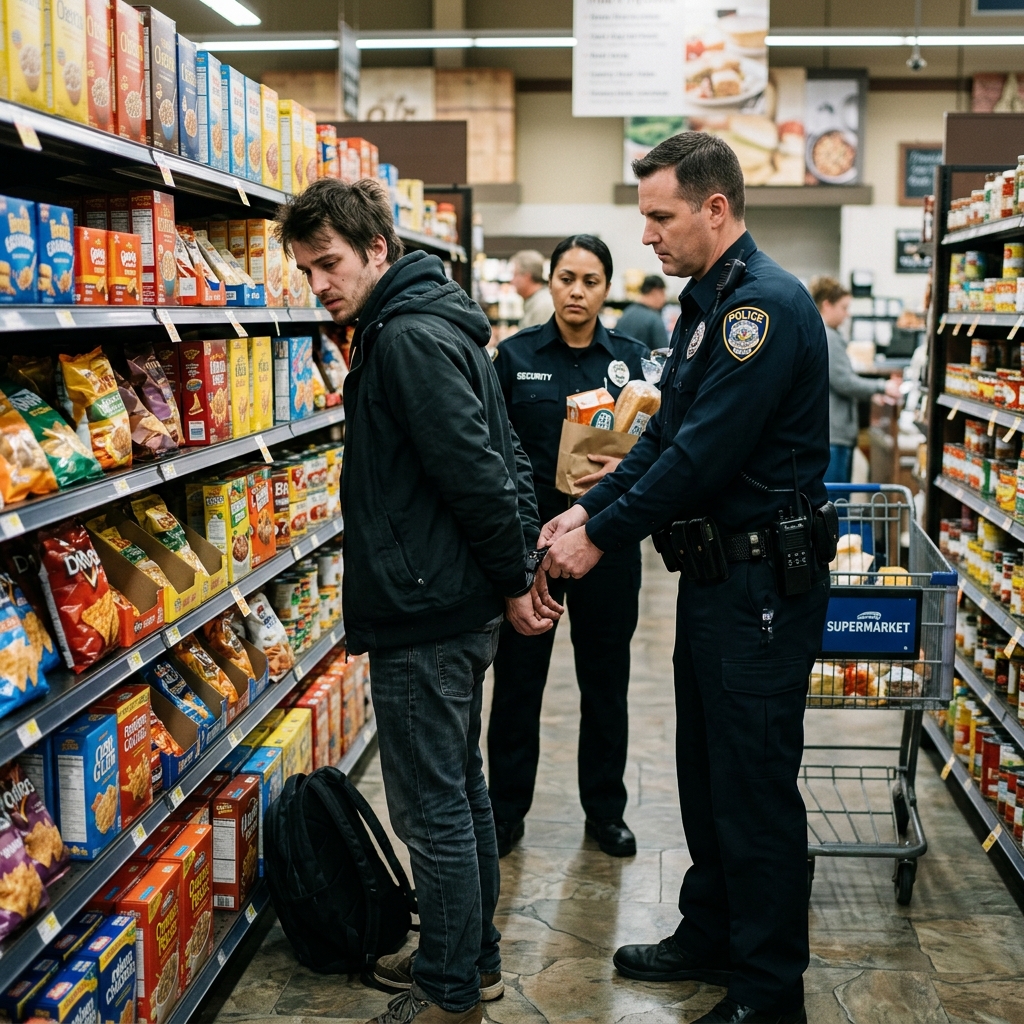
Stealing food from a grocery store may sound minor, especially when the items are inexpensive or taken out of desperation, but in most places it is treated as a form of theft or retail shoplifting that can lead to arrest, criminal charges, fines, and even jail time.
Understanding how the law classifies and punishes this conduct is vital for anyone facing a shoplifting accusation, managing a store, or simply trying to grasp the legal system’s approach to low-value theft.
What Does the Law Consider “Stealing Food”?
In legal terms, stealing food is generally covered by the broader concepts of theft, larceny, or retail theft, rather than a separate category for food.
- Theft / larceny: Unlawfully taking property belonging to another with the intent to permanently deprive the owner of it.
- Retail theft / shoplifting: Taking or attempting to take merchandise from a store without paying, or otherwise depriving the merchant of full value (for example, concealing items, changing price tags, or failing to scan items).
Food items – whether a single candy bar or a cart full of groceries – fall under these general theft statutes. Many states have a specific retail theft or shoplifting law that applies whenever property is taken from a commercial establishment during business hours.
Petty Theft vs. More Serious Charges
One of the most important legal distinctions is the value of the property taken. The total dollar amount often determines whether the offense is treated as a minor violation or a more serious crime.
| Type of Offense | Typical Value Range | Common Classification |
|---|---|---|
| Low-value theft (small food items, basic groceries) | Often under $50–$150 | Petty theft, summary offense, or misdemeanor |
| Mid-range theft (larger grocery orders, alcohol, high-value items) | From roughly $150 up to several hundred or $1,000 | Higher-level misdemeanor, occasionally low-level felony |
| High-value theft (bulk goods, premium alcohol, electronics) | Above thresholds such as $950 or $1,000 | Grand theft or felony retail theft |
While thresholds vary by state, many jurisdictions treat food theft of relatively low value as petty theft or an equivalent low-level offense, sometimes allowing it to be reduced to an infraction if the dollar amount is especially small.
Example Approaches in Different States
States structure shoplifting and petty theft laws differently, but patterns emerge across the country.
Retail Theft in Pennsylvania
Pennsylvania uses a specific retail theft statute, and penalties increase with both the value of the merchandise and the number of prior offenses.
- First offense, under $150: Treated as a summary offense, punishable by up to 90 days in jail and a fine up to $300.
- Second offense, under $150: Upgraded to a second-degree misdemeanor, with up to two years of incarceration and a fine up to $5,000.
- Items worth $150 or more, with limited prior history: First-degree misdemeanor, carrying up to five years in jail and a fine up to $10,000.
- High-value or repeat offenses: Third-degree felony when the merchandise exceeds $1,000 or for a third/subsequent offense, with possible imprisonment up to seven years and fines up to $15,000.
Although a person stealing a small amount of food might face only a summary offense if it is a first offense, repeat or higher-value thefts quickly become substantially more serious.
Shoplifting in California
California defines shoplifting as entering a commercial establishment during regular business hours with the intent to steal merchandise valued at $950 or less.
- Shoplifting under this statute is typically a misdemeanor, punishable by up to six months in county jail and a fine up to $1,000, unless certain prior serious or violent convictions apply.
- When the value exceeds $950, the conduct can be charged as grand theft, which may be prosecuted as a felony carrying up to three years in state prison.
In practice, low-value food thefts in California often fall under the shoplifting rule and may result in relatively modest penalties, especially for first-time offenders without criminal records.
New York’s Approach to Shoplifting
In New York, shoplifting is often treated as a form of petit larceny when the value is under $1,000, which is a class A misdemeanor.
- Petit larceny can carry up to one year in jail and fines up to $1,000.
- Higher-value thefts, particularly above $1,000, can be charged as various degrees of felony grand larceny, with penalties that may reach many years in prison.
On top of criminal punishment, New York also allows civil liability for shoplifting. Merchants may seek restitution and civil damages that significantly exceed the value of the stolen goods.
Typical Penalties for Stealing Food
Even when the value of the food is low, the list of potential consequences is long. Penalties depend on the jurisdiction, the person’s criminal history, and the total value of the items.
Criminal Penalties
- Fines: Many petty theft or summary offenses carry fines that can range from tens of dollars to several hundred dollars or more.
- Jail or prison: First-time petty theft charges may carry up to a few months in jail; higher-value or repeat offenses can lead to multi-year sentences.
- Probation: Courts frequently impose probation for low-level theft, sometimes combined with community service or mandatory counseling.
- Diversion programs: In some situations, defendants may be eligible for diversion or deferred adjudication programs that focus on rehabilitation and can result in dismissal of charges upon successful completion.
Civil and Financial Consequences
Beyond the criminal case, stores and state laws may authorize additional financial consequences.
- Restitution: Courts can require payment to compensate the store for the value of the food and any related losses.
- Civil damages: In some states, merchants can sue alleged shoplifters for statutory damages that may be multiple times the value of the stolen goods.
- Administrative fees: Stores sometimes send civil demand letters seeking payment to cover losses and anti-shoplifting measures; how enforceable these demands are may depend on state law.
Aggravating Factors That Increase Penalties
Not all food theft cases are treated alike. Certain circumstances can turn a low-level shoplifting case into a far more serious matter.
- Repeat offenses: Many statutes increase penalties when a defendant has prior convictions for theft or retail shoplifting.
- Use or threat of force: If a person pushes employees, uses a weapon, or otherwise commits an assault during the theft, prosecutors may add robbery or assault charges that carry significantly higher penalties.
- Organized schemes: Participating in organized retail crime rings to systematically steal groceries or other items can lead to felony charges and possible federal investigation.
- High-value items: Taking expensive alcohol, bulk goods, or large quantities of meat or seafood can push the value over felony thresholds even if the items are technically “food.”
Is Stealing Food to Satisfy Hunger Treated Differently?
Many people ask whether taking food for survival – for example, when someone is homeless or has no income – is treated more leniently. Under U.S. law, the conduct typically still falls under theft statutes, although prosecutors and judges may exercise discretion.
Other countries have occasionally taken a different stance. For instance, Italy’s highest court ruled in 2016 that a man who stole small amounts of food due to immediate and essential need for nourishment acted in a state of necessity, and therefore his conduct did not amount to a crime. This kind of ruling is rare and highly context-specific.
In the United States, necessity defenses are generally narrow and difficult to establish. Instead, compassion and practical considerations more often show up in decisions not to prosecute, in plea bargaining, or in sentencing rather than in rulings that theft itself is not a crime.
Common Defenses in Food Shoplifting Cases
Even when someone is accused of stealing food, they are entitled to raise defenses and demand proof beyond a reasonable doubt. Some defenses are more common than others.
- Mistake of fact: A defendant may argue they genuinely believed an item had already been paid for or that they had permission to take it.
- Lack of intent: Theft requires intent to permanently deprive the owner. If a person absentmindedly walks past the registers while distracted, this can be relevant, though facts must be carefully evaluated.
- Insufficient evidence: Video footage, witness testimony, and store records must show that the defendant took the items and intended not to pay; weak or inconsistent evidence can be challenged.
- Violation of rights: If store security or police violated constitutional rights during stop, search, or questioning, certain evidence might be suppressed.
Each case is fact-specific, and available defenses depend heavily on what occurred in the store and how the investigation was handled.
Long-Term Impact of a Food Theft Conviction
Even a relatively minor conviction for stealing food can carry consequences long after any fine or community service is completed.
- Criminal record: A petty theft or shoplifting conviction can show up on background checks for employment, housing, and professional licensing.
- Immigration consequences: For noncitizens, certain theft-related convictions can have immigration impacts depending on the circumstances, though these issues often require specialist advice.
- Future sentencing: Prior theft convictions typically increase penalties for any subsequent shoplifting or theft charges.
Because of these lasting effects, even people facing seemingly minor accusations – such as taking food worth only a few dollars – may benefit from speaking with a qualified criminal defense lawyer.
Practical Steps If You Are Accused of Stealing Food
Anyone confronted by store staff or charged with shoplifting food should proceed carefully.
- Remain calm and avoid confrontation: Arguments or physical resistance can escalate the situation and potentially add more serious charges.
- Do not sign documents without understanding them: Some stores present civil demand forms or statements; consulting a lawyer before signing can be crucial.
- Keep any written demands: Letters seeking civil payment or threatening further action should be saved, as they may be relevant if the case goes to court.
- Consult a defense attorney: A lawyer can assess the evidence, explain possible outcomes, and help negotiate diversion programs or reduced charges.
Frequently Asked Questions About Stealing Food From Grocery Stores
Is it still theft if I eat the food before reaching the checkout?
In most jurisdictions, consuming food in the store that is offered for sale without paying can still be treated as theft, especially if the person then leaves or attempts to leave without paying. Laws focus on the intent to deprive the merchant of the merchandise or its value.
Can I be arrested for stealing only a very small amount of food?
Yes. Police and prosecutors have the authority to charge theft even when the dollar amount is low. While minor food thefts sometimes result in warnings or civil demands instead of full criminal prosecution, there is no guarantee this will happen.
What if I return the food or the store gets it back?
Returning food or having the store recover the items does not automatically eliminate criminal liability, because the crime focuses on the act of taking and the intent at that time. However, successful recovery of property may influence prosecutors’ charging decisions and judges’ sentencing choices.
Can a store demand money from me even if there is no court case?
Some stores send civil demand letters asking for payment to cover loss prevention and other expenses. The legality and enforceability of such demands depend on state law, and it is often advisable to consult an attorney before paying or responding.
Is stealing food ever legally excused because of hunger?
U.S. law does not generally provide a broad exemption for theft committed due to hunger, although prosecutors and judges may consider a person’s circumstances. Rare cases in other countries have used necessity principles to excuse similar conduct, but these decisions are highly context-specific and not directly binding in U.S. courts.
References
- Legal Penalty for Stealing Food From a Grocery Store? — FindLaw. 2023-05-01. https://www.findlaw.com/legalblogs/criminal-defense/legal-penalty-for-stealing-food-from-a-grocery-store/
- Pennsylvania Shoplifting Laws — The Travis Law Firm. 2022-04-15. https://www.yourerielawyers.com/blog/pennsylvania-shoplifting-laws/
- Shoplifting Laws in California | Penal Code 459.5 PC — Eisner Gorin LLP. 2022-09-10. https://www.egattorneys.com/shoplifting-penal-code-459-5
- Shoplifting | Theft Crimes | Brooklyn Criminal Defense Lawyer — The Law Offices of Jeffrey C. Fagan. 2021-08-20. https://www.sidneylaw.com/criminal-defense/theft-crimes/shoplifting/
- Stealing Food When You’re Hungry. Should It Be a Crime? — New York City Food Policy Center at Hunter College. 2017-07-12. https://www.nycfoodpolicy.org/stealing-food-when-youre-hungry-should-it-be-a-crime/
- I was caught stealing at my grocery store. Can they really have me arrested? — Avvo Q&A. 2013-04-05. https://www.avvo.com/legal-answers/i-was-caught-stealing-at-my-grocery-store-can-they-3493302.html
Similar Articles








Read full bio of medha deb




