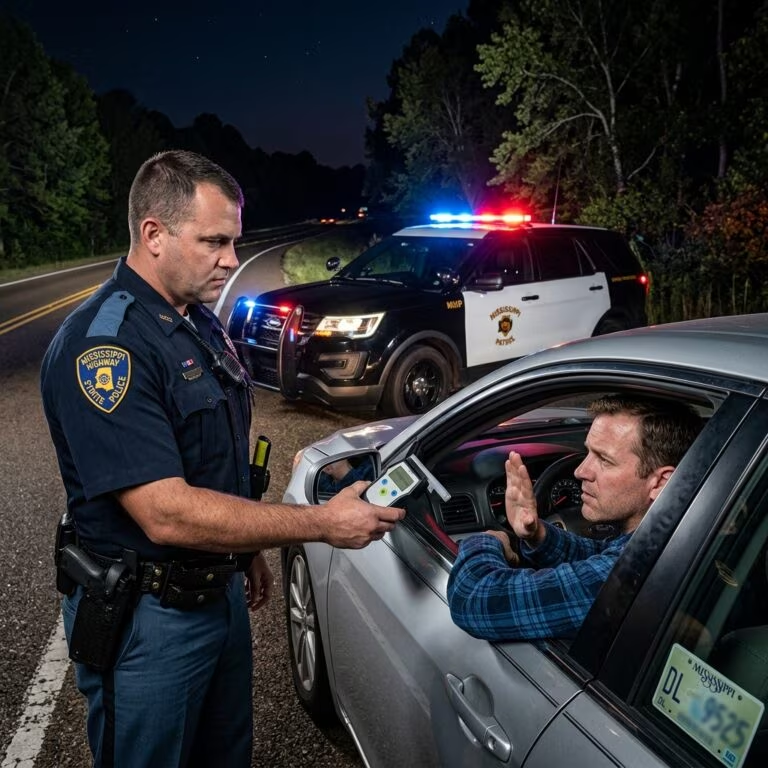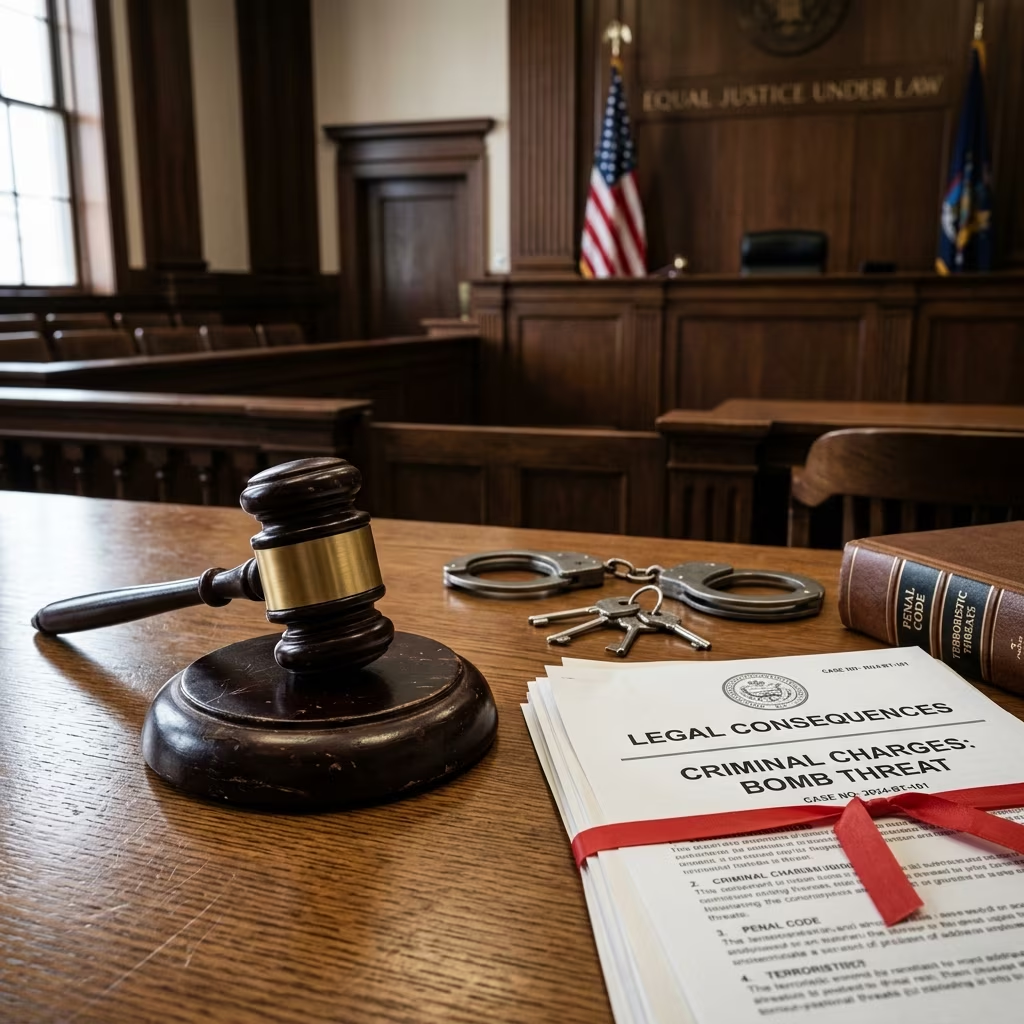
Bomb threats are often made in moments of anger, fear, or misguided humor, but under modern criminal law they are treated as serious offenses that can lead to felony convictions, long prison sentences, and lifelong consequences. Even if no explosive device exists and the threat was intended as a joke, law enforcement and prosecutors rarely treat these incidents lightly.
This article explains what legally counts as a bomb threat or hoax threat, why these cases are taken so seriously, the potential penalties in different jurisdictions, and what someone should do if they or a family member are under investigation.
What Is a Bomb Threat in Legal Terms?
In everyday language, people might call many things a “bomb scare,” but criminal statutes focus on the act of making or spreading a threat. A bomb threat is typically defined as a communicated intent to use an explosive device (or similar weapon) to cause harm, damage, or public panic.
Key elements often include:
- Communication of a threat – The person must convey a message, by any means, that suggests a bomb or explosive device may be used.
- Apparent intent to cause fear or disruption – Prosecutors usually need to show that the communication was made to frighten, intimidate, or disrupt normal activity.
- Reasonable fear – Many laws focus on whether a reasonable person, or the actual target, would believe the threat could be real; the existence of an actual bomb is not required.
Some jurisdictions also use related terms like terroristic threat or hoax threat, particularly when the threat targets a civilian population, government institution, or school.
Bomb Threats vs. Hoax and “Joke” Threats
People sometimes assume they are safe if they never intended to carry out the threat, or if they were “only joking.” Modern laws and law enforcement guidance reject this assumption.
Important distinctions:
- True threats – Statements made with serious intent to cause fear of violence.
- Hoax threats – Threats communicated without a real plan or capability to follow through, but which still cause panic or require emergency responses.
- Suspicious items or bomb scares – Discovery of packages or devices that may or may not contain explosives; these can lead to separate charges depending on the situation.
The U.S. Federal Bureau of Investigation warns that issuing a hoax threat by text, email, phone, or social media can be charged as a federal crime, even when the perpetrator had no real means or intention to use a bomb.
Common Settings: Schools, Workplaces, and Public Spaces
Bomb and hoax threats are especially common in places where they can cause massive disruption, such as schools, government buildings, transportation hubs, and large workplaces.
Typical scenarios include:
- A student posts on social media about a bomb at school, claiming it is a joke.
- An employee angry at a supervisor leaves an anonymous bomb threat at the office.
- Someone trying to delay an exam, court hearing, or flight calls in a false bomb report.
Authorities generally evacuate buildings, deploy bomb squads, interrupt public services, and sometimes shut down streets or entire campuses. The costs of these operations are high and are often sought back from the person convicted of making the threat.
How Federal Law Treats Bomb and Hoax Threats
At the federal level, threats that travel through interstate communication channels—such as the internet, phone networks, or mail—can be prosecuted under federal statutes dealing with threatening communications and weapons of mass destruction.
Key features of federal enforcement include:
- Interstate communication – Threats sent via social media, email, text, or phone that cross state lines may trigger federal jurisdiction.
- Weapons of mass destruction language – Current federal law covers threats related to bombs and other destructive devices, including some forms of biological, chemical, or radiological threats.
- Significant prison exposure – The FBI notes that hoax threats can lead to federal prison sentences of up to five years, separate from any state or local charges.
State and federal prosecutors can both pursue charges in some situations, because they represent different sovereign governments with overlapping criminal laws.
State-Level Bomb Threat Statutes and Penalties
Every U.S. state has its own statutes addressing bomb threats, false reports of explosives, or similar conduct. While terminology and penalty ranges differ, these offenses are almost always treated as felonies, especially when directed at schools or public facilities.
| Jurisdiction | Offense Type (Example) | Maximum Imprisonment | Maximum Fine | Notes |
|---|---|---|---|---|
| Nevada | Bomb threat (Category B felony) | 2 to 15 years in state prison | Up to $15,000 | Restitution for emergency response is possible |
| Florida | False report of bombing or arson (2nd-degree felony) | Up to 15 years in state prison | Up to $10,000 | Can be prosecuted as both state and federal crime |
| New York | False bomb threat to a school (Class E felony) | Up to 4 years in state prison (typical Class E range) | Varies; may include restitution | Separate statute covers broader terroristic threats |
| Massachusetts | False bomb threat and related disruption | Up to 20 years in state prison | Up to $50,000 | Restitution for disruption and response costs |
These examples show that even a single threat can expose a person to years, and in some states decades, of potential incarceration.
Bomb Threats and Terrorism-Related Laws
In some jurisdictions, bomb threats are prosecuted under broader terrorism or terroristic threat statutes. For instance, New York penal law makes it a crime to threaten a “specified offense”—including acts like bombing—with intent to intimidate or coerce the public or influence government policy.
Elements common to these laws include:
- Threatening to commit an act such as bombing, hijacking, or other serious violence.
- Intent to intimidate a civilian population or influence government actions.
- Creating a reasonable expectation or fear that the threatened act might occur.
Convictions under such statutes can bring severe felony penalties, including multi-year prison sentences and large fines.
Do You Need to Have an Actual Bomb?
In most bomb-threat prosecutions, the existence of a real explosive device is not required. Laws focus on the threat and its impact, not the underlying capability.
This means:
- No device needed – A person can be convicted even when there is no bomb and no materials to make one.
- Lack of intent to carry out the threat is often no defense – Some statutes explicitly state that it is not a defense that the accused did not intend or was not capable of committing the threatened act.
- Victim’s reasonable fear is central – Prosecutors usually only need to show that the threat caused reasonable fear or disruption, not that it was objectively feasible.
Because of this, law enforcement treats online posts, text messages, and anonymous calls as potentially chargeable threats, regardless of whether the sender viewed them as “jokes.”
Additional Consequences: Restitution, Records, and Life Impact
Beyond jail or prison time, bomb-threat convictions carry significant collateral consequences for both adults and juveniles.
Common impacts include:
- Restitution – Courts often require defendants to reimburse government agencies for the cost of evacuations, police overtime, bomb squads, and cleanup.
- Permanent criminal record – Felony records affect employment, housing, professional licensing, and in some cases immigration status.
- Educational consequences – Students may face expulsion or long-term suspension, in addition to criminal charges, when threats target schools.
- Travel and security issues – Terroristic-threat convictions can complicate air travel, background checks, and security clearances.
In some states, there are also secondary impacts such as restrictions on driver’s licenses for minors who make bomb threats against schools.
Juveniles and School-Based Threats
Many bomb threats originate from minors—often students—who underestimate how seriously the justice system treats these actions.
When the alleged offender is under 18:
- Juvenile court proceedings – Cases may be handled in juvenile court, but the conduct can still be classified as a felony-level offense.
- School discipline – Independent from the court system, schools may impose expulsion, long-term suspension, or alternative placement.
- Licensing and privileges – Some states tie driving eligibility or other privileges to the outcome of a bomb-threat case involving a school.
- Potential for adult charges – In especially serious cases, or when a pattern of threats exists, prosecutors may seek to transfer a juvenile case to adult criminal court.
Educational institutions and law enforcement agencies regularly emphasize in outreach materials that online hoax threats can quickly lead to arrest, detention, and a record that follows a young person into adulthood.
Defenses and Legal Strategies
The appropriate defense strategy in a bomb-threat case depends heavily on the specific facts, evidence, and the wording of the governing statute. Some common issues that defense attorneys explore include:
- Identity and attribution – Whether prosecutors can prove beyond a reasonable doubt who actually sent the text, email, call, or post.
- Nature of the communication – Whether the alleged “threat” can reasonably be interpreted as a serious statement of intent, versus a hyperbolic or misunderstood comment.
- Intent – In statutes requiring proof of intent to intimidate or coerce, the defense may argue that the necessary mental state is lacking.
- Constitutional issues – In some cases, arguments about free speech and what constitutes a “true threat” may arise, though courts generally allow criminalization of threats that create reasonable fear of violence.
Because both state and federal penalties can be severe, anyone under investigation for a bomb threat should seek qualified legal counsel as early as possible.
How to Reduce the Risk of Bomb-Threat Incidents
Prevention efforts typically focus on education, clear policies, and prompt reporting to authorities.
Practices that schools, families, and organizations can adopt include:
- Education campaigns – Explaining to students and employees that hoax threats are crimes with real consequences, not harmless pranks.
- Clear reporting channels – Encouraging people to report any threats they see online or hear about, rather than forwarding or amplifying them.
- Mental health support – Providing resources for individuals who may express violent thoughts or make threats as a cry for help.
- Social media guidance – Teaching young people particularly that a single impulsive post can trigger criminal investigation and prosecution.
Frequently Asked Questions About Bomb Threat Charges
Is it a crime if no bomb is found?
Yes. In most jurisdictions, the offense is the act of making the threat itself, not possessing or using a physical device. A person can be convicted even when the threat is completely fabricated.
Can I be charged for a threat I posted as a joke?
Yes. Law enforcement and courts generally do not accept “it was a joke” as a legal defense to a serious bomb or hoax threat. What matters is how a reasonable person would understand the statement and whether it caused fear or disruption.
What if I did not have the ability to carry out the threat?
Many statutes explicitly state that lack of intent or capability to commit the threatened act is not a defense. The law focuses on the communicated threat and its impact on others, not on the defendant’s actual means.
Are social media posts treated differently than phone calls?
No. Threats made on social media, by text, email, or phone can all be treated as criminal communications. In some cases, using these channels may bring the threat under federal jurisdiction if it crosses state lines.
Can minors go to prison for bomb threats?
Minors can face detention in juvenile facilities, and in some circumstances may even be prosecuted as adults for serious threats. They also risk long-term school discipline and criminal records that affect future opportunities.
What should I do if I see a bomb threat online?
Authorities recommend immediately reporting the threat to local law enforcement and, if appropriate, to the FBI. People are generally advised not to share or forward the threat further, to avoid spreading panic until authorities assess the situation.
References
- Hoax Threats Are Crimes — Federal Bureau of Investigation. 2018-10-05. https://www.fbi.gov/news/stories/hoax-threats-awareness-100518
- Fake Threats… Real Consequences — The School District of Lee County (Florida). 2023-08-01 (last updated, approximate). https://www.leeschools.net/parent_portal/school_safety/fake_threats_real_consequences
- Bomb Threats – NRS 202.840 — LV Criminal Defense (discussion of Nevada law). 2022-06-01 (approximate). https://www.lvnvlawfirm.com/nevada-crimes-by-name/bomb-threats-nrs-202-840/
- Bomb Threat — General overview of bomb-threat laws and penalties. 2021-09-15 (approximate). https://en.wikipedia.org/wiki/Bomb_threat
- New York Penal Law § 490.20: Making a Terrorist Threat — Stephen Bilkis & Associates (summary of New York statute). 2022-01-01 (approximate). https://criminaldefense.1800nynylaw.com/new-york-penal-code/new-york-penal-law-490-20-making-a-terrorist-threat/