Being pulled over by law enforcement can be stressful, but understanding the legal rules that apply to traffic stops gives you a better chance of staying safe and protecting your rights. This guide explains what officers may legally do, what you must do, and how to respond when you are asked questions, searched, or issued a ticket.
Core Principles: Safety First, Rights Always
Every traffic stop involves two main concerns: physical safety for everyone at the scene and legal protection of your rights. Law enforcement agencies emphasize that staying calm, visible, and cooperative reduces the likelihood of misunderstanding or escalation.
At the same time, constitutional protections apply from the moment the police stop your vehicle. You retain your rights to remain silent, to be free from unreasonable searches, and to challenge citations in court rather than at the roadside.
- Safety: Move your vehicle safely off the road, keep your hands visible, avoid sudden movements, and follow lawful instructions.
- Respect: Use a calm, polite tone; this can influence how the interaction unfolds.
- Rights: Provide legally required documents, but do not feel obligated to answer investigative questions or consent to searches.
What Happens From the Moment You See the Lights
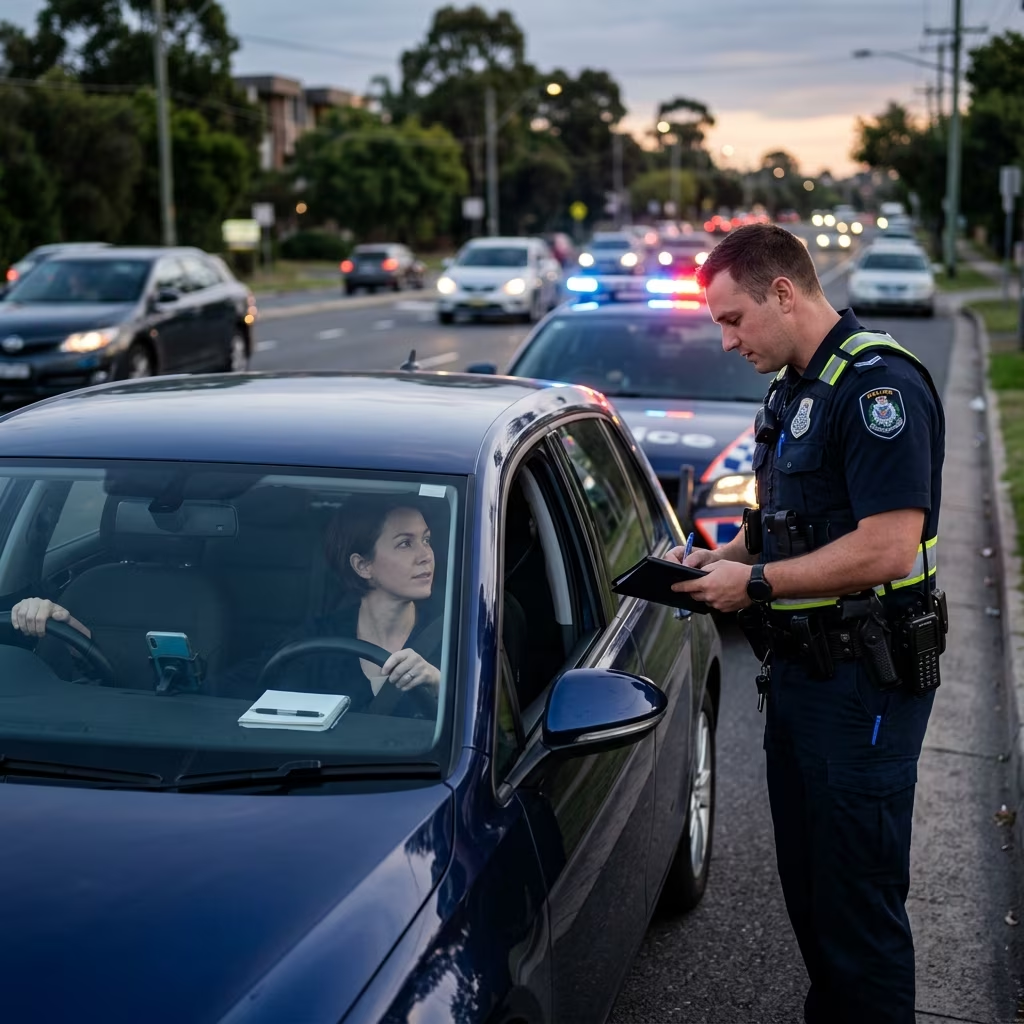
When you first notice flashing lights or hear a siren behind you, the law expects you to respond promptly and safely.
Step-by-Step Actions for Drivers
- Signal and pull over: Activate your turn signal and pull as far to the right as is safe, or into a nearby safe area such as a shoulder or parking lot.
- Stop completely: Come to a full stop, ideally in a location where the officer can safely stand beside your vehicle.
- Secure the vehicle: Turn off your engine and any loud audio devices. At night, turning on your interior light improves visibility.
- Stay inside: Remain in the driver’s seat unless the officer instructs you to get out of the vehicle.
- Hands visible: Place your hands on the steering wheel; passengers should keep their hands in plain sight as well.
Once the officer approaches, roll down your window enough to talk and exchange documents. If you are lawfully armed, many jurisdictions expect you to calmly disclose the presence of a weapon early in the encounter, according to local law enforcement guidance.
Your Legal Obligations During a Traffic Stop
While you have extensive rights, you also have specific legal duties. Failing to meet these obligations can lead to additional charges, including licensing violations or obstructing the officer.
Documents You Must Provide
In typical traffic stops, laws require drivers to present three main documents when asked:
- Valid driver’s license
- Vehicle registration
- Proof of insurance
Most states impose a legal duty to display these items on request. If they are not within immediate reach, explain where they are before reaching for them so the officer understands your movements.
Obeying Lawful Orders
Courts generally uphold an officer’s authority to issue certain instructions during a stop, such as asking you to:
- Remain in or exit the vehicle.
- Place your hands in a visible location.
- Refrain from sudden or suspicious movements.
Refusing straightforward safety-related instructions can escalate the encounter and potentially lead to additional charges. However, lawful orders do not cancel out your constitutional rights, such as the right to remain silent or the right to refuse consent to a search.
Understanding Your Right to Remain Silent
The right to remain silent arises from constitutional protections against self-incrimination. Civil rights organizations emphasize that both drivers and passengers may choose not to answer questions beyond basic identification information.
Which Questions You May Decline to Answer
After you have provided your license, registration, and proof of insurance, you generally are not required to answer questions such as:
- “Where are you coming from?”
- “Where are you going?”
- “Have you been drinking?”
- “Is this your car?” (if registration already shows this)
Instead, you can calmly say something like, “I choose to remain silent,” or “I do not wish to answer questions.” Once you invoke this right, avoid continuing the conversation about the incident.
How Your Silence Affects the Stop
Choosing silence does not give the officer a legal basis to punish you, but it may lead to a different tone in the interaction. A respectful, firm statement of your rights usually works better than a confrontational refusal.
| Officer Question or Request | Recommended Response |
|---|---|
| “Have you had anything to drink tonight?” | “I prefer not to answer any questions. I am exercising my right to remain silent.” |
| “Do you mind if I look through your car?” | “I do not consent to any searches.” |
| “Why were you driving so fast?” | “I would like to resolve this in court if necessary and prefer not to discuss it here.” |
Vehicle Searches: When Police May Look Inside Your Car
One of the most important legal topics during traffic stops is when and how officers can search your vehicle. You have a constitutional right to be free from unreasonable searches, but there are exceptions that allow police to search under certain conditions.
Consent Searches
Officers often request permission by saying something like, “Do you mind if I search your car?” If you say yes, they can legally search without needing additional justification. Attorneys and civil rights groups consistently advise drivers not to consent casually, because consent can broaden what the officer is allowed to inspect.
If you wish to refuse, you may say, “I do not consent to any searches,” and avoid arguing further.
Searches Based on Probable Cause
Even if you refuse consent, officers may conduct a search if they have probable cause—a reasonable belief based on specific facts that evidence of a crime is present. Examples can include:
- Obvious smell of illegal drugs or alcohol.
- Visible contraband in plain view, such as an open container of alcohol or illegal substances.
- Admission by someone in the vehicle that a crime has occurred.
Whether probable cause exists is often disputed in court after the fact. The roadside is not the place to litigate; your best approach is to state your objection calmly and, if a search proceeds anyway, focus on documenting what happens for future review by a lawyer or the court.
Searches Incident to Arrest
If a driver is lawfully arrested during a traffic stop, officers generally may conduct a limited search of the person and areas within immediate reach, as well as certain parts of the vehicle, depending on the circumstances. The underlying legal standards can be complex, but if you are placed under arrest, two immediate steps are recommended:
- Clearly state that you want an attorney and will not answer questions without legal counsel present.
- Avoid physically resisting; courts and legal experts emphasize that resistance can result in additional charges and increased risk.
Tickets, Citations, and Challenging the Officer’s Decision
If the officer believes you violated traffic laws, you may receive a ticket or citation. Official guidance from law enforcement agencies advises that arguments about guilt or innocence should be reserved for court.
Signing a Ticket
In many jurisdictions, signing a traffic ticket simply acknowledges that you received the citation and understand your obligation to respond; it is not an admission of guilt. Refusing to sign can create additional problems and, in some areas, may even lead to arrest.
How to Contest a Citation
- Read the ticket carefully: Note the specific violation, date, and location.
- Observe deadlines: Tickets typically state how long you have to pay or request a hearing.
- Gather evidence: Photographs of the scene, witness statements, or documents (e.g., repair records) can support your case.
- Consult legal counsel: For more serious allegations or repeat offenses, a traffic or criminal defense attorney can explain your options.
If you believe the officer behaved improperly, official guidance suggests contacting the agency soon after the stop and asking to speak with a supervisor. Filing a formal complaint allows internal review of the officer’s conduct.
Documenting and Following Up After the Stop
Legal practitioners often recommend writing down details of the encounter as soon as you can, especially if citations, searches, or arrests occurred. An accurate record can be important if you later challenge the stop or file a complaint.
Key Details to Record
- Officer’s name, badge number, and agency (if known).
- Time and location of the stop.
- Reason given for the stop.
- What questions were asked and how you responded.
- Whether the officer requested or conducted a search.
- Any passengers present and their observations.
In some states, you may also record the interaction using audio or video, as long as it does not interfere with police duties and complies with local recording laws. Checking your jurisdiction’s rules in advance is wise.
Passengers’ Rights and Responsibilities
Passengers share many of the same rights as drivers. Civil liberties guidance notes that passengers can ask whether they are free to leave and can choose to remain silent as well.
- Identification: Passengers are sometimes asked for ID, depending on the situation and local law. Refusing may have different consequences in different jurisdictions.
- Right to leave: A passenger may ask, “Am I free to go?” If the answer is yes, the passenger may calmly leave the scene.
- Non-interference: Passengers should avoid actions that could be seen as obstructing the officer, such as arguing, refusing lawful commands, or interfering physically.
Quick FAQ: Common Legal Questions About Traffic Stops
Do I have to answer questions after giving my license and registration?
In most situations, you are not legally required to answer investigative questions such as where you have been, where you are going, or whether you have consumed alcohol. You may calmly invoke your right to remain silent.
Can the officer search my car just because I was speeding?
A simple traffic violation like speeding does not, by itself, create a right to search your vehicle. Without your consent, police typically need probable cause or another recognized legal basis to conduct a search.
Should I argue if I think the ticket is unfair?
Law enforcement and legal sources agree that arguments should be saved for court. Disputing the officer’s judgment at the roadside usually does not help and can prolong or intensify the encounter.
Can I record the traffic stop?
Many jurisdictions allow filming or recording of police in public, provided you do not interfere with their duties. You should stand at a safe distance and comply with lawful instructions. Always confirm your local recording laws in advance.
What should I do if I’m arrested during the stop?
If you are arrested, do not resist physically. Clearly state that you want an attorney and will not answer questions without counsel. Afterward, contact a qualified lawyer and share your notes about the interaction.
Practical Checklist for Drivers
Because traffic stops can unfold quickly, having a simple mental checklist helps you respond consistently and safely.
- Pull over safely, signal, and stop fully.
- Turn off the engine and keep your hands visible.
- Provide your license, registration, and proof of insurance when asked.
- Remain polite and calm; avoid sudden movements or confrontational language.
- Use clear statements to assert your rights: remain silent, decline consent to searches, request an attorney if needed.
- Accept a citation without arguing and review it later to decide whether to challenge it.
- After the stop, write down what happened and seek legal advice if you are unsure of your rights or next steps.
Understanding these principles before you are pulled over makes it easier to stay composed, comply with the law, and ensure that any disputes are handled in the proper forum—usually the courtroom, not the roadside.
References
- What to Expect During a Traffic Stop — Michigan State Police. 2023-05-01. https://www.michigan.gov/msp/services/safetytips/what-to-expect-during-a-traffic-stop
- What to Do and Expect When Pulled Over by Law Enforcement — American Association of Motor Vehicle Administrators (AAMVA). 2022-08-10. https://www.aamva.org/law-enforcement/what-to-do-when-stopped-by-law-enforcement
- Traffic Stops by Police & Your Legal Rights — Justia. 2021-11-15. https://www.justia.com/traffic-tickets/police-stops/
- Stopped by Police — American Civil Liberties Union (ACLU). 2022-06-30. https://www.aclu.org/know-your-rights/stopped-by-police
- Know Your Rights: What to Do When Approached, Questioned, Detained, or Stopped by Law Enforcement — Poota Law. 2023-03-20. https://www.pootalaw.com/blog/know-your-rights-what-to-do-when-approached-questioned-detained-or-stopped-by-law-enforcement/