
Leaving Children in a Cold Car: Legal Risks
How winter conditions, child safety laws, and criminal charges can collide when a child is left alone in a vehicle.
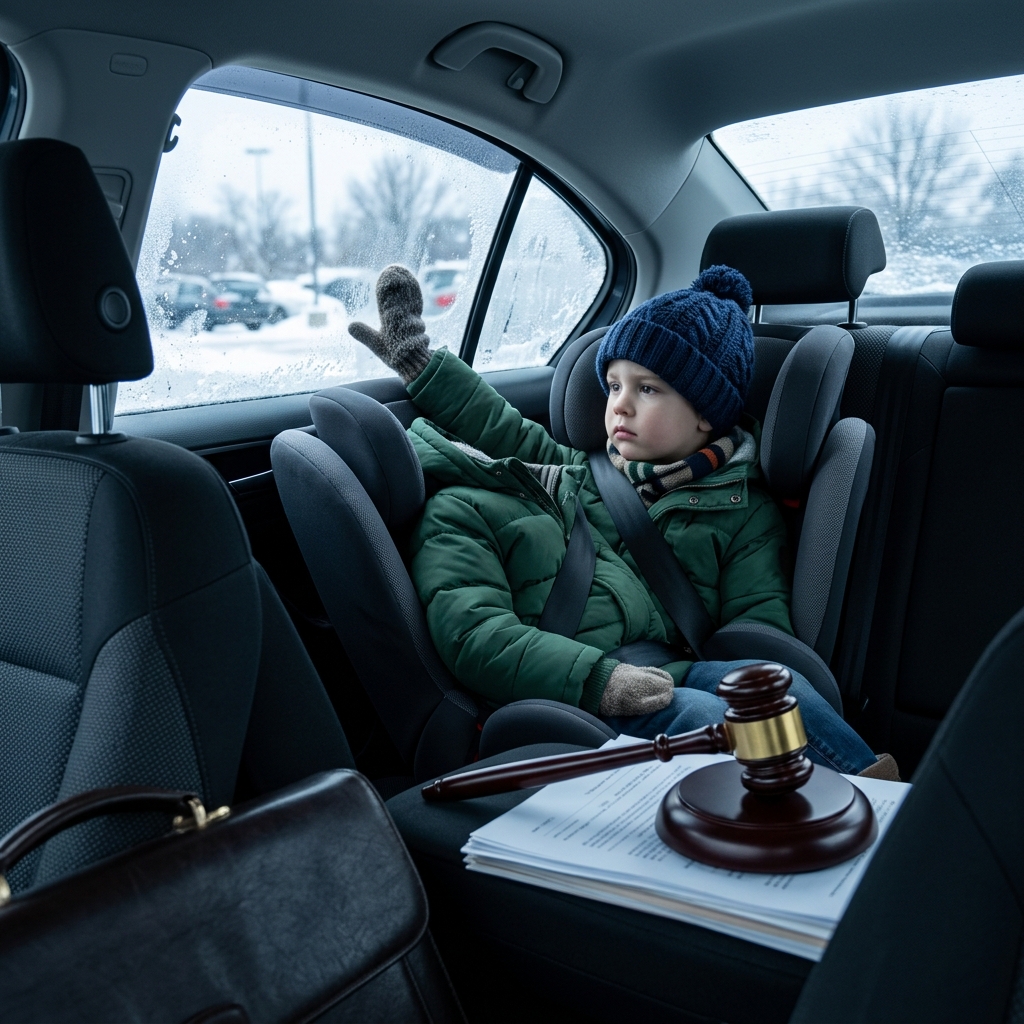
Leaving a child alone in a vehicle is dangerous in any season, but cold weather creates a different set of risks that are easy to underestimate. A short errand, a sleeping child, or a running heater can make the situation feel harmless, yet the law may treat it very differently.
Depending on the state, leaving a child unattended in a car can lead to a citation, a child endangerment case, or more serious charges if the child is hurt. Winter does not make the practice safer; in many situations, it can make the danger worse because children can lose body heat quickly, especially if the car stalls, the heat stops, or the child is too young to respond effectively.
Why cold weather does not make the situation safe
Many people associate vehicle danger with hot weather, but cold weather can also threaten a child’s health. Young children have less ability than adults to regulate body temperature, and a parked car can become cold rapidly if the engine is off or the heating system is not working.
Even if the car is running, leaving a child alone creates other risks. The child may move around the vehicle, become frightened, or accidentally put the car in motion if the vehicle is not secured properly. A child who cannot unbuckle safely or get out in an emergency is also at risk if the adult is delayed.
- Cold air can contribute to hypothermia if the child is exposed long enough.
- A running vehicle may create carbon monoxide risks if exhaust fumes are trapped.
- A child left alone may be exposed to traffic, kidnapping, or accidental injury.
- Winter clothing can create a false sense of security, even though it does not replace adult supervision.
How the law usually treats unattended children
There is no single nationwide rule that governs every situation. Instead, state laws vary widely, and local prosecutors may rely on general child endangerment statutes if there is no specific law about unattended children in vehicles. Some states have statutes that expressly forbid leaving young children alone in a car, while others use broader safety laws to address the conduct.
Where a specific statute exists, the law may define the child’s age, the length of time the child was left alone, and whether the child was actually harmed. In states without a specific vehicle statute, prosecutors may still argue that the conduct created an unreasonable risk to the child’s health or safety.
| Legal issue | What it can mean |
|---|---|
| Specific state statute | A law may directly prohibit leaving a child unattended in a vehicle. |
| Child endangerment law | General laws may apply if the child was exposed to danger. |
| Age of the child | Rules often focus on younger children, but the exact age threshold varies. |
| Condition of the vehicle | Running, locked, unlocked, heated, or stranded vehicles may change the analysis. |
| Actual harm | Some charges do not require injury, while others become more serious if harm occurs. |
Possible criminal consequences
The most common consequence is a misdemeanor citation or arrest, but more serious charges are possible if the child is injured, becomes ill, or dies. Authorities may view the circumstances as evidence of neglect or reckless conduct rather than a simple mistake.
Possible penalties can include fines, probation, counseling requirements, parenting classes, community service, or jail time. If the child suffers a serious injury, prosecutors may pursue charges such as child endangerment, neglect, reckless endangerment, or another offense under state law.
- A first violation may be handled as a minor offense in some jurisdictions.
- Repeated incidents can lead to harsher treatment.
- If the adult was intoxicated, distracted, or otherwise impaired, the case may become more serious.
- If the child is very young, prosecutors may argue that the risk was especially obvious.
Why prosecutors may treat these cases seriously
Courts and prosecutors often focus on what a reasonable adult should have understood at the time. If the weather was severe, the child was too young to protect himself or herself, or the vehicle created a foreseeable hazard, the state may argue that the adult acted recklessly.
The fact that the adult intended to return quickly does not always eliminate liability. A brief stop can still be enough to create danger, especially if the adult becomes delayed, distracted, or unable to return promptly. In criminal cases, the key question is often whether the child was exposed to a risk that a reasonable parent or caretaker would have avoided.
Situations that can make the case worse
Not every case is the same. Some facts increase the likelihood of an arrest, a child welfare report, or a stronger criminal case.
- The child was very young or unable to communicate clearly.
- The weather was extremely cold, windy, or wet.
- The vehicle was parked far from the adult or out of sight.
- The car was left running without proper safeguards.
- The child was asleep and could not easily wake up or respond.
- The adult left more than one child unattended.
- The vehicle was unlocked, increasing the risk of a child wandering off.
In some cases, authorities may also consider whether the child was dressed appropriately for the weather, whether the adult had a history of similar conduct, and whether the adult ignored safer alternatives.
Could this become a child welfare matter?
Yes. Even when criminal charges are not filed, a report to child protective services or another child welfare agency may follow. These agencies look at whether the child was left in circumstances that placed safety at risk, and they may investigate the home environment, supervision history, and overall caregiving situation.
That does not mean every mistake leads to removal of the child from the home. In many cases, the outcome is an investigation, a warning, or a requirement to participate in services. However, repeated incidents or serious harm can increase the likelihood of more intrusive intervention.
Common defenses and legal arguments
A defense attorney may examine the facts carefully before deciding how to respond. Some cases involve misunderstandings, a child left in the car for only a moment, or a genuine emergency. The defense may also argue that the state cannot prove the child was actually at risk under the law that applies.
- The child was not truly unattended because another responsible person was present.
- The time period was too short to violate the statute in that state.
- The vehicle was in a safe location and the circumstances did not create a real risk.
- The adult was responding to an emergency and acted reasonably.
- The prosecution cannot prove the required mental state, such as knowingly or recklessly leaving the child alone.
These defenses depend heavily on state law and the exact facts. A defense that works in one jurisdiction may fail in another where the statute is broader or the age threshold is higher.
How state laws can differ
Some states focus on children below a certain age, while others use a broader standard that depends on whether the child was left in conditions that endangered health or safety. A few states may treat the conduct as a traffic-related offense, while others handle it under criminal code provisions related to neglect or abuse.
That variation matters because a person may believe the conduct is legal based on what is allowed in one state, only to face charges in another. Families who travel often should be especially cautious because crossing state lines can change the legal consequences of leaving a child alone in a car, even briefly.
| State-law pattern | Typical approach |
|---|---|
| Age-based rule | Law applies only to children below a certain age. |
| Risk-based rule | Law applies when the child is exposed to danger. |
| Time-based rule | Law may specify a maximum period the child can be left alone. |
| General child endangerment rule | Prosecutors use broader criminal statutes instead of a special vehicle law. |
Safer habits for parents and caregivers
The best way to avoid legal and safety problems is to never leave a child alone in a vehicle. Even a quick stop can turn into an emergency if something goes wrong. Building a few simple routines into everyday life can reduce the chance of making a dangerous mistake.
- Take the child with you whenever possible.
- Use reminders such as a phone, bag, or key in the back seat.
- Check the back seat every time before locking the car.
- Keep children buckled and supervised during loading and unloading.
- Teach older children never to play in or around parked cars.
- Make a backup plan for errands so the child is never left behind.
Caregivers should also be careful about assumptions. A child who is quiet, sleeping, or covered by blankets is still vulnerable. The law and safety experts generally focus on supervision, not on whether the child appears comfortable for a few minutes.
What to do if you see a child alone in a cold car
If you see a child alone in a vehicle during cold weather, treat it as a potential emergency. Look for signs that the child is in distress, such as shivering, confusion, lethargy, or a lack of response. If the child appears to be in immediate danger, call emergency services right away.
It may also be appropriate to alert nearby security, store staff, or law enforcement while keeping the child in view. If the child seems to be in immediate danger and help is not arriving fast enough, follow local emergency guidance. Laws about entering a vehicle to rescue a child can differ, but the first priority is the child’s safety.
Frequently asked questions
Is leaving a child in a cold car always a crime?
Not always, but it can be. The answer depends on state law, the child’s age, the length of time the child was unattended, and whether the circumstances created a risk to health or safety.
Does it matter if the car was running?
Yes. A running car may reduce some cold exposure, but it does not eliminate the legal or safety risks. The child may still be endangered, and the adult may still face liability under a state statute or child endangerment law.
Can a parent be arrested even if nothing bad happened?
Yes. Some laws punish the act of leaving a child alone in unsafe conditions even if the child is not injured. Other charges may become more serious if harm occurs.
What if the child was left for only a few minutes?
A few minutes can still matter. Some laws focus on the conditions and the risk created, not just the length of time. A short absence does not automatically make the conduct legal.
Do the same rules apply to older children?
Not always. Many laws focus on younger children, but older children can still be unsafe if the circumstances are dangerous enough. Courts may look at maturity, ability to respond, and the overall risk.
Why the safest legal choice is also the simplest one
In many cases, the legal analysis starts with the same practical rule: if a child is too young to be left alone at home, the child is too young to be left alone in a car. Winter conditions do not change that logic, and in some situations they make the danger more severe.
Parents and caregivers who plan ahead, stay alert, and use consistent habits are far less likely to face an avoidable emergency. The law may vary from state to state, but the underlying message is consistent: a parked vehicle is not a substitute for supervision.
References
- Helpful Tips to Keep Your Child Safe: NOT EVEN FOR A MINUTE — New York State Office of Children and Family Services. 2024-01-01. https://ocfs.ny.gov/publications/Pub5036/
- Look Before You Lock warns Colorado parents about the dangers of hot cars — Colorado Department of Transportation. 2025-08-22. https://www.codot.gov/news/2025/august/look-before-you-lock-dangers-of-hot-cars
- Unattended Children in Vehicle State Laws — Kids and Car Safety. 2026-01-01. https://www.kidsandcars.org/laws/unattended-children-in-vehicle
- What is the Law on Leaving Children in the Car? — Walter Clark Legal Group. 2024-01-01. https://walterclark.com/blog/law-leaving-children-car/
- California Vehicle Code Section 15620 — California Legislative Information. 2026-01-01. https://leginfo.legislature.ca.gov/
Similar Articles








Read full bio of Sneha Tete




