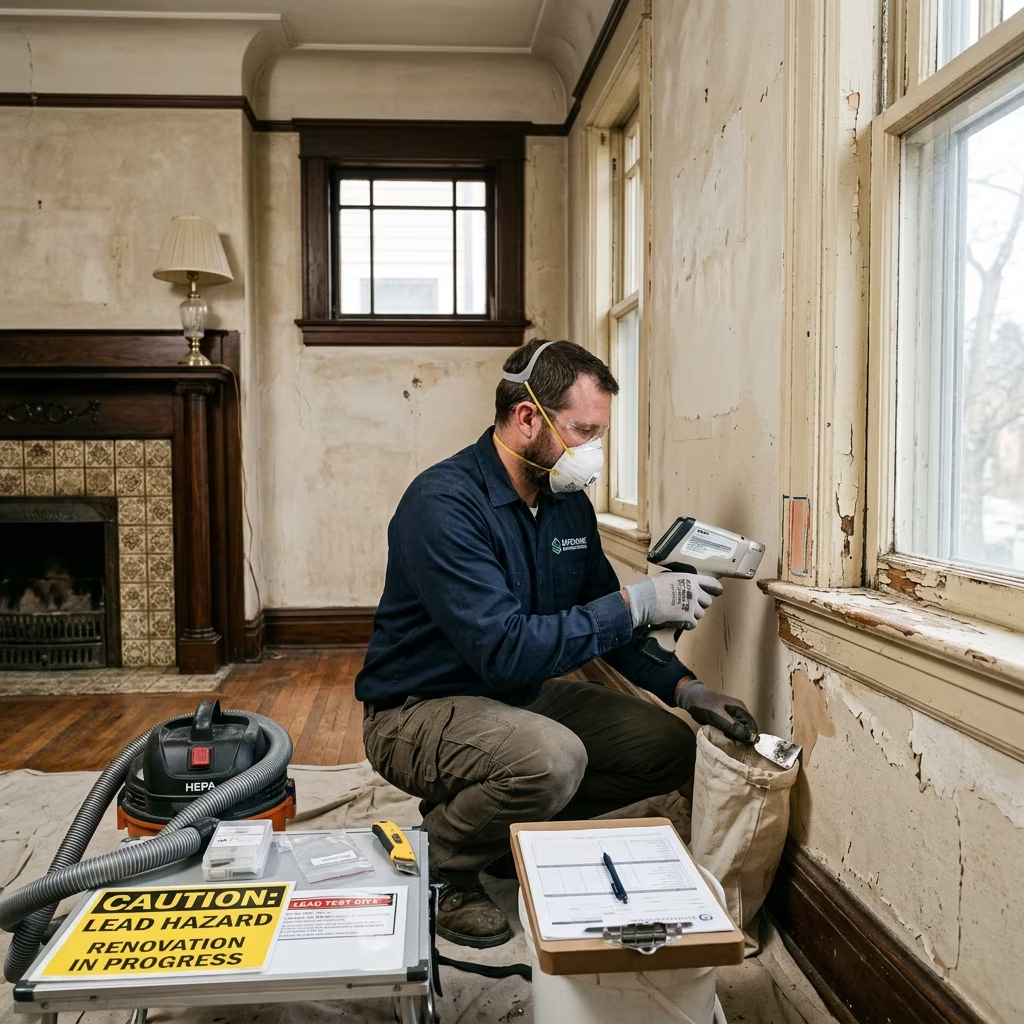
Homes built before 1978 deserve extra caution because they are more likely to contain lead-based paint or lead dust that can become a health hazard when disturbed. The safest approach is to treat older painted surfaces carefully, test when needed, and use lead-safe practices during repairs or renovations.
Why older housing still raises lead concerns
The federal ban on residential lead-based paint took effect in 1978, but that does not mean every home built after that year is automatically free from risk. Older paint may remain under newer layers, and some homes built near the transition period may still contain lead hazards from previous materials or contamination.
Lead becomes especially dangerous when it turns into dust or chips that children can touch, inhale, or accidentally swallow. This makes peeling paint, friction areas like windows, and renovation debris the most common sources of concern in older properties.
Who needs to pay the closest attention
Lead exposure is most concerning for children, pregnant women, and households planning major remodeling. Young children are more vulnerable because they spend time near floors, windowsills, and other surfaces where dust settles, and they are more likely to put hands or objects in their mouths.
Renters, buyers, and homeowners all need to take lead seriously if a property was built before 1978. Even if a house looks well maintained, a hidden hazard can appear once surfaces are sanded, cut, or otherwise disturbed.
How to judge the risk before you move in or start work
The age of the home is the first clue, but not the only one. According to EPA guidance, older homes are more likely to contain lead-based paint, and the safest default for pre-1978 housing is to assume lead may be present unless testing shows otherwise.
There are three practical ways to evaluate the property:
- Assume lead may be present and plan protective steps accordingly.
- Hire a certified inspector or risk assessor to determine where lead-based paint or lead hazards exist.
- Use recognized testing methods only when they are appropriate for the setting and performed correctly.
A professional assessment is especially useful if you want to know which rooms, surfaces, or exterior areas need extra care before repairs begin.
Common places where lead hazards show up
Lead risks are not evenly spread throughout a house. They often appear in high-wear areas where paint rubs, flakes, or gets damaged over time. Windows, door frames, stair railings, porches, and trim are especially likely to create dust when painted surfaces deteriorate or are opened and closed repeatedly.
Dust can also collect on floors, windowsills, and window wells, where children may crawl, sit, or play. The CDC notes that regular wet cleaning of floors and horizontal surfaces helps reduce the dust that can carry lead contamination.
Renting an older home: what tenants should ask
If you are renting a pre-1978 home or apartment, ask the landlord whether the property has any known lead-based paint concerns or past testing. A reasonable rental review should include attention to peeling paint, chipped surfaces, and any visible deterioration inside or outside the unit.
If you notice cracking, peeling, or chipping paint, report it quickly and keep children away from the affected area until repairs are made. Public health guidance emphasizes that peeling paint should not be ignored, especially in homes where children live or visit frequently.
- Check windows, doors, and baseboards for wear.
- Ask whether any prior lead inspection or risk assessment was done.
- Request repairs from qualified professionals if paint is deteriorating.
- Keep up with wet cleaning to reduce dust buildup.
Buying a pre-1978 home: questions that matter
When buying older housing, the key issue is not just whether lead might exist, but whether the hazard is active. A home with intact paint may be manageable with routine maintenance, while a home with damaged paint or recurring dust problems can require more extensive action.
Buyers should consider whether they want the certainty of a professional inspection before closing. EPA guidance makes clear that a certified inspector or risk assessor can identify both lead paint and current lead hazards in paint, dust, or soil.
Buying decisions should also account for planned renovations. If you intend to remodel soon after purchase, testing and lead-safe planning become even more important because repair work can release contaminated dust.
Renovating safely without spreading dust
Renovation work is one of the biggest ways lead exposure happens in older homes. Activities such as sanding, scraping, cutting, and window replacement can send fine lead dust into the air and across nearby surfaces.
That is why EPA and CDC guidance both stress using trained, lead-safe certified professionals for work that may disturb old paint. These workers are trained to contain dust, clean properly, and reduce the chance that contamination spreads to the rest of the home.
| Project type | Lead risk level | Safer approach |
|---|---|---|
| Minor touch-up on intact paint | Lower | Use careful cleaning and avoid aggressive scraping. |
| Window replacement or sanding | Higher | Use lead-safe certified contractors and contain dust. |
| Large remodeling project | Highest | Plan testing, isolation, and professional cleanup before work begins. |
Everyday steps that reduce exposure
You do not need to wait for a major project to lower lead risk. Simple housekeeping and maintenance steps can make a meaningful difference, especially in older homes where dust control matters every day.
- Wet-mop floors and wet-wipe windowsills and other flat surfaces.
- Keep painted surfaces in good condition so they do not peel or flake.
- Use doormats and remove shoes to reduce tracked-in soil and dust.
- Wash hands often, especially for children after playing outside.
- Keep children away from peeling paint and chewable painted surfaces.
These steps matter because lead dust can settle invisibly and then move through normal household activity. Routine cleaning with water-based methods is more effective than dry sweeping, which can stir dust back into the air.
Signs that call for immediate action
Some situations deserve quick attention rather than routine monitoring. Peeling or chipping paint, visible dust after repair work, or a child who may have been exposed to old paint or contaminated soil are all reasons to act fast.
If a renovation has already started and old paint was disturbed, keep children and pregnant women out of the work area until cleanup is complete. CDC guidance specifically recommends separating children from renovation zones and from cleanup activities that may spread dust.
What professional testing can tell you
Professional testing can answer different questions depending on the method used. An inspection can identify whether lead-based paint is present and where it is located, while a risk assessment can determine whether there are current hazards from paint, dust, or soil.
That distinction matters. A home may contain lead paint without posing an immediate hazard if the surface is intact and well maintained. But a home with deteriorating paint or contaminated dust may need corrective action, not just awareness.
Frequently asked questions
Is every pre-1978 home dangerous?
No. Many older homes can be lived in safely if painted surfaces are intact and dust is managed carefully. The risk rises when paint deteriorates or renovation disturbs old materials.
Can lead be present in homes built after 1978?
Yes, in limited cases. While 1978 is the federal cutoff for residential lead-based paint, some newer homes may still have older materials, residual contamination, or other lead sources that deserve attention.
Do I need a professional before painting or remodeling?
If you suspect lead may be present, using a certified lead-safe professional is the safest course, especially for work that disturbs paint or creates dust.
What is the simplest way to lower risk right now?
Keep paint in good condition, clean with wet methods, and avoid disturbing old painted surfaces unnecessarily. Those basic steps are among the most practical ways to reduce lead exposure in an older home.
References
- Protect Your Family from Sources of Lead — U.S. Environmental Protection Agency. 2024-05-15. https://www.epa.gov/lead/protect-your-family-sources-lead
- About Lead in Paint — Centers for Disease Control and Prevention. 2024-02-09. https://www.cdc.gov/lead-prevention/prevention/paint.html
- How can I tell if my home contains lead-based paint? — U.S. Environmental Protection Agency. 2024-05-15. https://www.epa.gov/lead/how-can-i-tell-if-my-home-contains-lead-based-paint
- Homes built shortly after 1978 aren’t necessarily safe from lead paint — Queens Daily Eagle. 2024-03-18. https://queenseagle.com/all/homes-built-shortly-after-1978-arent-necessarily-safe-from-lead-paint
- You Can Live Lead Safe In An Older Home — Cortland County Environmental Health. 2023-08-01. https://www.cortlandcountyny.gov/DocumentCenter/View/5519/You-Can-Live-Safe-In-An-Older-Home-PDF