
Launching a Hemp Farm: Essential Steps for Success
Navigate the complexities of starting a hemp farm with expert guidance on regulations, soil prep, planting, and market strategies for profitability.
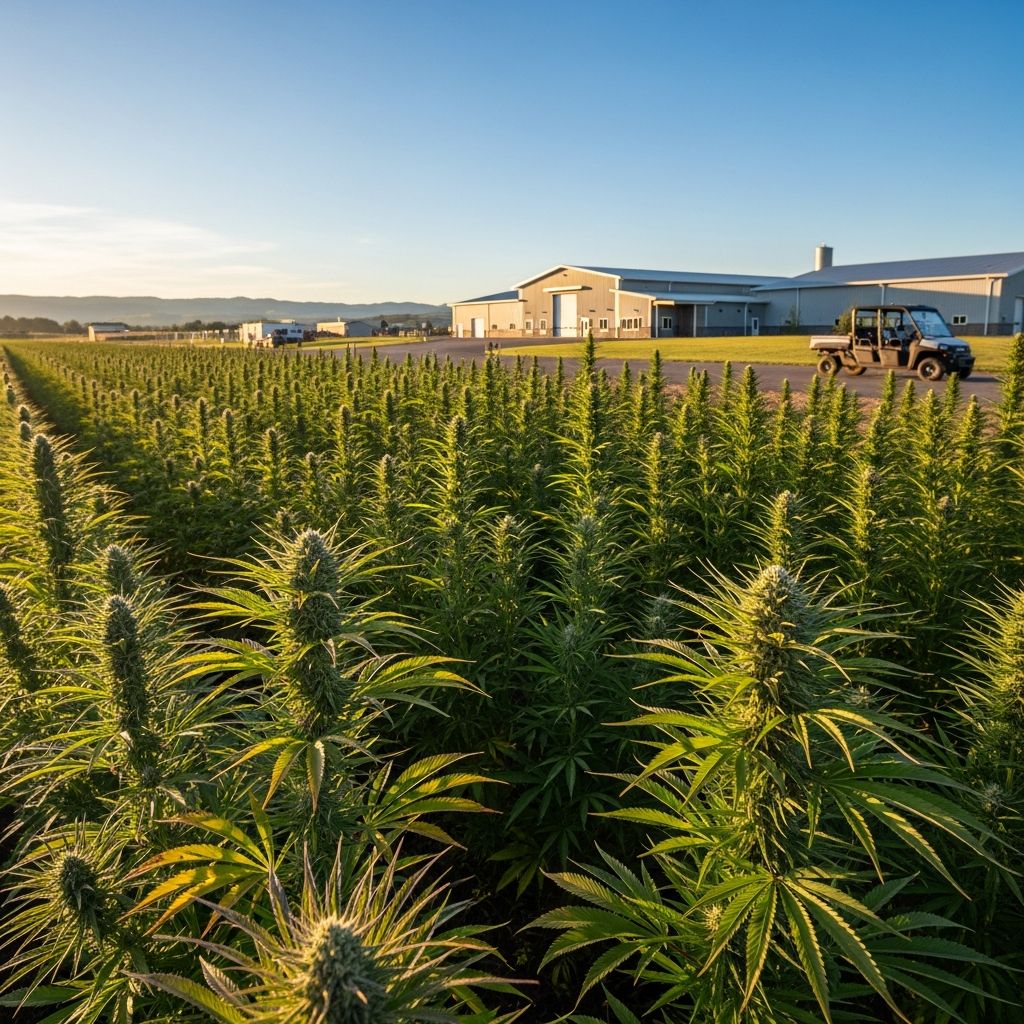
Hemp farming offers a promising avenue for agricultural entrepreneurs due to its versatility in producing fiber, seeds, grains, and CBD products. With rising demand and supportive policies, starting a hemp operation requires careful planning across legal, agronomic, and business domains. This guide outlines critical phases to build a viable farm from the ground up.
Navigating Legal and Regulatory Frameworks
Compliance forms the cornerstone of any hemp venture. Hemp, defined as Cannabis sativa L. with THC levels below 0.3%, falls under strict oversight by federal and state authorities. Producers must secure licenses from the USDA, state departments of agriculture, or tribal entities before planting.
Key steps include submitting applications with detailed field information, undergoing background checks, and agreeing to THC testing protocols. Licensed growers report planted acreage to the local Farm Service Agency (FSA), specifying license numbers and lot identifiers for greenhouses or fields. Initial costs for a 10-acre plot typically range from $600 to $800, covering registration fees ($150) and per-acre THC testing ($10).
Regulations vary by state; for instance, some mandate site inspections and destruction of non-compliant crops. Always consult your state’s department of agriculture for current rules, as updates occur frequently. Failure to comply risks fines, crop loss, or license revocation.
Selecting and Preparing Optimal Growing Sites
Site choice profoundly impacts yield and quality. Hemp flourishes in well-drained soils with full sun exposure of 6-8 hours daily, avoiding flood-prone or shaded areas. Conduct thorough soil tests to assess pH (ideal 6.0-7.5), nutrient levels (N, P, K, micronutrients), and organic matter.
Amend based on results: add lime for acidity, compost for fertility, or till deeply for aeration since hemp develops extensive roots. Prepare a fine, level seedbed using moldboard plows followed by disc or rotary tillage to eliminate weeds and ensure even germination.
| Soil Parameter | Optimal Range | Amendment Strategy |
|---|---|---|
| pH | 6.0-7.5 | Lime (raise), Sulfur (lower) |
| Organic Matter | 3-5% | Compost/Manure |
| Nitrogen (N) | 100-150 lbs/acre | Organic fertilizers |
| Drainage | Well-drained | Tilling/Bedding |
For fiber hemp, select larger fields; grain or CBD varieties suit smaller plots. Start small—1-2 acres for novices—to refine techniques before scaling.
Choosing Hemp Varieties and Seeds
Variety selection aligns with end goals: fiber (tall, sturdy stalks), grain (pollinator-friendly), or CBD (resinous flowers). Match cultivars to local climate, soil, and market needs. Certified seeds ensure genetic purity and compliance.
- Fiber: High-density planting (35-55 lbs/acre), harvested early for bast fibers.
- Grain: 20-30 lbs/acre, mid-season harvest for seeds.
- CBD: Feminized clones or auto-flowering seeds for higher cannabinoid yields.
Source from reputable suppliers; pre-soak seeds 8-12 hours to boost germination rates at 65-70°F. Aim for uniform emergence within 10-14 days.
Mastering Planting and Crop Management
Timing is crucial: plant fiber hemp mid-May to mid-June, grain early May to early June in northern climates. Use seed drills for precise depth (1-2 inches) and spacing.
Fertigation delivers nutrients efficiently; systems like precise injectors maintain NPK ratios (e.g., 3:1:2 for vegetative growth). Water consistently to keep soil moist like a wrung-out sponge, adjusting for humidity (40-70% vegetative, 40-50% flowering).
Lighting for indoor starts: 18-24 hours/day with high-output LEDs. Outdoors, monitor for 110-120 day cycles to maturity.
Pest, Disease, and Weed Control Strategies
Hemp’s rapid growth suppresses weeds if seeded densely, but early vigilance is key. Scout for aphids, armyworms, or fungal issues like gray mold; promote biodiversity with cover crops.
Use integrated pest management (IPM): rotate crops, introduce beneficial insects, and apply approved organic sprays. Hemp resists many pests but monitor THC impacts from stress.
- Preventive: Air circulation via fans, proper spacing.
- Cultural: Healthy soil reduces susceptibility.
- Biological: Ladybugs for aphids.
Harvesting, Processing, and Storage Techniques
Harvest at optimal stages: fiber pre-flower (60-70 days), grain at seed maturity (100-120 days), CBD post-flower. Use mowers for fiber, combines for grain; dry immediately to <15% moisture.
Post-harvest: grade seeds, bale fiber, or extract CBD. Store in cool, dry conditions to preserve quality. Contract with processors for off-take agreements.
Financial Planning and Risk Management
Budget for seeds ($200-500/acre), equipment, labor, and testing. Yields vary: 1,000-2,000 lbs fiber/acre, 500-1,500 lbs grain/acre. Explore crop insurance, now available in select states.
Secure markets via contracts for CBD biomass or grain. Diversify into value-added products like textiles or oils for higher margins.
Business Development and Scaling Up
Develop a plan: project yields, costs, revenues. Partner with buyers early. Leverage USDA programs for loans once compliant. Scale gradually, incorporating data from initial crops.
Frequently Asked Questions (FAQs)
What licenses do I need for hemp farming?
Obtain a production license from USDA, state, or tribe, plus report acreage to FSA.
What’s the best soil pH for hemp?
6.0-7.5; test and amend accordingly.
When should I plant hemp?
Mid-May to mid-June for fiber in the Northeast.
How much does it cost to start on 10 acres?
$600-800 for basics like fees and testing.
Is crop insurance available for hemp?
Yes, private options in states like Wisconsin.
Can I grow hemp organically?
Yes, with proper cultivar, planting, and pest management.
References
- How to Start a Hemp Farm with the Right Variety and Tools — Dosatron. 2023. https://www.dosatron.com/en-nam/blog/how-to-start-a-hemp-farm/
- Growing Industrial Hemp as an Organic Cash Crop — Rodale Institute. 2020-04-01. https://rodaleinstitute.org/science/articles/growing-industrial-hemp-as-an-organic-cash-crop/
- Industrial Hemp Production — Penn State Extension. 2023. https://extension.psu.edu/industrial-hemp-production
- Farming Hemp 101 — Legacy Hemp. 2023. https://legacyhemp.com/farming-hemp-101
- A Beginner’s Basics Guide about How to Grow Hemp — Gardeners.com. 2023. https://www.gardeners.com/blogs/techniques-tools-articles/grow-hemp-9405
- HEMP CULTIVATION MANUAL — HempFlax. 2020. https://www.hempflax.com/wp-content/uploads/Hempflax-Hemp-Cultivation-Manual.pdf
- Hemp and Eligibility for USDA Programs — Farmers.gov (USDA). 2026-03-01. https://www.farmers.gov/your-business/row-crops/hemp
Similar Articles








Read full bio of Sneha Tete




