
Launching a Profitable Cleaning Business
Practical legal, financial, and marketing steps to turn your cleaning skills into a sustainable, profitable service business.
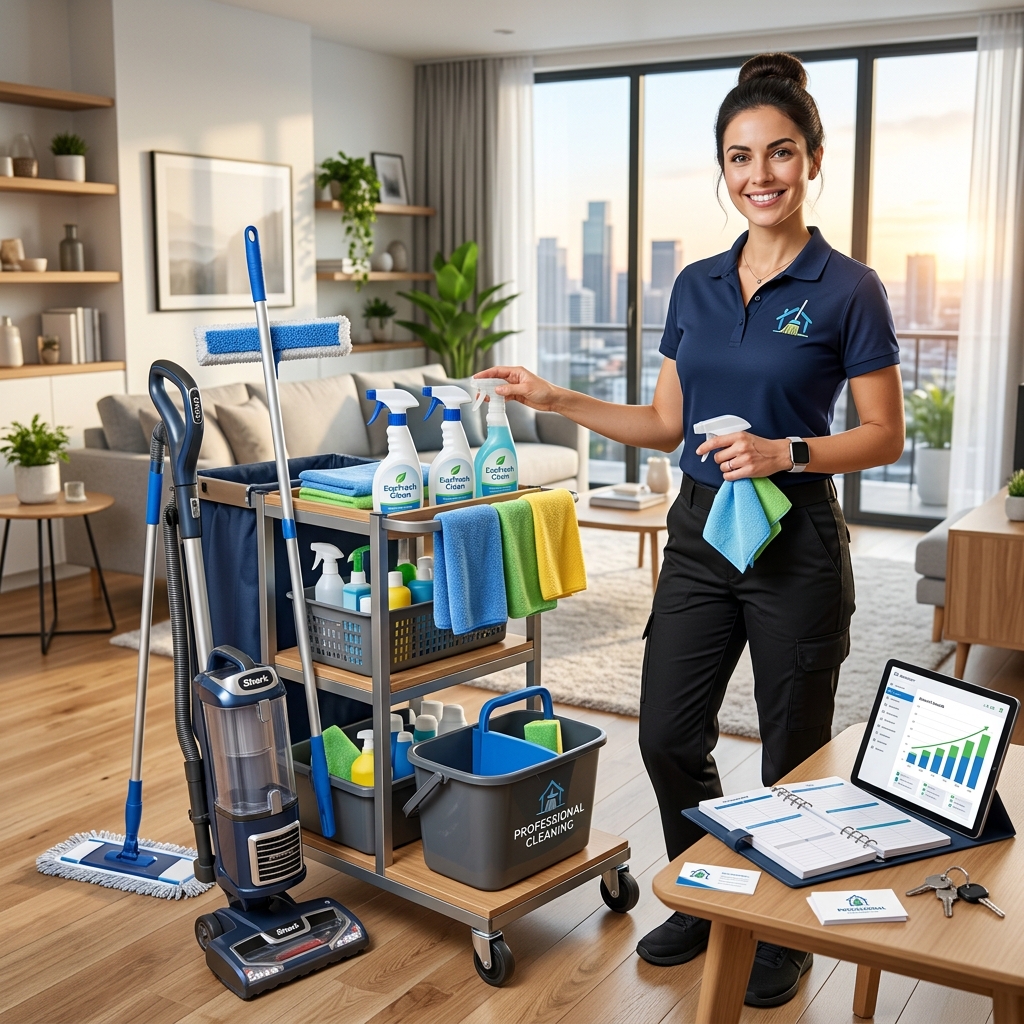
Starting a cleaning business can be one of the most accessible ways to become your own boss, but it still requires solid planning, legal compliance, and smart marketing to be sustainable. This guide walks you through the key decisions and steps from idea to first paying clients, with a focus on doing things legally and building a business that can grow.
Understanding the Cleaning Industry and Choosing Your Niche
Cleaning services cover a wide range of activities, from basic household tidying to specialized industrial sanitation. Clarifying where you fit in the market makes every later decision easier: pricing, equipment, contracts, and marketing all depend on your niche.
Common Cleaning Business Models
You can structure your business around one or more of these core service types:
- Residential cleaning – Regular or one-time cleaning of homes and apartments (weekly, biweekly, monthly, move-in/move-out).
- Commercial janitorial services – Offices, retail spaces, schools, and other workplaces, often after-hours.
- Specialty services – Deep cleaning, carpet and upholstery, post-construction cleanup, window cleaning, or eco-friendly cleaning.
- Short-term rental turnover – Fast, standardized cleaning for vacation rentals and furnished apartments.
Each model has different expectations, margins, and scheduling patterns. For example, residential work may provide recurring weekly revenue but requires strong relationships with individual clients, while commercial contracts can be larger but more formal, often involving bids and written proposals.
Assessing Demand in Your Area
Before you invest in equipment or branding, research your local market:
- List existing cleaning companies and note their advertised services and prices.
- Check reviews to see what customers praise or complain about.
- Observe which niches seem crowded and which appear underserved (e.g., few eco-friendly or post-construction cleaners).
- Consider demographic factors such as household income, number of offices, and local development projects.
Use this information to identify a niche where you can stand out—whether through specialized services, flexible scheduling, green products, or exceptional customer service.
Structuring and Registering Your Cleaning Business
Once you know what you will offer, you need a formal structure that governs taxes, liability, and ownership. Your structure also impacts the paperwork required to operate legally.
Choosing a Legal Structure
Common structures for cleaning businesses include:
- Sole proprietorship – Simple and inexpensive. The business is not separate from you, so you personally bear all liability.
- Limited Liability Company (LLC) – Popular choice; creates a separate legal entity, offering personal liability protection while keeping filings relatively straightforward.
- Corporation – More complex, sometimes used for larger operations or franchise models.
Governments often provide small business guides explaining the steps to register each type. If you anticipate hiring staff or bidding on large commercial contracts, an LLC is commonly recommended for balancing protection and simplicity.
Essential Registrations and Licenses
To operate legally, most cleaning businesses need to complete several registrations and obtain permits:
- Business registration with the appropriate state or national authority, depending on your jurisdiction.
- Business name registration or “Doing Business As” (DBA) filing if you operate under a name other than your personal name.
- Tax ID number (such as an Employer Identification Number) when hiring employees or operating as an LLC or corporation.
- General business license required by many cities or counties for local operation.
- Sales tax registration if your jurisdiction taxes cleaning services or if you sell products alongside services.
Requirements vary by location, so consult your local small business office or official government website for up-to-date rules.
Specialty Permits for Certain Services
Some cleaning niches require additional permits because they involve health or environmental risks:
- Handling hazardous materials (e.g., medical waste, industrial solvents) may require specialized licenses.
- Large commercial or industrial facilities might mandate specific safety training or certifications.
- Environmental regulations can apply if you discharge wastewater or use certain chemicals.
Investigate these obligations early if you plan to offer more advanced services, as they influence costs, training, and insurance.
Planning Finances, Banking, and Insurance
Even lean cleaning businesses need a financial plan that separates personal and business money, accounts for recurring costs, and protects against unexpected events.
Opening a Business Bank Account
Using a dedicated business account is widely recommended for managing cash flow:
- Separates business funds from personal money, simplifying bookkeeping and taxes.
- Supports professionalism when clients pay by check, transfer, or card.
- May be required by your bank, especially once you register as an LLC or corporation.
Your bank may ask for your registration documents, tax ID, and sometimes your operating agreement or bylaws.
Estimating Startup and Operating Costs
Typical expenses for a cleaning business include:
- Basic cleaning supplies and equipment (mops, vacuums, disinfectants).
- Transportation (fuel, vehicle maintenance).
- Insurance premiums.
- Licensing and permit fees.
- Marketing costs (website, online ads, printed materials).
- Payroll and payroll taxes if you hire employees.
Small business guides often encourage preparing a simple cash flow forecast for the first year, estimating monthly income and expenses to gauge how much capital you need.
Protecting Your Business with Insurance
Cleaning involves entering clients’ properties, handling their belongings, and using chemicals. These risks make insurance critical.
Common policies include:
- General liability insurance – Covers bodily injury or property damage claims related to your services.
- Workers’ compensation – Usually required once you hire employees, to cover work-related injuries.
- Commercial auto insurance – If you use vehicles primarily for business.
- Property or equipment coverage – Protects your tools and inventory.
Consult a licensed insurance broker familiar with service businesses in your area to match coverage levels to your risk profile and local regulations.
Defining Services, Pricing, and Contracts
Clear service descriptions, logical pricing, and well-drafted contracts help avoid misunderstandings and protect your revenue.
Designing Your Service Packages
Think in terms of packages instead of vague “cleaning” offers. Examples include:
- Standard recurring home cleaning (kitchen, bathrooms, floors, dusting).
- Deep cleaning (inside appliances, baseboards, detailed bathroom scrubbing).
- Office daily maintenance (trash removal, restroom cleaning, surface sanitizing).
- Special add-ons (window cleaning, carpet shampooing, refrigerator or oven cleaning).
Document exactly what each service includes and excludes. This becomes the basis for your quotes and contracts.
Approaches to Pricing Cleaning Services
Cleaning businesses commonly use three main pricing methods:
| Pricing Method | Description | Best For |
|---|---|---|
| Hourly rates | Charge per hour of labor, useful when task scope varies. | Custom and irregular jobs, detailed organizing, one-off projects. |
| Flat fees | Set a fixed price for a defined package, regardless of time. | Standard recurring home or office cleaning with consistent scope. |
| Square footage pricing | Price per square foot, common in commercial cleaning and large spaces. | Offices, retail spaces, schools, industrial facilities. |
To stay competitive, many advisors suggest reviewing local competitors’ pricing and positioning your rates within a similar range while emphasizing your unique value.
Using Written Contracts and Service Agreements
Formal service agreements are particularly important for commercial and recurring clients. A typical cleaning contract includes:
- Names and contact information for both parties.
- Detailed description of services, frequency, and schedule.
- Payment terms (rate, due dates, late fees, accepted methods).
- Cancellation and rescheduling policies.
- Responsibilities regarding supplies and access to premises.
- Liability limitations and insurance information.
Using written agreements helps manage expectations, supports collections, and can be critical evidence if a dispute arises. For large or complex contracts, consider consulting a legal professional.
Finding Your First Clients and Marketing Your Brand
Once the legal and financial foundations are in place, your priority becomes attracting and retaining clients. Effective marketing combines online visibility, local networking, and consistent service quality.
Building an Online Presence
Because many people search for cleaners online, a simple but clear digital footprint can significantly boost credibility:
- Create a basic website outlining services, service area, pricing approach, and contact details.
- Include testimonials or reviews once you have them.
- Use online booking tools or contact forms to make scheduling straightforward.
- List your business on local directories and map services for discoverability.
Search engine optimization (SEO) for local queries—such as “office cleaning near me”—can help potential clients find you organically.
Targeting Your Ideal Clients
Define your ideal customer profile and tailor your outreach:
- Identify where they spend time online and offline (neighborhood groups, professional associations, property management networks).
- Offer introductory discounts in exchange for honest reviews or referrals.
- Participate in community or business events where you can meet decision-makers.
For commercial clients, consider direct outreach with well-prepared proposals and emphasize reliability, insurance coverage, and experience.
Leveraging Referrals and Reputation
Cleaning businesses often grow through word-of-mouth. Encourage referrals by:
- Delivering consistent, high-quality work and showing up on time.
- Following up occasionally to ask for feedback and reviews.
- Creating simple referral programs that reward existing clients.
Track complaints and resolve them promptly. Reputation management is a long-term asset in the service industry.
Scaling Operations and Managing Staff
As your client list grows, you may need to move from a solo model to a team. Scaling responsibly means maintaining quality while adding capacity.
Hiring and Training Employees or Contractors
Before hiring, decide whether your workers will be employees or independent contractors, as this affects taxes, compliance, and control.
Key steps include:
- Developing clear job descriptions and performance standards.
- Providing training on cleaning methods, safety, and customer interaction.
- Ensuring payroll compliance, including withholding and reporting obligations for employees.
- Maintaining appropriate insurance such as workers’ compensation.
Strong internal processes reduce the risk of inconsistent service and help preserve your brand as you grow.
Documenting Procedures and Quality Standards
Standard operating procedures can include:
- Checklists for different types of cleaning jobs.
- Product usage guidelines, especially for chemicals.
- Protocols for handling client keys, alarms, and security concerns.
- Steps for reporting and addressing damages or accidents.
Written procedures make it easier to onboard new staff and ensure clients receive consistent results, even as your team expands.
Frequently Asked Questions
Do I need a business license for a small, home-based cleaning business?
In many locations, yes. Even home-based businesses often must obtain a general business license from the city or county, and register their business structure with state authorities. Check your local government website or small business office for specific requirements.
Is an LLC necessary for a cleaning business, or can I remain a sole proprietor?
You can operate as a sole proprietor, but many cleaning owners prefer an LLC because it separates personal and business liability and can simplify future growth. The choice depends on your risk tolerance, local law, and plans to hire or pursue larger contracts.
How should I decide between hourly and flat-rate pricing?
Hourly pricing can work for varied, unpredictable tasks, while flat rates are more attractive for standard recurring services. Research competitors, estimate your labor time accurately, and choose the structure that aligns with your service packages and client expectations.
Do I need to charge sales tax on cleaning services?
Sales tax treatment of cleaning services differs by jurisdiction. Some places tax services, while others only tax tangible goods. Consult your tax authority or a tax professional, and register for a sales tax permit if required.
What kind of insurance is most important when starting?
General liability insurance is usually considered essential, as it covers common claims related to property damage or injuries connected to your work. If you hire staff, workers’ compensation may also be legally required.
References
- How to start a cleaning business — Stripe. 2023-08-10. https://stripe.com/resources/more/how-to-start-a-cleaning-business
- Business Quick Start Guide: Janitorial Business — California Office of the Small Business Advocate. 2021-06-01. https://calosba.ca.gov/wp-content/uploads/BQSG_JANITORIAL-BUSINESS.pdf
- How to Start a Commercial Cleaning Business — JAN-PRO. 2023-05-15. https://jan-pro.com/blogs/how-to-start-a-commercial-cleaning-business/
- How to Start a Cleaning Business in Michigan — NEXT Insurance. 2022-09-20. https://www.nextinsurance.com/blog/michigan-cleaning-business-license-and-insurance-requirements/
- How to Start a Cleaning Business in 2026 — Forbes Advisor. 2024-01-05. https://www.forbes.com/advisor/business/start-a-cleaning-business/
- How to Start Your Solo Cleaning Business — Smart Cleaning School. 2020-11-10. https://www.smartcleaningschool.com/podcast/how-to-start-your-solo-cleaning-business
Similar Articles








Read full bio of Sneha Tete


