
Lap Dancers, Labor Law, and Worker Misclassification
How exotic dancers’ lawsuits over wages and control illuminate the broader legal divide between employees and independent contractors.
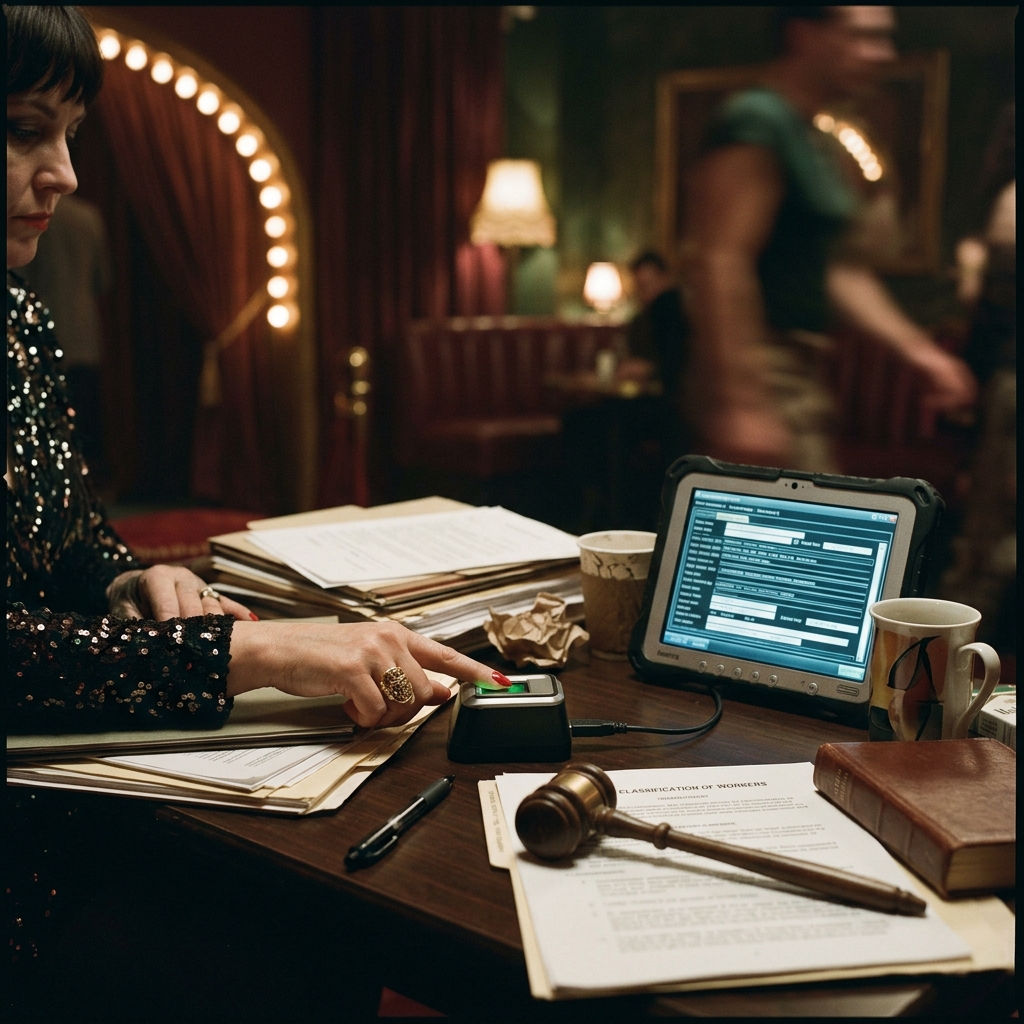
Across the United States, courts have repeatedly been asked a seemingly narrow question: are lap dancers and other exotic dancers employees or independent contractors? Behind that question lies a much broader issue of labor law, worker protections, and how businesses structure their workforce.
Strip clubs are a vivid example of a widespread trend: classifying workers as contractors to cut costs and shift risk. When judges examine how dancers actually work, they often conclude that these so-called contractors are legally employees entitled to minimum wage, overtime, and other protections. This article uses the lap dancer cases as a lens to explain the employee–contractor divide and what misclassification means for any business or worker.
Why Lap Dancers End Up at the Center of Classification Battles
Adult entertainment venues routinely label dancers as independent contractors, often requiring them to sign agreements and pay fees to work in the club. The economic incentive is straightforward: if dancers are contractors, the club may avoid paying:
- Minimum wage and overtime
- Payroll taxes (Social Security, Medicare, unemployment)
- Workers’ compensation premiums
- Employee benefits such as health insurance or vacation
In practice, lawsuits emerge when dancers realize that they are bearing significant costs and risks while the club tightly controls their work. Judges then apply federal and state tests to determine whether the label “contractor” matches the reality of the working relationship.
Employee vs. Independent Contractor: The Legal Basics
Under U.S. law, the distinction between an employee and an independent contractor hinges on control and economic dependence rather than the label chosen by the business. Different agencies use slightly different frameworks, but they all ask similar questions:
Common Factors Used to Classify Workers
- Behavioral control: Who decides how the work is done, including schedules, procedures, and rules?
- Financial control: Who controls key economic aspects of the work—pay structure, reimbursement of expenses, tools, and equipment?
- Nature of the relationship: Is the work central to the business, ongoing rather than temporary, and accompanied by contractual commitments or benefits?
- Relative investment: Has the worker meaningfully invested in equipment or facilities, or is the employer’s investment much greater?
- Opportunity for profit or loss: Does the worker’s managerial skill substantially affect earnings, beyond simply working more hours?
| Factor | Points toward Employee | Points toward Contractor |
|---|---|---|
| Behavioral control | Employer sets schedules, rules, and methods | Worker decides how, when, and where to work |
| Financial control | Employer controls pay rates, provides tools and space | Worker sets prices, owns tools, and serves multiple clients |
| Relationship | Work is integral and ongoing; benefits may be offered | Work is peripheral or project-based |
| Investment | Employer bears most costs of operations | Worker invests substantially in equipment or facilities |
| Profit/Loss | Earnings mainly depend on hours and employer policies | Earnings vary with worker’s business decisions |
What Courts See Inside Strip Clubs
When judges scrutinize strip clubs, they rarely rely on formal contracts alone. Instead, they examine how dancers are treated in day-to-day practice. A recurring pattern emerges across federal and state cases.
Club Control Over Dancers’ Work
Courts have found that many clubs exert extensive control over dancers, including:
- Dictating when dancers must arrive and how long they stay
- Setting dress codes and the types of performances allowed
- Imposing rules about behavior, such as where dancers may sit or which bathrooms they may use
- Determining music playlists or stage rotations
In a widely cited New York case involving an upscale Manhattan club, the judge noted that such detailed rules showed the dancers were subject to the club’s supervision and control, consistent with employee status. The dancers were not free to design their own shows or negotiate independently with customers in a way typical of contractors.
Dancers as the Core of the Business
Another crucial element is whether the work is integral to the employer’s business. Courts have consistently held that exotic dancers are the central attraction in strip clubs—they are not peripheral service providers, but the reason customers come at all. Under federal law, when a worker’s labor is essential to what the business sells, this strongly suggests employee status because the worker is economically dependent on that business.
Economic Reality: Fees, Tips, and Wage Rights
Strip clubs often argue that dancers earn substantial amounts in tips, sometimes far more than minimum wage, so the club need not pay hourly wages. Courts have rejected this reasoning. In the New York case, some dancers reported making up to $1,000 a night, yet the judge held that they were still entitled to at least the statutory minimum wage for all hours worked.
Similarly, lawsuits in multiple states have resulted in rulings that dancers were employees despite being required to pay “house fees” to perform or share a portion of tips with the club or staff. Judges have emphasized that businesses cannot sidestep wage obligations by labeling workers as contractors while controlling their working conditions.
Misclassification: Consequences for Businesses and Workers
Misclassifying workers as independent contractors is not a technical error; it can trigger significant financial and legal consequences. Public agencies and courts are increasingly attentive to these issues in industries like adult entertainment, gig work, and delivery services.
Risks for Employers
When an audit or lawsuit reveals misclassification, businesses may be required to pay:
- Unpaid minimum wages and overtime, sometimes going back several years
- Back taxes and penalties for failing to pay payroll taxes
- Unemployment insurance contributions
- Workers’ compensation premiums and possibly benefits for injured workers
- Attorneys’ fees and court costs
In some jurisdictions, class actions brought by groups of dancers have led to substantial settlements or judgments, pushing clubs to change their classification practices. While each case depends on state law and specific facts, the growing number of rulings against clubs sends a clear signal: simply calling someone a contractor does not shield a business from liability.
Impact on Workers
For dancers and other workers, being misclassified as a contractor can mean losing access to core protections:
- Minimum wage and overtime: Employees are guaranteed a baseline hourly wage and overtime pay for long hours; contractors are not.
- Workers’ compensation: Injured employees may receive medical care and wage replacement, while misclassified contractors must often rely on personal insurance or pay out of pocket.
- Unemployment benefits: Employees who lose their jobs may qualify for unemployment insurance, but contractors typically do not.
- Anti-discrimination protections: Employees are more clearly covered by workplace anti-discrimination statutes than contractors in many settings.
Legal advocacy groups and unions have argued that proper classification is a prerequisite to safer and fairer working conditions in strip clubs, including enforcement of sexual harassment laws and protection from retaliatory firings.
Lessons for All Businesses From the Lap Dancer Cases
Although strip clubs provide a dramatic backdrop, the legal principles at stake apply to any business that relies on freelance or gig labor. The same “control and independence” tests used for dancers are applied to delivery drivers, home care workers, consultants, and many others.
Practical Guidelines When Using Contractors
To reduce the risk of misclassification, businesses should pay attention to how they structure contractor relationships:
- Ensure contractors decide their own hours and can work for multiple clients.
- Avoid extensive rules about minute-by-minute conduct that resemble employee handbooks.
- Allow contractors to set or negotiate their own prices when feasible.
- Use contracts that reflect a genuine project-based or specialized service relationship.
- Consult with experienced employment counsel or review official guidance from agencies like the IRS or Department of Labor.
If a worker’s role is central to operations and closely supervised, businesses should consider treating them as employees and complying with wage and hour laws accordingly.
Rights of Exotic Dancers Beyond Classification
Even as courts grapple with classification, dancers face broader issues related to safety and dignity at work. In some states, legal protections for dancers have expanded regardless of their formal status.
For example, California law guarantees dancers a work environment free from sexual harassment and retaliation, and dancers may pursue legal remedies if clubs permit or engage in abusive behavior. In other jurisdictions, decisions recognizing dancers as employees have also clarified their entitlement to workers’ compensation and protections against discriminatory firing, such as termination due to pregnancy.
Frequently Asked Questions (FAQ)
Are lap dancers usually employees or independent contractors?
Most modern court decisions in the United States have concluded that exotic dancers working in strip clubs are legally employees, not independent contractors, because clubs typically exert substantial control over their schedules, behavior, and earnings.
Does signing a contractor agreement make a dancer a contractor?
No. The legal classification depends on the economic reality of the working relationship, not just the paperwork. If the club treats dancers like employees—controlling their work and relying on them as the core of the business—courts may find employee status even if a contract says otherwise.
Can a dancer both earn tips and receive minimum wage?
Yes. Courts have held that dancers are entitled to at least the applicable minimum wage for all hours worked, regardless of how much they earn in tips. High tip income does not eliminate an employer’s wage obligations under labor law.
What happens to a club that misclassifies dancers?
Clubs that misclassify dancers may be ordered to pay back wages, unpaid taxes, penalties, and sometimes damages for violating wage and hour laws. They may also need to reclassify dancers as employees going forward and comply with workers’ compensation and unemployment insurance requirements.
Do laws protecting dancers from harassment depend on their status?
Many anti-discrimination and anti-harassment laws primarily apply to employees, but some jurisdictions extend protections more broadly. In places like California, dancers can pursue claims for sexual harassment and hostile work environment even as classification disputes continue.
References
- Strippers, contractors and employee misclassification — Lang Law Group. 2018-01-15. https://www.lang.law/blog/misclassification
- NYC Strippers Aren’t Contractors, Judge Rules — FindLaw Legal Blogs. 2012-11-05. https://www.findlaw.com/legalblogs/small-business/nyc-strippers-arent-contractors-judge-rules/
- Independent Contractor vs Employee (Exotic Dancers) — Overtime Law Blog. 2015-06-10. https://flsaovertimelaw.com/tag/independent-contractor-vs-employee/
- Strippers Have Rights! Exotic Dancers are Classified as Employees — Avloni Law. 2019-03-21. https://avlonilaw.com/stripper-and-exotic-dancer-rights/
- The Stripper’s Dilemma — Queer Majority. 2022-08-30. https://www.queermajority.com/essays-all/the-strippers-dilemma
- Strippers are Employees, Not Independent Contractors, in Georgia — Simon Law Firm. 2017-04-05. https://www.simoninjurylawyers.com/strippers-are-employees-not-independent-contractors-in-georgia/
Similar Articles








Read full bio of Sneha Tete




