
Landrum-Griffin Act: Union Rights and Duties
Understand how federal law protects union democracy, finances, and member rights.
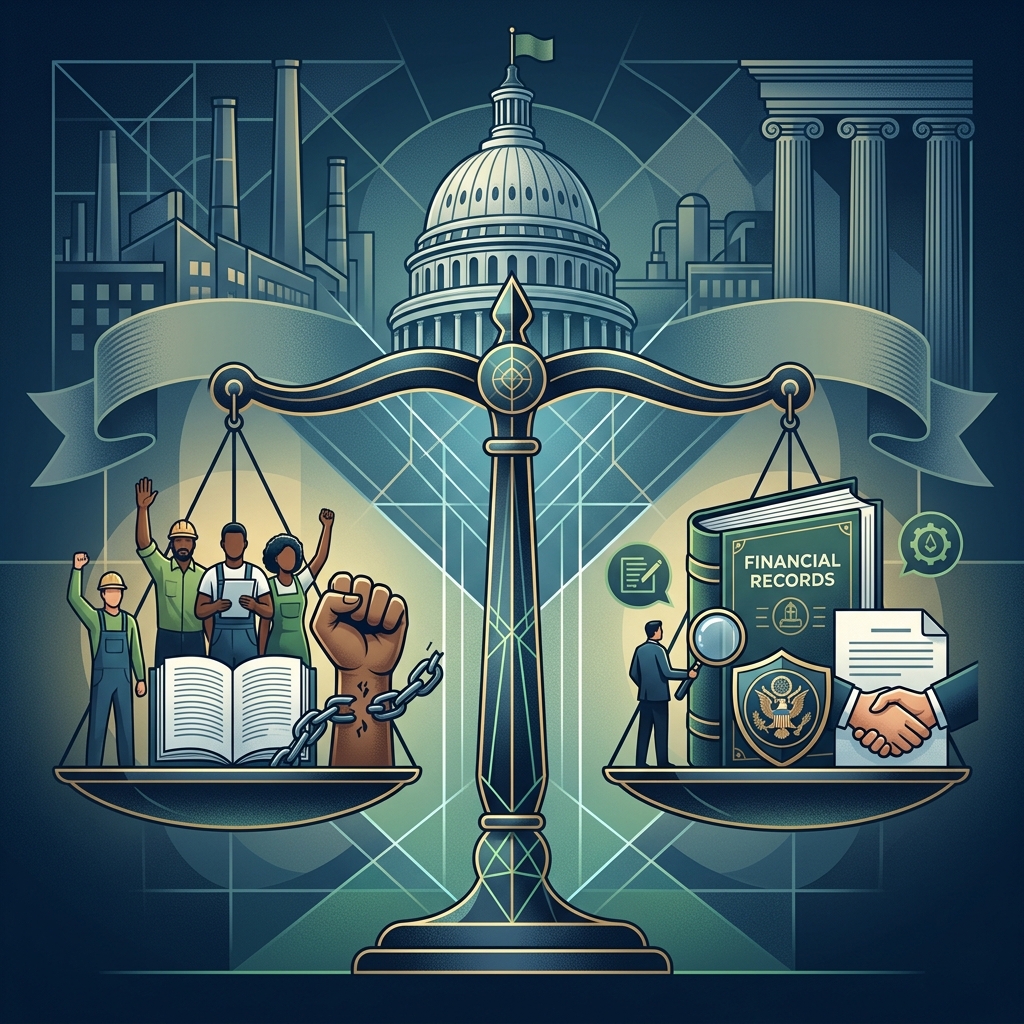
What the Landrum-Griffin Act Does
The Landrum-Griffin Act, formally known as the Labor-Management Reporting and Disclosure Act, is a federal law designed to make labor unions more transparent, democratic, and accountable. It was enacted after congressional concern about corruption, misuse of union power, and unfair practices in union governance.
At its core, the law focuses on two goals: protecting individual union members inside their organizations and requiring financial and administrative disclosure from unions and related parties. It also added rules that affect certain union-employer relationships and labor practices.
Why Congress Created the Law
Congress passed the statute in 1959 after a period of intense scrutiny of organized labor, especially over allegations of corruption, racketeering, and undemocratic conduct. Public hearings and investigations helped build support for a law that would strengthen internal union democracy while discouraging abuses by union leaders and employers.
The law did not replace earlier labor protections. Instead, it expanded federal oversight by addressing issues that older labor statutes did not fully cover, especially internal union governance and disclosure requirements.
Member Rights Inside a Union
One of the most important parts of the act is its union-members’ bill of rights. These protections are meant to ensure that rank-and-file members can participate in union life without retaliation or unfair exclusion.
- Members generally have equal rights to nominate candidates, vote in elections, and attend union meetings.
- Members may speak freely about union affairs and express views on collective bargaining, leadership, and policy.
- Members can assemble with other members and organize around union issues.
- Members are entitled to a fair process before being disciplined by the union.
These safeguards are intended to prevent a union leadership from silencing dissent or controlling the organization without meaningful member participation.
How Union Elections Are Regulated
The act sets standards for union officer elections to promote fairness and regular member participation. A central feature is the requirement for periodic secret-ballot elections, which helps reduce the risk of intimidation or vote manipulation.
Election rules are paired with broader protections that support internal democracy. In practical terms, the law aims to make leadership accountable to the people who pay dues and depend on the union to represent their interests.
Financial Disclosure and Reporting Duties
The law also requires unions, officers, employers, and certain representatives to file reports about financial transactions and administrative practices. These disclosure rules are designed to make union finances easier to review and to reduce hidden conflicts of interest.
According to the Department of Labor, the act covers reporting and disclosure of financial transactions and administrative practices for both labor organizations and employers. In addition, union officers may have to disclose loans, benefits, or financial interests that could create a conflict.
Common compliance themes include:
- annual financial reporting to the federal government,
- recordkeeping for receipts and expenditures,
- disclosure of certain relationships between union officials and employers,
- limits on the use of union funds for candidate support in union elections.
Rules for Union Property and Fiduciary Conduct
The act treats union leaders as fiduciaries, meaning they must manage union money and property for the benefit of the membership rather than personal gain. This standard reflects the law’s broader purpose of reducing misuse of union resources.
The Department of Labor’s materials also describe bonding rules for certain officers and employees who handle union funds, adding another layer of protection against theft or dishonesty. In simple terms, the law tries to ensure that people who control union assets are financially accountable.
Restrictions on Certain Labor Practices
The act also amended labor law in ways that limited some union tactics. According to the National Labor Relations Board, it tightened rules on secondary boycotts and banned certain hot cargo agreements. It also restricted recognition picketing in specified situations.
These provisions matter because they show that the law is not only about internal union governance. It also affects how unions may pressure employers and organize labor disputes.
How the Law Fits With Other Federal Labor Rules
The Landrum-Griffin Act works alongside other labor statutes rather than standing alone. The National Labor Relations Act protects employees from unfair labor practices by employers and unions, while the Landrum-Griffin framework focuses more heavily on union democracy, disclosure, and internal accountability.
That distinction is important. A worker may rely on one federal law for protection against employer misconduct and another for protection against abusive union conduct or opaque union governance.
Who Must Follow It
Although workers often think of this law as a union-members’ rights statute, it also reaches labor organizations, union officers, employers, and consultants involved in the covered reporting and disclosure system. In practice, the compliance burden can extend well beyond the union hall.
For members, the law is most visible in election rules, speech rights, and discipline protections. For officers and administrators, it is most visible in reporting duties, financial controls, and fiduciary obligations.
Practical Examples of the Act in Action
Consider a union member who wants to challenge leadership at a meeting. The act protects the member’s ability to speak and participate without facing arbitrary retaliation. Or imagine a contested officer election. Secret-ballot rules and reporting requirements are meant to make the result more trustworthy.
Another example is union spending. If an officer receives a benefit, loan, or financial interest that could affect judgment, disclosure rules are designed to bring that relationship into the open. The goal is not only punishment after abuse occurs, but also prevention through transparency.
Key Themes at a Glance
| Theme | What the Law Tries to Achieve |
|---|---|
| Member democracy | Gives members equal participation rights in union life and elections. |
| Transparency | Requires reporting of financial and administrative information. |
| Leadership accountability | Imposes fiduciary standards and disclosure duties on officers. |
| Labor conduct limits | Restricts certain boycott and picketing practices. |
Why the Law Still Matters
Even decades after enactment, the statute remains a key part of U.S. labor law because it addresses issues that can still arise in large membership organizations: concentrated power, weak financial oversight, and limited participation by ordinary members. Its reporting and disclosure rules also continue to matter because transparency is often the first step in identifying misuse.
For employees in unionized workplaces, the act helps define what fair internal union governance should look like. For unions, it sets baseline compliance expectations that shape how leaders manage elections, funds, and member relations.
Frequently Asked Questions
Is the Landrum-Griffin Act the same as the LMRDA?
Yes. The Landrum-Griffin Act is another name for the Labor-Management Reporting and Disclosure Act of 1959.
Does the act protect union members or all employees?
Its core protections focus on union members and union governance, although some reporting and labor-practice provisions also affect employers and other parties involved in labor relations.
Does the act require secret-ballot elections?
Yes. One of the law’s major reforms is the requirement for periodic secret-ballot elections for union officers.
Why are financial reports so important under this law?
Financial reporting helps members and regulators see how union money is collected, spent, and controlled. That visibility reduces the risk of corruption or hidden conflicts of interest.
What problems was the law meant to solve?
It was meant to address corruption, misuse of union power, poor financial oversight, and weak democratic procedures in unions.
References
- Landrum-Griffin Act Overview — FindLaw. 2026-07-09. https://www.findlaw.com/employment/wages-and-benefits/landrum-griffin-act-overview.html
- Landrum-Griffin Act of 1959 | History | Research Starters — EBSCO. 2026-07-09. https://www.ebsco.com/research-starters/history/landrum-griffin-act-1959
- 1959 Landrum Griffin Act — National Labor Relations Board. 2026-07-09. https://www.nlrb.gov/about-nlrb/who-we-are/our-history/1959-landrum-griffin-act
- Labor-Management Reporting and Disclosure Act of 1959, As Amended — U.S. Department of Labor, Office of Labor-Management Standards. 2026-07-09. https://www.dol.gov/agencies/olms/laws/labor-management-reporting-and-disclosure-act
Similar Articles








Read full bio of medha deb




