
The Landmark Supreme Court Ruling Protecting LGBTQ+ Workers
How the Supreme Court's Bostock ruling transformed LGBTQ+ workplace protections.
Introduction to a New Era in Civil Rights
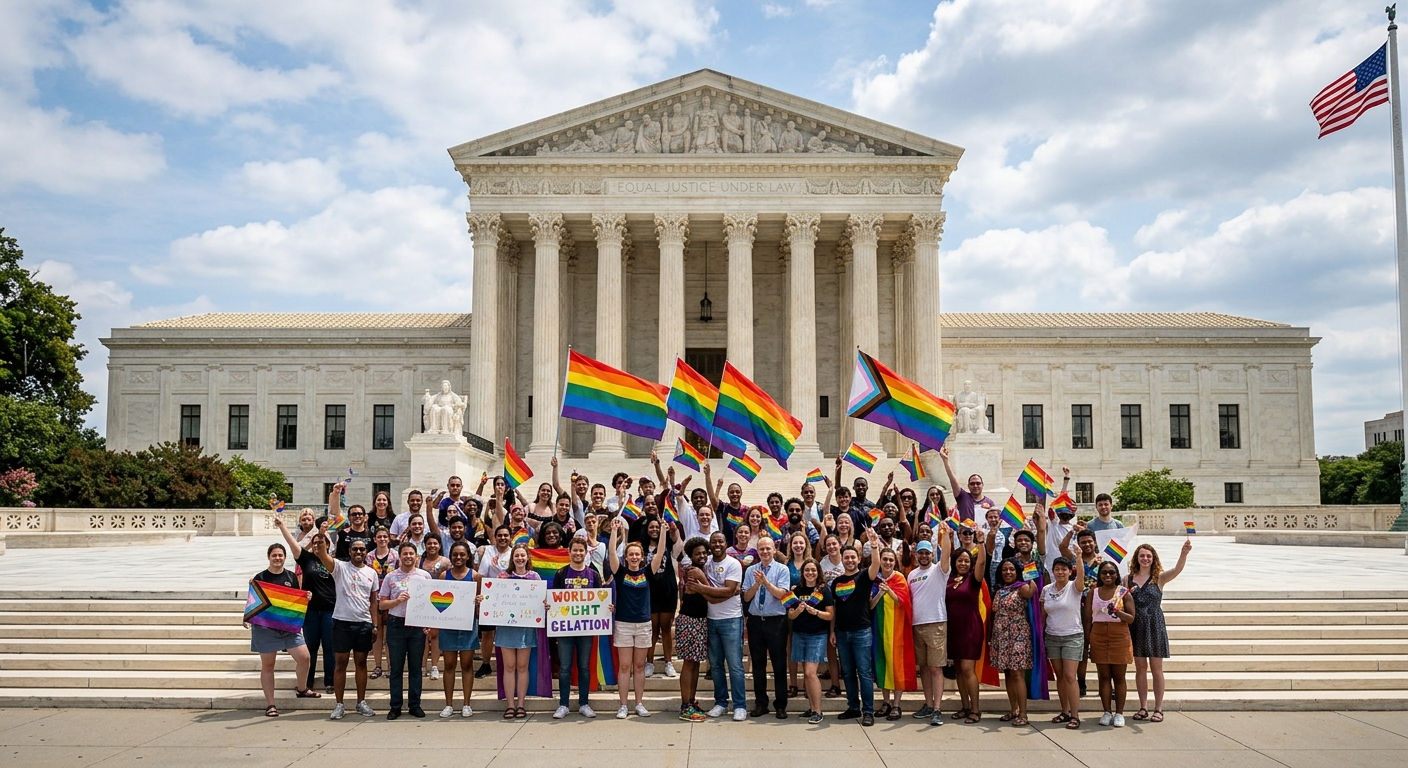
The pursuit of civil rights in the United States has been a continuous journey, marked by landmark legal decisions that expand the umbrella of protection for marginalized communities. On June 15, 2020, the United States Supreme Court issued one of the most consequential decisions in modern civil rights history: Bostock v. Clayton County. This ruling fundamentally altered the landscape of American employment law by holding that the Civil Rights Act of 1964 protects employees from being fired or disciplined due to their sexual orientation or transgender status.
For decades prior to this decision, the LGBTQ+ community navigated a fractured and often discriminatory legal landscape. In more than half of the states in the country, individuals could legally be terminated from their employment simply for being gay or transgender. The Bostock decision resolved this national inconsistency, establishing a uniform federal standard that prohibits such workplace discrimination. To fully comprehend the magnitude of this victory, it is essential to examine the historical context of the legislation it interpreted, the human stories that propelled the case to the nation’s highest court, the specific legal reasoning employed by the justices, and the far-reaching implications the decision continues to have on various sectors of American society, including child welfare, education, and healthcare.
The Civil Rights Act of 1964: Understanding Title VII
At the heart of the Bostock decision is Title VII of the Civil Rights Act of 1964. Enacted during the height of the American Civil Rights Movement, this landmark legislation was primarily designed to dismantle systemic racial segregation and widespread discrimination. However, the scope of the law was broad. Title VII makes it unlawful for an employer to fail or refuse to hire, to discharge, or otherwise to discriminate against any individual with respect to their compensation, terms, conditions, or privileges of employment, “because of such individual’s race, color, religion, sex, or national origin.”
For decades, the interpretation of the word “sex” within this statute was a subject of intense legal debate. Early judicial interpretations generally confined the definition to traditional understandings of biological difference between men and women. Courts routinely dismissed lawsuits brought by LGBTQ+ plaintiffs who argued that being fired for their sexual orientation or gender identity constituted sex discrimination. As societal understandings evolved, so too did legal theories. Advocates began arguing that sexual orientation and gender identity are inextricably linked to sex. They posited that penalizing a man for being attracted to men, while not penalizing a woman for the same attraction, is fundamentally a sex-based distinction. Similarly, penalizing an employee for transitioning is an action inherently rooted in the employee’s sex assigned at birth. Despite these sound arguments, the federal circuit courts remained deeply divided until the Supreme Court finally agreed to resolve the circuit split.
The Faces Behind the Landmark Ruling
The Supreme Court’s ruling was not born in a vacuum; it was the culmination of three separate lawsuits brought by individuals who suffered profound personal and professional losses simply for being their authentic selves. The consolidated cases included the stories of Gerald Bostock, Donald Zarda, and Aimee Stephens.
- Gerald Bostock: Gerald Bostock was an accomplished child welfare advocate working for Clayton County, Georgia. He dedicated a decade of his life to improving the juvenile justice system and protecting vulnerable children in the community. However, after he joined a gay recreational softball league, the county abruptly fired him, citing “conduct unbecoming of a county employee.” His termination underscored a tragic irony: a man devoted to the crucial work of child welfare was stripped of his livelihood—and his ability to assist marginalized youth—simply because of his sexual orientation.
- Donald Zarda: Donald Zarda worked as a skydiving instructor for Altitude Express in New York. To make a female client feel more comfortable being strapped to him for a tandem jump, Zarda mentioned that he was gay. Shortly after this disclosure, he was fired. Zarda filed a lawsuit under Title VII. Tragically, Zarda passed away in a BASE-jumping accident before his case reached its conclusion, but his estate continued the legal battle on his behalf.
- Aimee Stephens: Aimee Stephens worked as a funeral director at R.G. & G.R. Harris Funeral Homes in Michigan for several years. After struggling with her gender identity, Stephens informed her employer that she intended to transition and begin presenting as a woman at work. Her employer fired her shortly thereafter, explicitly stating that her transition violated the company’s dress code and religious beliefs.
These three distinct cases represented the varied and devastating ways that LGBTQ+ individuals were marginalized in the workforce, setting the stage for a historic legal showdown before the Supreme Court.
Textualism in Action: Justice Gorsuch’s Majority Opinion
The 6-3 Supreme Court decision was authored by Justice Neil Gorsuch, a conservative appointee widely known for his strict adherence to textualism. Textualism is a method of statutory interpretation that focuses on the plain, ordinary meaning of the text of the law at the time it was enacted, rather than attempting to divine the intent of the legislators who wrote it. In a brilliant and rigorous application of this judicial philosophy, Justice Gorsuch argued that the language of Title VII is completely unambiguous.
He posited a simple hypothetical: Imagine an employer with two employees, one male and one female, who are both attracted to men. If the employer fires the male employee because he is attracted to men, but retains the female employee, the employer has made a termination decision based entirely on the sex of the employee. Therefore, it is mathematically and logically impossible to discriminate against a person for being homosexual or transgender without simultaneously taking that individual’s sex into account. Gorsuch acknowledged that the Congress of 1964 likely did not have LGBTQ+ rights in mind when they passed the Civil Rights Act. However, he emphasized that the unexpected applications of a broadly written statute do not permit judges to ignore the law’s plain language. This reasoning successfully bridged the ideological divide on the Court, drawing support from both conservative and liberal justices to secure a sweeping victory for civil rights.
Transforming the Modern American Workplace
The immediate consequence of the Bostock ruling was a monumental shift in American employment law. Overnight, sweeping federal protections were extended to millions of LGBTQ+ workers residing in states that previously offered absolutely no legal recourse for workplace discrimination. The Equal Employment Opportunity Commission (EEOC), the federal agency responsible for enforcing Title VII, promptly updated its guidance and materials to reflect the Supreme Court’s ruling. This meant that LGBTQ+ individuals could now file formal complaints with the federal government if they experienced discrimination, harassment, or retaliation based on their sexual orientation or transgender status.
The impact extended far beyond initial hiring and firing decisions. Title VII also strictly prohibits creating a hostile work environment. Consequently, employers across the nation were forced to review and revise their internal policies regarding anti-discrimination, workplace harassment, and diversity training. It established a clear mandate that using slurs, repeatedly and intentionally misgendering an employee, or subjecting an LGBTQ+ individual to disparate treatment are actionable offenses under federal law.
Ripple Effects: Education, Child Welfare, and Healthcare
The implications of Bostock extend far beyond the corporate office, creating significant ripple effects in other areas of civil rights law that rely on sex discrimination statutes. Because Gerald Bostock was a child welfare advocate, his case highlights the critical intersection between employment protections and community care. When LGBTQ+ professionals are protected in the workplace, they are better positioned to provide stable, empathetic support to vulnerable populations, including LGBTQ+ youth in the foster care system who frequently face disproportionate rates of homelessness and abuse.
Furthermore, the legal reasoning applied in Bostock has been successfully utilized to interpret other federal statutes. For instance, Title IX of the Education Amendments of 1972 prohibits sex discrimination in federally funded educational programs. Following the Supreme Court’s logic, multiple federal courts and the Department of Education have recognized that Title IX also protects students from discrimination based on sexual orientation and gender identity. This ensures that LGBTQ+ youth have the legal right to a safe educational environment, free from harassment or exclusionary policies. Similarly, Section 1557 of the Affordable Care Act, which prohibits sex discrimination in healthcare, has been interpreted through the lens of Bostock to protect LGBTQ+ patients from being arbitrarily denied medically necessary care or facing outright discrimination from medical providers. The Supreme Court’s textual analysis has provided a robust legal framework that civil rights advocates continue to use to dismantle systemic inequalities across all sectors of society.
Ongoing Legal Battles: Religious Exemptions and Agency Guidance
Despite the decisive nature of the Bostock ruling, the fight for comprehensive LGBTQ+ equality in the workplace is not entirely over. The Supreme Court’s opinion intentionally left certain complex legal questions unanswered, particularly regarding the intersection of LGBTQ+ civil rights and religious liberty. The First Amendment and the Religious Freedom Restoration Act (RFRA) provide significant statutory protections for religious organizations and employers.
The “ministerial exception,” a legal doctrine that prevents the government from interfering with the employment relationship between a religious institution and its ministers, remains a potent defense for religious employers who wish to enforce conduct policies that exclude LGBTQ+ individuals. Since 2020, federal courts have seen a surge in litigation seeking to precisely clarify the boundaries between Title VII protections and religious exemptions. Additionally, some federal courts have recently challenged the EEOC’s expanded guidance regarding specific workplace accommodations for transgender employees, such as access to gender-affirming restrooms and the mandated use of preferred pronouns, highlighting that the daily application of Bostock will be heavily litigated for years to come.
Conclusion
The Supreme Court’s decision in Bostock v. Clayton County stands as a watershed moment in the ongoing pursuit of equality in the United States. By applying a rigorous textualist approach to the Civil Rights Act of 1964, the Court affirmed that the law’s protection against sex discrimination inherently shields LGBTQ+ individuals from workplace prejudice. The ruling not only provided long-overdue justice to the plaintiffs who bravely shared their stories but also established a formidable legal foundation for future civil rights advancements. While legal battles surrounding religious exemptions and specific workplace accommodations will undoubtedly continue in the lower courts, the core, foundational guarantee is now securely etched into federal employment law: no individual in the nation should ever be forced to choose between embracing their authentic self and maintaining their livelihood.
Frequently Asked Questions (FAQs)
What did the Supreme Court decide in Bostock v. Clayton County?
In Bostock v. Clayton County (2020), the Supreme Court ruled that Title VII of the Civil Rights Act of 1964, which explicitly prohibits employment discrimination based on sex, also encompasses and prohibits discrimination based on an individual’s sexual orientation and transgender status.
How does Title VII protect LGBTQ+ workers today?
Title VII protects LGBTQ+ workers by making it strictly illegal for employers with 15 or more employees to fire, refuse to hire, or otherwise discriminate against individuals regarding compensation or terms of employment simply because they are gay, lesbian, bisexual, or transgender. It also shields these workers from experiencing a hostile work environment based on their identity.
Does the Bostock decision affect laws outside of the workplace?
Yes. While Bostock strictly dealt with employment under Title VII, its foundational legal reasoning—that discrimination based on sexual orientation or gender identity is inherently a form of sex discrimination—has been successfully applied by lower federal courts and federal agencies to other critical laws, such as Title IX (protecting students in education) and Section 1557 of the Affordable Care Act (protecting patients in healthcare).
Are there any exceptions to the Bostock ruling?
The Supreme Court acknowledged that religious liberty protections, such as the First Amendment and the Religious Freedom Restoration Act (RFRA), could potentially limit the application of Title VII for certain religious employers. The specific boundaries of these religious exemptions, along with specific accommodations like bathroom access, are the subject of ongoing litigation in federal courts.
References
- 17-1618 Bostock v. Clayton County (06/15/2020) Opinion — Supreme Court of the United States. 2020-06-15. https://www.supremecourt.gov/opinions/19pdf/17-1618_hfci.pdf
- Title VII of the Civil Rights Act of 1964 — U.S. Equal Employment Opportunity Commission. 2023-01-01. https://www.eeoc.gov/statutes/title-vii-civil-rights-act-1964
- Sex-Based Discrimination — U.S. Equal Employment Opportunity Commission. 2024-01-01. https://www.eeoc.gov/sex-based-discrimination
- Beyond Bostock: The Future of LGBTQ Civil Rights — Center for American Progress. 2020-08-26. https://www.americanprogress.org/article/beyond-bostock-future-lgbtq-civil-rights/
- How the Impact of Bostock v. Clayton County on LGBTQ Rights Continues to Expand — American Civil Liberties Union (ACLU). 2022-06-15. https://www.aclu.org/news/lgbtq-rights/how-the-impact-of-bostock-v-clayton-county-on-lgbtq-rights-continues-to-expand
Similar Articles








Read full bio of medha deb


