
Landlord Foreclosure: Tenant Rights and Landlord Duties
Understand what happens when a rental home is foreclosed, how foreclosure affects leases, rent, security deposits, and what both landlords and tenants should do.
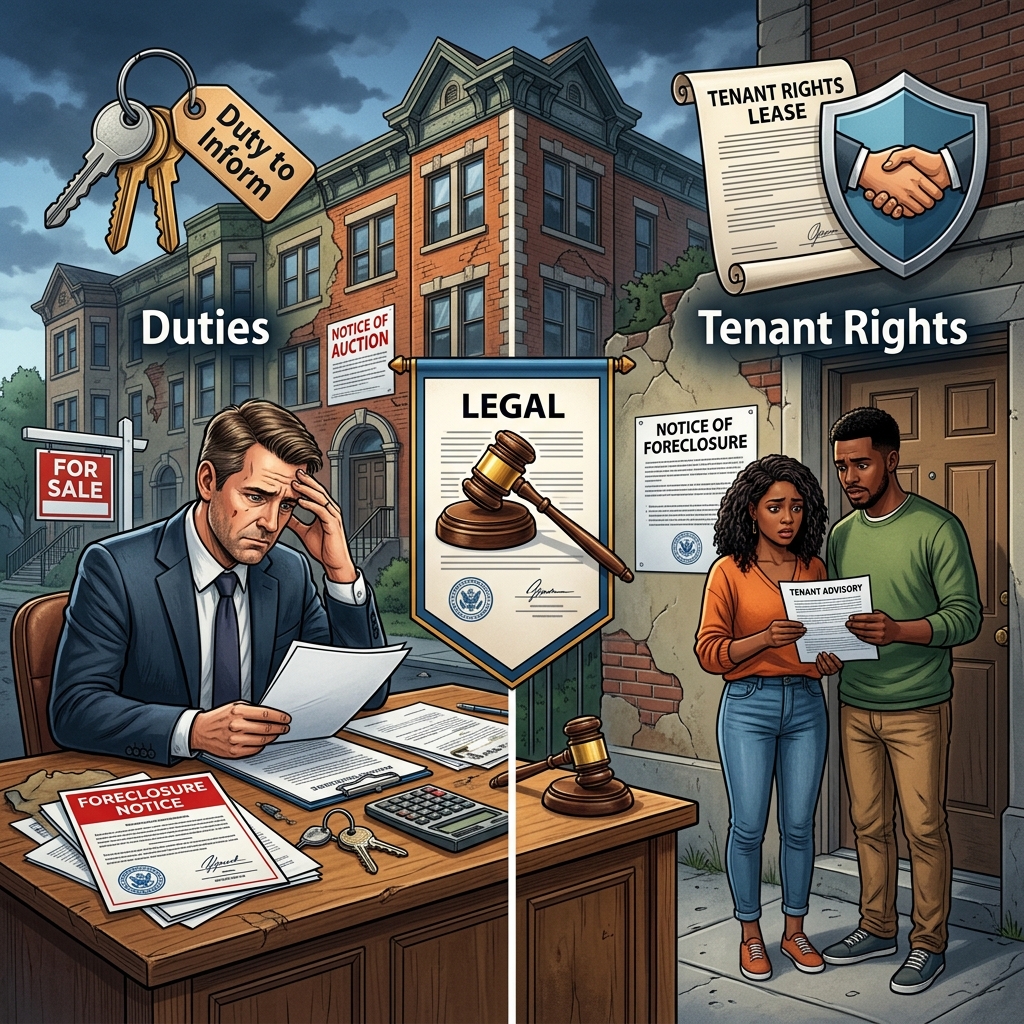
When a landlord falls behind on the mortgage, tenants are often the last to know that a foreclosure is underway. Foreclosure does not automatically end a tenancy, and both landlords and renters still have important rights and obligations. This guide explains, in plain language, what usually happens when a rental property is foreclosed, how leases are treated, what kind of notice is required, and how to protect yourself during the process.
While specific rules vary by state, there are federal protections for tenants in foreclosed properties and common patterns in how courts treat these situations. As always, anyone facing an actual foreclosure should speak with a qualified local attorney for advice about their particular circumstances.
1. How Foreclosure and Tenancy Interact
Foreclosure is a legal process where a lender or other lienholder takes ownership of a property because the borrower defaulted on the mortgage or deed of trust. For rental housing, the borrower is typically the landlord. The key point for tenants is that foreclosure changes who owns the property, not the fact that a tenancy exists.
In practice, there are three distinct phases tenants and landlords should understand:
- Pre-foreclosure: The landlord is behind on payments and the lender has begun legal steps, but ownership has not yet changed.
- Foreclosure sale: The property is sold at auction or otherwise transferred to a new owner (often the lender or an investor).
- Post-foreclosure: The new owner decides whether to keep renting the property or to end tenancies using applicable notice and eviction laws.
During all three phases, tenants usually continue to have rights to stay in the property until they receive proper legal notice and, if necessary, a court order for eviction. Landlords and new owners must follow both federal law and state or local rules before forcing tenants to move.
2. Federal Baseline: Protecting Tenants at Foreclosure Act
The Protecting Tenants at Foreclosure Act (PTFA) is a federal law that provides a baseline level of protection for bona fide tenants in foreclosed properties. The PTFA was originally enacted in 2009, lapsed briefly, and was later restored permanently by federal legislation in 2018. It applies in most residential foreclosure situations involving federally related mortgages.
Under the PTFA, a tenant with a legitimate rental agreement generally has:
- The right to stay until the end of the lease term, or
- At least 90 days’ written notice to move, whichever period is longer.
There is one main exception: if the new owner plans to move into the property as a primary residence, they may end the lease earlier, but they must still provide at least 90 days’ notice before requiring the tenant to vacate.
These federal protections are a floor, not a ceiling. Many states and cities provide equal or greater protections, including longer notice periods or special procedures for foreclosed properties.
3. What Happens to Your Lease After Foreclosure?
A common misconception is that foreclosure wipes out leases automatically. In reality, PTFA and many state laws require new owners to respect existing tenancies in most situations.
3.1 Fixed-term leases
For tenants with written leases, the general rule is:
- If the lease was signed before the foreclosure, the tenant usually may remain in the property until the end of the lease term, subject to the 90-day minimum notice requirement.
- If the lease was signed after title transferred in foreclosure, the new owner can normally end the tenancy with proper notice, because they are not bound by a lease the prior owner created after losing control of the property.
In many states, as long as the lease is bona fide (arm’s-length, market rent, and not with the landlord’s close family) the new owner steps into the shoes of the old landlord and inherits the lease obligations for the remainder of the term.
3.2 Month-to-month and at-will tenancies
Tenants without a fixed-term lease (for example, month-to-month renters) typically have fewer guarantees about how long they may stay. Under federal law, these tenants are still entitled to at least 90 days’ written notice before being required to move out after foreclosure.
State law might provide additional protection. For instance, some jurisdictions allow tenants in non-regulated units to stay until the end of the lease term or for 90 days after receiving notice from the new owner, whichever is longer. Others require specific forms of notice and longer timeframes for certain categories of tenants.
3.3 Comparison of typical tenant scenarios
| Tenant Situation | Federal PTFA Protection | Common State Add-ons (examples) |
|---|---|---|
| Fixed-term lease signed before foreclosure | May stay until lease ends; at least 90 days’ notice to terminate. | Some states confirm that the lease survives foreclosure and extends to the new owner. |
| Month-to-month or no written lease | At least 90 days’ written notice after foreclosure sale. | Some states guarantee 90 days after redemption periods or allow longer stays. |
| New owner intends to move in | May end lease early but must still give at least 90 days’ notice. | Local “just cause” rules may further restrict move-in evictions. |
4. Notice Requirements and Eviction Process
Even after foreclosure, tenants typically cannot be removed immediately. New owners must follow notice rules and, in most cases, obtain a court order before evicting someone who does not leave voluntarily.
4.1 How much notice is required?
The PTFA requires at least 90 days’ written notice in most residential foreclosure situations. However, the exact timing may depend on factors such as:
- The type of tenancy (fixed-term vs. month-to-month).
- Whether the tenant is considered bona fide.
- State-specific statutes that may extend notice periods or adjust when the notice clock starts.
For example, some states specify that tenants must receive 90 days’ notice after the redemption period ends or after the foreclosure sale becomes final. Others require that tenants be informed of the foreclosure case itself so that they are not surprised by a sudden demand to vacate.
4.2 Court process and illegal lockouts
New owners who want to remove tenants must usually file an eviction case in court if the tenant does not move out by the end of the notice period. Until a judge issues a court order and law enforcement carries out the eviction, self-help methods such as changing locks, shutting off utilities, or physically removing belongings are generally illegal.
Many legal aid organizations emphasize that tenants should:
- Read all foreclosure and eviction notices carefully and calendar important deadlines.
- Respond to court papers rather than ignoring them.
- Seek legal assistance promptly if they receive an eviction summons.
5. Who Should Tenants Pay Rent To?
Foreclosure can create confusion about who is entitled to collect rent. Tenants remain obligated to pay rent, but the correct payee may change once the foreclosure is complete.
- Before foreclosure sale: Rent is generally still payable to the original landlord, unless a court appoints a receiver or local law says otherwise.
- After foreclosure sale: Rent is typically owed to the new owner or any property manager they designate.
To protect themselves, tenants are often advised to request written proof of ownership from anyone claiming to be the new owner or property manager before changing where they send rent. Keeping thorough records of payments (receipts, bank statements, and any written instructions) helps prevent disputes later on.
6. Security Deposits and Prepaid Rent
Security deposits can become complicated when a property is foreclosed. Under many landlord–tenant laws, the original landlord remains responsible for returning the security deposit unless it has been properly transferred to the new owner.
Some key points frequently seen in state laws and legal guides:
- If a new owner actually receives the deposit from the former landlord, the new owner typically becomes responsible for refunding it at the end of the tenancy.
- If the deposit is never transferred, the former landlord may still owe the tenant, even though they no longer own the property.
- Some local rules make the new owner liable for deposits in foreclosure situations regardless of whether the money was transferred, especially in larger cities with tenant-protection ordinances.
Tenants who are unable to recover their deposit may need to pursue a claim in small claims court or similar forums. Keeping a copy of the lease, move-in condition reports, and a written demand letter strengthens these claims.
7. Special Situations: Subsidized Housing, Local Protections, and Cash for Keys
7.1 Tenants with housing vouchers
Renters with housing vouchers or other rental assistance programs may have additional protections. Federal agencies and local housing authorities often have particular procedures when a property under a voucher contract goes into foreclosure. Tenants in this situation are strongly encouraged to contact their housing authority and a legal aid office promptly if they learn of a foreclosure.
7.2 Cities with just-cause and rent control laws
In some jurisdictions, local law requires a valid reason (known as just cause) to end a tenancy. Foreclosure by itself may not qualify as just cause, or there may be extra conditions before a post-foreclosure eviction can proceed. Rent-controlled or rent-stabilized units may also have special rules regarding notice and allowable rent increases after a new owner takes over.
Because local regulations differ widely, tenants and landlords should look up city or county rules or consult local housing agencies in addition to state and federal law.
7.3 Negotiated move-outs and “cash for keys”
Sometimes new owners prefer voluntary move-outs to formal eviction. They may offer money to tenants in exchange for vacating the property by an agreed date, often referred to as a “cash for keys” arrangement. While these agreements can be mutually beneficial, tenants should:
- Get all terms in writing, including the move-out date, payment amount, and any conditions.
- Confirm the new owner’s identity and authority before signing anything.
- Ensure the timeline respects minimum legal notice requirements (e.g., the 90 days’ notice under PTFA).
8. Practical Steps for Landlords During Foreclosure
Landlords facing foreclosure have ethical and legal duties toward their tenants. Even if losing the property feels overwhelming, clear communication and compliance with the law can reduce conflict and liability.
Landlords should consider the following:
- Inform tenants early, where required: Some jurisdictions require written notice to existing tenants and even prospective tenants when a foreclosure case is pending.
- Maintain essential services: Landlords generally cannot shut off utilities, stop necessary repairs, or otherwise constructively evict tenants simply because a foreclosure is happening.
- Cooperate with receivers and new owners: Sharing rent rolls, leases, and deposit records makes transitions smoother and helps avoid disputes about rent and deposits.
- Handle security deposits properly: If law requires transfer of deposits at sale, document the transfer; if not, be prepared for potential claims from former tenants.
Landlords who ignore tenant rights during foreclosure may face statutory penalties, damages for wrongful eviction, and other legal consequences. Seeking legal advice before stopping mortgage payments or abandoning a property can help avoid these outcomes.
9. Practical Steps for Tenants When Foreclosure Hits
Tenants often hear about foreclosure through rumors, posted notices, or unexpected letters from lenders. Being proactive can make a significant difference in how disruptive the process becomes.
Common recommendations from consumer protection and legal aid organizations include:
- Monitor notices: Open and read any mail or postings about default, foreclosure, or trustee’s sales. Note deadlines and contact information.
- Confirm who owns the property: If you are unsure whether a foreclosure sale has occurred, check land records at your county recorder or equivalent office.
- Keep paying rent: Continue paying rent on time to the proper party (original landlord, court-appointed receiver, or new owner, as applicable). Ask for written instructions if the recipient changes.
- Gather documentation: Keep copies of your lease, rent receipts, deposit records, correspondence, and all foreclosure or eviction notices.
- Start planning early: Even with 90 days’ notice, finding new housing can take time; looking early provides more options.
- Seek legal help: Contact local legal aid, tenant unions, or housing organizations for advice, especially if you receive an eviction summons.
10. Frequently Asked Questions
10.1 Do I have to move out as soon as the property is foreclosed?
No. Federal law generally gives bona fide tenants at least 90 days’ written notice after foreclosure, and many tenants may stay until their lease term ends. State and local laws may provide even greater protection.
10.2 Can the new owner raise my rent right away?
Often, the new owner must honor the existing lease, including the agreed rent, until the lease expires. For month-to-month tenants, the new owner may be able to raise rent with proper notice, unless rent control or other local protections apply.
10.3 What if my landlord disappears and stops answering calls?
Keep paying rent as required by your lease, but document all attempts to reach the landlord and any returned mail. If foreclosure notices appear, follow the instructions for contacting the lender or trustee and seek legal advice about where to direct rent payments.
10.4 Who gives back my security deposit after foreclosure?
Typically, either the former landlord (if they kept the deposit) or the new owner (if the deposit was transferred) must return your deposit at the end of the tenancy, subject to lawful deductions. Local law may assign responsibility differently, particularly in cities with strong tenant protections.
10.5 Can I stop paying rent because the landlord is in foreclosure?
Generally, no. Most legal guides emphasize that tenants must keep paying rent during foreclosure and cannot use the foreclosure itself as a defense to nonpayment in eviction court. Failing to pay can expose tenants to eviction that might have been avoidable.
References
- Tenants’ rights in a foreclosure — California Courts, Judicial Branch of California. 2023-06-01. https://selfhelp.courts.ca.gov/foreclosures/tenants-rights
- Tenants Rights in Foreclosure — New York State Department of Financial Services. 2022-09-15. https://www.dfs.ny.gov/consumers/help_for_homeowners/tenants_rights_foreclosure
- Tenants in Foreclosed Properties — Michigan Legal Help. 2023-05-10. https://michiganlegalhelp.org/resources/housing/tenants-foreclosed-properties
- Foreclosure of A Rental Unit — Legal Services of Eastern Missouri (Missouri Legal Services). 2022-04-20. https://www.lsmo.org/node/646/foreclosure-rental-unit
- Foreclosure for tenants (FAQ) — Illinois Legal Aid Online. 2023-03-01. https://www.illinoislegalaid.org/legal-information/understanding-foreclosure-tenant
- Foreclosure of Residential Property — The Maryland People’s Law Library. 2022-11-30. https://www.peoples-law.org/foreclosure-residential-property
- Tenants in Foreclosure & Their Legal Rights — Justia. 2021-09-01. https://www.justia.com/foreclosure/foreclosures-of-investment-property/rights-of-tenants-in-foreclosure/
- What should I do if the house or apartment I’m renting goes into foreclosure? — Consumer Financial Protection Bureau. 2023-02-08. https://www.consumerfinance.gov/ask-cfpb/what-should-i-do-if-the-house-or-apartment-im-renting-goes-into-foreclosure-en-1545/
- Tenant Rights in a Foreclosure — Texas State Law Library. 2022-08-18. https://guides.sll.texas.gov/foreclosure/tenant-rights
Similar Articles








Read full bio of Sneha Tete


