Understanding Federal and State Protections for Nursing Employees
The landscape of workplace breastfeeding support has undergone significant transformation through federal legislation aimed at protecting nursing mothers. In December 2022, the federal government enacted the Providing Urgent Maternal Protections (PUMP) for Nursing Mothers Act, amending the Fair Labor Standards Act (FLSA) to extend comprehensive protections to all breastfeeding employees in the workplace. This landmark legislation represents a substantial expansion from previous federal protections, which had initially been introduced in 2010 but with more limited coverage.
The PUMP Act fundamentally changed the landscape by extending coverage to approximately 9 million additional women of childbearing age who were previously excluded from federal protections. Unlike the earlier FLSA amendment, which primarily protected non-exempt workers, the PUMP Act provides universal protections regardless of an employee’s classification status. This means that salaried employees, exempt workers, and other previously unprotected categories now have explicit legal rights to workplace lactation accommodations.
Beyond federal law, many states have established their own workplace lactation protections that often exceed or provide additional nuance to federal requirements. Employers must always comply with whichever law—federal or state—provides the greater protection to employees. Some states have implemented extended timelines beyond the one-year federal requirement, mandated specific amenities in lactation spaces, or created protections for specialized populations such as incarcerated mothers or students in educational settings.
Core Legal Requirements for Employer Compliance
Federal law establishes two fundamental requirements that all employers must satisfy when supporting breastfeeding employees. These baseline requirements serve as the foundation upon which employers should build their lactation accommodation policies.
Reasonable Break Time Provisions
The PUMP Act requires employers to provide nursing employees with reasonable break time to express breast milk. This accommodation extends for one year following the child’s birth and applies each time an employee needs to express milk. The law recognizes that breastfeeding schedules vary significantly among individuals, and employers are expected to demonstrate flexibility in accommodating these varying needs.
The term “reasonable break time” does not specify a precise duration or frequency, allowing for individualized accommodations based on employee circumstances. Most employees successfully integrate milk expression into their existing break periods and meal times, though some situations may require more structured arrangements. In work environments with rigid scheduling requirements—such as manufacturing facilities, retail establishments, or schools—employers can work with employees to schedule breaks in advance or arrange coverage through floaters or supervisory staff.
Private Lactation Space Requirements
Employers must provide a clean, private space that is not a bathroom for employees to express breast milk. This space requirement represents a critical component of meaningful lactation support, as privacy is essential for employee dignity and the biological functioning of milk expression. The space must be shielded from view and free from intrusion, including protection from security camera monitoring.
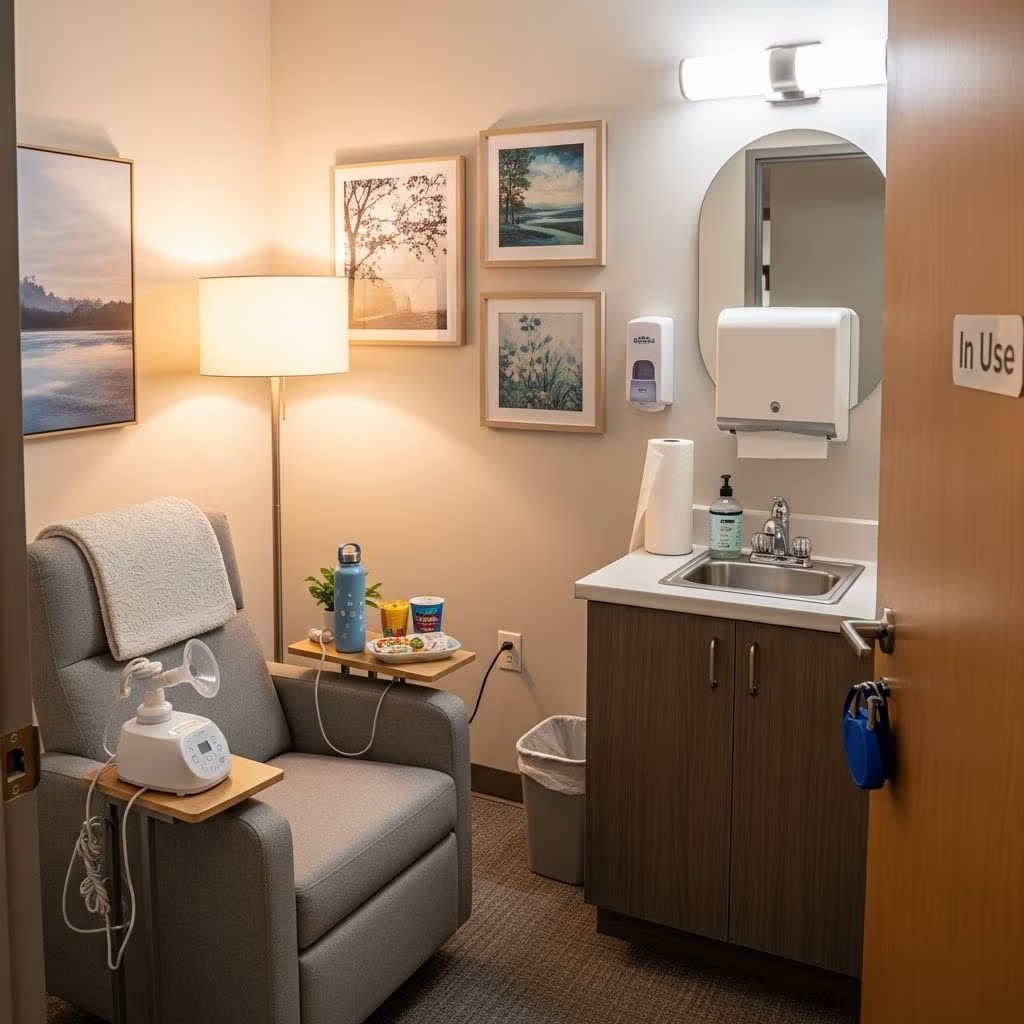
While federal law sets minimum standards regarding privacy and non-bathroom locations, many states have enhanced these requirements with additional specifications. Some states mandate that lactation spaces be free from hazardous materials, located near sinks for cleaning and hygiene purposes, or equipped with specific amenities such as electrical outlets and comfortable seating. Employers should research their applicable state laws to ensure full compliance with potentially more stringent requirements.
Designing Comprehensive Lactation Accommodation Policies
Establishing a formal written lactation policy serves multiple strategic purposes for organizations. A well-crafted policy communicates organizational commitment to supporting nursing mothers, provides clear guidance to managers and supervisors, and helps normalize lactation in the workplace culture.
Essential Policy Components
A comprehensive lactation policy should address several key elements to function effectively:
- Coverage and eligibility: Clearly define which employees are covered by the policy and the duration of protections available.
- Break time scheduling mechanisms: Establish procedures for employees to request breaks and communicate with supervisors, including whether breaks must be scheduled in advance or can be requested spontaneously.
- Coverage arrangements: Specify who will assume employee responsibilities during lactation breaks and how coverage will be organized, particularly in positions with continuous customer-facing or safety-critical functions.
- Space designation and availability: Describe the lactation space(s) available—whether permanently designated, shared and flexible, or mobile/temporary—and how employees access these spaces.
- Amenity provisions: Detail what equipment and furnishings will be available in lactation spaces, such as comfortable seating, tables for pump placement, electrical outlets, and cleaning supplies.
- Privacy and confidentiality protocols: Establish expectations that all employees will respect the privacy of nursing mothers and maintain confidentiality regarding lactation needs.
- Communication procedures: Create clear pathways for employees to inform supervisors of lactation needs before or after maternity leave.
- Roles and responsibilities: Delineate expectations for employers, managers, supervisors, and employees in supporting lactation accommodations.
Selecting Appropriate Lactation Spaces
Organizations have flexibility in determining how to provide private space, with options suited to different workplace configurations. A permanently designated lactation room works well for larger organizations with predictable space availability and multiple nursing employees. Smaller businesses might utilize flexible spaces—private offices, storage areas, or meeting rooms—made available on an as-needed basis. Mobile or temporary solutions, such as pop-up lactation tents or designated company vehicles, serve organizations with limited permanent space or mobile workforce structures.
Regardless of the space type selected, employers should prioritize comfort and functionality. Ideal lactation spaces include comfortable seating with back support, flat surfaces for placing breast pump equipment, multiple electrical outlets for powering pumps and charging devices, and proximity to water sources for hygiene purposes. Creating an aesthetically pleasant environment—with adequate lighting, temperature control, and cleanliness—demonstrates organizational commitment to supporting nursing employees.
Establishing Clear Roles and Responsibilities
Successful lactation accommodation requires coordinated effort across different organizational levels, with each group understanding their specific responsibilities and contributions.
Employer and Leadership Responsibilities
Organizations should educate all supervisors, managers, and employees about the benefits of supporting nursing mothers and the legal requirements governing workplace lactation. This organizational-wide education helps normalize pumping and reduces potential stigma or negative workplace behavior. Leadership should communicate that lactation support is not merely compliance, but reflects organizational values regarding employee health, retention, and family support.
Supervisor and Manager Responsibilities
Supervisors and managers serve as critical frontline communicators with employees. Their responsibilities include informing pregnant employees about available lactation support options before they return from maternity leave, working with individual employees to arrange practical scheduling and space accommodations, and ensuring that lactation breaks are consistently honored without scrutiny or resentment from coworkers. Managers should also monitor workplace culture to prevent harassment or negative comments directed at nursing mothers.
Employee Responsibilities
Employees should notify supervisors of their lactation needs as soon as practicable, preferably before maternity leave begins. Clear communication enables employers to make necessary arrangements. Employees should also maintain shared lactation spaces in clean condition and respect the privacy of other nursing colleagues using the same facilities.
Legal Compliance and Enforcement Mechanisms
Understanding the legal remedies available to employees when employers fail to provide adequate lactation accommodations helps organizations recognize the seriousness of compliance obligations.
Notification and Cure Procedures
Under the PUMP Act, employees must notify employers of non-compliance before initiating legal action. Employers then have 10 days to remedy compliance failures related to break time and lactation space access. However, this 10-day cure period does not apply to harassment, discrimination, or violations involving employee privacy and dignity—employers must cease these violations immediately.
Available Remedies
Employees who successfully demonstrate employer non-compliance may pursue legal remedies including job reinstatement, promotion, monetary damages for lost wages, compensation for emotional distress, and recovery of attorney fees and litigation costs. These substantial potential liabilities underscore why employers should treat lactation accommodation compliance seriously.
Navigating Multi-Jurisdictional Requirements
Organizations operating across multiple states or with remote employees must understand that they may need to comply with varying state-level protections in addition to federal requirements. When federal and state laws conflict, employers must follow the law providing greater protection to employees. Some states have extended the protection period beyond one year, mandated specific space amenities, or created specialized protections for particular employee populations. Employers should audit their current practices against applicable federal law and all states where they employ workers to ensure comprehensive compliance.
Building a Supportive Workplace Culture
Beyond formal legal compliance, organizations that want to truly support breastfeeding employees can implement practices that foster a parent-friendly workplace culture. Clear communication of lactation policies helps all employees understand the importance of respecting colleagues who are nursing. Some organizations establish employee resource groups dedicated to supporting breastfeeding parents, providing mentoring as new parents transition back to work and advocating for infrastructure improvements.
By creating an environment where lactation is normalized and supported, organizations often experience benefits including improved employee retention, higher productivity from nursing mothers who aren’t struggling with undisclosed breastfeeding challenges, and enhanced organizational reputation as a family-friendly employer.
Frequently Asked Questions About Workplace Lactation Accommodations
Q: Do small employers have to comply with lactation accommodation laws?
A: Yes, the PUMP Act applies to all employers covered by the Fair Labor Standards Act, regardless of size. Most employers are subject to FLSA requirements, making lactation accommodations a near-universal legal obligation.
Q: Can employers limit how many times an employee pumps during the workday?
A: No. The PUMP Act requires reasonable break time “each time” an employee needs to express milk. Employers cannot impose arbitrary limits on pumping frequency, though the term “reasonable” allows for practical workplace constraints and can involve discussion between employers and employees.
Q: What if an employee wants to breastfeed at work rather than pump?
A: While federal law specifically addresses milk expression, many states and local laws protect direct breastfeeding as well. Employers should review their jurisdiction’s specific protections and can generally accommodate direct nursing using the same private space provided for pumping.
Q: Can employers require employees to pump in bathrooms?
A: No. Federal law explicitly prohibits designating bathrooms as lactation spaces. Bathrooms are considered inappropriate and unsanitary environments for milk expression and do not meet the privacy and dignity requirements of the law.
Q: What should employers do if multiple employees need lactation space simultaneously?
A: Employers should work with employees to coordinate schedules, use floaters or other staff coverage for simultaneous breaks, or establish additional lactation spaces if regular scheduling becomes consistently problematic. Practical solutions should prioritize employee needs while managing operational constraints.
Q: Are employers required to provide breast pumps or lactation supplies?
A: Federal law does not require employers to provide pumps or supplies, though providing these amenities represents best practice and supports employee retention. Some states may have more specific requirements regarding space amenities.
References
- What Employers Need to Know — U.S. Department of Health and Human Services, Office on Women’s Health. https://womenshealth.gov/supporting-nursing-moms-work/what-law-says-about-breastfeeding-and-work/what-employers-need-know
- Breast Pumping at Work Laws + Lactation Accommodations in the U.S. — Mamava Inc. https://www.mamava.com/breastfeeding-laws/at-work
- Breastfeeding and Returning to Your Workplace — Centers for Disease Control and Prevention, U.S. Department of Health and Human Services. https://www.cdc.gov/infant-toddler-nutrition/breastfeeding/returning-to-your-workplace.html
- FLSA Protections to Pump at Work — U.S. Department of Labor, Wage and Hour Division. https://www.dol.gov/agencies/whd/pump-at-work
- Time and Place to Pump at Work: Your Rights — U.S. Equal Employment Opportunity Commission. https://www.eeoc.gov/time-and-place-pump-work-your-rights