
Supreme Court 2025-26 Term: 10 Key Cases To Watch And The Law
Explore the most anticipated U.S. Supreme Court cases shaping law on citizenship, guns, elections, and more in the 2025-26 term.
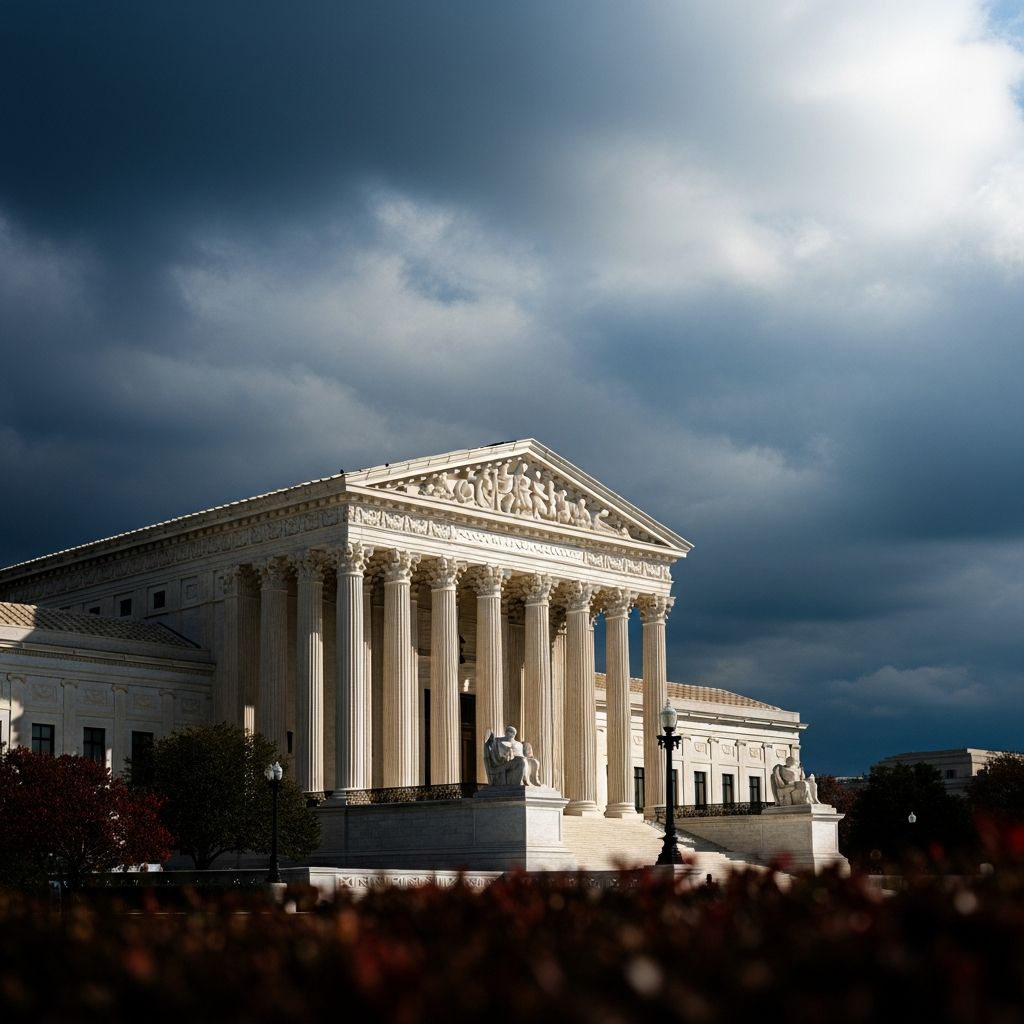
The U.S. Supreme Court’s 2025-26 term, commencing October 6, 2025, promises landmark decisions on constitutional rights, federal authority, and societal issues. With oral arguments spanning high-stakes disputes, these cases could redefine legal precedents for decades. This article examines the most critical matters, their backgrounds, and possible outcomes.
Birthright Citizenship Under Fire: Trump v. Barbara
At the forefront stands Trump v. Barbara, probing President Donald Trump’s executive order restricting birthright citizenship. The 14th Amendment declares that all persons born in the U.S. and subject to its jurisdiction are citizens. Challengers argue the order unlawfully curtails this guarantee, potentially affecting millions. Oral arguments are slated for March 2026, with rulings expected by term’s end. This case revives debates on immigration and constitutional interpretation, pitting originalism against modern application.
Historical context traces to United States v. Wong Kim Ark (1898), affirming birthright for children of non-citizens. Critics of the order claim it exceeds executive power, while supporters seek to exclude children of undocumented immigrants. A decision could prompt congressional action or reshape citizenship policy.
Second Amendment and Firearms: United States v. Hemani
United States v. Hemani, argued March 2, 2026, questions if a federal statute barring drug users from gun ownership violates the Second Amendment. The Trump administration defends the law as vital public safety measure post-New York State Rifle & Pistol Association v. Bruen (2022), which mandates historical analogs for restrictions.
Lower courts diverged: some upheld bans citing tradition, others struck them down. The Court may clarify Bruen‘s scope, influencing regulations on felons, domestic abusers, and mental health. Implications extend to state laws, balancing individual rights against community protection.
- Key Issue: Validity of prohibiting ‘unlawful users’ from firearms.
- Stakeholders: Government vs. individual gun owners.
- Potential Ruling: Narrow or expand Second Amendment protections.
Immigration and Asylum Access: Noem v. Al Otro Lado
Governor Kristi Noem challenges asylum rules in Noem v. Al Otro Lado. The dispute centers on whether asylum seekers must physically enter the U.S. under the Immigration and Nationality Act. Petitioners argue border policies bar legitimate claims, while respondents emphasize sovereignty and resource limits.
This follows Department of Homeland Security v. Thuraissigiam, testing procedural rights. A ruling could overhaul asylum processing, affecting millions amid record crossings. It intersects with executive enforcement and international obligations.
Election Integrity Battles
Voting rights dominate with Watson v. Republican National Committee and Louisiana v. Callais. In Watson, the Court reviews if states can count mail-in ballots postmarked by Election Day but received later. Petitioners, including Rep. Michael Bost, claim it dilutes votes; defenders cite accessibility.
Louisiana v. Callais tackles racial gerrymandering in congressional maps creating majority-Black districts. White voters allege unconstitutional race-based lines, despite stemming from Robinson v. Ardoin Voting Rights Act compliance. Louisiana defends as remedy-driven.
| Case | Core Dispute | Circuit Split |
|---|---|---|
| Watson v. RNC | Mail-in ballot deadlines | Yes, states vary on receipt rules |
| Louisiana v. Callais | Racial map drawing | Fifth Circuit tensions |
Campaign Finance Reexamination
National Republican Senatorial Committee v. Federal Election Commission revisits 2001’s limits on party-coordinated expenditures. The GOP challenges caps on candidate-input ads, arguing First Amendment violations amid inflated costs. Added in June 2025, fall arguments loom, potentially freeing party spending.
This echoes Citizens United v. FEC, scrutinizing soft money rules. A reversal could flood elections with funds, altering party-candidate dynamics.
Environmental and Energy Disputes: Enbridge Energy v. Nessel
Michigan AG Dana Nessel’s bid to close Enbridge’s Line 5 pipeline reaches the Court in Enbridge Energy v. Nessel. After state denial of federal removal, the 6th Circuit deemed it untimely. Justices will assess venue transfer deadlines under 28 U.S.C. § 1446.
Line 5 transports oil under Straits of Mackinac; closure risks shortages. Broader, it tests federal jurisdiction in state environmental suits.
Religious Liberty and Free Speech Claims
Oliver v. City of Brandon involves a street preacher’s dismissed challenge to ordinances curbing religious expression. The Fifth Circuit ruled his citation payment barred suit. The Court may address standing post-mootness.
Related, Justice Thomas critiqued lower courts in MacRae v. Mattos denial, decrying First Amendment misapplications in political speech cases like a teacher’s TikTok firing.
Other Notable Docket Items
- Chiles v. Salazar: Argued October 7, cultural issues in licensing.
- Urias-Orellana v. Bondi: Asylum persecution deference standards.
- Cox Communications v. Sony: Copyright and removal timeliness.
Potential Impacts on Law and Society
These cases cluster around constitutional core: amendments, federalism, rights. Birthright and guns test originalism; elections probe democracy; finance and immigration balance power. With Trump’s return, shadow docket activity surges—28 applications by mid-September 2025.
Decisions, due by June 2026, could shift policy landscapes, spark legislation, or fuel amendments. Public scrutiny intensifies amid polarization.
Frequently Asked Questions
What is the Supreme Court’s 2025-26 term schedule?
Oral arguments run October 2025 to April 2026, opinions through June. Key dates: October 6 start, summer recess post-July.
How many major cases are on the docket?
Dozens granted; highlights include 10+ high-profile on citizenship, guns, votes.
Will Trump v. Barbara end birthright citizenship?
Unlikely fully; may limit to undocumented parents’ kids, per 14th Amendment ‘jurisdiction’.
What Second Amendment tests apply post-Bruen?
Historical tradition; Hemani weighs drug user bans.
Can states reject late mail ballots?
Watson clarifies postmark vs. receipt; splits exist.
References
- The Supreme Court has (probably) chosen all the cases it will hear this term — SCOTUSblog / Kelsey Dallas. 2026-01-30. https://www.scotusblog.com/2026/01/the-supreme-court-has-probably-chosen-all-the-cases-it-will-hear-this-term/
- Constitutional law experts preview several upcoming Supreme Court cases — Harvard Law School. 2025. https://hls.harvard.edu/today/constitutional-law-experts-preview-several-upcoming-supreme-court-cases/
- Court adds seven new cases to the 2025-26 term — SCOTUSblog / Amy Howe. 2025-06. https://www.scotusblog.com/2025/06/court-adds-seven-new-cases-to-the-2025-26-term/
- The People’s Guide to the U.S. Supreme Court: 2025-2026 — Democracy Forward. 2025. https://democracyforward.org/work/research/peoples-guide-scotus-25-26/
- 2025-2026 Term — Oyez. 2026. https://www.oyez.org/cases
- Major Supreme Court Cases from the 2025–26 Term — Britannica. 2026. https://www.britannica.com/topic/Major-Supreme-Court-Cases-from-the-2025-26-Term
Similar Articles








Read full bio of medha deb




