
Key Obstacles That Can Delay Your U.S. Citizenship
Understand the legal, financial, and personal issues that can jeopardize your U.S. naturalization and how to prepare for them.
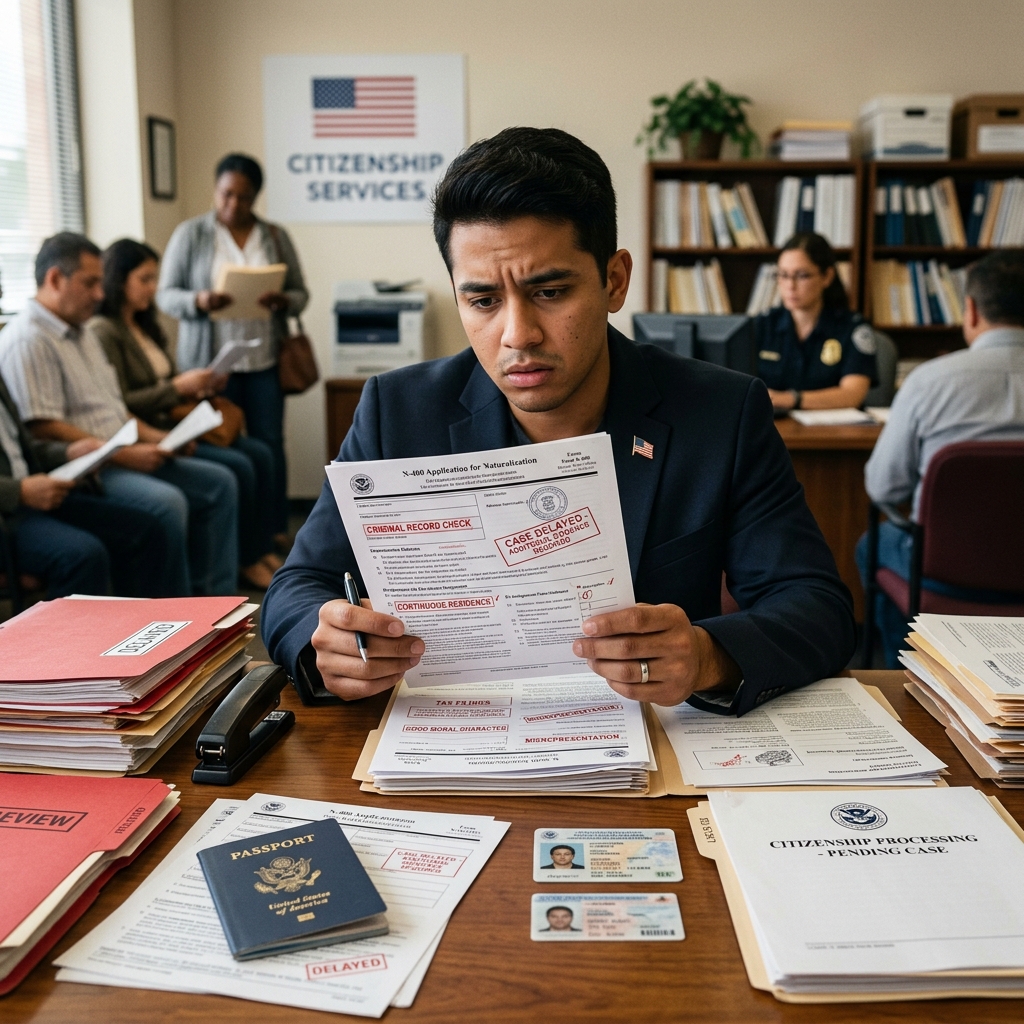
Applying for U.S. citizenship through naturalization is an important step, but the process is not automatic. U.S. Citizenship and Immigration Services (USCIS) reviews every application closely, and several legal, financial, and personal issues can delay or derail your case. Understanding these risk areas in advance helps you prepare a stronger application and avoid surprises.
This guide explains major factors that commonly affect naturalization decisions, including unpaid taxes, child support problems, criminal history and honesty issues, and residence requirements. It also offers practical tips, FAQs, and reference information so you can better evaluate your situation before filing Form N‑400.
Overview of Naturalization Risk Areas
USCIS does not simply check whether you meet basic eligibility requirements like having a green card for the required number of years. Officers look at your overall record to determine whether you are qualified and whether you demonstrate the good moral character and commitment to the United States that citizenship requires.
Four broad categories tend to cause the most problems:
- Tax and financial obligations – unpaid federal or state taxes and related penalties.
- Family support obligations – delinquent child support or alimony ordered by a court.
- Criminal, conduct, and honesty issues – arrests, certain convictions, or misrepresentation on immigration forms.
- Residence and presence requirements – breaks in continuous residence or insufficient physical presence in the United States.
None of these issues automatically block citizenship in every case, but they can lead to denial if they are serious, recent, or poorly documented.
Tax Obligations: How Unpaid Taxes Affect Naturalization
Tax compliance is an important part of demonstrating responsibility and good moral character. If USCIS discovers that you owe back taxes to the U.S. government and have made no arrangements to resolve the debt, your application may be denied.
Common Tax-Related Problems
- Unfiled federal or state income tax returns for one or more years.
- Unpaid tax balances, interest, or penalties with no payment plan.
- Discrepancies between income reported to the government and income listed on your immigration forms.
- Use of false Social Security numbers or improper employment records in earlier years.
USCIS can treat serious or repeated tax problems as evidence that you are not meeting your legal responsibilities. This may affect the officer’s view of your moral character during the statutory review period (usually five years, or three years if applying based on marriage to a U.S. citizen).
Steps to Reduce Tax Risk
Having tax issues does not automatically disqualify you from naturalization, especially if you have taken meaningful steps to correct them.
- File all missing tax returns before you submit Form N‑400.
- Work with the Internal Revenue Service (IRS) or your state tax agency to set up a written payment plan.
- Bring proof of payment arrangements and recent payments to your naturalization interview.
- Consult a qualified tax professional if your situation is complex.
| Scenario | Risk Level | Helpful Actions |
|---|---|---|
| One year of unpaid taxes with a signed payment plan | Moderate | Show payment agreement and proof of recent payments |
| Multiple unfiled returns and no contact with tax authorities | High | File overdue returns, seek legal advice before applying |
| Past underreporting but corrected through an amended return | Variable | Document corrections and explain at interview |
Child Support and Other Family Support Obligations
USCIS also examines whether you are meeting court-ordered financial responsibilities to dependents, such as child support or spousal support (alimony). Delinquent child support is a common reason for naturalization problems and may be seen as inconsistent with good moral character.
How Support Obligations Influence Your Case
Citizenship officers may review:
- Family court orders specifying the amount and frequency of support payments.
- Payment histories and statements from state child support agencies.
- Any arrears (past-due amounts) and whether you are actively paying them.
If you owe back child support and have not made any attempt to pay or modify the order, USCIS may conclude that you are disregarding legal obligations. On the other hand, having a reasonable repayment plan or a court-approved modification often improves your situation.
Practical Steps to Address Support Issues
- Obtain a copy of all relevant support orders before filing Form N‑400.
- Keep receipts or official statements showing each payment you have made.
- If you cannot pay the full amount, seek a court modification promptly and follow any new orders.
- Bring documentation of your efforts and any agreements to your interview.
Criminal History, Conduct, and Good Moral Character
Good moral character is a core requirement for naturalization. Certain crimes permanently bar citizenship, and other offenses during the review period can result in denial or even removal proceedings. USCIS looks at arrests, convictions, and patterns of behavior when assessing your record.
Serious Offenses That Often Block Naturalization
Some offenses are so serious that they typically make naturalization impossible and may lead to loss of immigration status. These include:
- Murder and certain aggravated felonies.
- Crimes involving violence or serious harm to another person.
- Multiple offenses that result in long total sentences.
- Serious controlled substance violations.
- Terrorism-related activity or persecution of others on the basis of race, religion, national origin, political opinion, or social group.
Conduct That Can Undermine Good Moral Character
Even if an offense does not automatically bar citizenship, USCIS may still find that your conduct shows poor moral character during the statutory period. Examples include:
- Habitual drunkenness or substance abuse affecting public safety.
- Illegal gambling, prostitution, or commercial vice activities.
- Polygamy or other conduct that conflicts with legal obligations.
- Failure to pay court-ordered child support or alimony.
- Imprisonment for 180 days or more during the review period.
- Failure to complete probation, parole, or a suspended sentence.
Misrepresentation and Immigration Fraud
Honesty on your application and during your interview is essential. Lying or omitting important facts can lead not only to denial of citizenship but also to the loss of your green card and possible removal from the United States.
Risky conduct includes:
- Giving false answers on Form N‑400 or other immigration forms.
- Using fraudulent documents to obtain immigration benefits.
- False claims to U.S. citizenship for any purpose.
- Misrepresenting the nature of a marriage used to obtain permanent residency.
If USCIS discovers fraud or misrepresentation, it can reopen earlier decisions, revoke lawful permanent residency, and place you in removal proceedings.
Evidence of Rehabilitation
If you have past offenses, USCIS may consider signs that you have changed your behavior, especially when the conduct occurred before the statutory period.
- Completion of probation, parole, or treatment programs.
- A long period without new offenses.
- Stable employment and community involvement.
- Positive references from employers, community leaders, or faith organizations.
Residence and Physical Presence Requirements
In most cases, you must show that you have been a lawful permanent resident of the United States for at least five years before applying for naturalization. You also need to demonstrate that you have:
- Maintained continuous residence for the required period.
- Met the physical presence requirement by spending enough time in the United States.
Continuous Residence
Continuous residence means that the United States has remained your main home during the required period. Long trips abroad can interrupt this continuity, particularly if any single trip lasts six months or more.
If USCIS believes you abandoned your U.S. residence by staying abroad too long or too often, it can restart your eligibility clock and delay your ability to apply.
Physical Presence
In general, applicants must have been physically present in the United States for at least 30 months out of the five-year period before filing Form N‑400. If you are applying based on marriage to a U.S. citizen, the required period is shorter, but similar physical presence rules apply.
To prove physical presence, you may rely on:
- Passport stamps and travel records.
- Employment and school records.
- Lease agreements or mortgage statements.
- Utility bills and other documents showing where you lived.
Practical Travel Tips for Applicants
- Keep a detailed log of all international trips, including dates and destinations.
- Avoid extended trips abroad during the statutory period unless necessary.
- If you must stay abroad for more than six months, gather evidence showing you maintained ties to the United States (home, job, family).
- Review your travel history carefully before submitting your naturalization application.
Other Common Challenges in the Citizenship Process
Beyond the four major categories above, several additional factors can cause difficulties or delays.
Selective Service Registration
Male applicants who lived in the United States between certain ages may have been required to register with the Selective Service System, which keeps records for potential military conscription. Failure to register when required can raise questions about your willingness to comply with U.S. law and your eligibility for citizenship.
Application Fees and Financial Barriers
The government filing fee for naturalization can be a significant burden, especially for low-income applicants. Research has shown that the cost of naturalization has risen sharply over the past several decades, turning fees into a major barrier for many potential citizens.
In some cases, fee waivers or reduced fees are available based on income levels, but many people still struggle with the total cost, including legal assistance and English or civics preparation courses.
Interview and Test Requirements
During the naturalization interview, a USCIS officer will ask questions about your application and background, and will administer English language and civics tests. Failing to prepare adequately can result in delays or the need for repeat interviews.
To improve your chances:
- Study the official civics materials provided by USCIS.
- Practice English reading, writing, and speaking consistently.
- Review your own application carefully before the interview so your answers are accurate and consistent.
Frequently Asked Questions (FAQs)
1. Will unpaid taxes automatically cause my citizenship application to be denied?
Unpaid taxes are not always an automatic bar to naturalization. USCIS is more concerned with whether you have addressed the problem by filing all required returns and entering into reasonable payment arrangements. If you ignore tax obligations, the risk of denial is much higher.
2. Can I become a citizen if I have a criminal record?
It depends on the type of offense, how long ago it occurred, and whether you have shown rehabilitation. Certain serious crimes, such as murder or aggravated felonies, generally bar naturalization. Less serious offenses may still affect your moral character but can sometimes be overcome with strong evidence of changed behavior.
3. What if I missed Selective Service registration when I was younger?
Missing required Selective Service registration can raise concerns, but it does not always result in automatic denial. You may be able to provide a written explanation and supporting evidence showing that the failure was not deliberate or that you misunderstood the requirement. Legal advice is often helpful in these cases.
4. How long can I stay outside the United States without affecting my continuous residence?
Trips of less than six months usually do not disrupt continuous residence, but multiple trips may still raise questions. Trips of six months or longer can cause USCIS to presume that you broke continuous residence, especially if you have limited ties to the United States during that time. Evidence of ongoing ties (home, employment, immediate family) can help rebut that presumption.
5. Should I apply for citizenship if I suspect my green card was obtained through errors or possible fraud?
Applying for naturalization triggers a review of your entire immigration history, including how you obtained permanent residency. If there are potential fraud issues, you may risk losing your green card and facing removal proceedings. In this situation, consulting a knowledgeable immigration attorney before filing is strongly recommended.
Practical Checklist Before You File Form N‑400
Before submitting your naturalization application, consider using this checklist to identify and address potential problems:
- Taxes: Are all returns filed? Do you have payment plans and receipts if you owe anything?
- Child support and alimony: Are all court orders current? Do you have proof of payments or modifications?
- Criminal history: Have you obtained certified court records for any arrests or convictions and discussed them with a legal professional?
- Residence and travel: Have you documented your trips abroad and confirmed that you meet continuous residence and physical presence requirements?
- Past immigration applications: Are there any inconsistencies or potential misrepresentations in earlier filings that need to be clarified?
- Financial planning: Can you afford the application fee and any related costs, or do you qualify for a fee waiver or reduced fee?
- Interview preparation: Have you studied for the civics and English tests and reviewed your application for accuracy?
Careful preparation does not guarantee approval, but it significantly reduces the likelihood of avoidable problems and strengthens your ability to respond to USCIS questions.
References
- 4 Issues That Will Affect Your U.S. Citizenship Application — FindLaw. 2023-06-01. https://www.findlaw.com/immigration/citizenship/4-issues-that-will-affect-your-us-citizenship-application.html
- What Are the Common Reasons for Citizenship Denial? — Brooks Law Firm. 2022-09-15. https://brookslawfirm.com/blog/what-are-common-reasons-for-citizenship-denial/
- Risks of Applying for Citizenship — Justia. 2021-04-20. https://www.justia.com/immigration/naturalization-citizenship/risks-of-applying-for-citizenship/
- Lifting Barriers to Citizenship — Immigration Policy Lab. 2017-10-10. https://immigrationlab.org/project/lifting-barriers-to-citizenship/
- The Naturalization Interview and Test — U.S. Citizenship and Immigration Services (USCIS). 2023-02-10. https://www.uscis.gov/citizenship/learn-about-citizenship/the-naturalization-interview-and-test
Similar Articles








Read full bio of medha deb


