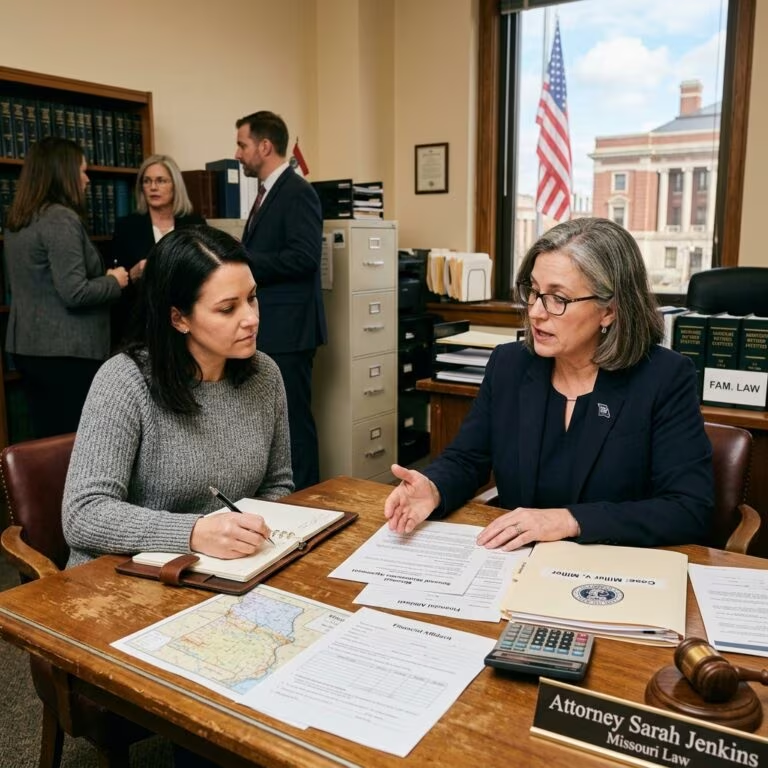
Preparing for divorce can feel overwhelming, but arriving at your first meeting with an attorney organized and informed will make a significant difference. Courts in the United States typically require both spouses to exchange detailed financial and personal information through formal disclosures, so assembling key records early can save time, reduce stress, and help your lawyer protect your rights.
This guide explains which documents to collect, why each category matters, and how to organize everything so your attorney can quickly understand your situation.
1. Core Personal and Relationship Information
Your attorney must first understand who is involved and how your relationship is structured. Start by gathering basic identifying and relationship records.
1.1 Personal Identification for Each Spouse
Bring copies (or clear photos, if allowed) of:
- Government-issued photo ID (driver’s license, passport, or state ID)
- Social Security numbers for both spouses
- Current residential addresses, phone numbers, and email addresses
- Employment information (employer name, address, and job title)
Attorneys use this information to draft court documents correctly and to ensure that any court orders accurately identify the parties.
1.2 Basic Relationship Records
- Marriage certificate or license
- Date and place of marriage
- Dates and locations of any separations
- Information about prior marriages and divorces (including copies of prior divorce decrees, if applicable)
These records help determine whether the court has jurisdiction and can affect the classification of property as marital or separate under state law.
2. Children and Parenting-Related Documents
If you have children, your lawyer will need documentation that helps address custody, support, and parenting-time questions. U.S. guidelines on child support typically consider each parent’s income and the child’s needs, so accurate records are crucial.
2.1 Information About Each Child
- Birth certificates
- Social Security numbers
- Current addresses and where the child has lived for the last several years (relevant to custody jurisdiction rules)
- School names, addresses, and grade levels
- Contact information for teachers, counselors, or daycare providers
2.2 Medical and Special Needs Documentation
- Health insurance cards and policy information
- Immunization records and primary care provider details
- Records of ongoing medical or mental health treatment
- Documents relating to special educational needs, such as Individualized Education Programs (IEPs) or 504 plans
These materials help your lawyer argue for appropriate parenting plans and financial arrangements that meet your child’s medical and educational needs.
2.3 Existing Court Orders or Agreements
- Any existing custody or visitation orders
- Child support orders
- Protective or restraining orders involving either spouse or the children
- Written parenting agreements or mediated parenting plans, even if not filed in court
Courts generally prefer stable arrangements that serve the child’s best interests, and prior orders or agreements provide a starting point for future decisions.
3. Financial Overview: Income, Expenses, Assets, and Debts
Most divorce cases hinge on the financial picture: what you earn, what you own, and what you owe. U.S. family courts usually require a sworn financial statement or similar document detailing income, assets, debts, and monthly expenses.
3.1 Income Records
Collect proof of income for both spouses, including:
- Recent pay stubs (typically from the last 3 months)
- W-2 and 1099 forms for the last 2–3 years
- Federal and state tax returns (individual and joint) for the last 3–5 years, including all schedules
- Documentation of self-employment income (profit and loss statements, business tax returns)
- Statements for any additional income, such as rental payments, dividends, bonuses, or commissions
Courts often rely on tax returns and pay records as the most reliable indicators of income for purposes of spousal and child support.
3.2 Monthly Household Budget
Prepare a simple but thorough list of typical monthly expenses, such as:
- Housing (rent or mortgage, property taxes, insurance)
- Utilities (electric, gas, water, trash, internet, phone)
- Food and household supplies
- Transportation (car payments, fuel, maintenance, public transit)
- Healthcare and insurance premiums
- Child-related costs (daycare, tuition, extracurricular activities)
- Debt payments (credit cards, personal loans, student loans)
- Personal expenses (clothing, entertainment, subscriptions)
Your attorney can use this information to evaluate your ability to pay or need for support, and to propose realistic temporary orders during the divorce.
4. Property and Asset Documentation
Property division in divorce depends on an accurate inventory and valuation of all assets. Many states follow an “equitable distribution” model, dividing marital property fairly but not always equally, while a smaller number use a community property approach.
4.1 Real Estate
For the marital home, investment properties, or vacation homes, gather:
- Deeds and closing documents
- Mortgage statements and home equity loan records
- Recent property tax assessments
- Appraisals or market analyses, if available
- Documents showing the source of down payment funds (for example, a gift or inheritance letter)
4.2 Bank and Investment Accounts
- Checking and savings account statements (joint and individual), usually for the last 6–12 months
- Certificates of deposit (CDs)
- Brokerage account statements (stocks, bonds, mutual funds, exchange-traded funds)
- College savings plans (such as 529 plans)
These records help trace whether assets are marital or separate and establish account balances as of key dates, such as marriage, separation, or filing.
4.3 Retirement and Pension Accounts
- 401(k), 403(b), and similar plan statements
- Individual retirement accounts (IRAs and Roth IRAs)
- Pension benefit statements and plan summaries
- Military or government retirement plan documentation
Retirement benefits earned during the marriage are often treated as marital property and may be divided through specialized court orders, such as Qualified Domestic Relations Orders (QDROs) in the United States.
4.4 Vehicles and Valuable Personal Property
- Titles and registration documents for cars, trucks, motorcycles, boats, and recreational vehicles
- Loan statements for any financed vehicles
- Purchase receipts or appraisals for items such as jewelry, artwork, antiques, or collectibles
Documenting value and ownership helps prevent disputes over whether items are marital or separate and supports negotiations regarding who keeps which property.
5. Debts and Liability Records
Divorce requires addressing not only what you own but also what you owe. Courts typically allocate responsibility for marital debts as part of the overall property division.
5.1 Credit Card and Loan Accounts
- Statements for all credit cards, both joint and individual
- Personal loan and line-of-credit statements
- Student loan records
- Business loans or guarantees signed by either spouse
Include both current balances and, if possible, statements from around the date of separation to help show how debts changed over time.
5.2 Tax and Government Obligations
- Notices of unpaid income, property, or other taxes
- Payment plans with tax authorities
- Documentation of any liens or judgments against you or your spouse
Unpaid taxes and other government debts can significantly affect settlement options and may require special handling in a divorce agreement.
6. Legal Agreements, Insurance, and Estate Planning
Many couples sign agreements or maintain policies that affect divorce outcomes. Provide your attorney with any paperwork that could create obligations or rights beyond basic property and support rules.
6.1 Prenuptial, Postnuptial, and Separation Agreements
- Signed prenuptial agreements and any amendments
- Postnuptial agreements entered after marriage
- Any written separation or settlement agreements
Court enforceability of these agreements depends on state law and factors such as voluntary consent and full financial disclosure.
6.2 Insurance Policies
- Health insurance policies covering either spouse or the children
- Life insurance policies, including beneficiary designations
- Disability and long-term care insurance
- Homeowner’s, renter’s, and auto insurance
Insurance coverage can be addressed in temporary orders or final decrees, and life insurance is sometimes required to secure ongoing support obligations.
6.3 Wills and Other Estate Planning Documents
- Wills for each spouse
- Trust documents
- Powers of attorney (financial and healthcare)
- Advance healthcare directives or living wills
Divorce often triggers a need to revise estate planning documents to ensure that former spouses do not remain unintended beneficiaries.
7. Organizing and Presenting Your Documents
Bringing a large stack of papers without structure can slow down your attorney’s review. Instead, organize information in a simple system that matches how lawyers and courts typically think about cases.
7.1 Suggested Organization Method
| Category | Examples of Documents | How to Organize |
|---|---|---|
| Personal & Relationship | IDs, marriage certificate, prior divorce decrees | Place in the first folder or section labeled “Personal” |
| Children | Birth records, school info, medical records, custody orders | Use a separate folder marked “Children & Parenting” |
| Income & Budget | Tax returns, pay stubs, expense lists | Group chronologically with the most recent documents on top |
| Assets | Deeds, bank and investment statements, retirement accounts | Subdivide into real estate, accounts, and retirement |
| Debts | Credit card, loan, and tax statements | Separate joint and individual debts if possible |
| Legal & Insurance | Agreements, insurance policies, wills, powers of attorney | Place in a final folder labeled “Legal & Estate” |
7.2 Practical Tips Before Your First Meeting
- Make copies of all documents so you can leave them with your attorney if requested.
- If you cannot locate certain records, write down where they may be found (for example, an accountant’s office or online portal).
- Bring a written list of questions about finances, custody, and the overall divorce process.
- Be honest and complete; withholding information often makes cases more expensive and complicated to resolve.
8. Frequently Asked Questions (FAQs)
Q: What if I cannot find all of these documents before my first appointment?
A: Bring whatever you can gather easily and prepare a written list of missing items. Attorneys understand that clients rarely have every document at the initial consultation, and they can explain how to obtain records from employers, financial institutions, or prior lawyers.
Q: Are electronic copies acceptable, or do I need originals?
A: In most cases, clear electronic copies (PDFs or photos) are sufficient for your attorney’s review. Courts often accept printed copies of electronic statements, although original documents may still be required for certain legal filings or evidentiary hearings, depending on local rules.
Q: Should I gather documents that only my spouse receives or controls?
A: Yes. If you have lawful access to statements or records—such as joint accounts or shared tax returns—saving copies can be very helpful. However, you should not attempt to access accounts or information in ways that violate privacy laws or court orders. If you are unsure, ask your attorney before accessing your spouse’s private accounts.
Q: Why do I need so many financial records if my divorce is amicable?
A: Even in cooperative cases, the court must ensure that any agreement on property division, support, and parenting is based on accurate information. Many jurisdictions require financial disclosures regardless of whether the parties settle or go to trial, to protect both spouses and to support fair outcomes.
Q: Do these document requirements change if we live in a community property state?
A: The specific rules for dividing property differ between community property and equitable distribution states, but both systems typically require similar underlying financial information. Your attorney will use the same categories of documents to classify assets and debts according to your state’s law.
References
- Divorce Preparation To-Do List — Aiello & DiFalco LLP. 2024-02-01. https://matlawyers.com/practice-areas/divorce/divorce-preparation-to-do-list/
- The Essential Divorce Checklist: 10 Steps to Prepare for Your Divorce — DivorceNet (Nolo). 2023-06-15. https://www.divorcenet.com/resources/divorce-checklist.html
- What To Bring To Your First Divorce Consultation — Klie Law Offices. 2023-09-10. https://klielaw.com/pre-divorce-checklist-what-to-bring-to-your-first-divorce-consultation/
- Divorce in New York State — New York State Unified Court System. 2023-01-05. https://ww2.nycourts.gov/divorce.shtml
- Financial Disclosure in Family Law Cases — Judicial Council of California. 2022-10-01. https://www.courts.ca.gov/1188.htm