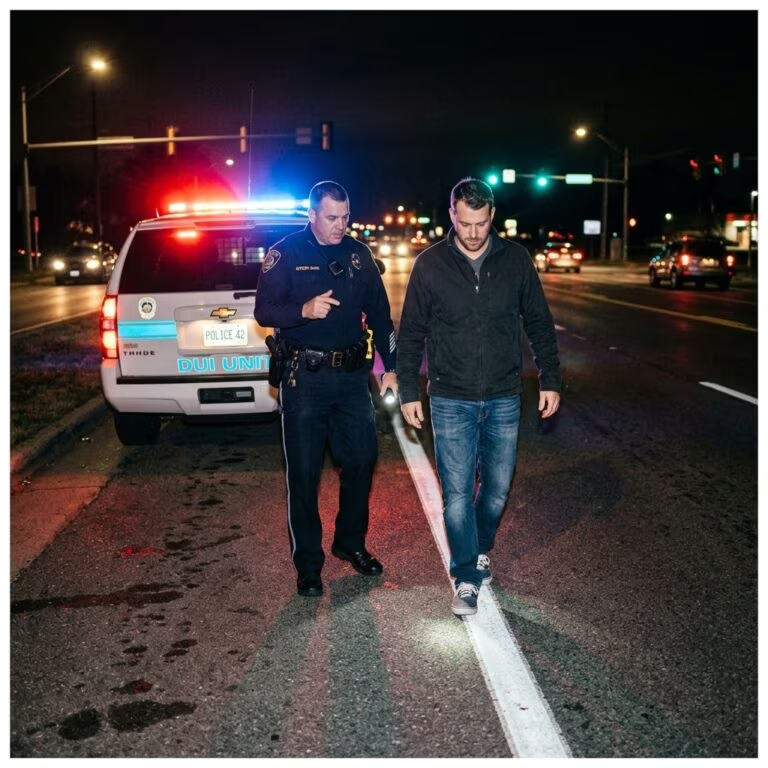
Criminal defendants in the United States benefit from powerful protections embedded in the Bill of Rights and subsequent amendments. These safeguards prevent government overreach, promote fairness, and uphold justice. Primarily, the **Fifth**, **Sixth**, and **Fourteenth Amendments** form the bedrock of these rights, covering everything from self-incrimination protections to trial procedures.
Foundations of Due Process and Fair Treatment
At the heart of American criminal justice lies the principle of due process, which mandates that the government follow established legal procedures before depriving anyone of life, liberty, or property. This concept appears in both the Fifth Amendment, applicable to federal cases, and the Fourteenth Amendment, which extends it to state actions. Without these, arbitrary punishments could occur, undermining democracy.
The Fifth Amendment declares that no person shall be deprived of life, liberty, or property without due process of law. It also prohibits double jeopardy—trying someone twice for the same offense—and protects against forced self-incrimination, famously known as ‘pleading the Fifth.’ These clauses ensure defendants aren’t coerced into confessions or unfairly retried.
Protecting Against Self-Incrimination
Defendants cannot be compelled to testify against themselves in criminal cases. This right, rooted in the Fifth Amendment, allows silence without penalty. Prosecutors may not call defendants as witnesses, and juries cannot infer guilt from silence. This protection extends from arrest through trial, forming the basis for Miranda warnings read during custody.
- Scope: Applies only to criminal proceedings; civil cases may require testimony.
- Impact: Prevents abusive interrogations and preserves defense strategies.
- Historical Note: Ratified in 1791, it counters colonial-era forced confessions.
Double Jeopardy Safeguards
Once acquitted or convicted, defendants cannot face trial again for the same crime. This prevents endless prosecutions until a desired outcome is achieved. Exceptions include mistrials or appeals in specific circumstances, but the core protection stands firm.
Core Trial Rights Under the Sixth Amendment
The Sixth Amendment, ratified in 1791, outlines comprehensive trial protections: speedy and public trials, impartial juries, notice of charges, confrontation of witnesses, compulsory process for defense witnesses, and counsel assistance. These ensure transparency and equity.
Right to a Speedy and Public Trial
Defendants deserve trials without undue delay in open court. ‘Speedy’ is assessed via a four-factor test: case length, government assertion of right, delay reasons, and prejudice. Public trials deter misconduct and allow oversight. Violations can lead to dismissals.
| Factor | Description |
|---|---|
| Length of Delay | Triggers review if excessive (e.g., years). |
| Assertion of Right | Did defendant demand trial promptly? |
| Reason for Delay | Government fault weighs against prosecution. |
| Prejudice | Did delay harm defense (e.g., witness death)? |
Impartial Jury and Venue Rules
Trials occur before juries from the crime’s state and district, previously defined by law. Juries must be unbiased; defendants can challenge biased jurors. For serious crimes, juries need at least six members, though 12 is standard. Waiver allows bench trials.
Notice of the Accusation
Defendants must receive clear charges detailing the crime’s nature and cause. Vague indictments violate this, hindering defense preparation. Preliminary hearings test probable cause.
- Clear specificity on acts alleged.
- Time for evidence gathering and witness interviews.
Confrontation and Compulsory Process
The confrontation clause mandates face-to-face encounters with accusers, enabling cross-examination. Hearsay from unavailable witnesses is often inadmissible. Defendants can also subpoena favorable witnesses via compulsory process.
This duo balances prosecution power, testing testimony reliability in open court.
Assistance of Counsel
Every defendant has a right to a lawyer, even if indigent—courts appoint one at no cost for jail-eligible cases. This stems from landmark rulings like Gideon v. Wainwright (1963), extending to all felony and serious misdemeanor stages.
Fourteenth Amendment: Extending Protections to States
While the Fifth and Sixth apply federally, the Fourteenth Amendment’s Due Process Clause incorporates them against states via selective incorporation. States must provide fair trials, counsel, and more. It also guarantees equal protection, barring discriminatory practices.
For example, indigent state defendants receive appointed counsel per Supreme Court precedents.
Practical Implications in Modern Cases
These rights interplay daily. Consider a theft charge: invoke Fifth Amendment silence during arrest; demand Sixth Amendment speedy trial if delayed; cross-examine witnesses; rely on public defender. Violations prompt motions to suppress evidence or dismiss.
Statistics show rights enforcement reduces wrongful convictions. The Innocence Project credits counsel and confrontation for exonerations.
Common Violations and Remedies
Prosecutorial delays, biased juries, coerced statements occur. Remedies include:
- Suppression Motions: Exclude tainted evidence.
- Dismissals: For speedy trial breaches.
- Appeals: Challenge post-conviction errors.
Attorneys vigilantly assert these to protect clients.
Frequently Asked Questions (FAQs)
Can I represent myself in court?
Yes, but courts advise against it due to complexity. Waiving counsel requires knowing waiver; judges ensure understanding.
What if my trial is delayed too long?
File a motion citing Sixth Amendment factors; extreme cases warrant dismissal.
Does the right to counsel cover appeals?
Not automatically; states vary, but critical stages from indictment onward are covered.
Can I plead the Fifth in civil cases?
Yes, but adverse inferences may apply, unlike criminal trials.
Is a jury always required?
No, for petty offenses ( <6 months) or if waived for bench trial.
Navigating Rights with Professional Help
Understanding these amendments empowers defendants, but legal expertise maximizes them. Consult attorneys early to invoke protections effectively. Free consultations often available via public defenders or pro bono services.
These rights, forged over centuries, balance power, ensuring ‘innocent until proven guilty’ endures.
References
- U.S. Constitution – Sixth Amendment — Library of Congress. N/A. https://constitution.congress.gov/constitution/amendment-6/
- Sixth Amendment | U.S. Constitution — Legal Information Institute, Cornell Law School. N/A. https://www.law.cornell.edu/constitution/sixth_amendment
- Amendment 6 – “The Rights of the Defendant” — Ronald Reagan Presidential Library. N/A. https://www.reaganlibrary.gov/constitutional-amendments-amendment-6-rights-defendant
- Constitutional Rights of Criminal Defendants — Nolo. 2023. https://www.nolo.com/legal-encyclopedia/defendants-rights-during-court-trial-29793.html
- Criminal Defendants’ Legal Rights — Dworken & Bernstein LPA. N/A. https://dworkenlaw.com/criminal-defendants-legal-rights/
- Constitutional Rights in Criminal Law Proceedings — Justia. N/A. https://www.justia.com/criminal/procedure/other-constitutional-rights/