
Kentucky Home Funeral Regulations: Complete Family Guide
Navigate Kentucky's rules for home funerals, burials, cremations, and family-led arrangements without mandatory funeral directors.
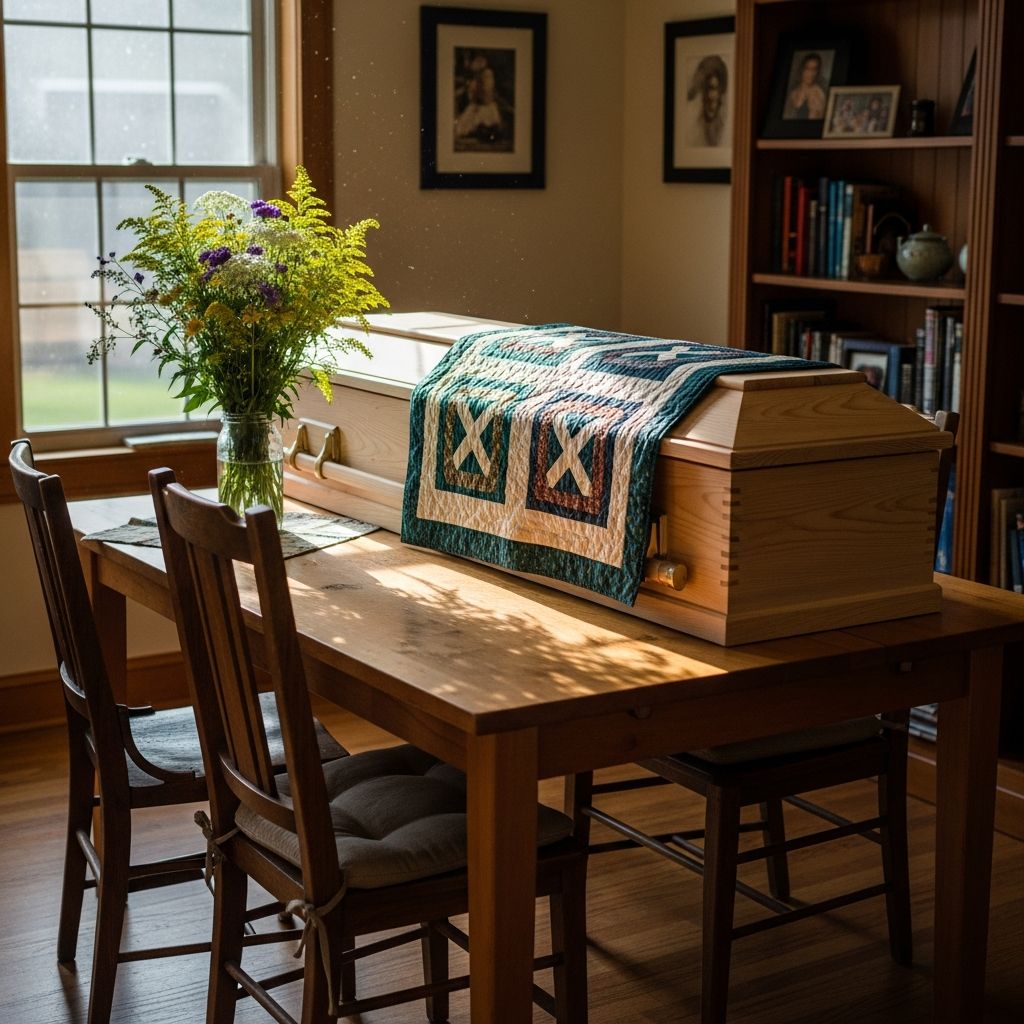
Conducting a home funeral in Kentucky offers families a personal, cost-effective way to honor loved ones without relying on professional funeral services. State laws support family-managed arrangements, provided essential legal steps are followed.
Understanding Home Funerals in Kentucky
A home funeral involves families caring for the deceased at home after death, organizing viewings, and handling final disposition without a funeral director. Kentucky permits this fully, as no statute mandates hiring licensed professionals. This approach aligns with growing preferences for intimate, customized memorials amid rising funeral costs.
Key benefits include emotional closeness during grieving, reduced expenses (often half of traditional funerals), and environmental considerations like skipping embalming chemicals. However, families must manage paperwork, transportation, and health regulations meticulously to comply with state rules.
Legal Framework for Family-Led Arrangements
Kentucky Revised Statutes (KRS) Chapter 213 governs vital records, while Chapter 367 addresses funeral practices. The Federal Trade Commission’s Funeral Rule applies nationwide, protecting consumers by requiring transparent pricing and allowing third-party purchases like caskets.
No state law requires embalming, caskets, vaults, or funeral homes for private dispositions. Families acting in the funeral director’s role assume those responsibilities, such as filing death certificates.
- No funeral director needed: Handle all steps independently.
- FTC protections: Prohibits surcharges on customer-supplied items.
- Preneed contracts: Regulated; funds must trust by registered agents.
Obtaining and Filing Death Certificates
A death certificate is mandatory before any final disposition. The person in charge (family member) must submit a draft to the attending physician, coroner, or medical examiner within five days of death. The professional certifies the cause within five working days.
Once completed, file with the local vital statistics office. This document is essential for closing accounts, claiming benefits, and authorizing burial or cremation. Delays can halt processes; digital filing options exist in some counties.
| Step | Responsible Party | Timeline |
|---|---|---|
| Notify medical authority | Family/person in charge | Within 5 days |
| Certify cause of death | Physician/Coroner | Within 5 working days |
| File with state | Family/person in charge | Promptly after certification |
Handling the Body at Home
Families may keep the body at home for viewing or vigil, refrigerating if needed to slow decomposition (dry ice or units suffice; no embalming required). Transport requires caution: use a sturdy vehicle, secure the body, and avoid public roads without permits if crossing jurisdictions.
Cleaning and dressing occur privately. For public transport (e.g., to crematory), check local health codes, though none mandate embalming statewide. Home vigils can last days, fostering closure.
Burial Options on Private Property
Burial on private land is feasible but regulated. Consult county zoning offices first—rural areas often allow it, urban zones restrict. No casket is legally required, but cemeteries may demand containers.
Depth rules: minimum two feet without casket, three feet with one, per 901 Ky. Admin. Regs. 5:090. Record the site on the property deed with a survey map for future owners. Cities increasingly mandate burial ground maintenance via local ordinances.
- Zoning check: Essential; varies by locality.
- Depth requirements: 2-3 feet based on container.
- Documentation: File map with deed.
Cremation Processes and Requirements
Cremation needs a permit from the coroner or medical examiner, plus a signed authorization from the next-of-kin (in priority order: spouse, adult children, parents, siblings). No waiting period exists beyond paperwork; coroner approval can take 24-48 hours practically.
Families may deliver the body directly to a crematory using alternative containers (cardboard, wood). Costs average lower than burial, with Kentucky’s rate rising due to affordability.
Managing Cremated Remains
Once received, ashes (cremains) can be kept indefinitely, buried, or scattered without further permits. Disposition options include:
- Private property: Owner permission if not yours.
- Cemeteries: Designated gardens available.
- Public lands: Use discretion; no strict enforcement for individuals.
- Water scattering: 3 nautical miles offshore (Clean Water Act); inland needs state permits.
KRS § 367.97524 outlines respectful handling, prohibiting desecration.
Cost Comparisons: Home vs. Traditional Funerals
Home funerals save significantly by avoiding service fees. Here’s a 2026 estimate:
| Category | Home Funeral | Traditional |
|---|---|---|
| Basic services | $0-$500 (DIY) | $2,000-$3,000 |
| Casket/Urn | $200-$1,000 | $2,000-$5,000 |
| Embalming | $0 (optional) | $700-$1,000 |
| Facility/Viewing | $0 (home) | $1,500-$2,500 |
| Burial/Cremation | $500-$2,000 | $1,000-$3,000 |
| Total | $700-$4,000 | $7,200-$14,500 |
Sources note traditional burials hit $10K-$12K; cremation $3K+ with services. Preneed plans lock rates but require trusts.
Practical Steps for Planning a Home Funeral
- Pre-plan: Document wishes in advance directive; appoint a responsible person.
- Death occurs: Pronounce via physician; secure certificate process.
- Care for body: Cool, clean, dress; host vigil.
- Choose disposition: Burial site, crematory; obtain permits.
- Finalize: File records, notify Social Security/VA.
Gather supplies: shroud, cooling unit, permits checklist. Networks like Funeral Consumers Alliance offer templates.
Frequently Asked Questions
Is embalming required for home funerals in Kentucky?
No, embalming is not mandated by state law unless transporting out-of-state or per funeral home policy for viewings.
Can I bury someone on my Kentucky property?
Yes, subject to local zoning; dig to required depth and record location.
Who authorizes cremation?
Next-of-kin in order: spouse, adult children, etc., after coroner permit.
Are burial vaults necessary?
Not by state law, but many cemeteries require them for ground stability.
How do I buy a casket cheaply?
Purchase from third parties; funeral homes must accept without fees per FTC Rule.
Recent Legislative Updates and Considerations
As of 2026, HB 350 emphasizes city oversight of burial grounds maintenance. Monitor KRS Chapter 316 for embalmer/funeral director changes.[10] For veterans or low-income, explore benefits—no statewide aid fund exists.
Consult local health departments for county-specific rules. Home funerals empower families but demand organization.
References
- Arranging a Funeral or Cremation Service in Kentucky — US-Funerals.com. 2024. https://www.us-funerals.com/funeral-guide/kentucky/
- Burial and Cremation Laws in Kentucky — Nolo. 2024. https://www.nolo.com/legal-encyclopedia/burial-cremation-laws-kentucky.html
- 26RS HB 350 — Kentucky Legislative Research Commission. 2026-01-13. https://apps.legislature.ky.gov/record/26rs/hb350.html
- Burial Laws by State 2026 — World Population Review. 2026. https://worldpopulationreview.com/state-rankings/burial-laws-by-state
- Frequent Questions — Franklin Funeral Home KY. 2024. https://www.franklinfuneralhomeky.com/frequent-questions
- Cremation Laws in Kentucky (2026) — Funeral.com. 2026. https://funeral.com/blogs/the-journal/cremation-laws-in-kentucky-2026-waiting-periods-permits-cremation-authorization-next-of-kin-order
- Cremation vs Burial Costs in Indiana and Kentucky (Updated for 2026) — Magnolia Cremations. 2026. https://magnoliacremations.com/blogs/cremation-planning-preplanning/cremation-vs-burial-costs-indiana-kentucky
Similar Articles








Read full bio of Sneha Tete


