Kansas Small Claims Court: A Complete Guide
Navigate Kansas small claims court with confidence: procedures, requirements, and filing essentials.
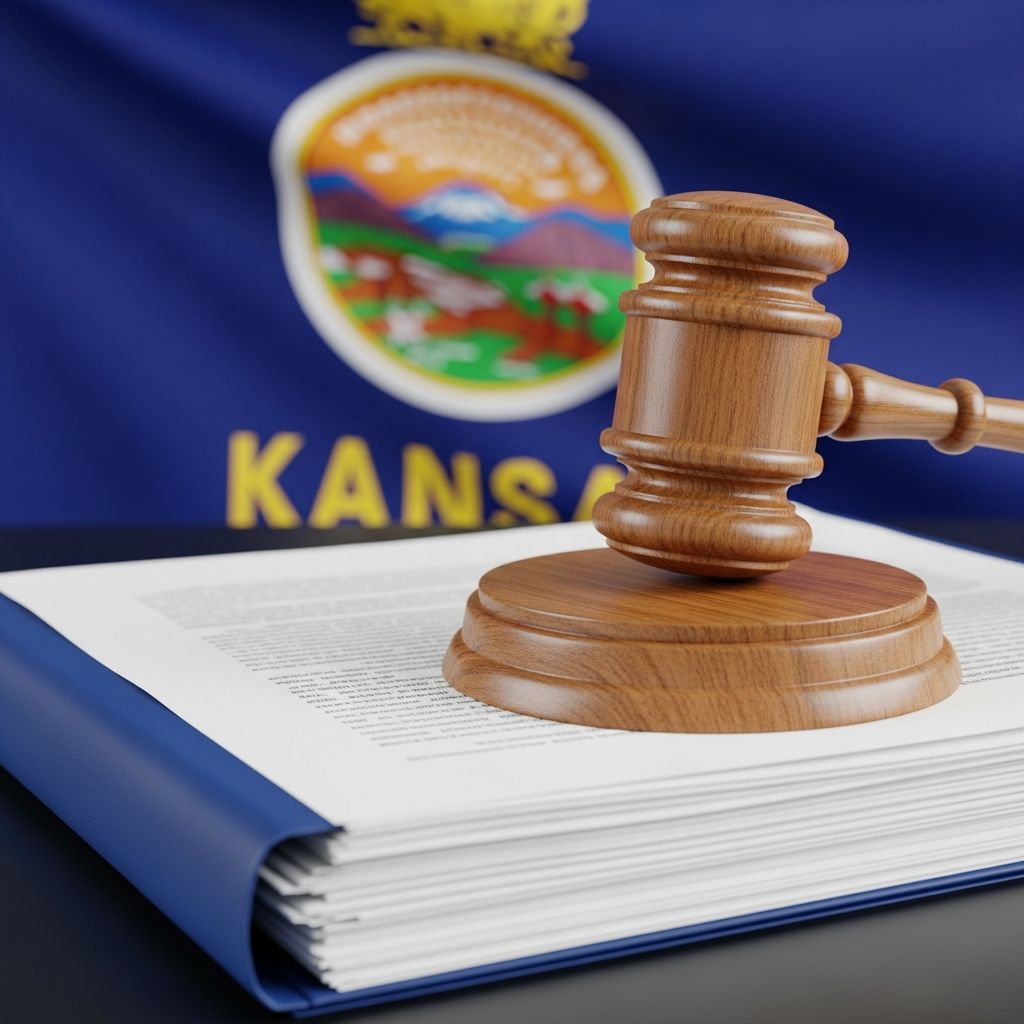
Introduction to Kansas Small Claims Court
Kansas established its small claims court system in 1973 with a specific mission: to provide an accessible, straightforward mechanism for resolving minor legal disputes without the complexity and expense of traditional civil litigation. This specialized court system serves as an important resource for individuals and small businesses seeking to recover money or retrieve property when conventional legal channels would be impractical. The Kansas small claims court operates on the principle that citizens should have a forum to address their grievances efficiently, even when attorney representation is not economically feasible.
The fundamental philosophy underlying Kansas small claims procedures emphasizes simplicity and informality. Rather than navigate the intricate procedural rules that govern standard district court litigation, parties in small claims cases present their arguments directly to a judge or magistrate in a casual setting. This democratic approach to justice ensures that ordinary people can effectively advocate for their own interests without requiring specialized legal knowledge or expensive professional representation.
Understanding Monetary Limits and Case Eligibility
Kansas small claims court has established clear monetary boundaries that define which disputes fall within its jurisdiction. The court accepts cases involving claims for money or property valued at
$10,000 or less
. This threshold creates an important distinction: claims exceeding this amount must be pursued through regular district court procedures, where attorney involvement becomes more common and procedural formality increases significantly.The monetary cap serves multiple purposes within the Kansas legal system. First, it preserves judicial resources by directing smaller disputes away from congested district court dockets. Second, it maintains the accessibility principle by keeping filing costs and overall expenses low for plaintiffs. Third, it prevents the development of complex legal precedents that might undermine the court’s informal character. Understanding this ceiling is crucial for potential claimants, as filing a case for an amount exceeding $10,000 in small claims court will likely result in dismissal or transfer to district court.
Beyond the monetary limitation, eligibility requirements address the parties involved in the dispute. Both the plaintiff (the person filing the claim) and the defendant (the person being sued) must be at least 18 years old. If a minor wishes to file a claim, they must be represented by someone who is 18 or older. This age requirement ensures that participants possess sufficient legal capacity to understand and engage with the court process.
Filing Frequency Restrictions
Kansas law imposes another important constraint on small claims court access: a single individual or business entity cannot file more than a specified number of cases within a calendar year. Different judicial districts have established varying limits, with some counties permitting up to 20 filings annually while others restrict filers to just 10 cases per year. Before initiating a small claims action, potential plaintiffs should contact their county clerk’s office to confirm the filing frequency limit that applies in their jurisdiction.
This restriction exists to prevent abuse of the small claims system and to ensure that the court remains available for individual users rather than serving as a collection mechanism for creditors or businesses. The limitation effectively transforms small claims court into a venue primarily intended for individual disputes rather than high-volume commercial litigation. Those who exceed the filing limit in their district may find themselves unable to pursue legitimate claims for the remainder of that calendar year.
Attorney Representation: A Key Distinction
One of the most significant characteristics distinguishing Kansas small claims court from regular civil proceedings concerns attorney involvement. Kansas law explicitly prohibits parties from being represented by attorneys in small claims cases, with a critical exception: if one party is a lawyer personally involved in the dispute, or if an attorney is suing another party, then the opposing side has the right to retain counsel or proceed without representation. This restriction fundamentally shapes the nature of small claims proceedings and reflects the court’s design as a forum for self-representation.
This no-attorney rule stems from the democratic ideal that citizens should be able to resolve modest disputes independently. By eliminating the financial burden of attorney fees, the court becomes genuinely accessible to individuals who cannot afford legal representation. The informal procedures and simplified rules of evidence make attorney assistance less essential than in complex commercial or criminal cases. However, parties may benefit from consulting an attorney beforehand to evaluate their legal position before appearing in court themselves.
Determining the Correct Filing Location
Kansas provides multiple venues where a plaintiff may file a small claims action, depending on the defendant’s connection to the state and the nature of the claim. A plaintiff suing an individual Kansas resident may initiate proceedings in the district court of any county where one of the following conditions is satisfied:
- The defendant resides
- The plaintiff lives, provided the defendant is served there
- The defendant works, if service is accomplished at that location
- The property at issue is located
- The incident giving rise to the claim occurred and the defendant resided there at that time
For defendants who are corporations or non-Kansas residents, additional considerations apply. Plaintiffs should consult venue information sheets provided by their local judicial district, as rules governing out-of-state defendants and business entities contain more complex requirements designed to ensure that defendants receive adequate notice and have a fair opportunity to appear in court.
The Filing Process and Required Documentation
Initiating a small claims action in Kansas begins with a visit to the Clerk of the District Court office in the appropriate county. This official serves as the gateway to the small claims system and provides essential forms and guidance. The clerk will furnish a small claims filing packet containing all necessary documents for pursuing the claim.
The centerpiece of any small claims filing is the petition, a formal written statement describing the claim. The petition should clearly identify the defendant by name and address, explain the nature of the dispute, specify the amount of money or value of property being sought, and provide a concise factual narrative supporting the claim. The petition may be completed either at the clerk’s office or taken home for careful preparation. Kansas law permits either typed or handwritten petitions, though handwritten documents must be printed clearly to ensure readability by court staff and the judge.
Before the petition can be processed, it must be signed before a notary public or one of the employees in the clerk’s office. This verification step authenticates the document and confirms that the plaintiff understands the claims being made. Once signed and notarized, the plaintiff must submit the petition along with payment of the required filing fee to the clerk.
Understanding Court Costs and Fees
Kansas small claims court maintains a tiered fee structure designed to keep costs proportional to the claim amount. For claims valued at $500 or less, the filing fee is $47.50. Claims exceeding $500 but not surpassing $10,000 require a filing fee of $67.50. These modest fees represent a significant savings compared to regular district court filing costs, making small claims an economically viable option for individuals with modest claims.
Beyond the filing fee, plaintiffs must budget for service of process charges. When the defendant is personally served with the summons and petition (rather than served by publication or other alternative methods), the sheriff’s office charges an additional fee of $15 for this service. This fee must be paid simultaneously with the filing fee through a separate check or money order made payable to the “County Sheriff’s Office,” never combined with the filing fee payment.
If a plaintiff wishes to subpoena witnesses to testify at trial, additional costs arise. Each subpoenaed witness receives a $10 witness fee plus mileage reimbursement calculated at rates established by Kansas law. Plaintiffs should factor these potential costs into their decision to pursue a claim, as witness testimony can significantly strengthen a case but adds to the overall expense of litigation.
Service of Process and Notice Requirements
After the clerk processes the petition and establishes a trial date, the court directs the sheriff to serve the defendant with a summons and a copy of the plaintiff’s claim. This service of process notifies the defendant of the lawsuit and provides notice of the hearing date. The summons is an official court document ordering the defendant to appear at the designated time and place.
In some circumstances, the defendant may not be personally served. Kansas law permits alternative service methods when personal service proves impossible or impractical. These alternatives might include certified mail, publication in a newspaper (for defendants whose whereabouts are unknown), or other court-approved methods. The specific alternative service procedures vary by county, so plaintiffs should discuss available options with the clerk.
The Small Claims Trial: What to Expect
Kansas small claims trials are conducted informally by a district judge or magistrate judge, typically allocating 15 minutes per case. The plaintiff, as the party bringing the claim, bears the burden of proving their case by presenting sufficient evidence to convince the judge that they are entitled to recover. This burden means the plaintiff must establish their claim through testimony, documents, photographs, receipts, contracts, or other evidence.
During the hearing, both the plaintiff and defendant present their respective positions. Each party may testify, examine their own witnesses, and present physical evidence such as photographs, receipts, or written documents. The judge and the opposing party may question witnesses about their testimony and the reliability of evidence. Unlike formal trials with strict rules of evidence, small claims proceedings permit more flexible introduction of evidence to ensure that relevant information reaches the judge.
If the defendant files a counterclaim asserting that the plaintiff owes them money or property, the defendant becomes a claimant on that counterclaim and must present evidence supporting it. The judge will address both the plaintiff’s claim and any counterclaim in a single judgment.
Preparing Effective Evidence for Trial
Success in small claims court depends largely on thorough evidence preparation. Plaintiffs should gather all documents relevant to their dispute, including contracts, invoices, receipts, photographs, text messages, emails, and written correspondence with the defendant. These materials provide concrete proof supporting the claim’s factual basis.
When assembling evidence, plaintiffs should organize materials chronologically or by topic to create a logical narrative arc. This organization helps the judge follow the story of the dispute and understand the plaintiff’s position. Bringing originals of important documents is preferable, though copies are generally acceptable if legible.
Witness testimony can significantly enhance a case, particularly when witnesses have direct knowledge of events in dispute. Plaintiffs should identify potential witnesses early and discuss their willingness to testify. A witness who provides independent corroboration of a plaintiff’s account often proves more persuasive than the plaintiff’s solo testimony.
Post-Judgment Collection and Enforcement
Obtaining a favorable judgment does not automatically result in receiving payment. If the defendant fails to pay the judgment voluntarily, the plaintiff may need to pursue collection efforts. Kansas provides mechanisms for enforcing judgments, including garnishment of wages or bank accounts, liens on property, and contempt proceedings against defendants who willfully refuse to pay.
The enforcement process requires filing additional motions with the court and may involve obtaining information about the defendant’s assets and income. Many winning plaintiffs discover that collection presents a greater challenge than securing the judgment itself, particularly when defendants lack sufficient assets or income to satisfy the award.
Special Considerations: Small Claims Procedures by County
Kansas law permits individual judicial districts and counties to establish specific procedures for small claims cases within certain parameters. While the basic framework remains consistent across the state, particular counties may impose additional requirements or establish unique processes. For example, some counties might require that petitions be filed in person, while others may accept mail filings. Certain jurisdictions might have specific forms beyond those provided by the Kansas Judicial Council.
Because procedures vary by county, the Kansas Legal Services organization and the Kansas Bar Association recommend that prospective litigants contact their local clerk’s office before initiating proceedings. The clerk can provide current information about local rules, required forms, filing deadlines, and any jurisdiction-specific procedures that might affect the plaintiff’s case.
Frequently Asked Questions
Q: Can I appeal a small claims judgment if I disagree with the judge’s decision?
A: Yes, Kansas permits appeals from small claims judgments to the district court for a new trial de novo, meaning the case is reconsidered from the beginning. However, specific procedures and timeframes apply, so parties should consult with the clerk’s office about appeal requirements.
Q: What happens if the defendant does not appear at the scheduled hearing?
A: If the defendant fails to appear without legitimate excuse, the plaintiff may request a default judgment, which constitutes a judgment in the plaintiff’s favor without requiring presentation of evidence. However, the defendant may challenge the default judgment later by showing good cause for their absence.
Q: Can I file a small claims case against a business or corporation?
A: Yes, businesses and corporations can be sued in Kansas small claims court, provided the claim amount falls within the $10,000 limit. Proper service of process on the business entity must be accomplished according to Kansas law.
Q: Are there any claims that small claims court cannot hear?
A: Small claims court focuses on disputes involving money or property recovery. Certain types of claims, such as eviction cases, divorce matters, or cases seeking equitable relief rather than money damages, may require filing in regular district court instead.
Q: How long does a small claims case typically take from filing to judgment?
A: The timeline varies by county and court availability, but many cases proceed from filing to trial within two to six months. The clerk’s office can provide estimates based on current court schedules in your specific jurisdiction.
References
- Small Claims Court – Basic Information — Kansas Legal Services. Accessed January 2026. https://www.kansaslegalservices.org/node/2625/small-claims-court-basic-information
- Small Claims Court – Basic Information — Kansas Legal Services. Accessed January 2026. https://www.kansaslegalservices.org/page/2626/small-claims-court-basic-information
- Small Claims Court – 6th Judicial District — Kansas Court System. Accessed January 2026. https://kscourts.gov/6th-Judicial-District/6th-Judicial-District/Resources/Small-Claims
- About Small Claims Court — Kansas Bar Association. Accessed January 2026. https://ksbar.org/?pg=You-Heard-It-Here&blAction=showEntry&blogEntry=128247
Similar Articles







Read full bio of Sneha Tete