
Kansas Foster Care System Faces Ongoing Class Action
Federal litigation forces systemic reforms in the Kansas foster care network.
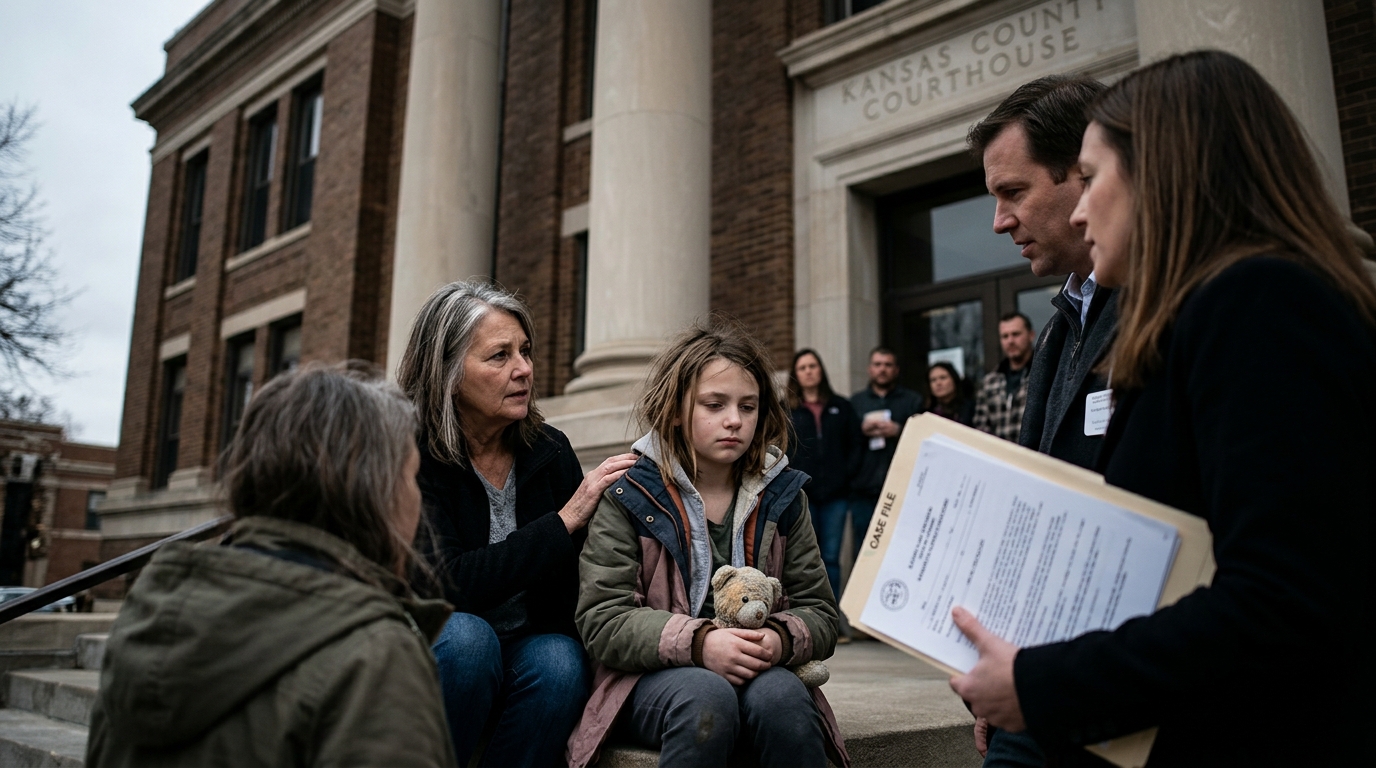
The Crisis in the Kansas Child Welfare System
The American child welfare system is ostensibly designed to be a temporary, stabilizing safety net for the nation’s most vulnerable youth. However, for thousands of children navigating the foster care infrastructure in Kansas, the state’s safety net has frequently transformed into a traumatic labyrinth of instability and neglect. The ongoing class-action lawsuit against the Kansas Department for Children and Families (DCF), formally recognized in federal legal dockets as M.B. v. Howard, represents one of the most significant legal battles regarding child welfare in recent history. Originally filed to address extreme placement disruptions and severe gaps in mental health services, the litigation has recently drawn renewed public scrutiny as children continue to face a system struggling to execute court-mandated reforms.
This article delves deep into the structural failures that precipitated this landmark civil rights litigation, the intricacies of the federal settlement designed to overhaul the Kansas foster care network, and the sobering reality of why legal action remains a persistent necessity. By examining the state’s ongoing legal obligations and the lived experiences of the children in its custody, we can better understand the monumental task of holding government agencies accountable for the lives they are sworn to protect.
The Catalyst for Legal Intervention
To comprehend the magnitude of the ongoing class action, one must first examine the dire conditions that forced advocates to seek federal intervention in November 2018. At the time the lawsuit was filed, the Kansas child welfare system was buckling under the weight of severe administrative mismanagement, a severe shortage of licensed foster homes, and an overreliance on private contractors who failed to meet basic operational standards.
The most egregious manifestation of this systemic collapse was the profound housing instability forced upon traumatized youth. Child welfare advocates gathered horrifying testimonies of children being subjected to “night-to-night” placements. In this dystopian practice, a child would be dropped off at a temporary foster home late at night, only to be picked up early the next morning. During the day, these children were routinely housed in the administrative offices of child welfare contractors because there was simply nowhere else for them to go. Many children reported sleeping on office floors or in cubicles, lacking access to showers, warm meals, or educational continuity.
Furthermore, some children experienced staggering rates of placement changes, with case files documenting youth who were moved anywhere from tens to over one hundred times during their tenure in state custody. This chronic instability directly violated the state’s constitutional obligations. Under the Fourteenth Amendment, when a state assumes custody of a child, it assumes an affirmative duty to ensure their basic safety and well-being. Housing children in commercial office buildings and shuffling them relentlessly constituted a clear breach of this constitutional mandate.
Violations of the Federal Medicaid Act
Beyond the immediate physical dangers of housing instability, the lawsuit heavily targeted the Kansas DCF, the Department of Health and Environment, and the Department for Aging and Disability Services for severe violations of the federal Medicaid Act. Foster children are categorically eligible for comprehensive healthcare coverage under Medicaid, specifically the Early and Periodic Screening, Diagnostic, and Treatment (EPSDT) provision. This mandate is considered the gold standard of pediatric care, requiring states to actively seek out and treat physical and mental illnesses.
However, the transient nature of the Kansas foster system made it virtually impossible for children to receive consistent care. When a child is moved to a new county or a new home every few days, establishing a therapeutic relationship with a mental health professional becomes an insurmountable hurdle. Plaintiffs argued that the state routinely failed to provide necessary mental health screenings, trauma-informed behavioral interventions, and crisis support. For children who had already been removed from their families due to abuse, the denial of prompt psychological care compounded their trauma, often leading to severe behavioral escalations that the system was fundamentally unequipped to handle.
The 2021 Settlement Agreement: Promises of Reform
After years of rigorous legal posturing, a federal judge approved a comprehensive settlement agreement in January 2021. The agreement was hailed as a transformative victory for children’s rights, aiming to fundamentally restructure the priorities and operations of Kansas’s child welfare apparatus. Instead of seeking monetary damages, the plaintiffs sought sweeping injunctive relief—court-ordered mandates compelling the state to change its practices.
The settlement required the state to hit and maintain specific, measurable benchmarks, validated by a neutral independent monitor from the Center for the Study of Social Policy. To successfully exit court oversight, the state must hit these target metrics for a twelve-month period and successfully hold them for another consecutive twelve months.
Key Practice Improvements Mandated by the Court
| Settlement Mandate | Description of Legal Obligation |
|---|---|
| Eliminate Office Housing | An absolute end to the practice of housing children overnight in administrative offices, hotels, or other unlicensed, non-welfare facilities. |
| End Night-to-Night Placements | Cessation of short-term, temporary placements that require children to move daily without establishing a stable living environment. |
| Placement Stability Metrics | Achieving specific, low average rates of placement moves per 1,000 days in foster care to ensure children can establish roots in a community. |
| Timely Mental Health Screening | Ensuring that every child entering state custody receives a comprehensive mental health and trauma screening within their first 30 days. |
| Crisis Intervention Services | Developing and funding a robust, statewide crisis response system to support foster families and prevent sudden placement disruptions. |
A System Still Struggling: Expanding the Class Action
While the 2021 settlement represented a monumental legal achievement on paper, the reality of its implementation has proven to be a complex and highly contested endeavor. Annual progress reports generated by the neutral monitor have illuminated a mixed landscape of success and continued failure, explaining why the litigation remains active and why the class of affected plaintiffs continues to expand.
The state has made undeniable progress in certain administrative domains, such as expanding crisis hotline infrastructure and formally revising contracts with private case management providers to align with the lawsuit’s mandates. However, deeply entrenched logistical and workforce challenges have hindered full compliance. Child advocates continue to raise alarms over the lingering usage of unlicensed temporary accommodations and the alarming trend of placement instability for older youth with profound behavioral health needs.
Furthermore, new concerns have emerged regarding the inadvertent diversion of foster youth into the juvenile justice system. When the child welfare system fails to provide adequate psychiatric interventions, youth in crisis may exhibit behaviors that result in law enforcement intervention. Consequently, children who desperately need therapeutic care are instead funneled into detention facilities. Because the settlement covers all children who are currently or will be in the state’s custody, the continuous influx of youth into a system that has not fully corrected its foundational flaws means the class of affected children is continuously expanding.
The Human Toll of Systemic Instability
The legal jargon of “placement instability” and “injunctive relief” often obscures the profound human tragedy at the heart of this litigation. Child psychology and neurobiology experts universally agree that stability and secure attachments are the bedrock of healthy childhood development. When a state agency disrupts that stability, the psychological ramifications can be irreversible. A child who is moved through ten, twenty, or fifty different placements internalizes a deep sense of unworthiness and hyper-vigilance.
The constant uprooting disrupts educational trajectories, resulting in abysmal graduation rates for foster youth. It severs ties with siblings, extended family members, and community support systems. The brain, locked in a perpetual state of survival mode, struggles to develop the executive functioning and emotional regulation skills necessary for successful independent adulthood. By forcing the state to recognize these damages through federal court oversight, the lawsuit emphasizes that child welfare agencies are constitutionally and morally obligated to provide an environment where healing from past trauma is possible.
The Path Forward and True Accountability
The future of the Kansas child welfare system hinges on transparent accountability and sustained political will. The federal court’s oversight mechanism ensures that the state cannot quietly abandon its commitments when public attention wanes. Moving forward, Kansas must heavily invest in recruiting and retaining highly trained foster families capable of handling complex behavioral needs. Additionally, the state must aggressively expand its mental health workforce to ensure that community-based therapeutic interventions are accessible in every county.
True accountability also requires addressing the immense caseloads burdened by child welfare workers. High turnover rates among social workers exacerbate placement instability, as children are constantly passed between new case managers who are unfamiliar with their histories. Stabilizing the workforce is an unavoidable prerequisite to stabilizing the lives of the children they serve. Until these structural deficits are fully rectified, advocates will undoubtedly keep the pressure on the state through the judicial system.
Frequently Asked Questions (FAQs)
- What is a class-action lawsuit in the context of child welfare?
A class-action lawsuit allows one or a small group of plaintiffs to sue on behalf of a much larger group of people facing the same systemic harm. In this case, a few named foster children sued on behalf of all children currently in, or who will enter, the Kansas foster care system, ensuring that any court-ordered reforms benefit the entire population. - Who are the primary defendants in the M.B. v. Howard case?
The lawsuit was filed against the top officials responsible for the state’s child welfare and health systems in their official capacities. This includes the Secretary of the Kansas Department for Children and Families (DCF), the Secretary of the Kansas Department of Health and Environment (KDHE), and the Secretary of the Kansas Department for Aging and Disability Services (KDADS). - What happens if the state fails to meet the settlement requirements?
If the state consistently fails to meet the mandated performance goals and practice improvements, the plaintiffs can file motions to enforce the agreement. The federal judge overseeing the case has the authority to issue further orders, compel specific actions, or impose sanctions to ensure the state complies with its legal obligations. - Does the lawsuit seek financial compensation for the foster children?
No. This specific lawsuit seeks “injunctive relief,” meaning it asks the federal court to order the state to fix the broken system and change its policies and practices, rather than demanding financial payouts for past harms.
References
- Federal Judge Approves Child Welfare Settlement Agreement — Kansas Department for Children and Families. 2021-01-28. https://www.dcf.ks.gov
- McIntyre v. Howard — National Center for Youth Law. 2023-08-14. https://youthlaw.org/cases/mb-v-howard
- Neutral’s Annual McIntyre v. Howard Progress Report — Center for the Study of Social Policy. 2024-12-17. https://cssp.org/our-work/project/mcintyre-v-howard/
- UNITED STATES DISTRICT COURT FOR THE DISTRICT OF KANSAS M.B. and S.E. through their next friend Katharyn McIntyre, et al., v. Laura Howard — U.S. District Court of Kansas. 2021-01-22. https://www.ksd.uscourts.gov/
Similar Articles








Read full bio of Sneha Tete


