
A Vision for Equality: Kamala Harris and LGBTQ+ Rights
Exploring how a Kamala Harris presidency could impact LGBTQ+ civil rights.
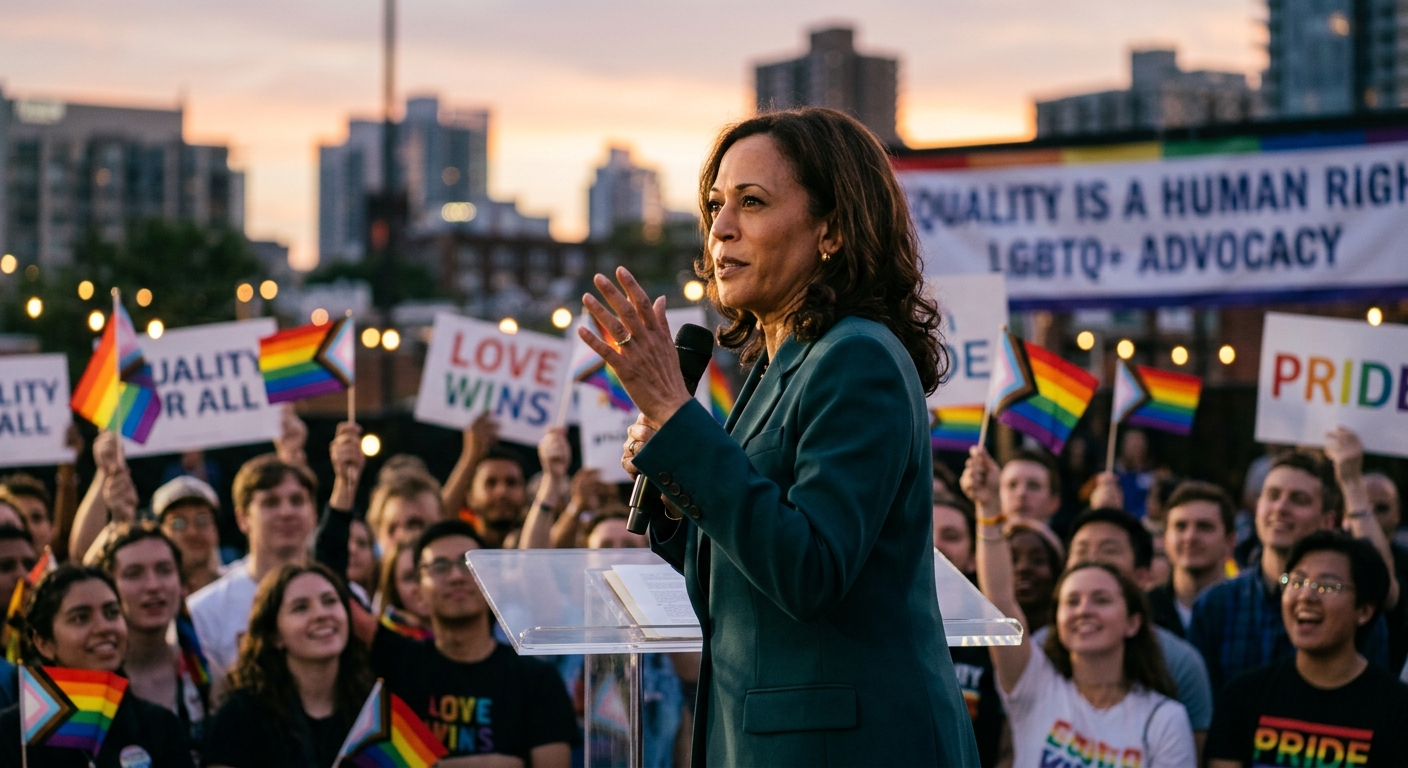
Navigating the Intersection of Politics and Civil Liberties
In an era defined by intensifying legislative battles over bodily autonomy and personal identity, the future of the American presidency holds immense consequences for marginalized communities. Over the last few years, a wave of state-level legislation has explicitly targeted the LGBTQ+ community, focusing heavily on transgender youth, their access to health care, and their right to participate in public life. In this highly polarized climate, civil rights organizations and advocates are closely examining the potential impacts of a Kamala Harris presidency. The federal government plays an essential role in either mitigating or exacerbating these state-level inequities. As a result, equality voters and political strategists alike are mapping out the contours of a future administration to determine if it will serve as an aggressive champion for marginalized people.
For many within the LGBTQ+ community, Harris represents a familiar and formidable ally. Her political trajectory—from a local prosecutor to the Vice President of the United States—has been closely intertwined with the modern fight for queer rights. However, exploring what a Harris presidency promises requires looking beyond political rhetoric. It demands a rigorous analysis of her historical track record, the actions taken during the Biden-Harris administration, and the specific policy blueprints that progressive organizations are pushing her to adopt. The stakes have never been higher; with the conservative supermajority on the Supreme Court and emboldened state legislatures, the executive branch remains one of the most critical bulwarks against the erosion of civil liberties.
Tracing the Arc: Harris’s Historical Blueprint on LGBTQ+ Protections
To understand what Kamala Harris might do in the Oval Office, one must examine her foundational years in California politics. Her approach to LGBTQ+ rights was forged in San Francisco, a city with a rich, albeit turbulent, history of queer activism. When Harris served as the city’s District Attorney in the early 2000s, she made headlines by creating a specialized hate crimes unit designed specifically to prosecute violence against LGBTQ+ individuals. Furthermore, during the famous “Winter of Love” in 2004, when San Francisco Mayor Gavin Newsom directed the city to issue marriage licenses to same-sex couples in defiance of state law, Harris was visibly supportive, officiating some of these historic—though later nullified—unions.
Her elevation to California Attorney General brought a broader platform. One of her most significant actions was her refusal to defend Proposition 8, the state constitutional amendment that temporarily banned same-sex marriage, arguing that it violated the U.S. Constitution. Additionally, she spearheaded efforts to eliminate the so-called “gay panic” and “trans panic” defenses in criminal trials, setting a precedent that several other states would eventually follow.
However, her prosecutorial record is not without its complexities. During her tenure as Attorney General, Harris faced criticism from some progressive advocates regarding the state’s treatment of incarcerated transgender individuals, specifically concerning access to gender-affirming surgeries in prison. While she later stated she took full responsibility for her office’s legal briefs and maintained that she worked internally to change the policy, these moments highlight the tension between her role as top law enforcement officer and a civil rights advocate. By the time she reached the U.S. Senate, her legislative priorities heavily favored equality, most notably through her ardent co-sponsorship of the Equality Act, which seeks to provide sweeping federal non-discrimination protections for the LGBTQ+ community.
The Biden-Harris Administration: A Catalyst for Federal Action
As Vice President, Kamala Harris has been a key architect of an administration that has actively sought to dismantle the restrictive policies of its predecessor. The Biden-Harris White House has made LGBTQ+ rights a cornerstone of its domestic policy agenda. From day one, the administration moved to reverse the ban on transgender individuals serving openly in the military, signaling a stark departure from the previous administration’s exclusionary tactics.
A landmark achievement of their executive strategy has been the broad interpretation and enforcement of the Supreme Court’s ruling in Bostock v. Clayton County. The administration ordered all federal agencies to ensure that the protections against sex discrimination outlined in the Civil Rights Act of 1964 are understood to include sexual orientation and gender identity. This directive effectively expanded protections in housing, healthcare, credit lending, and education across the federal landscape.
Furthermore, the Biden-Harris Department of Justice has been proactive in challenging state laws that infringe upon queer rights. The DOJ has filed lawsuits and statements of interest against several states attempting to ban medically necessary, gender-affirming health care for transgender adolescents. This aggressive litigation strategy underscores the administration’s willingness to use federal authority to combat state-sanctioned discrimination, providing a strong indicator of how a Harris-led executive branch would operate.
The Rising Tide of Anti-LGBTQ+ Legislation
Understanding the potential of a Harris presidency requires acknowledging the severe headwinds facing the LGBTQ+ community today. Over the past four years, the United States has witnessed an unprecedented surge in bills targeting queer individuals. State legislatures have introduced hundreds of measures aimed at restricting transgender youth from participating in school sports, banning the discussion of LGBTQ+ topics in classrooms, and criminalizing healthcare providers who offer gender-affirming care.
These legislative maneuvers are not occurring in isolation; they are part of a coordinated national strategy by conservative groups to roll back decades of progress. The implications of this regressive movement extend far beyond the immediate targets. It fundamentally threatens the broader framework of civil rights in America, raising alarming questions about the privacy, autonomy, and freedoms of all citizens. The psychological toll on LGBTQ+ youth, who see their existence debated and delegitimized in state capitols, is immeasurable and requires an urgent, compassionate federal response.
This hostile environment has created a patchwork of rights across the country, where an individual’s civil liberties are largely dictated by their zip code. For families with transgender children, this has led to heartbreaking decisions, with many forced to flee their home states to access essential medical care and secure a safe educational environment. The systemic nature of these attacks has placed immense pressure on the federal government to intervene. Advocates argue that an administration deeply committed to equality is the only viable counterweight to these state-level assaults, making the prospect of a Harris presidency a beacon of hope for a community under siege.
A Blueprint for a Harris Administration
Civil rights organizations have already begun outlining a comprehensive roadmap for a potential Harris presidency. If elected, advocates expect her to immediately utilize the power of the executive pen to reinforce and expand protections. A primary focus will likely be an executive order directing federal agencies to affirmatively enhance access to gender-affirming care within federally funded programs. This would serve as a powerful counter-narrative to the state-level bans currently sweeping the nation.
Moreover, a Harris administration would be tasked with solidifying the gains made under Title IX, ensuring that educational institutions receiving federal funding cannot discriminate against students based on their gender identity. There is also a strong expectation that she would prioritize the passage of the Equality Act, using the full weight of the presidency to lobby Congress and navigate the legislative gridlock that has stalled the bill for years.
Key Policy Expectations Under a Harris Presidency
- Enshrining Non-Discrimination: Comprehensive executive action to solidify Bostock v. Clayton County protections across every federal department, ensuring LGBTQ+ individuals face no barriers in housing, loans, and employment.
- Combating State Health Care Bans: Directing the Department of Justice to aggressively litigate against state laws that criminalize or restrict gender-affirming care for youth and adults alike.
- Prioritizing the Equality Act: Utilizing presidential influence to champion the Equality Act in Congress, securing a permanent, nationwide civil rights framework for LGBTQ+ Americans.
- Global Human Rights Advocacy: Integrating LGBTQ+ rights firmly into U.S. foreign policy, penalizing nations that persecute queer populations and offering asylum protections to international refugees.
| Policy Area | Past Challenges & Barriers | Potential Harris Administration Actions |
|---|---|---|
| Healthcare Access | State-level bans criminalizing providers; restrictions on insurance coverage for trans individuals. | Executive orders mandating non-discrimination in federally funded health programs; DOJ litigation against state bans. |
| Federal Legislation | Stalled progress on comprehensive civil rights protections due to congressional filibusters. | Aggressive executive lobbying for the Equality Act; embedding protections into federal contractor requirements. |
| Judicial Strategy | Conservative packing of lower courts leading to unfavorable rulings on LGBTQ+ rights. | Nominating judges with diverse backgrounds and strong civil rights experience to reshape the federal bench. |
| Education | Book bans and “Don’t Say Gay” bills proliferating across conservative states. | Strict enforcement of Title IX protections; withholding federal funding from non-compliant districts. |
The Critical Role of the Judiciary
Beyond executive orders and legislative lobbying, the most enduring impact of any presidency lies in its judicial appointments. The federal courts are the ultimate arbiters of civil rights, and the current conservative tilt of the Supreme Court has cast a long shadow over the future of LGBTQ+ liberties. A Harris presidency would be essential in nominating federal judges who possess a deep understanding of civil rights law and a commitment to upholding the constitutional protections of all Americans, regardless of their sexual orientation or gender identity. Filling vacancies on the district and appellate courts with equality-minded jurists would be a critical strategy to insulate the community against future legal challenges and rollbacks from conservative legislatures.
Frequently Asked Questions (FAQ)
What was Kamala Harris’s stance on Proposition 8?
As the Attorney General of California, Kamala Harris famously refused to defend Proposition 8, a ballot initiative that banned same-sex marriage in the state. She argued that the ban was unconstitutional and violated the civil rights of LGBTQ+ Californians, a stance that helped pave the way for the eventual legal restoration of marriage equality in the state.
How would a Harris presidency address the current bans on gender-affirming care?
Advocates expect a Harris administration to direct the Department of Justice to continue and expand its lawsuits against states that implement healthcare bans. Additionally, she would likely use executive orders to ensure that all federally funded healthcare programs provide access to gender-affirming care, utilizing federal leverage to counteract state restrictions.
What is the Equality Act?
The Equality Act is comprehensive federal legislation that would amend the Civil Rights Act of 1964 to explicitly prohibit discrimination based on sex, sexual orientation, and gender identity in areas including employment, housing, public accommodations, education, and federally funded programs. Kamala Harris has been a staunch supporter and co-sponsor of the bill during her time in the Senate.
The Path Forward: Sustaining the Fight for Equality
The prospect of a Kamala Harris presidency offers a distinct and protective vision for the future of LGBTQ+ rights in the United States. While no single administration can completely eradicate prejudice or single-handedly dismantle systemic discrimination, the executive branch holds unparalleled power to set the national agenda, direct federal resources, and enforce civil rights laws. As anti-LGBTQ+ rhetoric continues to escalate in various parts of the country, the commitment of the President to serve as a bulwark against these attacks is of paramount importance.
For equality advocates, a Harris administration represents not just the continuation of the progress made over the last four years, but an opportunity to push the boundaries of federal protection even further. It is a promise of a government that recognizes the humanity of every individual and actively works to ensure that the constitutional guarantee of liberty and justice applies to all. Every executive action, judicial appointment, and legislative push carries the weight of history and the hopes of millions. The LGBTQ+ community has long relied on resilience and grassroots organizing to weather political storms. Yet, pairing that grassroots power with an administration fully committed to structural equality can transform temporary legal victories into lasting, generational change. A Harris presidency would not just be a continuation of current policies; it would be a critical defining epoch in the enduring fight for human dignity.
References
- Harris on LGBTQ Rights: Building on a Legacy of Undoing Harm — American Civil Liberties Union. 2024-08-13. https://www.aclu.org/news/lgbtq-rights/why-a-harris-presidency-promises-hope-for-lgbtq-rights
- Statement of Administration Policy: S.J. Res. 42 (Bostock v. Clayton County Application) — The White House. 2023-10-26. https://www.whitehouse.gov/wp-content/uploads/2023/10/SAP-S.J.-Res.-42.pdf
- Fact Sheet: Kamala Harris on LGBTQ Issues — GLAAD. 2024-07-31. https://glaad.org/fact-sheet-kamala-harris-lgbtq-issues-jobs-economy-housing/
Similar Articles








Read full bio of Sneha Tete


