
Juvenile Life Without Parole: Constitutional Battles and Evolving Standards
How the Supreme Court reshaped juvenile sentencing, parole eligibility, and the meaning of cruel and unusual punishment in America.
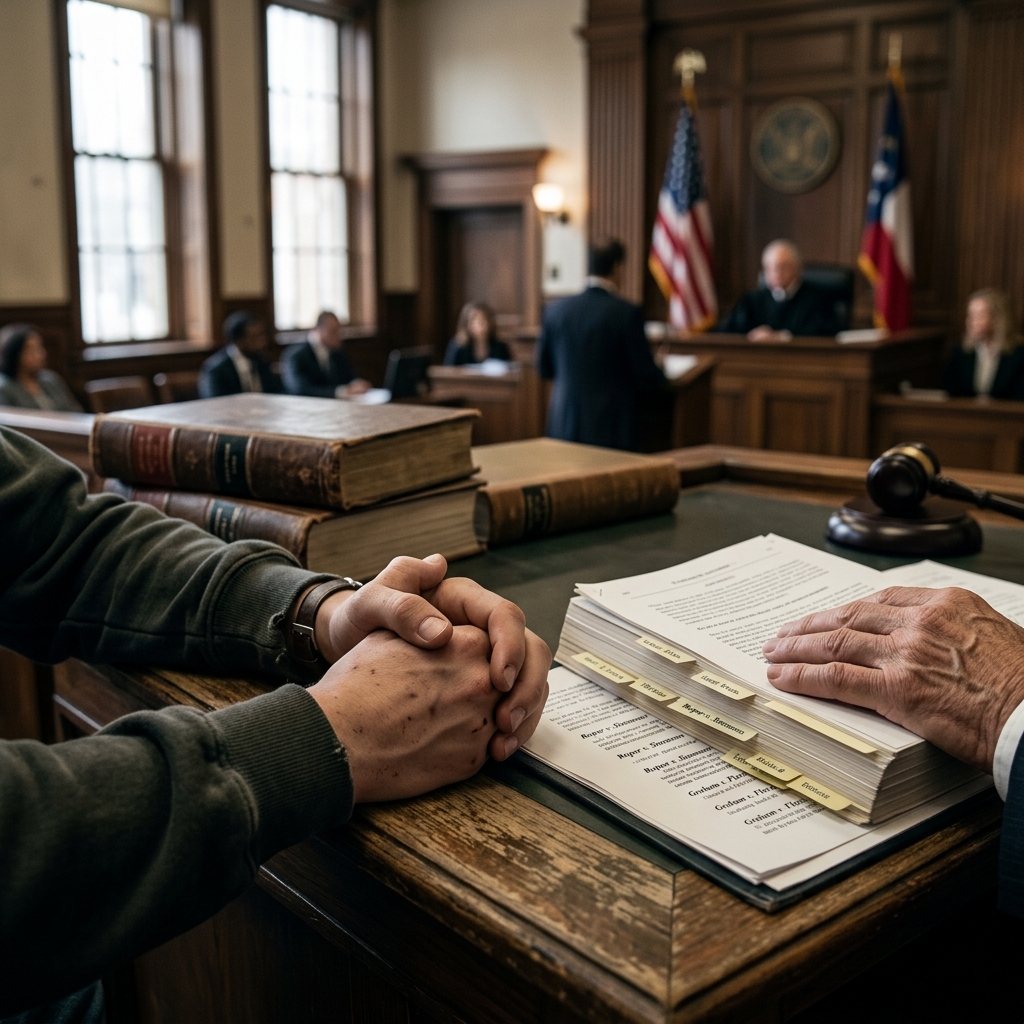
For much of modern American history, children convicted of serious crimes could be sentenced to life imprisonment without the possibility of parole, often under rigid mandatory sentencing schemes. Over the last two decades, however, the U.S. Supreme Court has fundamentally altered the constitutional landscape for juvenile sentencing, forcing courts and legislatures to confront the question: When, if ever, is it permissible to condemn a child to die in prison?
This article explains how juvenile life without parole (JLWOP) has evolved under the Eighth Amendment, outlines landmark Supreme Court decisions, and explores what these changes mean for youth offenders, victims, and the criminal justice system.
Understanding Juvenile Life Without Parole
Juvenile life without parole refers to a sentence in which an individual, convicted for a crime committed under the age of 18, is sentenced to spend the rest of their life in prison without any opportunity for release. Under such a sentence, parole boards are legally barred from considering the person’s rehabilitation, growth, or transformation over time.
- Age threshold: In U.S. constitutional law, “juvenile” typically means under 18 at the time of the offense.
- Parole ineligibility: The person cannot seek parole, unless laws change or a court later modifies the sentence.
- Finality: JLWOP is often described as a sentence to “die in prison,” reflecting its permanence.
Historically, many states treated juveniles and adults similarly for sentencing purposes, especially for serious offenses like homicide. Since 2005, however, the Supreme Court has repeatedly emphasized that “children are constitutionally different from adults” for purposes of punishment.
The Constitutional Framework: Eighth Amendment and Youth
Challenges to JLWOP primarily invoke the Eighth Amendment, which prohibits “cruel and unusual punishments.” The Court applies two overlapping concepts when reviewing such punishments:
- Proportionality: Whether a punishment is excessive in relation to the offender’s culpability and the nature of the offense.
- Evolving standards of decency: Whether social consensus and legal developments indicate that a punishment is no longer acceptable in a civilized society.
In the juvenile context, the Court has recognized several key features of adolescence that weigh heavily in the proportionality analysis:
- Reduced impulse control and greater susceptibility to peer pressure.
- Ongoing brain development affecting judgment and risk assessment.
- Significant capacity for change and rehabilitation over time.
These characteristics do not excuse serious crimes, but they influence how harshly society may punish children compared with adults.
Key Supreme Court Decisions Shaping Juvenile Sentencing
Since 2005, a series of major Supreme Court decisions have steadily narrowed the circumstances in which juveniles may receive the harshest punishments. Together, they form the backbone of modern juvenile sentencing doctrine.
| Case | Year | Main Holding |
|---|---|---|
| Roper v. Simmons | 2005 | Capital punishment unconstitutional for offenders under 18. |
| Graham v. Florida | 2010 | JLWOP barred for non-homicide offenses committed by juveniles. |
| Miller v. Alabama | 2012 | Mandatory JLWOP unconstitutional; individualized sentencing required. |
| Montgomery v. Louisiana | 2016 | Miller applied retroactively to cases already final. |
| Jones v. Mississippi | 2021 | No requirement for explicit finding of “permanent incorrigibility” before JLWOP. |
From Death Penalty to Life Without Parole: Roper and Graham
Roper v. Simmons (2005) was a turning point. The Court held that executing individuals for crimes committed under age 18 violates the Eighth Amendment, citing international norms, developmental science, and a national consensus against juvenile capital punishment. This case did not directly involve parole, but it established the principle that juveniles are less culpable and require different sentencing rules.
Graham v. Florida (2010) extended this reasoning to JLWOP for non-homicide offenses. The Court ruled that it is categorically unconstitutional to sentence a juvenile to life without parole for crimes where no one is killed.
Instead, states must provide a juvenile non-homicide offender with a “meaningful opportunity to obtain release based on demonstrated maturity and rehabilitation.” This did not guarantee release, but it ensured that some mechanism—usually parole—must exist for reconsidering the sentence.
Miller v. Alabama: Ending Mandatory JLWOP
Two years later, Miller v. Alabama (2012) confronted mandatory sentencing schemes that required JLWOP for certain crimes regardless of individual circumstances. The Court held that mandatory JLWOP for juveniles violates the Eighth Amendment.
Under Miller:
- Judges and juries must consider “how children are different” before imposing JLWOP.
- Youthful characteristics—immaturity, home environment, role in the offense—must be treated as mitigating factors, not ignored.
- The harshest sentence may be reserved only for the rare juvenile whose crime reflects “irretrievable depravity.”
As a result, many states’ mandatory JLWOP statutes were invalidated, and sentencing became individualized rather than automatic.
Montgomery v. Louisiana: Making Miller Retroactive
Montgomery v. Louisiana (2016) addressed whether people already serving mandatory JLWOP could benefit from Miller. The Court held that Miller announced a substantive rule of constitutional law and must apply retroactively.
This meant thousands of individuals sentenced to mandatory JLWOP as juveniles were entitled to new sentencing hearings or parole opportunities. The decision signaled that the constitutional protections for youth are not merely forward-looking; they require revisiting past sentences that now violate the Eighth Amendment.
Jones v. Mississippi: Limits on Procedural Requirements
Jones v. Mississippi (2021) clarified, and in some ways narrowed, how Miller and Montgomery operate. The question was whether a sentencer must make a special factual finding that a juvenile is “permanently incorrigible” before imposing JLWOP.
The Court held that no such explicit finding is required, as long as the sentencing scheme is discretionary and allows consideration of youth. According to the majority, the Eighth Amendment does not mandate a particular set of procedures; it only forbids mandatory schemes and requires that youth be relevant to sentencing.
At the same time, the Court emphasized that states retain broad authority to impose additional safeguards if they wish. States may, for example:
- Ban JLWOP altogether for offenders under 18.
- Require judges to make detailed findings on the record before imposing JLWOP.
- Create robust appellate review to ensure proportionality.
How States Have Responded to Supreme Court Rulings
The Supreme Court decisions have not eliminated JLWOP nationwide, but they have compelled significant reforms. State responses vary widely.
States Abolishing JLWOP or Restricting It
Many states have enacted legislation that either abolishes JLWOP for youth or severely restricts its use. According to policy analyses, a number of states now provide parole eligibility for most juvenile offenders after a fixed number of years, often between 15 and 40, depending on the offense.
- Some states provide parole eligibility after 15 years for juvenile offenders.
- Others permit parole only after significantly longer periods, such as 30 or 40 years.
- In some jurisdictions, JLWOP is prohibited entirely for offenses committed under 18.
These reforms reflect a legislative judgment that young people deserve a realistic chance at release, provided they can demonstrate maturity and rehabilitation.
States Retaining JLWOP as a Sentencing Option
Despite national trends, many states still allow JLWOP in at least some cases. A recent overview notes that about 25 states continue to permit JLWOP for certain juvenile homicide offenses, even after the Supreme Court’s decisions.
In these states:
- JLWOP tends to be discretionary rather than mandatory, consistent with Miller.
- Sentencing hearings often include expert testimony on youth development, trauma, and rehabilitation potential.
- Appeals frequently challenge whether the sentence is proportionate and whether youth was adequately considered.
Example: State-Level Limits on Parole Opportunities
State supreme courts have also weighed in on how parole statutes apply to youth with life sentences. For instance, the California Supreme Court held that youth offenders sentenced to life without parole could not access certain new parole opportunities created for those sentenced to life with parole, reinforcing a statutory distinction between the two categories.
This decision underscores that even in reform-minded states, the line between life with parole and life without parole remains crucial: the latter still represents a uniquely severe punishment.
The Role of Neuroscience and Developmental Research
A central theme across the Court’s juvenile sentencing cases is reliance on developmental psychology and neuroscience. Judicial opinions frequently point to research showing that adolescent brains, especially regions governing impulse control and foresight, are still maturing during teenage years.
This research supports several legal conclusions:
- Reduced culpability: Juveniles often have diminished blameworthiness compared with adults who commit similar crimes.
- Greater potential for change: Because personalities and capacities are not fully formed, youth offenders may outgrow the traits that contributed to their crimes.
- Risk of disproportionate punishment: Imposing the harshest sentences based on transient adolescent behavior carries a high risk of excessive punishment.
These insights do not guarantee leniency in every case, but they strongly support individualized sentencing and a presumption in favor of giving youth some chance at release.
Balancing Accountability, Public Safety, and Second Chances
Debates around JLWOP are often framed around competing values:
- Accountability for serious harm: Victims and communities legitimately seek strong punishment for grave offenses, especially homicides.
- Recognition of youth and change: Advocates argue that children who commit serious crimes can, over decades, transform into law-abiding adults.
- Public safety: Policymakers must ensure that parole opportunities do not expose the public to unreasonable risks.
Supreme Court decisions do not trivialize serious crimes; they instead reframe the inquiry. The constitutional question is not whether a juvenile’s crime was severe, but whether imposing a lifelong, hopeless sentence is compatible with the Eighth Amendment and contemporary standards of decency.
Frequently Asked Questions (FAQs)
Is juvenile life without parole still legal in the United States?
Yes, JLWOP remains legal in many states, especially for homicide offenses, but mandatory JLWOP for juveniles is unconstitutional under Miller v. Alabama. Sentencers must consider youth and mitigating factors before imposing such a sentence.
Can a juvenile receive life without parole for a non-homicide crime?
No, under Graham v. Florida, it is unconstitutional to sentence a juvenile to life without parole for a non-homicide offense. States must provide a meaningful opportunity for release based on demonstrated maturity and rehabilitation.
Do judges have to find that a juvenile is “permanently incorrigible” before imposing JLWOP?
No. In Jones v. Mississippi, the Supreme Court ruled that the Eighth Amendment does not require a separate factual finding of “permanent incorrigibility.” The sentencing scheme must be discretionary and must allow consideration of youth, but no specific label is mandated.
What does a “meaningful opportunity for release” mean?
It generally means that juvenile offenders must have access to a process—typically parole—through which they can present evidence of maturity, rehabilitation, and reduced risk, and be genuinely considered for release. It does not guarantee release, but it forbids locking youth away with no possibility of review.
How have Supreme Court decisions affected people already serving JLWOP?
Many individuals sentenced under mandatory JLWOP schemes have become eligible for resentencing or parole as a result of Miller and Montgomery. Outcomes vary by state, but thousands of cases nationwide have been revisited.
Looking Ahead: The Future of Juvenile Sentencing
The constitutional journey of juvenile life without parole is far from over. While the Supreme Court in Jones signaled a reluctance to add more procedural requirements, it left states wide latitude to adopt stricter protections for youth. Several likely developments include:
- More states abolishing JLWOP entirely for crimes committed under 18.
- Expanded parole eligibility and clearer criteria for evaluating rehabilitation.
- Continued litigation under state constitutions, which can offer broader rights than the federal baseline.
At the core of these debates is a fundamental question: how should a constitutional democracy treat children who commit devastating crimes? The Court’s answer has been evolving, but one principle is now entrenched in law: youth matters in sentencing, and the harshest punishments must be reserved for the rare juvenile whose crimes truly reflect a permanently depraved character.
References
- Juvenile Life Without Parole: An Overview — The Sentencing Project. 2023-04-20. https://www.sentencingproject.org/policy-brief/juvenile-life-without-parole-an-overview/
- Overview of U.S. Supreme Court Decisions — Juvenile Sentencing Project. 2022-09-15. https://juvenilesentencingproject.org/us-supreme-court-decisions/
- U.S. Supreme Court Cases Archive — Campaign for the Fair Sentencing of Youth (CFSY). 2024-01-10. https://cfsy.org/court-case/
- Mandatory Juvenile Life Without Parole Sentences Unconstitutional — American Civil Liberties Union of Michigan. 2012-06-25. https://www.aclumich.org/press-releases/mandatory-juvenile-life-without-parole-sentences-unconstitutional-supreme-court-rules/
- Juvenile Life Without Parole — National Conference of State Legislatures (NCSL). 2012-08-01. https://www.ncsl.org/civil-and-criminal-justice/juvenile-life-without-parole
- Supreme Court Rejects Restrictions On Life Without Parole For Juveniles — NPR. 2021-04-22. https://www.npr.org/2021/04/22/989822872/supreme-court-rejects-restrictions-on-life-without-parole-for-juveniles
- No parole for youth with life sentences, California Supreme Court rules — CalMatters. 2024-03-05. https://calmatters.org/justice/2024/03/youth-offender-parole/
Similar Articles








Read full bio of medha deb




