
Justice, Juveniles, and the Military Tribunal Conundrum
Examining the complex intersection of human rights and military commissions.
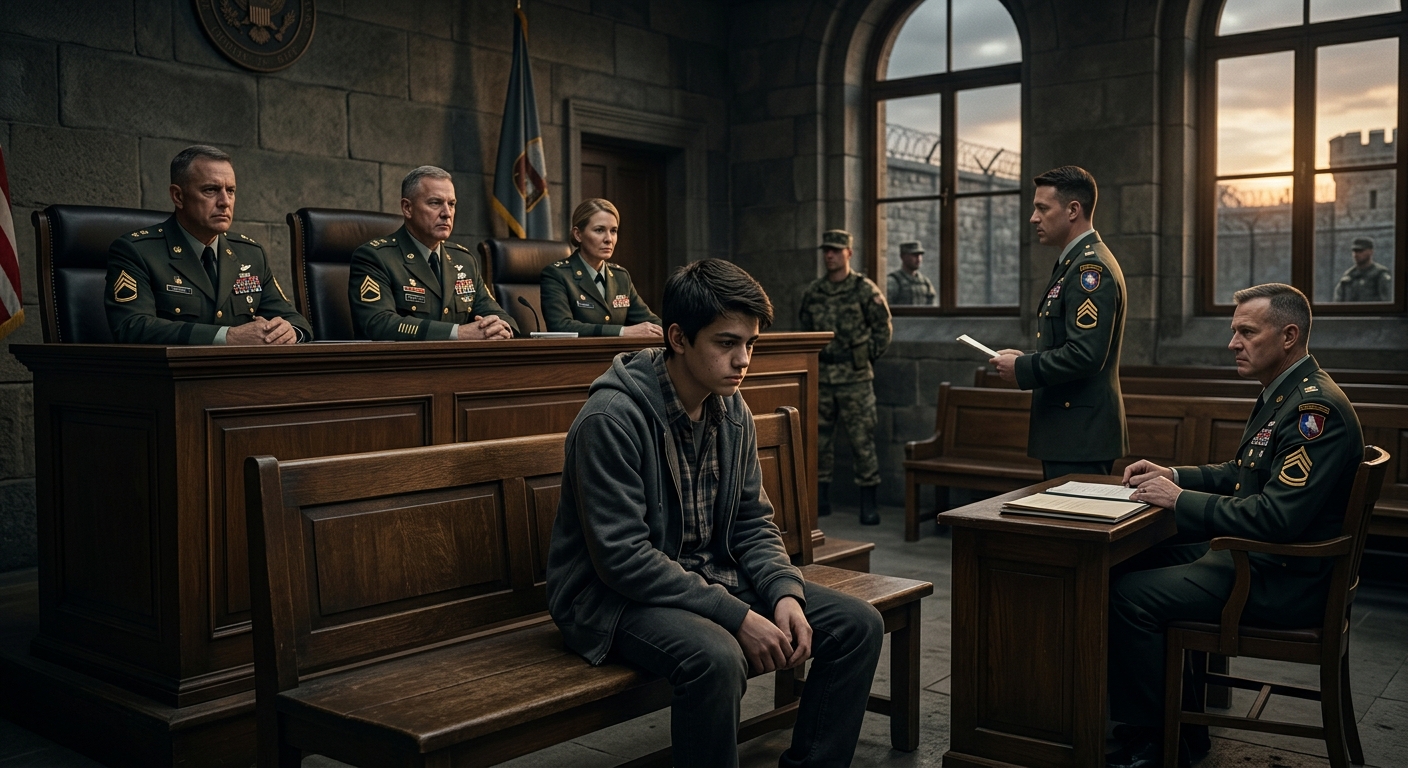
Introduction to the Conundrum of Military Tribunals
In the aftermath of the September 11, 2001 attacks, the global legal landscape experienced a seismic shift. Traditional paradigms of criminal justice and international laws of war were suddenly confronted with the complexities of asymmetric warfare. To address the capture and detention of individuals suspected of terrorism, specific offshore detention facilities were established. Accompanying these facilities was the resurrection of the military commission system, a judicial framework distinctly separate from both civilian federal courts and established international criminal tribunals. By categorizing detainees as unlawful enemy combatants, prosecuting authorities effectively bypassed many of the procedural safeguards intrinsic to domestic legal systems.
This approach created a profound legal conundrum, particularly when the individuals subjected to this framework were not adult combatants, but juveniles. The prosecution of minors within a military tribunal designed for international combatants raised unprecedented ethical and legal questions. It forced human rights advocates, legal scholars, and governments to confront a glaring gap in the intersection of national security and juvenile justice. By examining the mechanisms of these military commissions, one can better understand the immense strain placed on international human rights norms when security imperatives overshadow established legal doctrines.
Defining the Child Soldier in International Law
The international community has long recognized the unique vulnerability of youth caught in the crossfire of armed conflict. This consensus is codified in numerous treaties, most notably the United Nations’ Optional Protocol to the Convention on the Rights of the Child on the involvement of children in armed conflict. This protocol explicitly aims to protect children under the age of eighteen from recruitment and use in hostilities. A foundational principle of this and similar international agreements is the recognition that child soldiers are, primarily and fundamentally, victims of the adults who exploit them.
Under these comprehensive legal frameworks, the preferred international response to a captured juvenile combatant focuses on recovery rather than punishment. Key tenets of this approach include:
- Prohibition of Conscription: States must ensure that persons under the age of eighteen are not compulsorily drafted into their armed forces.
- Direct Hostilities: A strict ban on utilizing children in direct combat scenarios or utilizing them as active combatants.
- Rehabilitation Priority: The mandate to prioritize the psychological and physical recovery of demobilized youth, facilitating their social reintegration rather than punitive incarceration.
When a juvenile is instead funneled into a high-security military detention apparatus designed for adult leaders of terrorist organizations, it directly contravenes the spirit of these international treaties. The global norm dictates that children lack the cognitive maturity to fully consent to military involvement or comprehend the ideological motivations of the conflicts they are dragged into. Prosecuting them sets a deeply controversial precedent, threatening decades of diplomatic progress.
The Military Commissions Framework: A Departure from Tradition
The structure of military commissions diverges sharply from the rigors of standard civilian courts or traditional courts-martial. Following initial challenges to their constitutionality, legislative efforts attempted to formalize the proceedings. However, these commissions remained heavily criticized for their procedural anomalies. Unlike federal courts, which operate on centuries of established jurisprudence, military commissions often functioned with a degree of procedural improvisation that alarmed legal scholars.
One of the most contentious aspects of the military commission framework is its evidentiary standard. Historically, these tribunals allowed for the introduction of hearsay evidence and, in certain iterations, evidence obtained through coercive interrogation methods. The threshold for what constitutes inadmissible, tainted evidence is significantly lower than in domestic criminal courts. Furthermore, defense teams face extreme hurdles, including restricted access to classified evidence and limited ability to independently investigate claims from overseas conflict zones.
| Feature | Federal Civilian Courts | Military Commissions (Post-2001) |
|---|---|---|
| Constitutional Protections | Fully applicable to all defendants | Limited application, frequently debated |
| Hearsay Evidence | Generally inadmissible with strict exceptions | Often admissible under broader, flexible rules |
| Coerced Statements | Strictly excluded from proceedings | Historically permitted under specific, controversial conditions |
| Trial Resolution | Standard trials and structured plea bargains | Heavy reliance on plea deals due to systemic delays |
This departure from traditional legal standards is reflected in the systemic outcomes. Over two decades, the military commission system has produced a comparatively low number of convictions, particularly when contrasted with the hundreds of terrorism-related convictions successfully secured in federal courts over the same period.
Intersecting Vulnerabilities: Youth, Conflict, and Interrogation
The intersection of youth and prolonged military detention produces severe psychological consequences. When a teenager is captured in a war zone and subsequently transferred to an offshore detention facility, they are deprived of the fundamental protections normally afforded to minors. In domestic legal systems, the interrogation of a juvenile requires the presence of a guardian or specialized legal counsel, recognizing that adolescents are highly susceptible to coercion, suggestion, and intimidation.
In the environment of a military intelligence-gathering operation, these domestic safeguards are entirely absent. Juveniles subjected to continuous interrogations, sleep deprivation, and isolation face profound trauma. Because the brain’s prefrontal cortex—responsible for reasoning and impulse control—is still developing throughout adolescence, the psychological impact of aggressive interrogation is magnified exponentially. Clinical psychologists and human rights observers have extensively documented the developmental damage inflicted upon youths held in such environments.
These vulnerabilities cast a long shadow over the reliability of any statements or confessions obtained during detention. The inherent power imbalance between an isolated minor and adult military interrogators makes it nearly impossible to ascertain whether a confession is genuine or merely the desperate attempt of a traumatized youth to stop the interrogation. This unreliability is a core reason why civilian courts treat juvenile confessions with intense scrutiny.
The Psychological Repercussions of Prolonged Custody
Beyond the strict legal definitions and constitutional arguments, the human element of juvenile military detention requires profound consideration. Medical professionals and psychiatric experts have extensively studied the effects of indefinite custody on the developing adolescent mind. When youths are isolated from their families, peers, and standard educational environments, their cognitive and emotional development is severely stunted. In a military detention center characterized by strict confinement, limited sensory input, and ongoing interrogations, these developmental delays are frequently compounded by severe post-traumatic stress.
The psychological toll is not merely a byproduct of the detention; it fundamentally undermines the integrity of the judicial process itself. A core tenet of any legal system is that a defendant must be mentally competent to stand trial, capable of understanding the charges against them, and able to assist in their own defense. For youths who have grown up entirely within the confines of a high-security military prison, achieving this level of legal competency is immensely challenging. The chronic stress, depression, and institutionalization they experience can render them unable to effectively participate in legal proceedings. Transitioning back into civilian society becomes a monumental hurdle. Thus, the choice to prioritize military prosecution over immediate rehabilitative care inflicts irreversible psychological harm, violating the fundamental ethos of international child protection standards.
Judicial Scrutiny: Responses from the Supreme Court
The irregular nature of offshore military detention and the treatment of juvenile detainees inevitably provoked intense judicial scrutiny at the highest levels. Landmark rulings by supreme courts in multiple jurisdictions have frequently admonished the overreach of executive and military authorities. A prominent example is the 2010 ruling by the Supreme Court of Canada regarding the detention and interrogation of a juvenile citizen held in military custody.
The Canadian Supreme Court determined that intelligence officials participating in the interrogation of the minor—knowing he had been subjected to sleep deprivation and lacked access to counsel—violated the principles of fundamental justice. The Court recognized that the regime under which the juvenile was held at the time of the interviews failed to provide basic legal protections. Such judicial interventions highlight the fundamental friction between the exigencies of national security and the rule of law.
While supreme courts have sometimes been reluctant to directly dictate foreign policy or military strategy, they have consistently drawn a line when state actors violate foundational constitutional and human rights principles. These legal battles emphasize that democratic nations cannot simply suspend their human rights obligations by operating extraterritorially. The involvement of highest-level courts underscores the enduring necessity of judicial oversight over military detention operations.
The Plea Deal Paradigm in Military Justice
A defining characteristic of the military commissions in recent years has been their reliance on plea agreements. Faced with a tribunal system where procedural rules have frequently shifted and where legal challenges can stall trials for years or even decades, defendants are placed in an agonizing position. For a detainee who has spent a significant portion of their life—often their entire transition from childhood to adulthood—in military custody, the prospect of a contested trial offers little hope of timely resolution.
Consequently, plea deals become a pragmatic, albeit legally fraught, exit strategy. By pleading guilty to war crimes, detainees can often negotiate a fixed sentence, capping their time in custody and, crucially, securing a pathway for repatriation to their home countries. However, this dynamic raises profound questions about the legitimacy of the convictions. When a guilty plea is the only mechanism available to escape the purgatory of indefinite, uncharged detention, the voluntariness of that plea is highly questionable. In the context of a juvenile detainee, the pressure to accept a plea bargain is even more acute. This paradigm transforms the military commission from an instrument of justice into a tool for negotiating political resolutions to diplomatic impasses.
Long-Term Ramifications for Global Human Rights
The prosecution of a former child soldier within a military tribunal carries profound and lasting implications for the global human rights framework. The precedent set by treating a juvenile combatant primarily as a terrorist rather than a victim of illegal recruitment undermines international efforts to protect children in conflict zones. When leading democracies diverge from the established norms of the Optional Protocol on the Involvement of Children in Armed Conflict, it emboldens autocratic regimes and non-state actors to lower their own standards of conduct.
Human rights organizations have long warned that the erosion of these protections creates a dangerous ripple effect. If a western nation can justify the military prosecution of a minor captured on a battlefield, it severely weakens the diplomatic leverage required to demand that warlords and rebel groups in other regions demobilize their child soldiers. The universality of human rights depends on consistent application, particularly by nations that champion the rule of law. The legacy of these cases will likely be cited in international law classrooms and diplomatic negotiations for decades.
Conclusion: A Precedent for the Future?
The intersection of military commissions and juvenile justice represents one of the most challenging legal chapters of the modern era. The reliance on specialized tribunals to bypass standard legal protections has generated a legacy of procedural delays, questionable convictions, and intense international criticism. As the global community continues to grapple with the realities of asymmetric warfare, the lessons learned from the detention and prosecution of youthful combatants must not be ignored. Upholding human rights is not a luxury reserved for times of peace, but an absolute necessity during times of conflict. Ensuring that child soldiers are treated with the rehabilitative focus demanded by international law remains a critical test of global moral leadership.
Frequently Asked Questions (FAQs)
Q: What is a military commission?
A: A military commission is a type of military tribunal used to prosecute enemy combatants for violations of the laws of war. Unlike standard civilian federal courts or standard military courts-martial, they often operate under different, more flexible rules regarding the admissibility of evidence and specific legal protections.
Q: How does international law define a child soldier?
A: Under frameworks like the UN’s Optional Protocol on the Involvement of Children in Armed Conflict, individuals under the age of 18 are protected from compulsory recruitment and direct participation in hostilities. The international community generally considers them victims requiring physical and psychological rehabilitation rather than adult perpetrators of war crimes.
Q: Why are plea deals common in military commissions?
A: Due to the unprecedented and evolving procedural rules, lengthy legal delays, and the threat of indefinite detention without trial, defendants often view plea agreements as the only realistic and pragmatic way to secure a definite release date or achieve repatriation to their home country.
References
- Optional Protocol to the Convention on the Rights of the Child on the involvement of children in armed conflict — United Nations OHCHR. 2000-05-25. https://www.ohchr.org/en/instruments-mechanisms/instruments/optional-protocol-convention-rights-child-involvement-children
- Canada (Prime Minister) v. Khadr, 2010 SCC 3 — Supreme Court of Canada. 2010-01-29. https://decisions.scc-csc.ca/scc-csc/scc-csc/en/item/7842/index.do
- Public Law 111-84: Military Commissions Act of 2009 (Title XVIII) — U.S. Congress. 2009-10-28. https://www.congress.gov/111/plaws/publ84/PLAW-111publ84.pdf
Similar Articles








Read full bio of medha deb


