
Juneteenth: America’s Path to Freedom Day
Tracing the journey of Juneteenth from a Texas emancipation announcement to a cherished federal holiday symbolizing true independence.
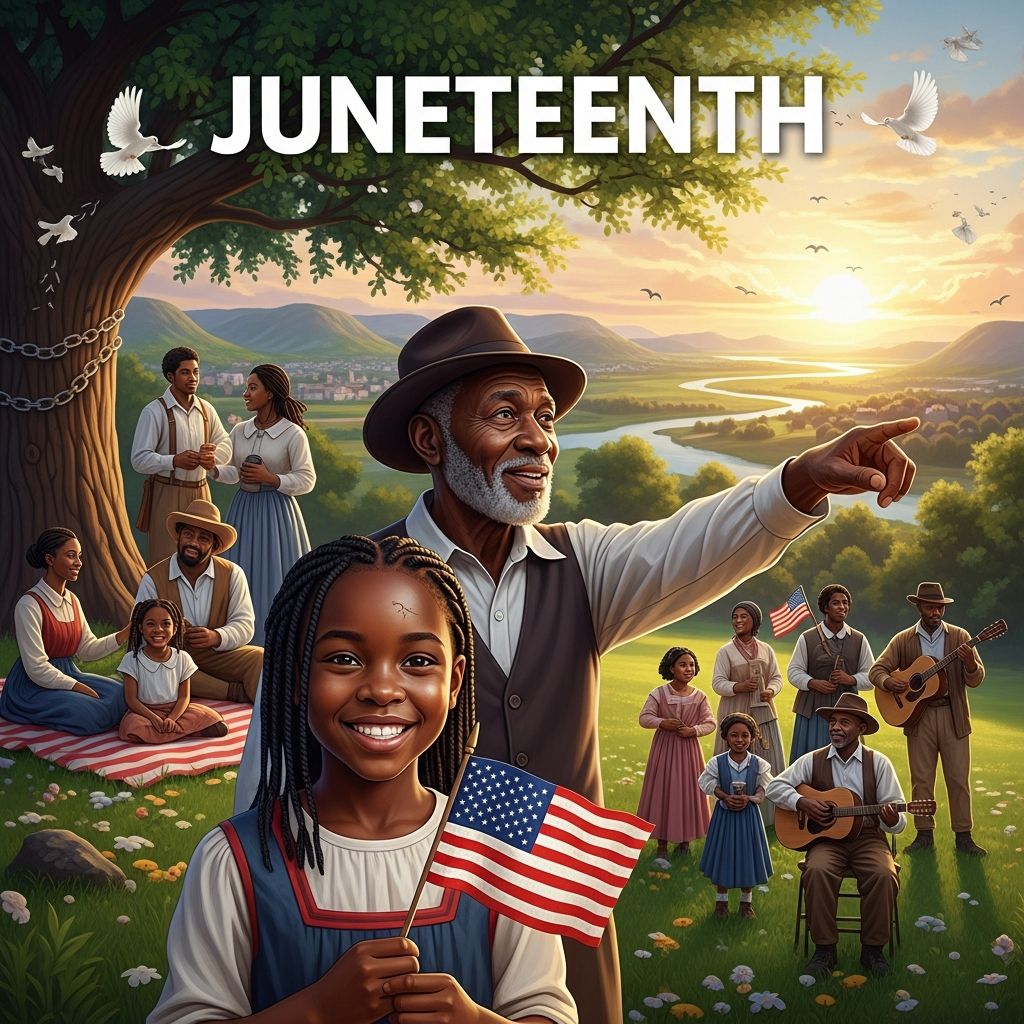
Juneteenth stands as a pivotal marker in U.S. history, commemorating the day when the last major group of enslaved African Americans in the Confederacy learned of their freedom on June 19, 1865. This date, blending ‘June’ and ‘nineteenth,’ symbolizes the practical end of slavery in Texas through General Order No. 3 issued by Major General Gordon Granger in Galveston.
Roots in the Civil War and Delayed Liberation
The story of Juneteenth begins amid the chaos of the Civil War. President Abraham Lincoln’s Emancipation Proclamation, effective January 1, 1863, declared freedom for enslaved people in Confederate states, but its reach was limited by ongoing battles and Confederate control. Even after General Robert E. Lee’s surrender in April 1865, remote areas like Texas remained isolated from this news.
Texas, a Confederate stronghold, held approximately 250,000 enslaved individuals until Union forces arrived. On June 19, 1865, Granger’s troops landed in Galveston and proclaimed General Order No. 3: “The people of Texas are informed that, in accordance with a proclamation from the Executive of the United States, all slaves are free. This involves an absolute equality of personal rights and rights of property between former masters and slaves.” This order shifted relationships from enslavement to waged labor, advising freed people to stay and work for pay while discouraging idleness at military posts.
Celebrations erupted immediately, with singing, prayer, dancing, and family reunions. Many newly freed individuals traveled north to find relatives, birthing annual gatherings that evolved into picnics, parades, speeches, and art exhibits.
From Local Tradition to Statewide Acknowledgment
Juneteenth’s observance started locally in Texas post-1865 but gained formal traction decades later. A 1938 proclamation by Texas officials marked an early step, followed by legislation in 1979 making it an official state holiday—the first such recognition. By 1980, Texas law cemented this status, setting a precedent.
Adoption spread gradually. By 2002, eight states recognized it; by 2006, 15 states; and by 2008, over half had some form of observance. As of 2019, 47 states and the District of Columbia acknowledged Juneteenth, though only Texas offered it as a paid holiday for state employees initially. Today, 48 states formally recognize it.
- Texas leads with 1979 legislation and 1980 enactment.
- Expansion reflects growing awareness of emancipation’s uneven timeline.
- Observances vary: holidays, commemorative days, or educational events.
The Push for National Recognition
Federal momentum built through persistent advocacy. In 2018, Senator Roger F. Wicker introduced a resolution for ‘Juneteenth Independence Day.’ Representative Sheila Jackson Lee sponsored the Juneteenth National Independence Day Act in June 2020, amid racial justice movements spurred by events like those following George Floyd’s death.
Opal Lee, dubbed the ‘Grandmother of Juneteenth,’ played a key role with petitions and walks. The Congressional Black Caucus amplified efforts. Culminating in 2021, the 117th Congress acted swiftly: the Senate passed the bill unanimously on June 15, the House by 415–14 on June 16, and President Joe Biden signed Public Law 117-17 on June 17. This made Juneteenth the 11th federal holiday and the first since Martin Luther King Jr. Day in 1983.
| Milestone | Date | Key Action |
|---|---|---|
| Emancipation Proclamation | Jan 1, 1863 | Freed slaves in Confederate areas (limited enforcement) |
| General Order No. 3 | June 19, 1865 | Freed 250,000 in Texas |
| 13th Amendment Ratified | Dec 1865 | Banned slavery nationwide |
| Texas State Holiday | 1979/1980 | First official state recognition |
| Federal Holiday | June 17, 2021 | Pub. L. 117-17 signed |
Legal Framework and Broader Implications
Juneteenth’s federal status underscores its role as America’s ‘second Independence Day,’ distinct from July 4, which predates full emancipation. The 13th Amendment, ratified December 1865, constitutionally abolished slavery, freeing holdouts in Delaware and Kentucky. Yet Juneteenth captures the lived reality of freedom’s arrival.
Post-Civil War, Black codes and violence threatened gains, reminding that emancipation was a starting point, not an end. Modern celebrations blend joy with reflection on ongoing justice struggles.
Legally, as a federal holiday, it closes non-essential government offices, mirroring others like Memorial Day. States align variably, with some mandating paid time off.
Cultural Celebrations and Global Echoes
Traditions include barbecues, red foods symbolizing resilience (e.g., red velvet cake), music, and readings of General Order No. 3. Events feature historical reenactments and educational programs.
Internationally, Mascogos—Black Seminole descendants who fled to Mexico in 1852—celebrate Juneteenth, linking African American history across borders.
Challenges in Awareness and Equity
Despite roots in 1865, a 2021 Gallup survey found over 60% of Americans knew little or nothing about it, highlighting education gaps. Federal status boosts visibility, but disparities persist in observance depth.
Politically, its passage faced minimal opposition, reflecting broad consensus amid 2020’s racial reckoning, though some critique it as symbolic without deeper reforms.
Frequently Asked Questions (FAQs)
What exactly happened on June 19, 1865?
Major General Gordon Granger issued General Order No. 3 in Galveston, Texas, announcing freedom for all enslaved people under Union control.
Why was Texas the last to hear about emancipation?
Its remote location and lack of Union enforcement delayed news from the 1863 Emancipation Proclamation until after the war’s end.
How many states recognize Juneteenth?
48 states and the District of Columbia have formal recognitions, with variations in holiday status.
Who signed Juneteenth into federal law?
President Joe Biden on June 17, 2021, as Public Law 117-17.
Is Juneteenth only celebrated in the U.S.?
Primarily yes, but groups like the Mascogos in Mexico also observe it.
Looking Forward: Juneteenth’s Enduring Legacy
(Expanded discussion for depth: Juneteenth evolves, fostering dialogues on reparative justice, voting rights, and equality. Educational initiatives in schools now integrate its history, ensuring future generations grasp slavery’s end as a hard-won, uneven process. Community leaders advocate expanding paid holidays nationwide. Its federal elevation coincides with cultural milestones, like increased media coverage and corporate acknowledgments, though debates continue on whether holidays alone advance equity. Historians emphasize contextualizing it alongside Reconstruction failures, Jim Crow, and Civil Rights eras. For instance, the Equal Justice Initiative notes post-1865 threats to Black liberty persisted. Today, amid contemporary issues like criminal justice reform, Juneteenth inspires activism. Annual events grow, from virtual webinars to massive parades, blending solemn remembrance with vibrant joy. Legal scholars view it as affirming constitutional promises under the 13th, 14th, and 15th Amendments. As America reflects, Juneteenth reinforces that true independence demands ongoing vigilance.)
References
- Legislative History of Juneteenth — Library of Congress. 2021-06. https://blogs.loc.gov/law/2021/06/legislative-history-of-juneteenth/
- Juneteenth — Wikipedia (primary sources referenced). 2024. https://en.wikipedia.org/wiki/Juneteenth
- Juneteenth: The complicated history, significance and celebration — University of South Florida St. Petersburg. 2023. https://www.stpetersburg.usf.edu/news/2023/juneteenth-complicated-history-significance-celebration-around-struggle-for-freedom.aspx
- The Real Story of the Politics of Juneteenth — Brennan Center for Justice. N/A. https://www.brennancenter.org/our-work/analysis-opinion/real-story-politics-juneteenth
- A Brief History: The Significance of Juneteenth — Stanford Law School. 2022-06-15. https://law.stanford.edu/2022/06/15/a-brief-history-the-significance-of-juneteenth/
- Juneteenth — NAACP Legal Defense Fund. N/A. https://www.naacpldf.org/juneteenth/
- The Historical Legacy of Juneteenth — Smithsonian National Museum of African American History and Culture. N/A. https://nmaahc.si.edu/explore/stories/historical-legacy-juneteenth
- The Emancipation Proclamation and Juneteenth — National Archives. N/A. https://visit.archives.gov/whats-on/explore-exhibits/emancipation-proclamation-and-juneteenth
Similar Articles








Read full bio of medha deb




