
Judicial Social Media Use and Ex Parte Communication
Understanding judicial conduct standards when judges engage with social platforms
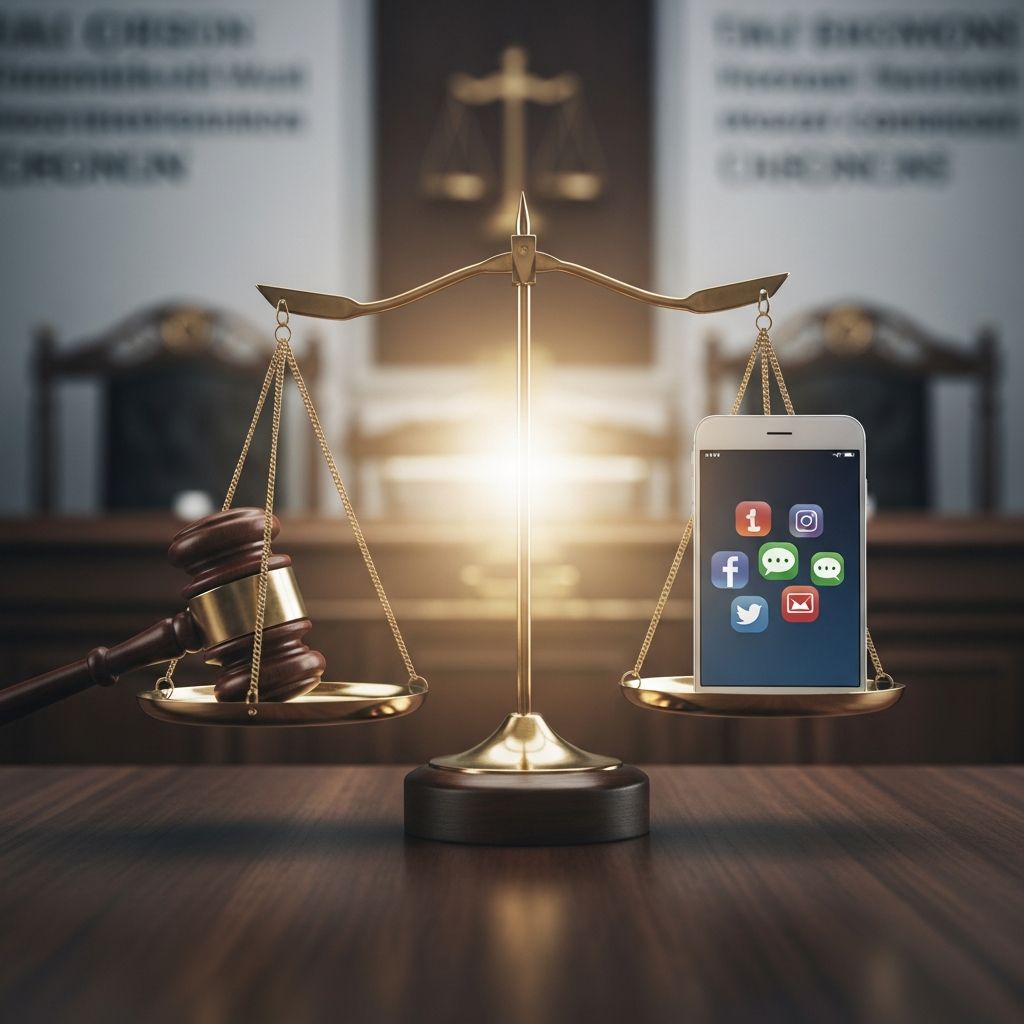
Navigating Judicial Ethics in the Digital Age
The rapid expansion of social media platforms into professional and personal spheres has created novel challenges for the judicial system. Judges, like other professionals, increasingly encounter opportunities to connect with colleagues, stay informed about current events, and share information through digital channels. However, the judicial role carries unique responsibilities that extend into the online environment. The ethical standards that govern judicial conduct in courtrooms and chambers apply with equal force to social media interactions. Understanding how traditional judicial ethics principles translate to digital platforms is essential for judges seeking to maintain public confidence in the impartiality and integrity of the judiciary.
The core concern underlying judicial social media regulation is whether online activities might compromise the appearance or reality of judicial impartiality. Unlike private citizens, judges operate under strict ethical constraints designed to protect the legitimacy of judicial decision-making. These constraints become particularly complex when judges use platforms that facilitate direct communication and social connection with attorneys, parties, and others with interests in litigation.
The Foundation of Judicial Ethics and Social Media
Judicial conduct codes across various jurisdictions establish baseline principles that apply to all judicial activities, whether conducted in person or online. These principles typically address several core concerns: maintaining impartiality, avoiding conflicts of interest, preventing improper communications, and protecting the dignity of judicial office. When judges engage with social media, each of these principles requires careful consideration and application.
The prevailing interpretation among judicial ethics committees is that judges are not categorically prohibited from using social media platforms. Rather, judges must exercise caution and restraint when using these tools to ensure their conduct remains consistent with applicable ethical rules. This balanced approach acknowledges the reality that social media has become an ordinary part of contemporary life while maintaining robust protections for judicial independence and fairness.
Following Attorneys and the Impartiality Question
One of the most frequently asked questions concerning judicial social media use involves whether a judge may follow an attorney’s account on platforms such as Twitter or other social networks. Many judicial ethics committees have addressed this issue directly, and the responses reveal nuanced guidance rather than categorical prohibitions.
According to guidance from multiple state judicial conduct committees, a judge may follow an attorney on social media platforms, including Twitter, even if that attorney might appear before the judge in pending or future cases. However, this permission comes with important caveats and qualifications. The act of following someone on social media does not by itself create an improper relationship or suggest favoritism. Following an account is fundamentally a means of receiving information and staying informed about matters of professional or personal interest.
The critical distinction lies in how the judge uses the information received through following an attorney’s account and whether the judge engages in communications that might create an appearance of partiality. Simply observing publicly available posts and updates does not constitute an ethical violation. The concern arises only when the judge’s actions—whether following, liking, commenting, or messaging—create a reasonable perception that the judge has become biased or that an attorney possesses special influence or access to the judge.
The Ex Parte Communication Danger
The most significant ethical risk associated with judicial social media use involves inadvertent ex parte communications. An ex parte communication occurs when one party in litigation communicates with the judge outside the presence of the opposing party. Such communications are generally prohibited because they undermine fairness and create opportunities for one side to present information, arguments, or influence without the other side’s knowledge or ability to respond.
Social media platforms can facilitate ex parte communications in ways that judges may not fully anticipate. For example:
- An attorney might send a direct message to a judge about a pending case
- A judge might receive comments or reactions to posts that relate to matters before the court
- A judge’s public posts about legal topics might be interpreted as commentary on pending cases
- Exchanges through social media between a judge and attorney might create an improper back-and-forth communication
When a judge inadvertently receives an ex parte communication through social media or any other channel, the judge must take appropriate corrective action. This action may include notifying all parties about the substance of the communication and providing an opportunity for the other party to respond. In more serious situations, the judge may need to recuse themselves from the case to preserve the integrity of the proceedings and maintain public confidence in the judicial system.
Managing Judge-Attorney Relationships Online
The question of whether judges should accept friend requests or establish direct connections with attorneys presents distinct ethical considerations. Judicial ethics committees have generally cautioned judges against establishing formal social media friendships with attorneys who might appear before them. The reasoning behind this guidance reflects concerns about the appearance of favoritism and special access.
A formal friendship or follower relationship on social media can create an impression that an attorney has special knowledge about a judge’s personal life, opinions, and preferences. This perception, even if unfounded, can undermine public confidence in the judge’s impartiality. Additionally, ongoing direct communication through social media platforms makes it more likely that ex parte communications might occur, either intentionally by the attorney or inadvertently through casual exchanges.
When considering social media connections with attorneys, judges should ask themselves several questions:
- Would a reasonable person question my impartiality based on this connection?
- Might this attorney reasonably believe they have special access or influence with me?
- Does this connection create opportunities for improper communications?
- Would accepting this connection appear to favor this attorney over others?
Where judges are already connected with attorneys through social media, judicial ethics committees recommend that judges consider disconnecting from those attorneys who might appear before them in future cases.
The Content Problem: What Judges Should Avoid Posting
Beyond the question of whom judges follow or connect with, judicial ethics rules impose constraints on the content judges may post on social media platforms. Judges must be mindful of several categories of problematic content.
First, judges should avoid posting content that comments on pending or impending litigation. Even seemingly neutral observations about legal principles or case types can be misinterpreted as commentary on specific cases before the judge. This restriction ensures that judges do not appear to have prejudged matters or developed opinions about cases before full presentations by the parties.
Second, judges must be cautious about endorsements or expressions of personal political or commercial preferences. While judges retain the right to hold personal beliefs and affiliations, broadcasting these preferences on social media can create perceptions of bias. For instance, repeatedly liking or sharing content from a particular political perspective might lead parties to question whether the judge can fairly decide cases involving those political interests.
Third, judges should avoid content that demeans, disparages, or shows bias toward particular groups, professions, or individuals. Comments that appear critical of defense attorneys, prosecutors, specific law firms, or demographic groups raise serious concerns about judicial impartiality and the judge’s ability to hear cases fairly involving those subjects.
Fourth, judges must recognize that every action on social media—including likes, retweets, and the selection of accounts to follow—constitutes a public communication subject to ethical scrutiny. A seemingly casual like of a post might, in context, create an appearance of bias or favoritism. The fact that social media makes such actions visible to the public means judges should evaluate each action against the standard of whether a reasonable person might question the judge’s impartiality.
Platform-Specific Considerations
Different social media platforms present distinct challenges and opportunities for judicial use. Understanding the characteristics of each platform helps judges make informed decisions about their participation.
Twitter operates as a public broadcast platform where judges post short messages visible to all followers. The public nature of Twitter means that judicial tweets are subject to heightened scrutiny. Judges may use Twitter to share information about court proceedings, report on published decisions, and provide general legal information, provided they do so in ways that do not compromise their impartiality or suggest personal bias.
Facebook traditionally operated as a more personal social network, though privacy controls have become more complex. Judicial ethics committees have indicated that judges may use Facebook while identifying themselves as judges, provided they maintain ethical standards regarding content, connections, and communications. The key concern is ensuring that personal posts do not create impressions of bias or impropriety.
LinkedIn functions as a professional networking platform. Judges using LinkedIn should apply the same principles as with other platforms: avoid connections with attorneys likely to appear before them and refrain from endorsements or commentary that might suggest bias or partiality.
Recusal and Disclosure Obligations
In situations where judicial social media activity might create a reasonable appearance of bias or where inadvertent ex parte communications occur, judges may need to consider recusal from particular cases. Recusal is the process by which a judge withdraws from a case to preserve its integrity when circumstances suggest the judge cannot be impartial or when an appearance of impropriety exists.
Some judicial ethics opinions recommend that judges disclose their social media interactions or relationships when those interactions might be relevant to concerns about impartiality. Transparency about online relationships and communications can, in some instances, mitigate concerns and allow parties to make informed decisions about whether to request recusal.
Frequently Asked Questions
Can a judge follow an attorney on Twitter?
Yes, judges may follow attorneys on Twitter, even those who might appear before them. However, judges must be careful that this following does not lead to ex parte communications or create an appearance of special access or favoritism. The key is ensuring that the following action and any subsequent interactions remain consistent with judicial ethics rules.
What should a judge do if they receive an ex parte message through social media?
If a judge receives an ex parte communication through social media about a pending matter, the judge should take the same corrective action as with any inadvertent ex parte communication. This typically includes notifying all parties about the substance of the communication and providing an opportunity to respond. In serious cases, recusal may be necessary.
Can judges like posts on social media?
Judges should exercise caution with likes and other reactive features. Each like is a public communication that might suggest bias or endorsement. Before liking a post, judges should consider whether a reasonable person might question their impartiality based on the like.
Should judges accept friend requests from attorneys?
Judges should generally avoid establishing formal social media friendships with attorneys who might appear before them. Such connections can create an appearance of special access or favoritism. If already connected, judges should consider whether disconnecting is appropriate.
Are judges prohibited from using social media entirely?
No, judges are not prohibited from using social media. Rather, judges must ensure that their use is consistent with applicable judicial ethics rules and that their activities do not compromise their impartiality or the appearance of impartiality.
Best Practices for Judicial Social Media Use
Judges seeking to use social media responsibly should consider implementing the following practices:
- Review your jurisdiction’s judicial ethics rules and any guidance issued by your state’s judicial ethics committee before establishing or maintaining social media accounts
- Limit connections and friendships to personal acquaintances and avoid connecting with attorneys who practice before you
- Evaluate each post, like, retweet, and follow decision against the standard of whether a reasonable person might question your impartiality
- Avoid commenting on pending or impending matters, even in general terms
- Refrain from expressing strong personal political, religious, or commercial preferences that might suggest bias
- Do not engage in direct messaging with attorneys about their cases or any matters that might come before you
- Immediately disclose and address any inadvertent ex parte communications received through social media
- Consider periodic review of your existing connections and consider disconnecting from attorneys as appropriate
- Document your social media activity policy if you maintain accounts, and ensure consistency with your documented approach
Conclusion: Balancing Participation and Propriety
Judicial engagement with social media need not present insurmountable ethical challenges when judges approach these platforms with appropriate caution and awareness. The ethical principles that guide judicial conduct in traditional settings translate meaningfully to digital environments. By maintaining awareness of the risks—particularly regarding ex parte communications and the appearance of bias—judges can participate in social media in ways that enhance their connection to their communities while preserving the integrity and impartiality essential to the judicial function.
References
- Informal Opinion 12-01: Judges and Social Media — Utah State Courts. 2012. https://www.utcourts.gov/content/dam/court-records-publications/publications/ethadv/ethics_opinions/2012/12-1.pdf
- Ethics Panel Delves into Social Media, Ex Parte Communications — The Florida Bar. https://www.floridabar.org/the-florida-bar-news/ethics-panel-delves-into-social-media-ex-parte-communications/
- Can Judges Tweet? Judicial Ethics in the Social Media Age — Boston Bar Association Journal. https://bostonbar.org/journal/can-judges-tweet-judicial-ethics-in-the-social-media-age/
- Judicial Social Media FAQs — State Bar of Michigan. https://www.michbar.org/opinions/ethics/judicialsocialmediafaqs
- To Tweet or Not to Tweet? — Judicature, Duke University. https://judicature.duke.edu/articles/point-counterpoint-to-tweet-or-not-to-tweet/
- Use of Electronic Social Media by Judges and Judicial Employees — U.S. District Court, District of New Hampshire. https://www.nhd.uscourts.gov/sites/default/files/pdf/HR/ETHICS-Advisory%20Opinion%20112%20Social%20Media%20by%20Judges-Employees.pdf
- Ethics & Social Media: What Judges Need to Know — National Center for State Courts. https://www.ncsc.org/resources-courts/ethics-social-media-what-judges-need-know
Similar Articles








Read full bio of Sneha Tete




