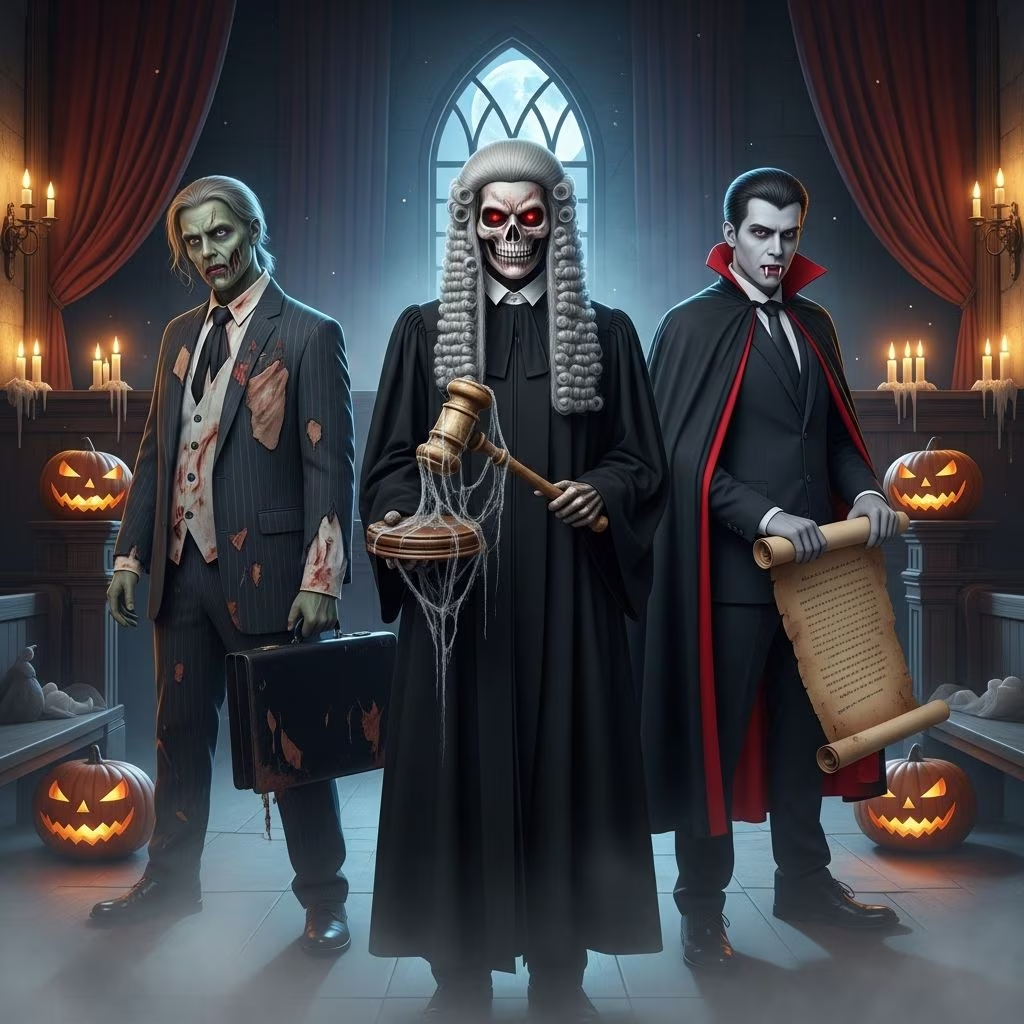
Channeling Judicial Authority Through Halloween Dress
Halloween presents an ideal opportunity for legal professionals, law students, and court enthusiasts to showcase their passion for the judiciary through imaginative costume selections. Rather than defaulting to conventional judicial robes or generic courtroom attire, consider exploring more nuanced and entertaining interpretations that capture the essence of legal culture. The following costume concepts blend humor, historical significance, and courtroom authenticity to create memorable Halloween experiences that resonate with both legal circles and general audiences.
The Appellate Practitioner in Action
For those deeply immersed in appellate work, this costume celebrates the meticulous nature of briefing, oral arguments, and legal documentation. The ensemble features formal business attire paired with visual elements that immediately signal appellate focus. Incorporate a collection of mock appellate briefs in a worn leather portfolio, highlight tabs marking key sections, and perhaps a visual indicator showing case citation numbers or docket information prominently displayed.
To complete this portrayal, accessorize with reading glasses suspended around the neck or perched on the forehead, signifying countless hours spent reviewing legal precedent. A small courtroom ornament or miniature gavel positioned in a coat pocket adds subtle authenticity. This costume works particularly well for individuals who can remain in character throughout the evening, occasionally consulting their “briefs” and discussing procedural minutiae with fellow attendees.
The Legendary Trial Lawyer Aesthetic
Channel the gravitas and commanding presence of legendary trial advocates through carefully curated period-appropriate attire. Research the fashion sensibilities of famous litigators from American legal history, then interpret their distinctive styles through your costume. This might involve a three-piece suit in classic colors, suspenders instead of a conventional belt, or vintage accessories that suggest decades of courtroom experience.
The key distinction between a generic lawyer costume and this particular interpretation lies in the intentional selection of details that convey decades of trial victories. Carry a leather briefcase bearing mock labels of landmark cases, wear a watch that appears inherited and well-worn, and select accessories that suggest both professional polish and lived experience. Consider adding a small boutonniere or other flourish that hints at the theatrical aspects of courtroom presence.
Supreme Court Justice in Contemporary Context
While the traditional black robe remains an iconic element, this costume interpretation extends beyond basic judicial vestments. Begin with authentic-looking judicial robes, but elevate the presentation by researching and incorporating contemporary details. Study photographs of justices from recent Supreme Court sessions to capture accurate styling of robes, including proper fitting and any distinguishing accessories.
Enhance the costume with props that reference specific justices or famous Court decisions. Carry a leather-bound copy of a landmark Supreme Court decision, perhaps with marginal notes and highlighted passages. A small nameplate indicating your chosen justice, or subtle visual references to their judicial philosophy, transforms this costume from generic to genuinely informed. Consider the justice’s particular areas of legal expertise or memorable oral arguments as inspiration for additional costume elements.
The Courtroom Clerk’s Formal Attire
Often overlooked in favor of more prominent judicial figures, courtroom clerks play essential roles in the legal system. This costume celebrates those dedicated professionals through formal business wear combined with specific courtroom-centric accessories. The ensemble typically features business formal clothing in neutral colors, complemented by items that signal courtroom function and responsibility.
Incorporate visible elements such as a desk nameplate, courtroom security badge, or document folders bearing official-looking labels. Carry a leather portfolio containing case files, docket sheets, or transcript pages. This costume particularly resonates with individuals who have worked in court systems or understand the logistical complexity of maintaining courtroom operations. The attention to detail and demonstration of insider knowledge creates an informed and respectful portrayal.
Historical Legal Figure Interpretation
Rather than selecting from contemporary judicial figures, investigate transformative legal personalities from American history. Research their documented appearance through photographs, paintings, or written descriptions, then construct a historically inspired costume that captures their era and distinctive characteristics. This approach allows creative flexibility while maintaining historical grounding.
When selecting a historical legal figure, consider those whose contributions to jurisprudence or courtroom advocacy remain culturally significant. Study period-appropriate clothing styles, accessories, and grooming conventions to ensure authenticity. Carrying props associated with the figure’s notable cases or legal innovations—such as landmark briefs, landmark decision copies, or symbolic items related to their advocacy—strengthens the overall presentation and creates conversation opportunities.
Law Library Professional Character
For those who appreciate the institutional infrastructure of legal systems, this costume celebrates the specialized professionals who maintain and manage legal research resources. The ensemble combines professional library attire with accessories specific to legal research environments. Business casual clothing serves as the foundation, enhanced with visible elements indicating expertise in legal information systems.
Accessorize with items such as a legal reference guide in a visible pocket, highlighters in multiple colors indicating different citation types, and perhaps a small organizational chart or database printout. This costume works especially well for individuals who can incorporate humor and detailed knowledge about legal research tools, databases, and methodologies. The portrayal celebrates often-overlooked professionals whose work supports the entire judicial system.
Comparative Legal Systems Ambassador
This sophisticated costume concept explores the intersection of law and international culture by representing a legal professional from a different legal tradition or jurisdiction. Research international judicial systems, then create a costume that reflects authentic elements of that legal culture. This might involve specific formal attire conventions, distinctive judicial vestments, or accessories associated with particular legal traditions.
The costume presents an educational opportunity to discuss comparative legal systems, different approaches to judicial governance, and the fascinating diversity of courtroom practices globally. Carrying a copy of a legal code or constitutional document from the represented jurisdiction, or incorporating linguistic elements and cultural markers, demonstrates genuine research and cultural respect.
Legal Technology Pioneer Representation
In recognition of technology’s transformative impact on legal practice, this costume celebrates the convergence of law and innovation. Combine professional legal attire with contemporary tech accessories and visual elements indicating digital transformation in judicial systems. Business formal wear serves as the foundation, accessorized with items such as a tablet or laptop bearing legal software logos, or wearable technology.
Incorporate visual representations of legal technology innovations such as blockchain, artificial intelligence in legal research, or digital courtroom management systems. This costume concept appeals to legal professionals interested in legal technology, law students exploring tech-forward practice areas, and individuals passionate about how digital innovation reshapes traditional legal institutions.
Costume Assembly and Styling Guidelines
Regardless of which costume concept you select, several practical considerations enhance overall effectiveness and wearability throughout extended Halloween celebrations:
- Comfort Priority: Ensure selected garments allow comfortable movement and visibility, particularly if attending events involving socializing, walking, or extended wear periods
- Material Selection: Choose durable, quality fabrics that withstand the wear and tear of Halloween activities while maintaining professional appearance
- Accessory Integration: Select accessories that enhance rather than overwhelm the overall presentation, maintaining focus on costume coherence
- Footwear Consideration: Choose professional shoes that remain comfortable for extended periods while maintaining costume authenticity
- Lighting and Visibility: If attending evening events, ensure costume elements remain visible under varying lighting conditions
Makeup and Grooming Elements
Refined grooming and minimal makeup enhancements often strengthen judicial and legal professional costumes more effectively than elaborate makeup applications. For most legal-themed costumes, maintaining clean, polished grooming standards that mirror actual courtroom appearance creates immediate authenticity. Professional hairstyling, well-maintained facial hair, and minimal cosmetic enhancement typically outperform theatrical makeup applications for this costume category.
Consider subtle makeup adjustments that enhance professional appearance rather than transforming facial features. For individuals selecting historical legal figures, researching period-appropriate grooming conventions allows subtle makeup adjustments that enhance resemblance without appearing theatrical or exaggerated.
Prop Selection and Construction
Thoughtfully selected props significantly enhance costume authenticity and provide conversation catalysts throughout Halloween celebrations. Rather than obvious, mass-produced costume props, consider creating custom elements that demonstrate detailed knowledge and genuine interest in legal systems. Printed legal documents, mock case files, and custom labels or nameplates often prove more effective than generic costume accessories.
When constructing props, prioritize materials that withstand handling and remain comfortable to carry or wear throughout extended periods. Document props particularly benefit from careful printing and presentation, as quality reproduction suggests genuine courtroom materials rather than hastily assembled costume elements.
Group Costume Coordination Opportunities
Legal-themed costumes offer exceptional potential for coordinated group presentations that multiply impact and entertainment value. Consider assembling small groups representing different elements of judicial systems, opposing trial teams, or notable historical legal moments. Coordinated group costumes allow individual creative expression while creating cohesive, recognizable presentations that generate conversation and admiration throughout Halloween celebrations.
Frequently Asked Questions About Legal Halloween Costumes
Q: Are judicial robes necessary for creating an effective legal Halloween costume?
A: While judicial robes represent an iconic element, effective legal costumes can emphasize other aspects of courtroom culture, legal practice, or historical significance. Professional attire combined with appropriate accessories and contextual props often creates more distinctive and memorable presentations than robes alone.
Q: How can I research specific Supreme Court justices for costume inspiration?
A: Official Supreme Court websites, published biographies, photographs from oral arguments, and documented interviews provide valuable research resources. Historical legal publications and academic sources offer deeper context regarding justices’ contributions, judicial philosophies, and notable decisions.
Q: What considerations apply when selecting historical legal figures as costume inspiration?
A: Prioritize figures whose contributions to legal systems remain historically significant and culturally recognizable. Research period-appropriate clothing, documented personal characteristics, and notable cases or legal innovations associated with your selected figure.
Q: Can legal-themed costumes work for non-law professionals?
A: Absolutely. Legal-themed costumes appeal to law enthusiasts, individuals with court system experience, and people interested in demonstrating particular historical or cultural knowledge. These costumes particularly resonate at events attended by legal professionals who appreciate the thoughtfulness and specificity.
Q: How do I avoid offensive portrayals when selecting historical legal figures?
A: Approach historical figures with respect and nuance, acknowledging complex legacies rather than reducing figures to stereotypes. Research thoroughly to understand historical context and significance beyond simplified characterizations.
Q: What budget considerations should guide legal costume selections?
A: Effective legal costumes often utilize existing professional wardrobe elements, requiring primarily strategic accessorization and prop creation rather than expensive costume purchases. Many components can be assembled from business casual clothing supplemented with custom-created or modest retail accessories.
References
- Halloween is Here: The Best Law School Costumes — BC Law Impact. 2023-10-23. https://bclawimpact.org/2023/10/23/halloween-is-here-the-best-law-school-costumes/
- Happy Halloween! Legal-Themed Costumes for You and Your Pet — University of Connecticut School of Law Library. 2023-10-30. https://library.law.uconn.edu/2023/10/30/happy-halloween-legal-themed-costumes-for-you-and-your-pet/
- Halloween Costumes That Only a Lawyer Could Love — Themis Bar Association. 2023. https://www.themisbar.com/themis-blog/halloween_costumes_that_only_a_lawyer_could_love