Judges Ban Prosecutor Chatter Near Courtrooms
How courtroom civility rules are reshaping prosecutor-judge interactions and safeguarding fair trials.
When the Hallway Becomes Off-Limits
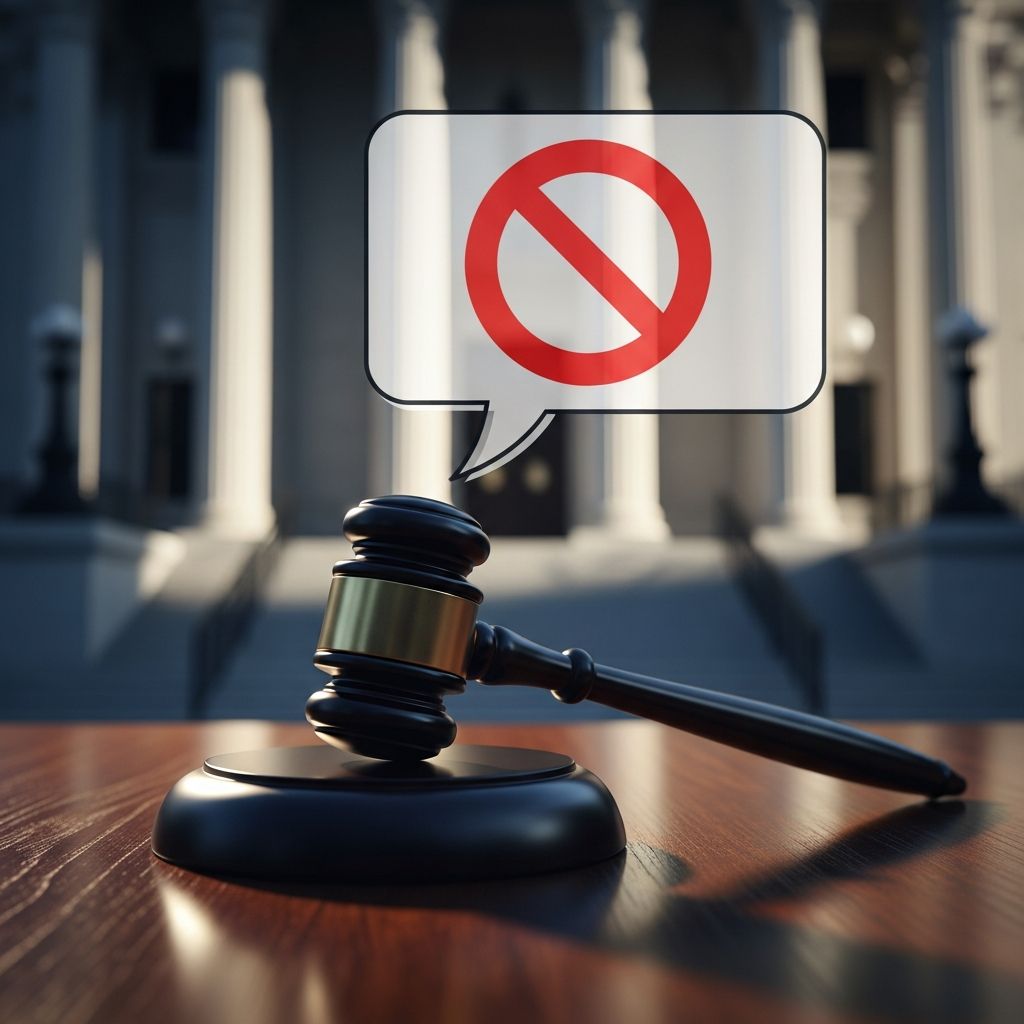
In many courthouses, the space just outside the courtroom door has long functioned as an informal extension of the legal process. Lawyers huddle, judges exchange quick notes, and prosecutors sometimes share updates or impressions with court staff or even the judge’s clerks. But a quiet but significant shift is underway: judges are now drawing firmer lines, explicitly banning prosecutors from engaging in casual or substantive conversations in hallways, lobbies, and other areas adjacent to courtrooms.
This move is not about petty rules or personal preferences. It reflects a deeper concern about the integrity of the judicial process, the appearance of impartiality, and the need to prevent even the perception that justice is being shaped in private, off-the-record exchanges. When prosecutors are told they can no longer “jaw-jack” near the judge’s chambers or in the hallway before a hearing, it signals a recalibration of how the criminal justice system manages power, access, and fairness.
Why the Sudden Crackdown?
The decision to restrict informal prosecutor interactions near courtrooms stems from several overlapping concerns:
- Preserving Judicial Impartiality: Judges are expected to be neutral arbiters, not participants in prosecutorial strategy. Casual conversations in hallways can create the impression that a judge is aligned with the prosecution, even if no actual bias exists.
- Preventing Improper Influence: Off-the-record exchanges can inadvertently shape a judge’s view of a case, a witness, or a legal issue before it is formally presented in open court.
- Ensuring Equal Access: Defense attorneys often lack the same level of access to judges or their staff. Allowing prosecutors to have frequent, informal contact can create an uneven playing field, even if unintentional.
- Protecting the Record: Informal discussions leave no transcript, no minutes, and no accountability. If a judge later makes a ruling that appears influenced by such a conversation, it becomes nearly impossible to challenge on appeal.
These concerns are not theoretical. There are documented cases where judges have been disciplined for engaging in ex parte communications with prosecutors, or where appellate courts have criticized rulings that appeared to rely on information never presented in open court.
What Exactly Is Being Banned?
The new restrictions are not a blanket ban on all communication between prosecutors and judges. Instead, they target specific types of informal, off-the-record interactions that occur in sensitive areas of the courthouse. These typically include:
- Discussions about pending cases in hallways, lobbies, or near courtroom doors.
- Conversations with the judge’s clerks or staff about case strategy, evidence, or witnesses.
- Informal updates or “heads-up” messages delivered outside of formal proceedings.
- Any substantive legal discussion that does not occur on the record, in open court, or in the judge’s chambers with proper notice to all parties.
What remains allowed is communication that is transparent, documented, and fair to all sides. This includes:
- Formal hearings and arguments on the record.
- Written motions, briefs, and orders.
- Chambers conferences that are scheduled in advance and to which all parties are invited or given notice.
- Administrative or scheduling discussions that do not touch on the merits of a case.
Chambers vs. Hallway: Where the Line Is Drawn
The judge’s chambers is a private office, but it is still part of the judicial workspace. When used properly, chambers can be a legitimate venue for certain types of discussions, such as scheduling, procedural matters, or sensitive issues that require confidentiality (e.g., victim safety, witness protection). However, even chambers conversations are subject to strict rules:
- They must be limited to matters that are appropriate for ex parte communication (if any).
- They should be documented, either in writing or on the record, when they touch on substantive issues.
- They must not give one side an unfair advantage over the other.
The hallway, by contrast, is a public or semi-public space. It is not designed for confidential legal discussions, and it lacks the procedural safeguards of a formal hearing. When prosecutors use the hallway to “jaw-jack” about a case, they risk creating the appearance that the judge is receiving information in a way that is inaccessible to the defense. This is why judges are increasingly insisting that all substantive communication occur in a transparent, accountable setting.
How This Affects Prosecutors’ Daily Work
For many prosecutors, the ban on informal hallway conversations represents a significant change in how they operate. They can no longer rely on quick, off-the-record chats to:
- Signal their position on a motion before it is argued.
- Test a judge’s reaction to a legal argument.
- Coordinate scheduling or procedural details in a way that bypasses the defense.
Instead, prosecutors must now:
- File formal motions and briefs for all substantive issues.
- Request hearings or conferences on the record when clarification is needed.
- Communicate with the court only through proper channels, ensuring that the defense is aware of and can respond to any communication.
This shift can slow down some aspects of case management, but it also promotes greater discipline, transparency, and fairness. It forces prosecutors to think more carefully about what they say, how they say it, and whether it belongs in the official record.
Impact on Defense Attorneys and Fair Trial Rights
From the defense perspective, these restrictions are a welcome development. They help level the playing field by ensuring that:
- All parties have equal access to the judge on substantive matters.
- All legal arguments are made in open court, where they can be challenged and preserved for appeal.
- The judge’s rulings are based on information that has been tested and scrutinized by both sides.
When prosecutors are allowed to have frequent, informal contact with the judge, it can create a subtle but powerful imbalance. Defense attorneys may feel that they are at a disadvantage, that the judge already “knows” the prosecution’s side of the story, or that certain arguments have already been previewed and accepted in private. By banning hallway chatter, judges help ensure that the trial process remains adversarial in the right way: competitive, but fair.
Broader Implications for Judicial Ethics
This trend is part of a larger movement toward stricter judicial ethics and greater accountability. Judges are increasingly aware that their conduct, both on and off the bench, shapes public confidence in the justice system. When a judge allows prosecutors to dominate informal conversations in the courthouse, it can erode trust in the court’s neutrality.
Key ethical principles at play include:
- Impartiality: Judges must avoid even the appearance of bias or favoritism.
- Transparency: Decisions should be based on information that is part of the public record.
- Equal Treatment: All parties must be treated fairly and given the same opportunities to be heard.
- Accountability: Judges and prosecutors must be able to explain their actions and decisions in a way that is open to review.
By enforcing rules against informal prosecutor chatter, judges are not just managing courtroom logistics—they are reinforcing these core ethical values.
Practical Challenges and Enforcement
Implementing and enforcing these restrictions is not always straightforward. Some practical challenges include:
- Defining the Boundaries: What counts as “informal” or “substantive” conversation? A quick “heads-up” about a scheduling conflict may be harmless, but a detailed discussion of a witness’s credibility is not.
- Monitoring Compliance: Judges cannot be expected to police every hallway conversation. The rule depends heavily on the professionalism and self-discipline of prosecutors and court staff.
- Resistance from Prosecutors: Some prosecutors may view these rules as unnecessary bureaucracy or as a challenge to their traditional role in the courtroom.
- Consistency Across Courts: Different judges may interpret and apply the rules differently, leading to confusion for prosecutors who appear in multiple courtrooms.
To address these challenges, many courts are adopting clear written policies, providing training for prosecutors and court staff, and using judicial conferences or bench memos to communicate expectations.
Comparing Formal and Informal Communication
The table below illustrates the key differences between formal and informal prosecutor-judge communication:
| Aspect | Formal Communication | Informal Communication |
|---|---|---|
| Location | Open courtroom, chambers (with notice) | Hallway, lobby, courthouse common areas |
| Record | Transcribed, part of the official record | No transcript, not part of the record |
| Notice to Parties | All parties are notified and can participate | Often one-sided, defense may be unaware |
| Accountability | Subject to appeal and judicial review | Difficult to challenge or review |
| Impact on Fair Trial | Supports fairness and due process | Can undermine fairness and impartiality |
What This Means for the Future of Prosecutorial Conduct
The move to ban informal prosecutor chatter near courtrooms is part of a broader reevaluation of prosecutorial power and responsibility. Prosecutors wield enormous influence over the criminal justice system, from charging decisions to plea bargaining to trial strategy. As public scrutiny of prosecutorial conduct increases, courts are taking steps to ensure that this power is exercised in a way that is transparent, accountable, and consistent with due process.
Going forward, we can expect to see:
- More courts adopting explicit rules limiting informal prosecutor-judge communication.
- Greater emphasis on training prosecutors in ethical communication and courtroom decorum.
- Increased use of written orders and on-the-record conferences to replace off-the-record hallway discussions.
- Stronger judicial oversight of prosecutorial conduct, including the power to reassign or discipline prosecutors who repeatedly violate these rules.
These changes are not about weakening the prosecution, but about strengthening the integrity of the entire system.
Frequently Asked Questions
Can prosecutors still talk to judges at all?
Yes, but only through formal, on-the-record channels. Prosecutors can argue motions, file briefs, and participate in scheduled conferences, as long as the defense is given proper notice and an opportunity to respond.
Does this rule apply to defense attorneys too?
Yes, the same principles apply to all lawyers. Defense attorneys are also expected to avoid substantive, off-the-record discussions with judges in hallways or other informal settings.
What happens if a prosecutor violates the ban?
Consequences can range from a warning or reprimand to more serious sanctions, such as being barred from certain courtrooms or having a case reassigned. In extreme cases, it could even lead to disciplinary action by the bar or judicial ethics body.
Does this slow down the court process?
It may add some procedural steps, but it also reduces the risk of later challenges based on improper communication. In the long run, a more transparent process can actually improve efficiency by minimizing appeals and reversals.
Are these rules new, or have they always existed?
The ethical principles have long been part of judicial codes, but enforcement has varied. What is new is the explicit, written ban on informal hallway conversations in some jurisdictions, reflecting a more proactive approach to preserving fairness.
References
- Code of Conduct for United States Judges — United States Judicial Conference. 2023. https://www.uscourts.gov/administration-policies/judiciary-policies/ethics-policies/code-conduct-united-states-judges
- Legal Terms Glossary — U.S. Department of Justice, U.S. Attorneys. https://www.justice.gov/usao/justice-101/glossary
- What, Exactly, Is “Prosecutorial Misconduct”? — MoloLamken LLP. https://www.mololamken.com/knowledge-What-Exactly-Is-Prosecutorial-Misconduct
Similar Articles







Read full bio of Sneha Tete