
Joining the U.S. Military With a DUI on Your Record
Understand how a DUI affects military enlistment, waivers, and your options for moving forward with a service career.
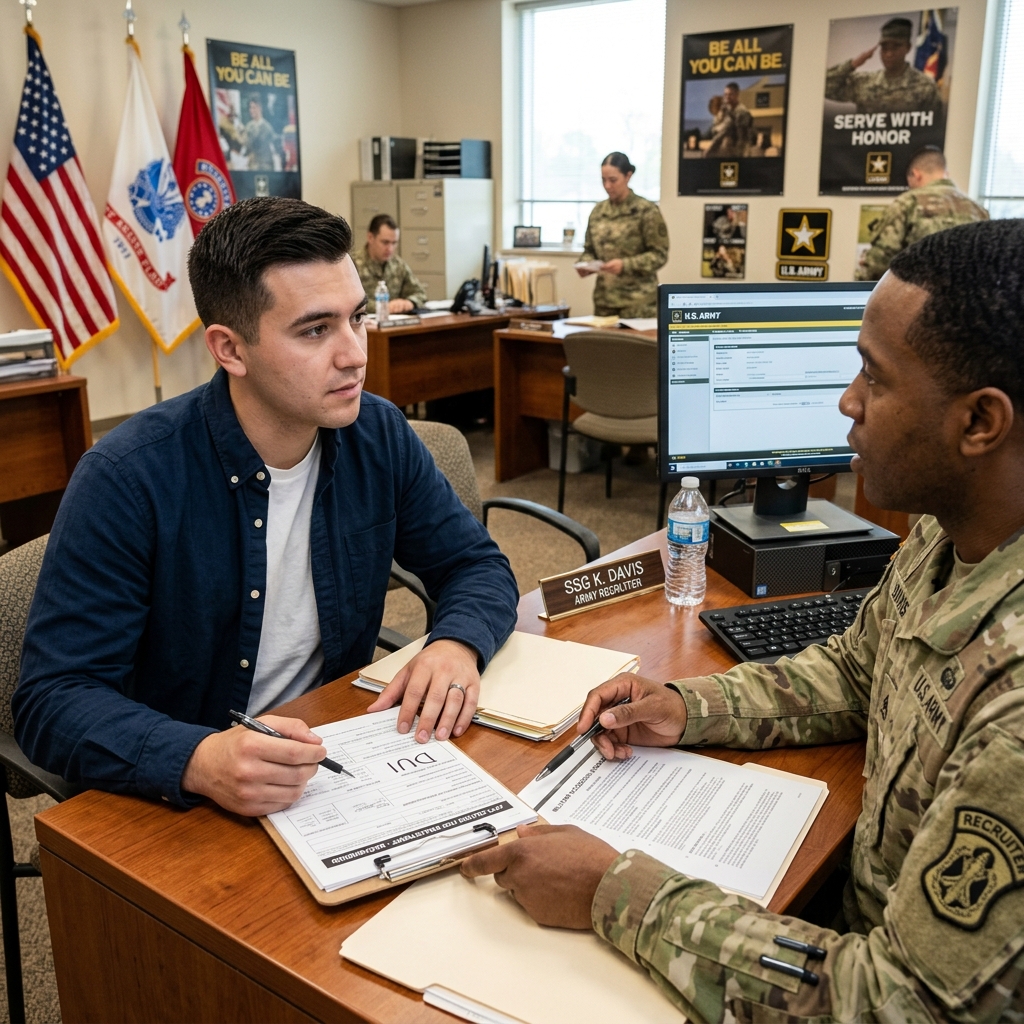
Many people decide to pursue military service after a difficult period in their lives, including mistakes like driving under the influence (DUI). A common question is whether a DUI conviction permanently blocks you from enlisting. The answer is usually no, not automatically, but it does make the process more complicated and can limit your options.
This guide explains how a DUI affects eligibility to enlist in the U.S. armed forces, how waivers work, what differences exist among branches, and practical steps you can take to present the strongest possible application.
1. Why the Military Cares About DUI Convictions
The U.S. military treats DUI offenses as a sign of potential problems with judgment, reliability, and respect for the law. The Department of Defense classifies DUI as a form of misconduct, so it is reviewed as part of your moral and character evaluation during enlistment.
Recruiters and approval authorities are especially concerned about:
- Substance abuse risk – whether alcohol misuse may affect performance or safety.
- Obedience to rules – willingness to follow strict orders and regulations.
- Security considerations – for careers requiring security clearances, past criminal conduct can be a red flag.
- Public image – the armed forces want to maintain public trust and high standards of conduct.
Because of these concerns, a DUI can require extra review and special approval before you are allowed to enlist.
2. Does One DUI Automatically Disqualify You?
In most situations, a single DUI does not automatically bar you from joining the military, especially if it occurred years ago and you have stayed out of trouble since. However, it will almost always make the process slower and more demanding.
Key points to understand:
- Not an automatic ban – policies change over time, but generally one DUI is treated as a waiverable offense rather than a permanent disqualifier.
- Recent DUIs are a major problem – a conviction within the last year often leads to an automatic temporary disqualification until enough time has passed and all sentencing requirements are completed.
- Multiple DUIs can be career-ending – two or more DUI convictions often make it extremely difficult, and sometimes practically impossible, to enlist.
- Completion of sentence is essential – you usually must finish probation, classes, fines, community service, and any license or treatment requirements before a waiver is even considered.
3. How Different Military Branches Treat DUI Records
Each branch applies Department of Defense standards, but has its own policies, recruiting needs, and level of flexibility.
| Branch | General Approach to a Single DUI | Multiple DUIs |
|---|---|---|
| Army | Often more open to considering waivers, depending on recruiting needs, time since offense, and overall record. | Two DUIs usually require a higher-level conduct waiver; approval is difficult and not common. |
| Navy | May consider a waiver for one DUI if the applicant shows rehabilitation and a clean recent history. | Repeated DUIs are likely to result in denial except in rare, strongly justified cases. |
| Air Force | Generally stricter; a DUI can significantly limit job options and may require strong scores and evidence of rehabilitation. | Multiple DUIs are usually disqualifying. |
| Marine Corps | Known for high conduct standards; may be less forgiving, especially if the DUI is recent or severe. | More than one DUI often means you are not competitive for enlistment. |
| Coast Guard | Smaller force with limited slots; a DUI can seriously damage your chances unless there is compelling evidence of reform. | Multiple DUIs are usually incompatible with service. |
Policies change and are applied case by case, so a conversation with a recruiter is necessary to understand the current rules for each branch.
4. Understanding Conduct and Moral Waivers
Because DUI is treated as misconduct, joining with a conviction typically requires a conduct (moral) waiver. A waiver is formal permission for the military to overlook certain disqualifying information in your background.
4.1 What a Waiver Does and Does Not Do
- What it does
- Signals that the military is aware of your DUI and has decided to allow you to enlist despite it.
- Shows that a reviewing authority has judged your overall character as acceptable for service.
- What it does not do
- Erase or seal the conviction on your civilian record.
- Guarantee a particular job, security clearance, or promotion path.
- Prevent future problems if new misconduct occurs; additional issues can quickly lead to discharge.
4.2 Typical Requirements to Request a Waiver
While details vary among branches, you can expect to need:
- Full disclosure of the DUI – withholding information or lying on forms is itself a separate disqualifying offense and can result in discharge later if discovered.
- Official court records – charging documents, final judgment, proof of completed probation, and proof of any classes or programs.
- Evidence of rehabilitation – such as completion of alcohol education, counseling, or treatment, plus a clean record since the conviction.
- Character references – letters from employers, teachers, community leaders, or probation officers attesting to your reliability and growth.
- Time since the offense – many recruiters look for at least one year after conviction, and in some cases several years, with no new incidents.
4.3 Who Approves the Waiver?
Approval level depends on the seriousness and number of offenses:
- A single misdemeanor DUI might be decided by a recruiting company commander or similar authority.
- Multiple DUIs or DUIs with injury or aggravating factors may require approval from higher-level commanders, such as a battalion commander or general officer.
The more serious the record, the harder it is to persuade decision-makers to take the risk of approving you.
5. Timing, Waiting Periods, and Completing Your Sentence
You usually cannot apply for a waiver immediately after a DUI conviction. Recruiters want to see that you have completed every part of your sentence and maintained good behavior for a meaningful period of time.
Common expectations include:
- Completion of probation – including check-ins, tests, and any monitoring requirements.
- Payment of all fines and fees – courts may require proof of payment before closing the case.
- Finished classes or treatment – alcohol or drug education programs, counseling, or treatment must be completed.
- Completed community service – hours verified and accepted by the court.
- Waiting period – often at least one year after conviction before a waiver is considered, and sometimes several years depending on the branch and the circumstances.
6. Expunged, Reduced, or “No Contest” DUI Cases
Many people assume that if their DUI was expunged, reduced to a lesser offense, or resolved through a “no contest” plea, the military will not see it. That is usually not the case.
For military enlistment purposes:
- Background checks are extensive – the military typically has access to records that may not appear in standard public background checks, and expungement does not guarantee the record disappears.
- The military may treat it as a conviction – even if the case was reduced or expunged, the underlying conduct can still be considered when evaluating your character.
- Honesty is critical – failing to disclose a past DUI that later appears in a background investigation can disqualify you even if the offense itself would have been waiverable.
Before speaking with a recruiter, it can be wise to consult a qualified criminal defense attorney to understand exactly how your case was resolved and what your record shows.
7. How a DUI Can Limit Careers Inside the Military
Even if you succeed in enlisting with a DUI, the conviction can still affect your military career in several ways.
- Restricted job options – some positions, especially those involving sensitive equipment, high security clearances, or law enforcement duties, may be closed to applicants with certain criminal histories.
- Security clearance concerns – background investigations for clearances look at criminal conduct, alcohol use, and judgment; a DUI may require extra explanation and supporting evidence of rehabilitation.
- Commissioning challenges – becoming an officer generally involves stricter screening standards; a prior DUI can be a serious obstacle to officer training programs or commissions.
- Reenlistment risks – if you receive another alcohol-related incident while in uniform, you may face separation, especially if there are repeated incidents.
8. What If You Get a DUI While Already in the Military?
This guide focuses on joining with a prior conviction, but it is important to understand that service members who receive a DUI while on active duty face serious consequences.
Depending on where the offense occurs, you may face:
- Military prosecution under the Uniform Code of Military Justice (UCMJ) for driving under the influence.
- Civilian prosecution in state court if the offense happens off base and local authorities handle the case.
- Federal court charges applying state DUI law if the offense occurs on a federal enclave controlled by the U.S. government.
Possible military consequences include court-martial, loss of rank, forfeiture of pay, confinement, administrative reprimands, mandatory treatment, and in some cases separation from service. These risks underline why recruiters treat pre-service DUIs as a serious warning sign.
9. Practical Steps to Improve Your Chances
If you are serious about serving in the military after a DUI, you can take concrete actions to demonstrate that you have learned from the experience and changed your behavior.
9.1 Build a Strong Rehabilitation Story
- Complete all court-ordered requirements early – finish classes, treatment, community service, and payments as soon as possible.
- Document sobriety and responsible behavior – maintain a clean driving record, avoid new criminal issues, and stay away from high-risk situations.
- Seek additional counseling if appropriate – voluntary participation in support groups, counseling, or alcohol education can help show initiative and maturity.
9.2 Strengthen Your Overall Application
- Improve your education and test scores – a strong ASVAB score and educational record can offset some concerns about your past.
- Gain stable employment – holding a job, paying bills on time, and receiving positive evaluations from employers all help demonstrate reliability.
- Volunteer in your community – community service beyond court requirements can show commitment to service and personal growth.
- Collect strong references – letters from employers, teachers, military veterans, or community leaders can support your waiver packet and show that responsible adults trust you.
9.3 Work Openly With a Recruiter
- Be transparent from the first conversation – bring all documents related to your DUI and be prepared to talk about what you have learned and how you have changed.
- Ask about current policies – recruiting standards shift over time depending on manpower needs and policy updates; only a current recruiter can tell you how your case will be evaluated right now.
- Follow instructions carefully – if the recruiter asks for additional documentation or steps, provide them promptly and keep copies for your records.
10. Frequently Asked Questions (FAQs)
Can I join the military with one DUI?
In many cases, yes, but it is not guaranteed. A single DUI usually requires a conduct waiver and proof that you completed your sentence and have stayed out of trouble since.
Is there a waiting period after a DUI before I can enlist?
Most branches expect some waiting period, often at least one year after the conviction and after all sentencing requirements are completed, though some recruiters prefer a longer clean history.
What if my DUI was expunged or reduced to a lesser charge?
You should still disclose it. The military’s background investigations may treat an expunged, reduced, or “no contest” DUI as a conviction when evaluating eligibility.
Can I become an officer if I have a DUI on my record?
Commissioning standards are typically stricter than enlistment standards. A prior DUI can be a major barrier to becoming an officer, and some programs may not accept applicants with such a record.
Will my job options in the military be limited because of a DUI?
Possibly. Certain roles, especially those requiring high-level security clearances or involving sensitive duties, may be harder to obtain if you have a DUI. Your recruiter can explain which career fields remain realistic.
What should I do before meeting with a recruiter?
- Gather all court documents related to your DUI.
- Make sure all fines, classes, and community service are complete.
- Prepare a brief, honest explanation of what happened and how you have changed.
- Consider speaking with a criminal defense attorney about your record and options.
References
- Can I Join the Military With a DUI? — O’Meara Law. 2023-05-01. https://chicagocriminaldefenselawyer.com/can-join-military-dui/
- Can You Join the Military With a DUI? — DC DUI Lawyer. 2023-03-10. https://www.dc-dui-lawyer.com/can-you-join-the-military-with-a-dui/
- Can You Join the Military With a DUI? — Marquis Law Group. 2022-11-02. https://marquislawgroup.com/can-you-join-the-military-with-a-dui/
- How Will An Atlanta DUI on Your Civilian Record Affect Military Enlistment? — Yeargan & Kert, LLC. 2022-08-18. https://www.atlantageorgiadui.com/how-will-an-atlanta-dui-on-your-civilian-record-affect-military-enlistment
- What Happens If You Get a DUI In the Military? — FindLaw. 2021-04-15. https://www.findlaw.com/military/criminal-law/military-dui-court-martial-and-civilian-charges.html
Similar Articles








Read full bio of medha deb




