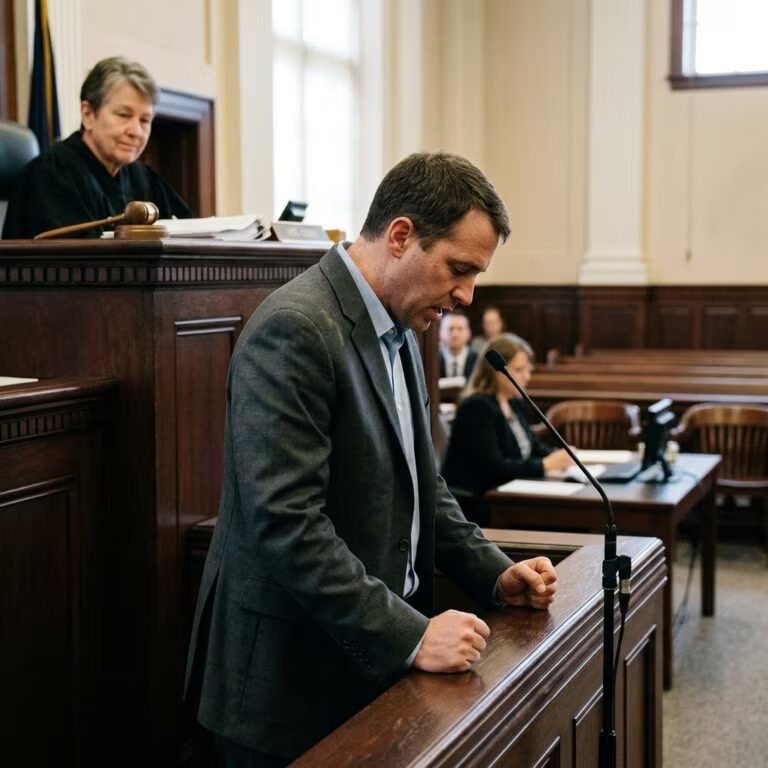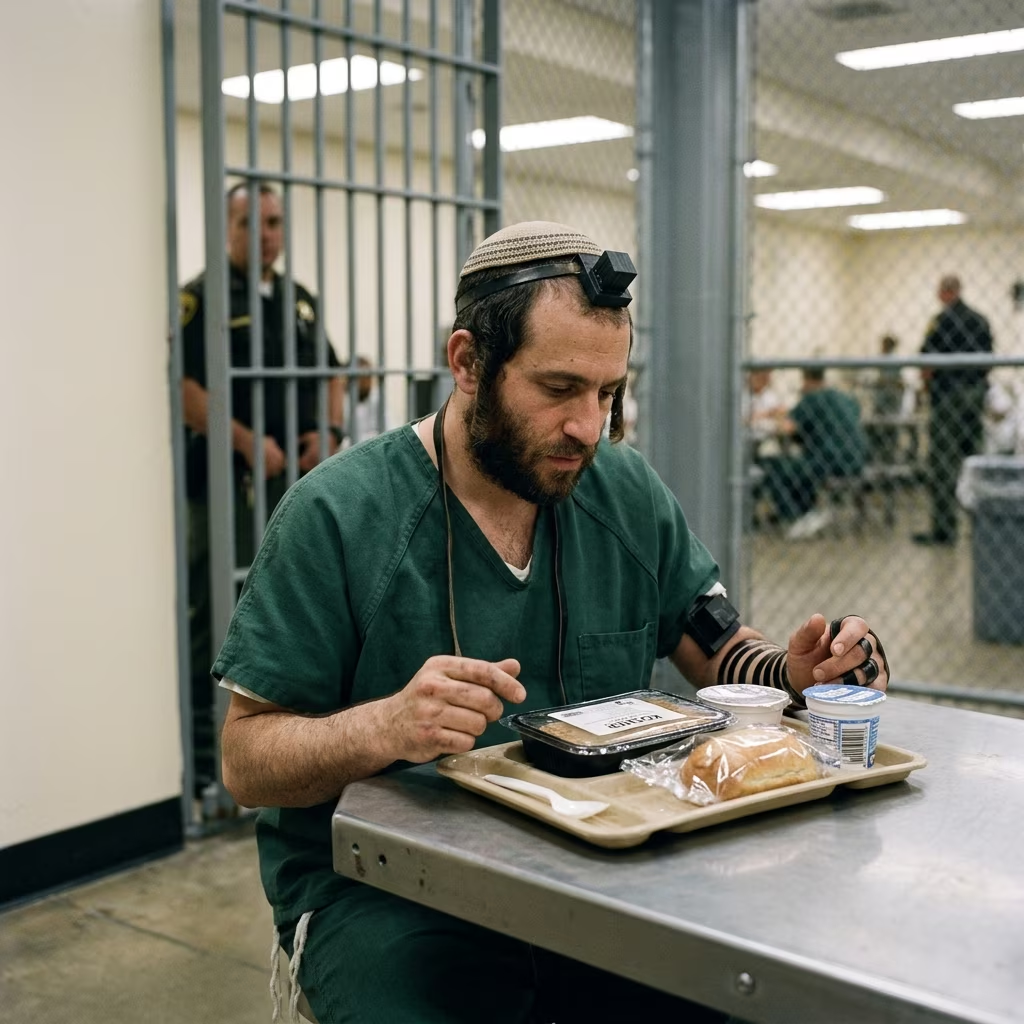
Religious freedom does not stop at the prison gate. When an incarcerated person requests a meal or a space for worship tied to a sincere faith practice, correctional officials must balance security, logistics, and constitutional obligations. A dispute over a Jewish prisoner’s ability to eat in observance of Sukkot highlights how that balance can become a legal question, especially when prison rules interfere with a religious holiday centered on shared meals and symbolic observance.
Sukkot is a weeklong Jewish festival associated with harvest, gratitude, and the commandment to dwell in or at least spend time in a sukkah, a temporary booth or shelter. Because the holiday includes specific food and ritual customs, prison officials may need to consider whether standard meal delivery, housing assignments, or movement restrictions effectively burden a prisoner’s religious exercise.
Why Sukkot Matters in a Correctional Setting
Sukkot begins five days after Yom Kippur and lasts for a week, with the first and last days carrying the strongest observance requirements. Many Jewish communities mark the holiday with meals in a sukkah, blessings over bread, and celebration with family or community. For incarcerated people, those practices are harder to carry out because prison architecture and schedules are built for order, not ritual flexibility.
The religious importance of the holiday is not limited to symbolism. Jewish sources describe eating in the sukkah as a mitzvah, or commandment, and many observant Jews treat communal meals during the festival as a core part of observance. If a prison denies access to a meal arrangement that allows a prisoner to comply with that practice, the refusal may create more than inconvenience; it may create a substantial burden on religious exercise.
The Legal Framework for Faith-Based Accommodation
In the United States, prisoners retain some constitutional protection for religious exercise, though those rights may be limited by legitimate penological concerns. Courts generally recognize that incarceration does not erase the Free Exercise Clause, but they also give correctional administrators broad discretion when safety, staffing, or institutional order is at stake.
Federal law can provide additional protection. The Religious Land Use and Institutionalized Persons Act, commonly known as RLUIPA, requires government institutions receiving federal funds to avoid imposing a substantial burden on religious exercise unless they can show that the burden is the least restrictive means of furthering a compelling governmental interest. In the prison context, that standard often becomes the central issue when a prisoner asks for a religious diet, access to ritual items, or a modified schedule.
That legal structure is important because disputes over food are not merely about personal preference. Courts often distinguish between a routine menu complaint and a denial that prevents an incarcerated person from observing a sincerely held religious command. The more directly the prison rule blocks a required practice, the stronger the case for accommodation.
How a Food Request Can Become a Rights Claim
Food accommodations in prison may involve kosher meals, timing of meals, access to sealed packages, or permission to eat in a designated area. In the context of Sukkot, the issue may be whether a prisoner can participate in a meal that reflects the holiday’s religious meaning, whether food can be transported to a sukkah-like space, or whether the institution can provide an alternative that preserves the essential observance.
Religious-rights disputes frequently turn on practical details:
- Whether the prisoner’s request is based on a sincere religious belief.
- Whether the prison has a neutral policy that unintentionally blocks observance.
- Whether a workable alternative exists that would respect both security and faith.
- Whether the denial is narrowly tailored to a real institutional need.
If officials refuse a request without considering those factors, the denial may look arbitrary rather than necessary. That distinction matters because prison administrators are not allowed to dismiss religious practice simply because it is unfamiliar or inconvenient.
Security Concerns Are Real, but Not Automatic
Correctional facilities have legitimate reasons to control movement, food delivery, and group gatherings. Sukkot observance can involve communal meals, outdoor structures, and special ritual objects such as the lulav and etrog. In a prison, each of those elements may raise security questions. Officials may worry about contraband, congregation size, supervision, or the use of items that could be broken or weaponized.
Still, security concerns are not a blank check. Courts usually expect prisons to explain why a less restrictive accommodation would not work. For example, if a prisoner can safely receive a pre-packaged kosher meal in a supervised area, a complete denial may be harder to justify than a more limited restriction. The same idea applies to holiday observance: a prison may limit the setting or timing, but it should still consider whether the prisoner can meaningfully participate.
The legal question is therefore not whether prisons may regulate religious practice at all. They may. The question is whether the regulation is reasonable, necessary, and respectful of rights that survive incarceration.
What Courts Look for in Religious-Exercise Cases
When a prisoner brings a claim over religious food or worship, courts often examine several recurring issues. The precise test depends on the statute or constitutional theory involved, but the practical analysis usually asks:
| Issue | What the Court Examines |
|---|---|
| Sincerity | Whether the prisoner’s religious belief is genuine rather than fabricated for advantage |
| Burden | Whether the policy makes observance significantly harder or impossible |
| Justification | Whether the prison can show a real safety, cost, or operational need |
| Alternatives | Whether a less restrictive option could satisfy both sides |
This framework helps courts avoid deciding religious questions themselves. Instead, they focus on whether the institution has treated a faith-based request fairly and consistently.
Why the Sukkot Context Is Especially Sensitive
Sukkot is a holiday of movement, hospitality, and ritual eating. Jewish sources describe it as a time when meals are commonly eaten in a sukkah, sometimes accompanied by special blessings and communal celebration. That means a prison denial may affect not only what is served, but also the setting in which the food is consumed.
For observant prisoners, the inability to eat in an appropriate location can be deeply meaningful. A person may not view the issue as a preference for better conditions; instead, the person may see it as a denial of the holiday itself. That is why a prison can create legal exposure if it treats the request as trivial or refuses to engage with the religious explanation.
At the same time, prisons may find it difficult to replicate a sukkah within a secure perimeter. Because of that, many institutions try to solve the problem through partial accommodations such as supervised access to a designated area, modified meal schedules, or approved religious programming. Those efforts are often more legally defensible than a flat refusal.
Practical Steps Institutions Can Take
Prisons that want to minimize conflict can build clearer procedures for religious holiday requests. Better planning often prevents disputes before they become grievances or lawsuits.
- Adopt a written process for holiday and dietary accommodation requests.
- Train staff to recognize the difference between religious observance and ordinary preference.
- Review requests early enough to allow meaningful alternatives.
- Document any denial with specific security or operational reasons.
- Consider temporary, supervised accommodations for major holy days.
These steps do not guarantee that every request will be granted. They do, however, make it more likely that decisions will be lawful, consistent, and defensible if challenged later.
What a Prisoner Should Document
From the prisoner’s perspective, records matter. If a faith-based meal request is denied, the person should keep copies of forms, grievances, responses, and any written explanations from staff. It also helps to note dates, names, and the exact nature of the request.
Clear documentation can show whether the denial was isolated or part of a repeated pattern. It can also help demonstrate that the prisoner was asking for a sincere religious accommodation rather than a general comfort item. In many cases, that paper trail becomes central to any administrative appeal or court filing.
Common Misunderstandings About Prison Religion Cases
Public debates about prison religious rights often contain misconceptions. One common misunderstanding is that religious accommodation must always mean full compliance with every religious rule. That is not how the law works in a correctional environment. Prisons can impose limits when they are justified.
Another misconception is that any restriction on a religious practice is automatically illegal. That also overstates the law. The real issue is whether the restriction is a serious burden and, if so, whether the institution has a strong enough reason for it.
A third misunderstanding is that food accommodations are minor because they concern only meals. For many faiths, food is inseparable from worship and identity. In the Jewish observance of Sukkot, meals can be part of the holy obligation itself, which makes meal access much more than a nutrition issue.
Frequently Asked Questions
Can a prisoner demand any religious meal they want?
No. A prisoner must usually show a sincere religious need, and the prison may still impose reasonable limits if it can justify them with legitimate security or administrative concerns.
Does Sukkot require eating outdoors in a sukkah every time?
Traditional observance involves eating in a sukkah during the festival, and many sources describe that practice as a central feature of the holiday. In prison, however, exact compliance may be impossible, so the legal issue becomes whether a meaningful alternative was offered.
What law most often protects prisoners seeking religious accommodations?
Claims are often brought under the Free Exercise Clause and RLUIPA. RLUIPA is especially important because it places a strong burden on the government once a substantial burden on religious exercise is shown.
Can prison officials deny a request just because it is expensive?
Cost can matter, but it is not automatically enough. The institution typically needs to explain why the cost is significant and why a less restrictive option would not work.
What should happen if the prison cannot build a full sukkah?
Officials should still consider partial alternatives, such as supervised access to a designated space or a modified meal arrangement that allows the prisoner to observe the holiday as fully as possible within the institution’s limits.
Why This Issue Keeps Reappearing
Faith-based prison disputes continue because they sit at the intersection of rules that are hard to simplify: security, equality, and conscience. Holidays like Sukkot make that tension visible because they combine food, time, ritual, and community. When one of those elements is removed, the entire observance can be affected.
That is why prison administrators need more than a rigid rulebook. They need a process that recognizes religion as a serious interest, not an optional convenience. When institutions take that approach, they are less likely to face litigation and more likely to treat incarcerated people with basic fairness.
References
- Sukkot Customs and Rituals — Reform Judaism. 2024. https://reformjudaism.org/sukkot-customs-and-rituals
- What Is Sukkot? A Guide to the Jewish Holiday of Booths — Chabad.org. 2024. https://www.chabad.org/library/article_cdo/aid/4784/jewish/What-Is-Sukkot.htm
- Sukkot 5783, Jewish Holiday Sukkot — Jewish Senior Life of Michigan. 2022-10-09. https://jslmi.org/sukkot-5783/
- 42 U.S.C. § 2000cc-1, RLUIPA — U.S. Government Publishing Office. 2000. https://www.govinfo.gov/content/pkg/USCODE-2023-title42/pdf/USCODE-2023-title42-chap21-subchapI-partA-sec2000cc-1.pdf
- Religious Freedom in Prisons — U.S. Department of Justice, Civil Rights Division. 2023. https://www.justice.gov/crt/religious-freedom