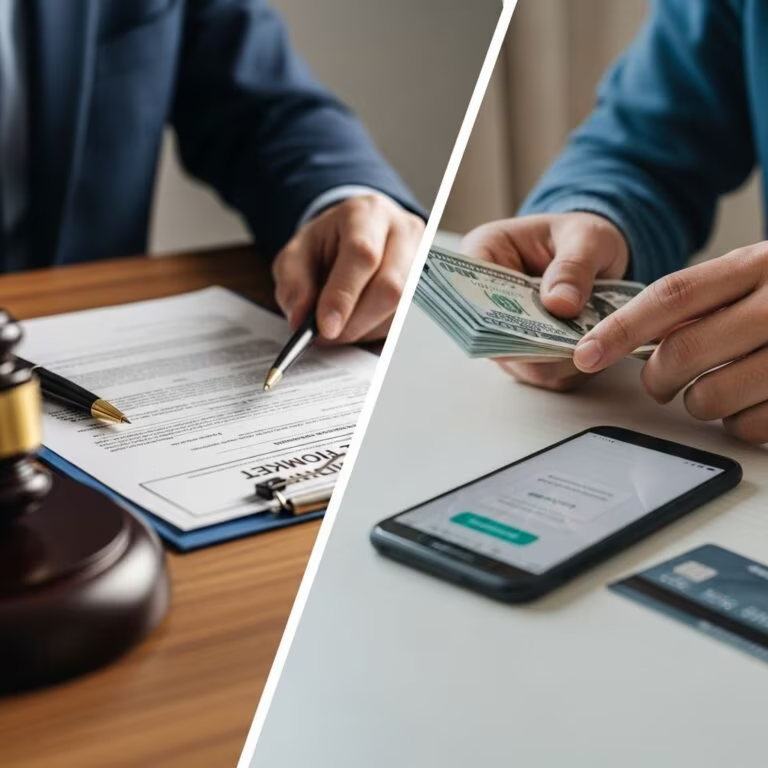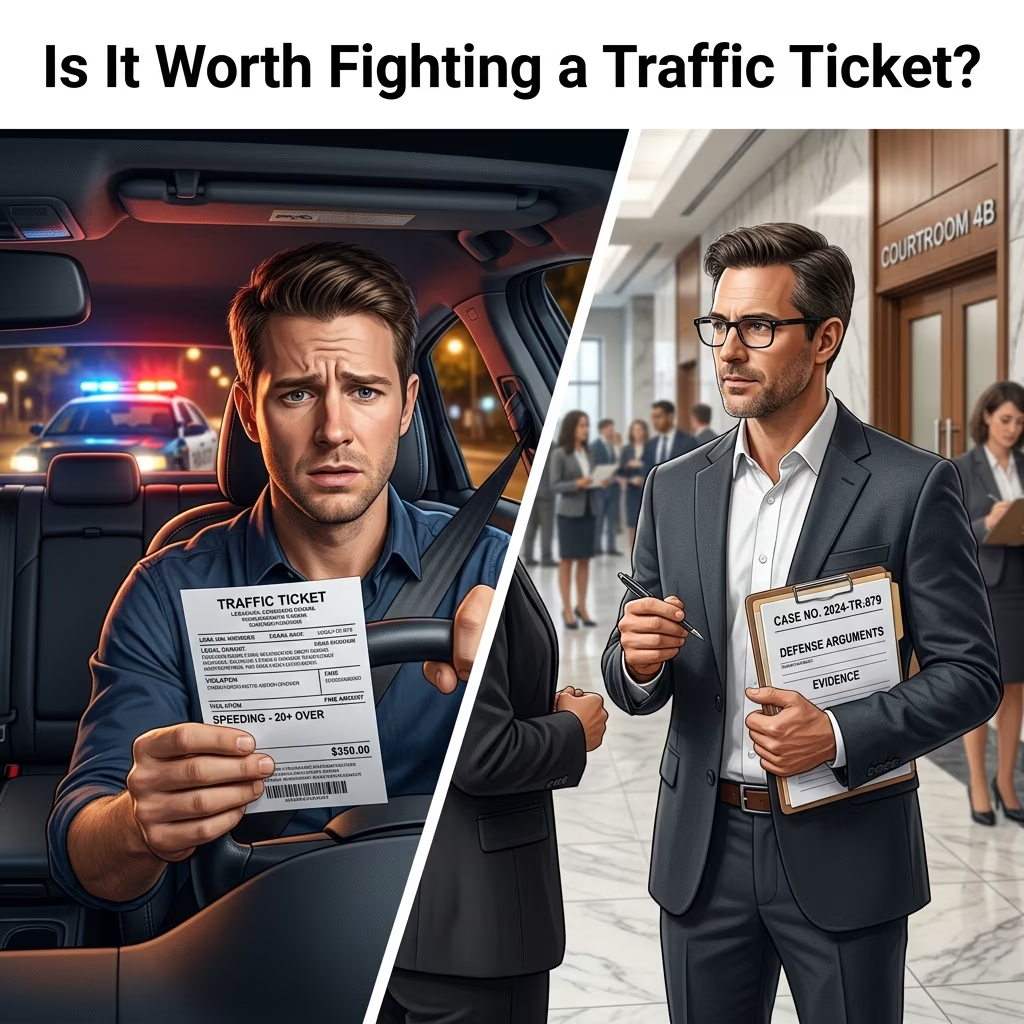
Not every traffic citation should be treated the same way. In some cases, paying the fine is the simplest choice, but in others, contesting the ticket can protect your driving record, reduce long-term costs, or even lead to a dismissal. The right decision depends on the charge, the evidence, the possible penalties, and how much time and effort you are willing to invest.
This guide explains how drivers can think through that decision, what defenses are commonly raised, and what other options may be available besides simply paying the ticket. It also outlines the kinds of evidence that can matter in court and the tradeoffs you should consider before taking action.
Why Drivers Choose to Contest a Ticket
People fight traffic tickets for different reasons. For some, the issue is financial. For others, the larger concern is the effect on insurance premiums, license points, or a commercial driving record. A citation for speeding, failing to stop, following too closely, or disobeying a signal may look minor at first, but the consequences can grow quickly if points accumulate or the violation is treated as a moving offense.
Another reason to challenge a ticket is fairness. An officer can make an error, misunderstand what happened, or have a limited view of the roadway. If the alleged violation did not actually occur, or if the facts are more complicated than the citation suggests, contesting the charge may be worthwhile.
The First Question: What Is the Ticket Really Costing You?
The decision often begins with a simple comparison: what will happen if you pay versus what might happen if you fight? The fine listed on the ticket is only part of the picture. You may also need to consider court costs, driver record points, insurance increases, time off work, and the stress of preparing for a hearing.
| Option | Possible Benefits | Possible Downsides |
|---|---|---|
| Pay the ticket | Fast resolution, no court appearance in many cases | Possible points, higher insurance, admission of responsibility |
| Fight the ticket | Chance of dismissal, reduction, or lower penalties | Time, preparation, and no guarantee of success |
| Negotiate a resolution | May reduce the charge or protect your record | May still require payment, court approval, or conditions |
When the ticket carries only a modest fine and no meaningful impact on your record, paying it may be reasonable. When the violation could raise insurance costs or create licensing problems, a defense becomes more attractive.
Look Closely at the Citation Before Making a Decision
Your ticket contains important details that can shape your response. Read the citation carefully and identify the exact offense, the law or code section, the location, the date and time, and any notes the officer wrote. Those details can help you understand what the prosecution must prove.
Small errors do not automatically void a ticket, but they can matter if they create confusion about what you allegedly did. If the location is wrong, the traffic control device is described incorrectly, or the alleged maneuver could not have occurred as stated, those issues may help your defense.
Common Ways to Challenge a Traffic Ticket
There is no single defense that works for every citation. The best approach depends on the traffic law involved and the available proof. Still, several strategies appear frequently in ticket cases.
Dispute the Officer’s Interpretation
Some traffic violations depend on judgment. An officer may conclude that your lane change was unsafe, your speed was excessive, or your turn was improper. When a charge relies heavily on an opinion, you may be able to argue that the conclusion was too subjective or not supported by the conditions on the road.
For example, if the road was clear, traffic was light, and your maneuver was completed safely, the facts may undercut the idea that your driving created a hazard. The more the offense depends on what was “unsafe” or “improper,” the more useful it is to show why your conduct was reasonable.
Challenge What the Officer Could Actually See
Another common strategy is to question the accuracy of the officer’s observations. The officer may have been blocked by another vehicle, too far away, facing the wrong angle, or distracted by traffic conditions. If the officer could not clearly observe the event, the certainty of the citation may weaken.
Photographs, diagrams, and witness statements can be especially helpful here. A simple diagram showing the positions of the cars, signals, signs, and intersections may clarify why the officer’s line of sight was limited or why the event unfolded differently from the citation narrative.
Show That a Reasonable Mistake Happened
Some traffic cases turn on a mistake of fact rather than a deliberate choice to break the law. A driver may make an honest error because of road design, hidden signage, confusing markings, or a temporary condition that could not be easily seen from the driver’s position.
This defense is not about ignoring the law. It is about showing that the driver acted under a mistaken but understandable belief about the facts. If the sign was obscured by branches or the lane markings were faded enough to mislead a careful driver, that context may matter.
Argue That the Conduct Was Legally Justified
In some situations, a driver’s conduct may look like a violation at first glance but still be justified under the circumstances. A legal justification defense focuses on whether the action was reasonable in light of the situation, even if it technically conflicted with a traffic rule.
This type of argument is often narrow. It is more likely to be relevant when the driver had to react quickly to an unexpected condition and had limited safe choices. The key is showing that the conduct was not reckless, but instead was a response to a real problem.
Claim That the Violation Was Necessary to Avoid Harm
Necessity is one of the strongest-sounding but least common defenses. It may apply when the driver broke a traffic law to avoid immediate danger to people or property. The harm avoided must usually be serious and urgent, and the driver’s response must be proportionate.
For example, a driver who briefly crossed a lane line to avoid a collision may have a stronger argument than a driver who simply chose to hurry. A necessity defense is more persuasive when the danger is sudden, unavoidable, and not caused by the driver’s own behavior.
Evidence That Can Help Your Case
A traffic court case is only as strong as the proof behind it. Even a good explanation may not be enough if you cannot support it. Useful evidence can come from multiple sources, and the more objective it is, the better.
- Witness statements: Passengers, pedestrians, or other drivers may support your version of events.
- Diagrams: A clear drawing can show distances, sight lines, traffic signals, and vehicle positions.
- Photographs: Images of the scene can show signage, road layout, weather conditions, or visual obstructions.
- Documents: Repair invoices, trip records, or navigation history may help explain what happened.
- Video: Dashcam footage or surveillance clips can be among the most persuasive forms of evidence.
If your defense depends on visibility, timing, or road conditions, document those details as soon as possible. Conditions can change quickly, so evidence gathered early is usually more reliable.
Other Ways to Resolve the Ticket
Fighting a ticket does not always mean going all the way to trial. In many cases, drivers can explore alternatives that reduce the impact of the citation without forcing a full courtroom battle.
One option is negotiating with the prosecutor or traffic enforcement authority. Depending on local practice, the charge may be reduced to a lesser offense or reclassified in a way that affects points less severely. Another option is traffic school or another diversion-style program that may help preserve your record if you meet the court’s conditions.
These alternatives can be appealing when the evidence against you is not strong enough to justify a full fight, but the charge is still serious enough that you do not want to simply pay it and move on.
When Hiring a Lawyer Makes Sense
Not every citation requires a lawyer, but legal help can be valuable in more complicated situations. A lawyer may be especially useful if the ticket involves a high number of points, a suspension risk, a commercial driver’s license, an accident, or a charge that could carry collateral consequences beyond the fine itself.
An attorney can review the citation, assess the elements of the alleged offense, request discovery where available, and identify weaknesses in the officer’s account. In some cases, representation can also improve your chances of negotiating a better resolution before the hearing even begins.
Questions to Ask Before You Decide
Before choosing whether to contest a ticket, it helps to ask a few practical questions:
- Will this citation affect my license points or insurance premiums?
- Do I have witnesses, photographs, video, or other proof?
- Did the officer have a clear view of the alleged violation?
- Is there a plausible mistake-of-fact or necessity argument?
- Would a negotiated resolution be better than a full trial?
Answering these questions honestly can save time and help you choose the option that best fits your situation.
What Happens If You Decide to Fight?
If you contest the ticket, expect to follow the procedures required in your jurisdiction. That may include notifying the court, requesting a hearing, appearing on the scheduled date, and presenting your evidence. Some cases are resolved in advance, while others are decided after the officer testifies and you have a chance to respond.
Preparation matters. Bring organized documents, keep your explanation focused, and be ready to speak clearly about what happened. The goal is not to argue every detail at once, but to show the judge why the citation should be reduced, dismissed, or handled in a less damaging way.
FAQs
Is it always better to fight a traffic ticket than to pay it?
No. In some situations, paying the ticket is the cheapest and fastest solution. Fighting makes more sense when the citation could affect your driving record, insurance, or license status.
Can I win if it is just my word against the officer’s?
It is possible, but harder. Independent evidence such as witnesses, photos, video, or diagrams can make a much stronger case than a bare denial.
Does every traffic ticket go to trial if I challenge it?
No. Some cases end through negotiation, reduction, or dismissal before trial. The available process depends on the court and the type of violation.
Can a mistake of law help me?
Usually not. A mistake of law means the driver did not know the rule, which generally is not a strong defense. A mistake of fact, by contrast, may be more useful if the mistake was reasonable.
What if I need to drive for work?
If driving is essential to your job, the stakes may be higher. A citation that seems minor can become more serious if it threatens your ability to keep driving for employment.
References
- Fight a Traffic Ticket: 5 Strategies That Work — FindLaw. 2025-xx-xx. https://www.findlaw.com/traffic/traffic-tickets/how-to-fight-traffic-tickets-five-strategies-that-work.html
- How to Fight a Traffic Ticket — Justia. 2025-xx-xx. https://www.justia.com/traffic-tickets/how-to-fight-a-traffic-ticket/
- Five Strategies for Fighting a Traffic Ticket — GE Appliances EAP. 2025-xx-xx. https://www.anthemeap.com/ge-appliances/find-legal-support/resources/consumer-rights/legal-assist/five-strategies-for-fighting-a-traffic-ticket
- How to Fight a Traffic Ticket in Pennsylvania | Fienman Defense — Fienman Defense. 2025-xx-xx. https://www.philadelphiacriminalattorney.com/fighting-your-ticket/