
Is It Legal To Text When Your Car Isn’t Moving?
Why texting at red lights, in gridlock, or on the shoulder can still count as distracted driving under modern traffic laws.
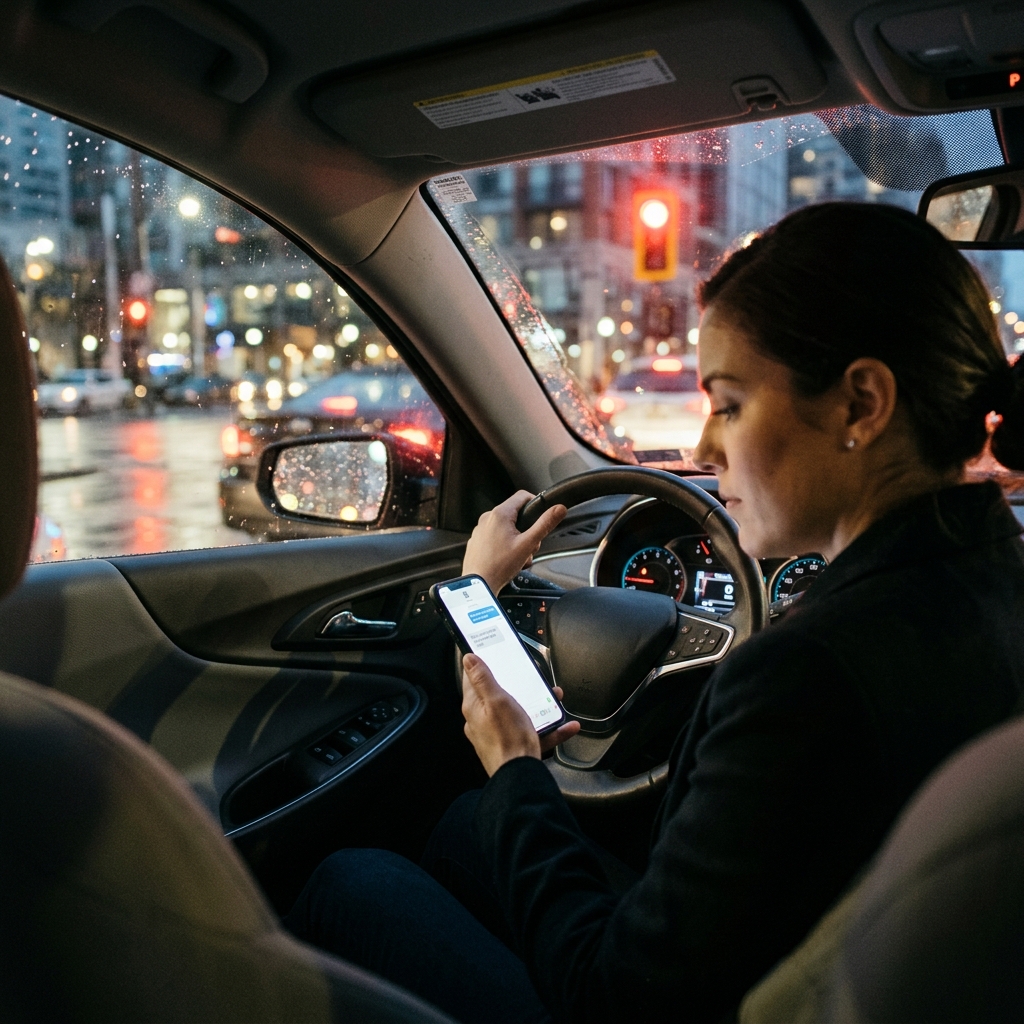
Texting behind the wheel is widely recognized as dangerous and illegal in most places when a vehicle is in motion. Yet many drivers still wonder whether it is acceptable to pick up their phones when traffic grinds to a halt, the light turns red, or they are stuck in a long highway backup. The answer depends heavily on where you are, how local laws define “driving” or “operating” a vehicle, and whether your car is truly parked or only temporarily stopped.
This article explains how U.S. distracted driving laws treat texting in stopped traffic, highlights common exceptions, and offers practical safety tips to help you avoid both collisions and costly tickets.
Why Texting In Any Traffic Situation Is Treated Seriously
Most modern traffic laws treat texting as a form of distracted driving, whether the car is moving quickly or barely creeping forward. Distracted driving encompasses any activity that takes your attention away from the primary task of safe driving, including:
- Sending or reading text messages
- Scrolling social media or email on a phone
- Dialing a number or searching contacts
- Adjusting music or navigation with a handheld device
Public safety agencies emphasize that distraction is not limited to high-speed travel. Even short lapses in attention—such as looking down at a text—can lead to rear-end collisions, lane departures, or failure to react when traffic suddenly moves. Research has found that composing or reading a text can take a driver’s eyes off the road for roughly 4–5 seconds, which is enough time to travel the length of a football field at highway speeds.
Because of these risks, nearly all U.S. jurisdictions now restrict texting while driving, and many extend those restrictions to times when a vehicle is stopped in the travel lane.
How States Generally Regulate Texting Behind The Wheel
Across the United States, distracted driving rules vary, but there are some common patterns that shape whether texting in stopped traffic is legal. Transportation statistics show that 48 states plus several territories now ban text messaging for all drivers, and almost all of these laws allow primary enforcement—meaning officers can pull a driver over solely for a texting violation.
Typical elements of a state texting law include:
- Scope of the ban: Prohibiting writing, sending, or reading text or electronic messages while driving or operating a vehicle.
- Definitions: Clarifying what counts as a “text messaging device” or “electronic communication device.”
- Enforcement type: Primary enforcement (officers can stop you for texting alone) or secondary enforcement (officers must first observe another violation).
- Exemptions: Allowing phone use to contact emergency services such as 9-1-1 or permitting specific hands-free functions.
- Penalties: Fines that increase for subsequent offenses and, in some jurisdictions, points or related consequences such as insurance impacts.
States also often adopt stricter rules for younger or novice drivers, and some prohibit any handheld phone use in school zones or for commercial drivers.
Example: Maryland’s Definition Of Texting While Driving
To illustrate how this works, consider Maryland’s law. The state broadly bans using a text messaging device to write, send, or read messages while operating a motor vehicle on the travel portion of the roadway. The law defines a text messaging device as a handheld device used to send messages via wireless networks, and classifies illegal texting as a primary offense, so police may stop a driver even if no other violation is observed.
Maryland’s provisions show why even slowed or stopped traffic can be covered: if the driver is “operating” a vehicle in the travel lane, the texting prohibition applies regardless of speed. Only narrow exceptions—such as contacting emergency services or using GPS—are permitted.
Stopped vs. Parked: A Key Legal Distinction
One of the most important questions in determining whether texting is legal is whether your vehicle is considered simply stopped or truly parked. State statutes and enforcement practices often draw a line between a vehicle that remains part of active traffic and one that is safely removed from the roadway.
| Situation | Typical Legal View | Common Risk Level |
|---|---|---|
| Stopped at a red light | Often treated as still “driving” or “operating” a vehicle | Moderate: traffic can move suddenly |
| In slow or gridlocked traffic | Usually covered by texting bans if in travel lane | High: frequent stopping and starting |
| Pulled off the road and parked safely | More likely to be considered outside driving restrictions | Lower, but surroundings still matter |
| Parked in a lot with engine off | Generally not treated as driving | Low for traffic, but other safety issues exist |
In many jurisdictions, the critical factor is whether your car remains on the roadway and you still have active driving responsibilities. If you are in a travel lane, even at a standstill, you may still be legally considered to be operating the vehicle, and the texting ban can apply.
Common Legal Approaches To Texting In Stopped Traffic
While the details differ by state, several broad approaches tend to appear in distracted driving statutes and enforcement policies.
1. Texting Is Illegal Whenever The Vehicle Is On The Roadway
Some states and cities interpret their laws to mean that using a handheld device for texting is prohibited whenever the vehicle is on the roadway, regardless of whether it is moving. Under this approach, drivers stuck in gridlock or waiting at a red light can still be ticketed for handling a phone to send or read messages.
For example, transportation safety organizations note that many handheld bans apply throughout the driving process, not just at speed, which allows primary enforcement of phone use at intersections or in congestion. This framework reflects the idea that drivers must remain alert and ready to react at all times when they occupy the travel lane.
2. Texting Is Banned Only When The Vehicle Is In Motion
In contrast, some jurisdictions draw a clearer distinction between motion and complete stops. Under this view, the key legal trigger is whether the vehicle is moving. If the law explicitly states that the prohibition applies while a vehicle is “in motion,” drivers may be allowed to use their phones briefly at red lights or in stopped traffic, so long as they put the device away before the car begins to move again.
Official state materials sometimes emphasize that drivers must never text while driving, but advise that the safest approach is to pull off the road and stop completely before texting—even if the law might technically allow limited use at full stops. This shows how safety guidance can be stricter than the minimum legal requirements.
3. Total Bans On Handheld Use Regardless Of Movement
A growing number of jurisdictions prohibit any handheld phone use while driving, including phoning, texting, or manually interacting with apps. In these locations, drivers may have to rely solely on fully hands-free systems or built-in vehicle interfaces. The laws often specify that handling a phone is allowed only before entering the roadway—for example, to start navigation—and then the device must not be touched again until the vehicle is parked.
These comprehensive bans make it much more likely that texting is illegal not just during motion but also when stopped at lights or in congestion.
Special Rules For Young, Commercial, And Government Drivers
Differing risk profiles lead lawmakers to impose stricter rules on certain groups of drivers. These rules apply whether traffic is flowing or halted.
Novice And Underage Drivers
Many states bar teenage or novice drivers from using electronic devices at all behind the wheel, including hands-free systems. For example, some laws prohibit drivers under 18 from using wireless communication devices except to contact emergency services. The assumption is that newer drivers need full attention to manage basic driving tasks and are at particular risk when distracted.
In practice, this means younger drivers can be cited for texting even when the car is stopped in traffic if they are still on the roadway.
Commercial Drivers And Hazardous Materials
Federal agencies impose nationwide bans on texting for certain categories of professional drivers. The Federal Motor Carrier Safety Administration prohibits commercial truck and bus drivers from texting while driving, and later extended the restriction to handheld phone use. Another federal agency, the Pipeline and Hazardous Materials Safety Administration, bars texting by drivers transporting hazardous materials.
For these drivers, texting in stopped traffic can still violate federal regulations, as long as they are engaged in transporting cargo or passengers and remain part of the traffic stream.
Government Employees On Official Business
An executive order issued at the federal level restricts text messaging by government employees when they are driving on official business or using government equipment, regardless of location. These rules are designed to model safe behavior and reduce crash risk for a large workforce.
Safety And Legal Consequences Of Texting In Stopped Traffic
Even when drivers believe they can manage a quick glance at a phone while stopped, the potential consequences—both safety-related and legal—remain significant.
Crash And Injury Risk
- Drivers who text are far more likely to be involved in crashes compared with non-texting drivers, because distraction combines visual, manual, and cognitive elements.
- National safety data show thousands of fatalities each year in crashes involving distracted drivers, which include texting and other device use.
- Rear-end collisions at intersections often occur when drivers fail to notice that traffic ahead has stopped, or fail to move when a light changes because their attention is on their phones.
These risks do not disappear simply because the vehicle is not moving at a given moment. Traffic can change suddenly, and drivers must be ready to take action.
Fines, Enforcement, And Long-Term Effects
Texting violations can be costly even if they do not lead to an immediate crash. In some states, fines for texting while driving start relatively low but increase significantly with added fees, surcharges, or subsequent offenses. In others, the penalties may include higher fines for repeated violations, points on a driving record, or requirements to attend safety courses.
Because most texting bans are primary offenses, officers can initiate a stop based solely on observing handheld phone use in traffic. That means looking at a phone when stopped at a light can still lead to a citation if your jurisdiction treats that as operating a vehicle.
Practical Tips To Stay Legal And Safe
Regardless of how your state specifically defines texting while driving, several practical strategies can help you reduce risk and avoid tickets.
- Assume texting is illegal whenever you are in the travel lane. Even if your area allows limited use at complete stops, the safest approach is to treat any phone handling in active traffic as off-limits.
- Pull completely off the road. If you must send or read a message, wait until you can park safely in a lot, on a side street, or in a designated area off the main roadway.
- Use built-in or approved hands-free systems. Many laws permit voice-activated calling or integrated vehicle controls as long as you do not hold the phone in your hand.
- Enable “do not disturb” or driving modes. Some phones and apps can automatically silence notifications or respond to texts while your vehicle is moving, reducing the urge to look at the screen.
- Plan before you move. Set your route, adjust music, and send important messages before you enter the roadway, so you do not need to manage these tasks in traffic.
- Check local laws frequently. Traffic and phone rules can change, and city-level ordinances sometimes add stricter requirements on top of state law.
Frequently Asked Questions About Texting In Stopped Traffic
Is it ever legal to text at a red light?
In some jurisdictions, the law focuses on whether the vehicle is in motion, which may allow limited phone use at full stops. However, many states either interpret their rules to cover all roadway operation or have total bans on handheld phone use while driving. Because enforcement and wording differ, you should check your own state’s statutes and assume that texting at red lights may be treated as a violation.
Can I text if I am stuck for a long time in highway gridlock?
Even in severe congestion, your vehicle typically remains on the travel lane, and you are still considered to be operating it. In states with broad texting bans or handheld device restrictions, this situation is usually covered by the law. From a safety perspective, sudden changes—such as lanes reopening or emergency vehicles approaching—also require full attention.
Is using navigation on my phone treated the same as texting?
Some laws specifically exempt GPS use, as long as the driver does not type while driving and the device is mounted or integrated. Others allow phone-based navigation only if it is set before entering the roadway and then operated hands-free. Always review the language in your jurisdiction to see how navigation is treated.
Are hands-free calls safer than texting?
Hands-free systems remove the manual component of distraction and can reduce visual distraction, but they may still create cognitive distraction. Many laws permit hands-free calls while banning handheld texting as a compromise, yet safety experts recommend keeping calls short and focused, and avoiding complex conversations in heavy traffic.
How can I check my state’s current distracted driving laws?
Reliable options include state transportation department websites, official legislative code databases, and federal transportation resources that summarize state phone and texting bans. These sources are more accurate and up to date than informal summaries.
References
- Texting and Driving Can Be Deadly — David Ricks Law. 2023-06-01. https://www.davidrickslaw.com/library/texting-and-driving-can-be-deadly.cfm
- Texting or Using a Telephone While Driving — Maryland People’s Law Library. 2022-05-10. https://www.peoples-law.org/texting-or-using-telephone-while-driving
- U.S. State and Federal Laws Targeting Distracted Driving — Governors Highway Safety Association / National Academies Press. 2014-04-01. https://pmc.ncbi.nlm.nih.gov/articles/PMC4001667/
- State Laws on Distracted Driving — Bureau of Transportation Statistics. 2023-09-15. https://www.bts.gov/content/state-laws-distracted-driving-0
- Texting and Cellphone Laws — Texas Department of Transportation. 2024-02-20. https://www.txdot.gov/safety/driving-laws/texting-cellphone-laws.html
- Distracted Driving — National Highway Traffic Safety Administration. 2025-03-01. https://www.nhtsa.gov/risky-driving/distracted-driving
Similar Articles








Read full bio of medha deb


