
Is It Illegal to Record Police Without Telling Them?
Know when recording police is protected, when it can become risky, and what to do during a stop.
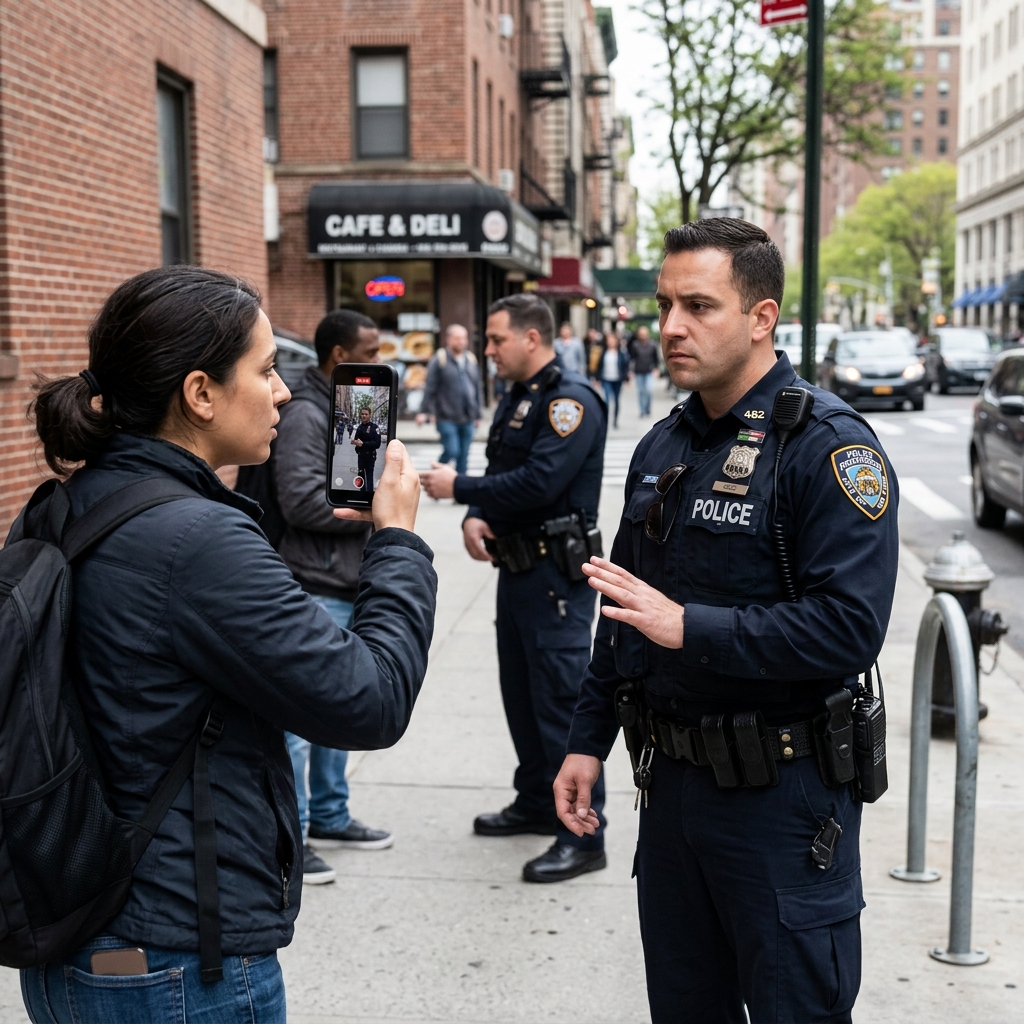
In many public settings, the answer is no: the law generally protects your right to record police officers while they are doing their jobs. The harder question is not whether recording is allowed, but whether the way you record creates a legal problem, such as interfering with police activity or violating a state eavesdropping law.
The basic rule: public recording is usually protected
Courts and civil liberties organizations generally agree that people have a First Amendment right to film, photograph, or audio-record police officers performing official duties in public. That protection exists because recording public officials can document possible misconduct, preserve evidence, and inform the public about matters of public concern.
This right is not unlimited, however. It is usually tied to two practical conditions: you must be lawfully present where you are recording, and your recording must not interfere with police work.
Do you have to tell officers that you are recording?
As a general matter, you do not have to announce that you are recording police in a public place. Open recording is often the safest approach because it avoids suspicion about secret monitoring and reduces the chance that an officer will claim privacy or safety concerns.
That said, the law is not identical everywhere. Some states have stricter wiretapping or consent rules that can complicate secret audio recording, especially when a conversation is not obviously public. In those places, whether notice is required may depend on the kind of recording, the setting, and whether the communication is considered private under state law.
When recording can become legally risky
Even where recording itself is lawful, officers may stop it if your actions interfere with their duties. Interference can include blocking movement, getting too close after being told to step back, refusing lawful commands, or creating a safety hazard.
Recording can also become risky if it is done secretly in a state that treats undisclosed audio capture as unlawful in certain situations. Secret recordings may raise questions under state privacy statutes even when video alone would be permitted.
Other criminal laws can sometimes come into play as well, including laws against trespass, harassment, or stalking. The key point is that the legality of the recording does not give anyone a license to disrupt law enforcement operations.
Open recording versus hidden recording
| Type of recording | Typical legal treatment | Common risk |
|---|---|---|
| Visible phone or camera | Usually protected in public if you do not interfere | Officers may order you to move if you are too close or obstructing activity |
| Hidden audio recording | May be restricted by state consent or wiretap laws | Possible privacy or interception issue |
| Recording from private property | Depends on location and owner permission | Property rules may limit where and how you record |
What if the police are interacting with you personally?
You do not lose your rights just because the officer is talking to you instead of to someone else. Courts have recognized that people may record their own encounters with police in public, so long as the recording does not interfere with the officer’s work.
For example, recording a traffic stop from a safe distance is often protected, but trying to document an arrest from within the officer’s immediate operational space may be treated differently because it can impede the arrest. The line is usually drawn around interference, not around whether the officer likes being recorded.
Why visibility and distance matter
If your goal is to stay on strong legal ground, make the recording obvious. A visible phone, camera, or body-worn device makes it harder for anyone to argue that you were secretly intercepting a communication or engaging in deceptive conduct.
Distance matters for the same reason. Civil liberties guidance commonly recommends remaining calm, obeying lawful orders, and keeping enough space so that your recording does not affect the officer’s ability to act. If an officer asks you to back up, the safest response is usually to comply and continue recording only if you can do so without interference.
Can police take your phone or delete your footage?
As a rule, police cannot confiscate your recording device or demand to inspect its contents without legal authority such as a warrant, and they may not delete your recordings. If you are arrested, officers may take possession of the phone as part of the arrest process, but that does not automatically give them the right to search the data inside it.
Because digital evidence can matter later, many advocacy groups recommend using a strong passcode and backing up your files when it is safe to do so. If footage is lost, altered, or deleted, it can affect both civil rights claims and internal investigations.
How state law can change the analysis
Federal First Amendment protections are important, but they do not override every state privacy rule. Some jurisdictions are more permissive, while others have statutes that can affect audio recording if everyone being recorded has not consented.
That is why two people could do nearly the same thing in two different states and reach different legal outcomes. A visible video recording of police in public is often the least controversial option, while undisclosed audio capture is more likely to trigger legal questions under state law.
What to do during a police encounter
- Stay calm and do not physically resist.
- Keep your device visible if you choose to record.
- Do not block the officers or step into their work area.
- Follow lawful orders to move back or change position.
- Do not consent to a search if you do not want one.
- If detained, ask whether you are free to leave.
These steps do not guarantee that an encounter will go smoothly, but they can reduce the chance that your recording will be framed as interference or escalation.
What to document after the encounter
If you believe your rights were violated, write down details as soon as possible. Note the date, time, location, number of officers, badge numbers, patrol car numbers, and the agency involved. If witnesses were present, get their contact information while memories are fresh.
It can also help to save original files, take screenshots of metadata if available, and keep copies in more than one place. This record may support a complaint, a public records request, or a civil rights claim later on.
When a lawyer may be useful
You may want legal advice if you were arrested, charged with interference, told that your recording was illegal, or had your device seized. An attorney can help evaluate whether the officers relied on a valid safety concern, whether state recording law applies, and whether any evidence should be preserved immediately.
Legal help is also useful if your footage captures a use of force incident, a traffic stop, a protest arrest, or another event where timing and chain of custody matter. The sooner the facts are reviewed, the easier it is to protect the recording and assess possible remedies.
FAQ
Can I record police during a traffic stop?
Usually yes, if you are lawfully present and do not interfere with the stop. The safest approach is to keep the recording visible and maintain a respectful distance.
Do I have to say “I’m recording” before filming?
Not usually in a public setting. However, announcing that you are recording can reduce confusion and may help avoid arguments about whether the recording was secret.
Can an officer make me stop recording just because they do not like it?
No, not if you are lawfully recording in public and not interfering with police duties. Officers need a legitimate reason tied to safety, lawful operations, or another recognized restriction.
Is audio recording treated the same as video recording?
Not always. Video of public police activity is often protected, while audio can be more sensitive under state interception laws. The legal rules may differ depending on whether the recording is open or secret.
Can police delete my video?
No. Guidance from civil liberties groups states that police may not delete your recordings, and they generally need a warrant to access device contents.
Bottom line
Recording police without telling them is often legal when the recording happens in public, does not interfere with official duties, and does not violate a state-specific privacy or wiretap rule. The most cautious approach is to record openly, stay at a safe distance, and know the rules that apply where you live.
References
- Video or Audio Recording of Police Officers & Your Legal Rights — Justia. n.d. https://www.justia.com/criminal/procedure/right-to-record-police-officers/
- Recording police in public: What you need to know — Fire.org. n.d. https://www.fire.org/research-learn/recording-police-public-what-you-need-know
- Recording and Documenting Police and Federal Agents — American Civil Liberties Union. n.d. https://www.aclu.org/know-your-rights/recording-and-documenting-police-and-federal-agents
- Right to Record the Police in Florida — ACLU of Florida. n.d. https://www.aclufl.org/right-record-police-florida/
- Know Your Rights When Filming Police — NYCLU. n.d. https://www.nyclu.org/resources/know-your-rights/know-your-rights-when-filming-police
- Recording Police — Ohio State Bar Association. n.d. https://www.ohiobar.org/my-ohio-rights/recording-police/
Similar Articles








Read full bio of Sneha Tete




