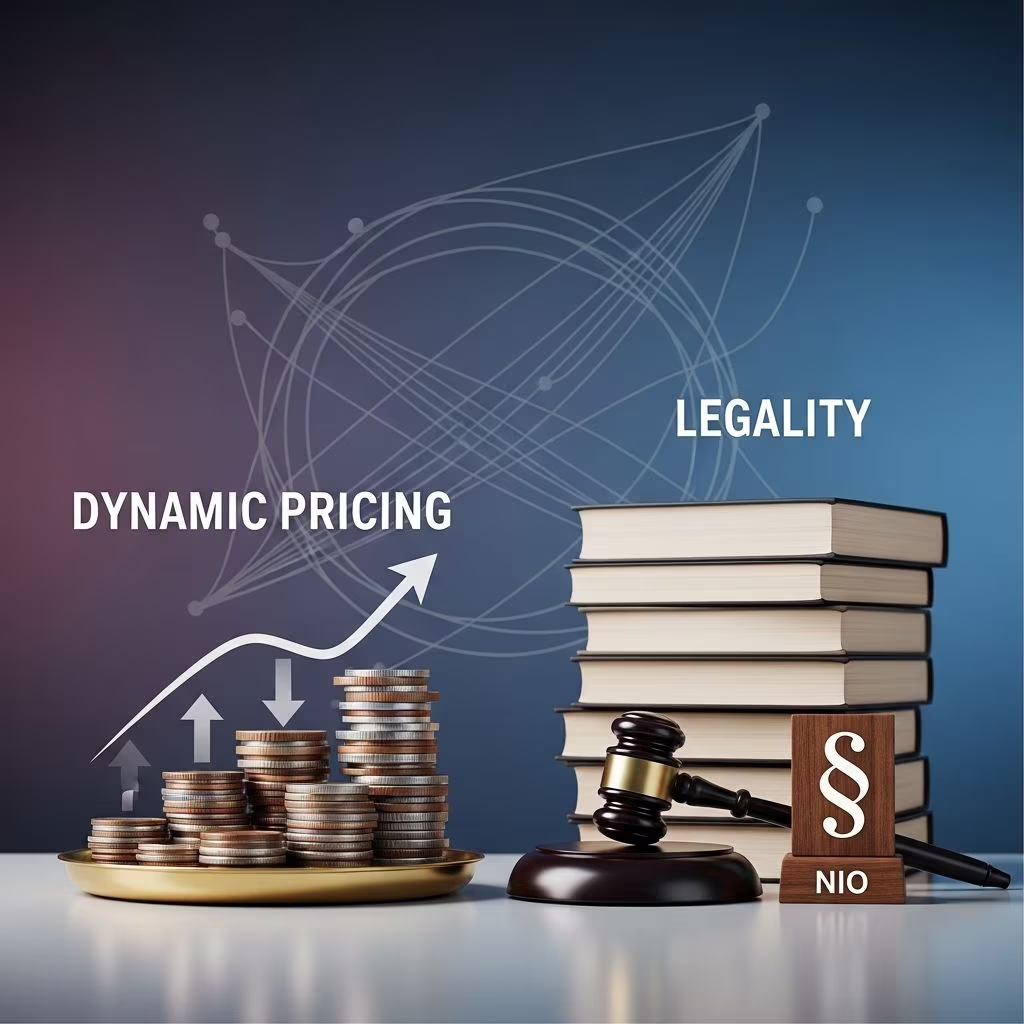
Dynamic pricing, where costs fluctuate based on demand, supply, or customer data, powers industries like airlines, rideshares, and e-commerce. While generally permissible, it intersects with antitrust, consumer protection, and emerging AI regulations, requiring careful implementation to avoid penalties.
Understanding Dynamic Pricing Fundamentals
At its core, dynamic pricing uses algorithms to adjust rates in real time. For instance, ride-sharing apps raise fares during peak hours, while ticket platforms hike prices as events near sellout. This model maximizes revenue but sparks debates on fairness.
Businesses employ it for efficiency: airlines fill seats profitably, hotels optimize occupancy. Yet, opacity in how prices change can erode trust, prompting legal oversight.
- Real-time adjustments: Respond to market shifts instantly.
- Data-driven: Incorporate user behavior, location, or inventory levels.
- AI-powered: Algorithms predict demand, often personalizing offers.
Federal Antitrust Frameworks Governing Pricing
U.S. antitrust laws, primarily the Sherman Act, scrutinize dynamic pricing for collusion risks. Algorithms facilitating price-fixing among competitors qualify as per se violations, subject to criminal prosecution.
The Department of Justice (DOJ) monitors “hub-and-spoke” schemes where software vendors enable coordinated hikes, as in the RealPage settlement targeting rental markets. Platforms must ensure tools do not inadvertently signal competitors’ moves.
| Law | Key Prohibition | Potential Penalty |
|---|---|---|
| Sherman Act Section 1 | Collusive price-fixing via algorithms | Criminal fines, imprisonment |
| California AB 325 (2026) | Coercing algorithm adoption for pricing | Civil claims under Cartwright Act |
| Federal Trade Commission Act | Unfair/deceptive practices | Injunctions, restitution |
Consumer Protection Mandates and Transparency
Transparency remains paramount. Sudden surges without notice can violate unfair trade laws. New York’s Algorithmic Pricing Disclosure Act (2025) mandates notices like “THIS PRICE WAS SET BY AN ALGORITHM USING YOUR PERSONAL DATA” for data-influenced rates.
Enforced by the Attorney General, violations draw up to $1,000 fines post-cease-and-desist. California’s CCPA probes whether consumers expect data use in pricing, expanding privacy into commerce.
Businesses must disclose methodologies clearly, avoiding deception. For example, airlines often post surge explanations, mitigating backlash.
State-Level Regulations Reshaping the Landscape
By 2026, states lead reforms. Tennessee’s SB 1807 deems personalized algorithmic pricing deceptive under consumer laws, effective July 1. Connecticut’s HB 8002 curbs automated rental pricing.
Maryland’s Protection from Predatory Pricing Act bans dynamic models in groceries, requiring 24-hour price stability and no surveillance personalization. Pennsylvania eyes similar curbs on essentials like fuel.
- Tennessee SB 1807: Targets goods/services for residents.
- California AB 325: Bans coercion in algorithm use.
- New York Disclosure Act: Broad applicability, AG enforcement.
- Maryland SB 387: Grocery-specific prohibitions.
These reflect bipartisan worries over AI exacerbating inequality in necessities.
Price Discrimination and Civil Rights Concerns
Charging variably based on demographics risks anti-discrimination suits. While market-based differences (e.g., loyalty discounts) are standard, using race, gender, or income proxies violates laws like the Civil Rights Act.
Algorithmic biases amplify issues; firms must audit for fairness. The proposed AI Civil Rights Act (2025 reintroduction) would mandate audits and ban discriminatory AI.
Sector-Specific Rules and Case Studies
Travel and Hospitality
Airlines face DOT oversight; undisclosed surges draw fines. Uber’s surge pricing withstood challenges if transparently applied.
Ticketing and Events
Illinois bills propose bans on event dynamic pricing amid fan outrage.
Housing Rentals
DOJ actions against RealPage highlight collusion via shared data. Connecticut’s law directly addresses this.
Australian cases, like ACCC v. Google (2021), affirm platforms’ liability for algorithmic anticompetitiveness. U.S. courts uphold dynamic models if reasonable and disclosed.
Risks of Algorithmic Pricing Tools
Third-party software heightens exposure. Vendors like those in RealPage cases face DOJ scrutiny for enabling supracompetitive rents. Businesses must vet providers, document decisions.
Proposed federal bills like the Stop AI Price Gouging Act (2025) target surveillance pricing across sectors.
Best Practices for Legal Compliance
To navigate this terrain:
- Disclose prominently: Explain price variability and data use.
- Audit algorithms: Check for bias, collusion risks quarterly.
- Monitor legislation: Track state AG actions, federal bills.
- Document rationale: Justify pricing logic for CCPA compliance.
- Train staff: Ensure customer service addresses pricing queries accurately.
- Sector checks: Adhere to industry rules (e.g., no grocery surges in MD).
Proactive steps reduce litigation odds. For instance, posting FAQs on pricing builds trust.
Frequently Asked Questions
Is dynamic pricing illegal in the U.S.?
No, it’s legal if transparent and non-collusive, but state laws add restrictions.
Do businesses need to disclose algorithmic pricing?
Yes, in New York and potentially elsewhere; check local rules.
Can algorithms discriminate in pricing?
No, using protected traits is prohibited; audits are essential.
What happens if caught colluding via pricing software?
Criminal charges under Sherman Act possible.
How does dynamic pricing affect small businesses?
It boosts revenue but demands compliance investment; start with simple disclosures.
Future Outlook: Evolving Regulations
With AI advancing, expect tighter federal rules. Bills like One Fair Price Act propose surveillance bans. Businesses should prepare for nationwide disclosures and essential-goods exemptions.
Global trends mirror this: EU probes algorithmic fairness. U.S. firms operating internationally face layered compliance.
Ultimately, balancing innovation with ethics sustains dynamic pricing’s viability. Transparent adoption fosters consumer acceptance amid scrutiny.
References
- Dynamic Pricing Legality In Online Platforms — Law Gratis. 2023. https://mail.lawgratis.com/blog-detail/dynamic-pricing-legality-in-online-platforms
- The Price of Dynamic and Personalized Pricing—What’s Next? — Vorys. 2026-03-13. https://www.vorys.com/publication-the-price-of-dynamic-and-personalized-pricing-whats-next
- Pricing Algorithms – Price Tags and Personal and Competitor Data — JD Supra. 2026. https://www.jdsupra.com/legalnews/pricing-algorithms-price-tags-and-9661583/
- DYNAMIC PRICING ALGORITHMS, CONSUMER HARM, AND REGULATORY RESPONSE — Washington University Law Review. 2022-11. https://wustllawreview.org/wp-content/uploads/2022/11/MacKay-Weinstein-Dynamic-Pricing-Algorithms-Consumer-Harm-and-Regulatory-Response.pdf
- What is dynamic pricing, and why do consumers need better protections? — Brookings Institution. 2025. https://www.brookings.edu/articles/what-is-dynamic-pricing-and-why-do-consumers-need-better-protections/
- Personalized Pricing: What Business Lawyers Need to Know — WilmerHale. 2026-03-13. https://www.wilmerhale.com/en/insights/client-alerts/20260313-personalized-pricing-what-business-lawyers-need-to-know