
Barefoot Driving: Legal Facts, Risks, And Practical Safety Tips
Understand the legal status, safety risks, and practical tips before you decide to drive barefoot on U.S. roads.
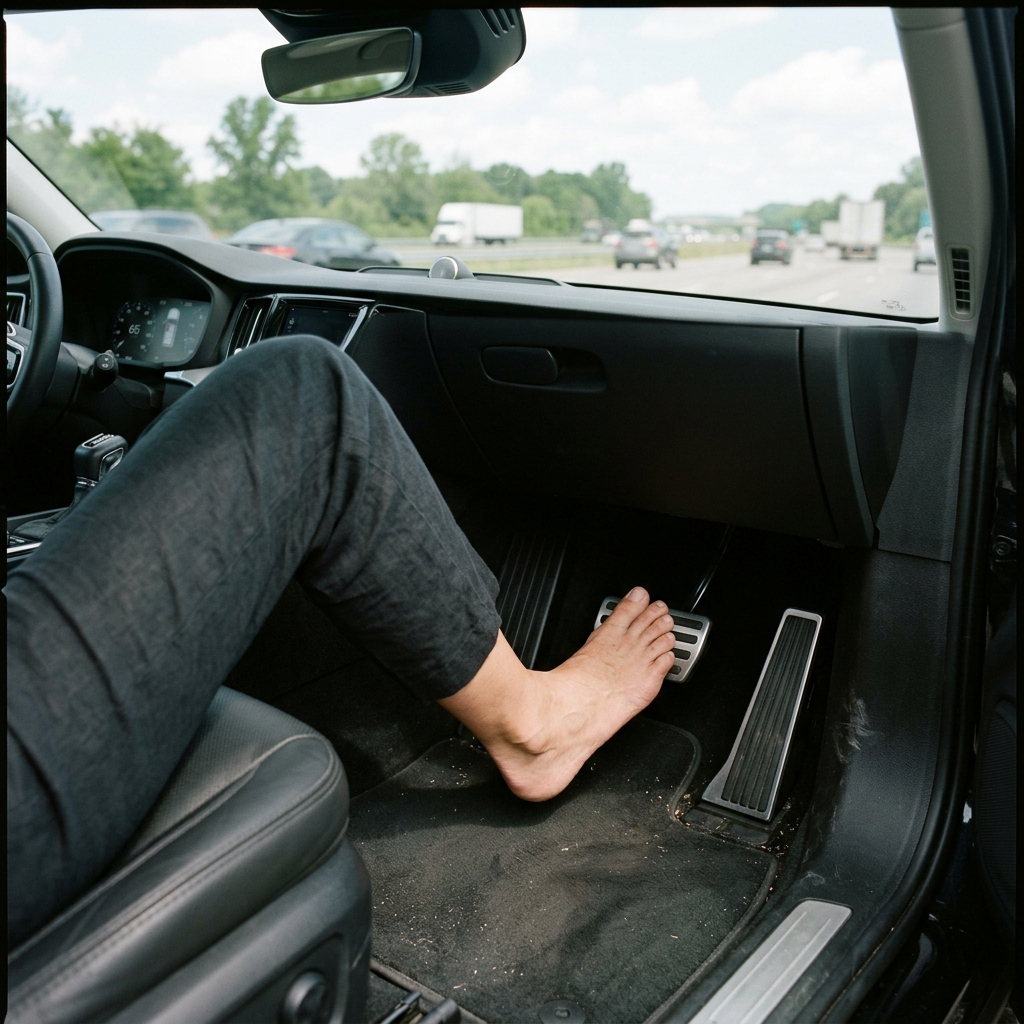
Many drivers have heard the warning that driving barefoot is against the law. In reality, no U.S. state expressly prohibits operating a standard passenger vehicle without shoes, but that does not mean going barefoot is always wise or risk-free. Understanding the difference between what is legal and what is safe can help you make better decisions behind the wheel and avoid unexpected legal or insurance complications.
Myths and Facts About Barefoot Driving
Rumors about barefoot driving have circulated for decades, often passed along in driver education classes, family conversations, or social media posts. Separating myth from verifiable fact is the first step to understanding your rights and responsibilities as a driver.
- Myth: Driving barefoot is illegal in the United States.
- Fact: No state traffic code explicitly bans barefoot driving for typical cars and trucks.
- Myth: You can be ticketed solely for having bare feet on the pedals.
- Fact: Officers generally cannot issue a citation for footwear alone if no other violation is present, although they may consider your footwear when assessing careless or reckless driving after an incident.
- Myth: You will automatically lose any accident claim if you were barefoot.
- Fact: Barefoot driving is one factor among many. It can be relevant if investigators believe it contributed to the crash, but it does not automatically determine fault.
These distinctions highlight an important theme: barefoot driving is legal, but it may be scrutinized if something goes wrong on the road.
Is Barefoot Driving Legal in the United States?
From a traffic law perspective, barefoot driving is surprisingly straightforward. Legal research and public inquiries to state motor vehicle departments have repeatedly confirmed that there is no statewide prohibition on barefoot driving in any U.S. state.
In practical terms, that means:
- You may drive a conventional passenger vehicle without shoes in all 50 states.
- Most state traffic codes do not even mention footwear for ordinary drivers.
- If a behavior is not prohibited by statute or regulation, it is usually considered legal by default.
However, a few important qualifications apply:
- Some states or local governments have issued nonbinding safety recommendations discouraging barefoot driving.
- Local ordinances may theoretically impose footwear rules, so conditions can vary at the county or municipal level.
- Courts and police can still evaluate your footwear in assessing whether you operated your vehicle prudently, especially after a collision.
Special Rules for Motorcycles and Similar Vehicles
The legal landscape changes when you move from passenger cars to motorcycles or motor-driven cycles. A small number of jurisdictions specifically require shoes for motorcyclists, even though they allow barefoot driving in cars.
| Vehicle Type | Typical Footwear Rule | Notes |
|---|---|---|
| Passenger cars / trucks | No explicit footwear requirement | Legal to drive barefoot in all 50 states at the statewide level. |
| Motorcycles / motor-driven cycles | Some states require shoes | Example: Certain statutes make riding or operating a motorcycle without shoes unlawful, while car drivers remain unaffected. |
Because motorcycle crashes often result in more severe injuries, lawmakers have paid special attention to protective gear, including helmets and footwear. Riders should consult their own state’s code and, if necessary, a local attorney for precise rules.
Safety Considerations: Is Driving Barefoot a Good Idea?
Legal permission does not automatically mean an activity is safe. Several states and safety organizations have publicly warned that barefoot driving can create control and injury risks, even though it is not a crime.
Potential Control Issues
Your ability to operate a vehicle safely depends on how well you can modulate the accelerator, brake, and clutch pedals. Driving barefoot can change the way your foot contacts those surfaces.
- Reduced grip: Bare skin may offer less friction on smooth pedal surfaces, especially if your feet are wet, sweaty, or sandy.
- Uneven pressure: The shape of your foot and sensitivity of your toes can make fine pedal control more difficult, particularly during emergency maneuvers.
- Discomfort and distraction: Pedals can feel harsh, cold, or hot on bare feet, which may distract you or cause instinctive reactions that interfere with controlled braking or acceleration.
Some states explicitly cite these control issues when discouraging barefoot driving, even though they decline to ban it outright.
Risk of Foot Injuries
Foot protection is another major concern. In a crash, abrupt stop, or mechanical failure, bare feet are more exposed than feet protected by sturdy shoes.
- Broken glass or metal fragments inside the cabin can cut or puncture bare skin.
- Hot surfaces from engine or exhaust components may cause burns if your foot slips from the pedal.
- Emergency exits from the vehicle on rough pavement or roadside debris become more hazardous without shoes.
Traffic safety professionals often emphasize that, while shoes can have their own drawbacks (such as loose flip-flops), appropriately designed footwear generally offers better protection than bare feet when driving.
Barefoot vs. Problematic Footwear
Interestingly, some experts view barefoot driving as less risky than driving in unstable footwear such as loose flip-flops or high heels. Loose shoes can slide off or become trapped under pedals, while unusual heel designs can change your foot’s posture, making delicate pedal control harder.
A balanced approach is to choose:
- Flat, closed-toe shoes that stay securely on your feet.
- Non-slip soles that provide good traction.
- Comfortable footwear that does not distract you but still protects you from injury.
If your everyday shoes are unsuitable for driving—such as very loose sandals—you may be safer keeping a pair of stable driving shoes in your vehicle rather than relying on bare feet.
How Barefoot Driving Can Affect Legal Liability
Even though barefoot driving is lawful, your choice of footwear can be relevant to legal and insurance decisions if something goes wrong on the road. Investigators are less interested in the fact that you were barefoot and more interested in whether that choice contributed to a crash or traffic offense.
Reckless or Careless Driving Allegations
Reckless or careless driving statutes generally require proof that you operated a vehicle with disregard for the safety of others, not that you broke a specific footwear rule. However, if officers or courts conclude that barefoot driving made you lose pedal control or react poorly in an emergency, they may view your footwear as one element of reckless behavior.
For example, if an accident investigation shows that your foot slipped off the brake pedal because it was bare and wet, authorities might argue that choosing to drive barefoot was imprudent and contributed to the crash. In such situations, you could face enhanced penalties or a higher degree of fault.
Impact on Insurance Claims
Insurance companies examine the circumstances of a collision to determine fault and coverage. While policies rarely address barefoot driving directly, they often contain provisions related to negligent operation of a vehicle. If an insurer believes your footwear choice helped cause the accident, it may affect how they evaluate your claim.
- Adjusters might argue that bare feet reduced your control over the vehicle.
- They may factor this into fault determinations or settlement negotiations.
- In extreme cases, they could contest coverage if they view your conduct as grossly negligent.
This does not mean you will automatically lose coverage or be found at fault simply because you were barefoot. It does mean that you should treat footwear as part of your overall driving safety strategy, not an afterthought.
State-Level Perspectives and Guidance
Although every state allows barefoot driving for passenger vehicles at the statewide level, some legislatures and officials have publicly discouraged the practice, emphasizing safety concerns rather than criminal penalties.
- Several states have issued statements condemning barefoot driving as unsafe, even though it remains legal.
- Some jurisdictions highlight that footwear choices may be considered when evaluating whether a driver acted reasonably during an accident.
- Motorcycle-specific statutes in a few states require shoes, underscoring that vehicle type can change the legal analysis.
Because municipal rules can differ, drivers who frequently operate vehicles in different cities or counties should be aware that local ordinances, while uncommon, may address footwear. When in doubt, checking local traffic codes or speaking with a traffic attorney can clarify your obligations.
Practical Tips for Drivers Considering Barefoot Driving
If you occasionally drive barefoot—perhaps after a day at the beach or when your shoes feel uncomfortable—it is wise to take practical steps to reduce risk. Simple precautions can make a substantial difference in control and safety.
- Inspect your pedals: Ensure they are clean, dry, and free of substances such as oil or sand that could cause slipping.
- Test pedal feel: In a safe, stationary environment, gently press the pedals with bare feet to understand how much pressure is needed and how the surfaces feel.
- Avoid distracting pain: If the pedal feels sharp or uncomfortable, reconsider driving barefoot or add appropriate footwear.
- Keep backup shoes in the car: Store a pair of secure, flat shoes in your vehicle so you can switch quickly and safely when needed.
- Consider road conditions: In heavy traffic, bad weather, or unfamiliar areas, prioritize maximum control over personal comfort.
Small planning steps like these help ensure that your choice to drive barefoot does not unexpectedly compromise your safety or raise questions if you are later involved in a traffic incident.
Frequently Asked Questions
Is it illegal to drive barefoot in any U.S. state?
At the statewide level, there is no U.S. state that expressly prohibits barefoot driving for standard passenger vehicles. However, individual cities or counties could adopt local rules, and specific requirements may apply to motorcycles or other specialized vehicles.
Can I be pulled over just for driving without shoes?
Generally, officers cannot stop you solely because you are barefoot if you are otherwise obeying traffic laws. A traffic stop normally requires observable behavior such as speeding, erratic driving, or equipment violations. Once stopped, if your footwear appears to have contributed to unsafe operation, it may become part of the discussion.
Could driving barefoot affect my liability after an accident?
Yes, it can be relevant. If investigators believe that barefoot driving reduced your control or caused your foot to slip off a pedal, they may consider that choice when assigning fault or deciding whether your conduct was reckless. The key question is not whether you were barefoot, but whether your footwear contributed to unsafe driving.
Is driving barefoot safer than wearing flip-flops or high heels?
In some situations, driving barefoot may be safer than using loose or unstable shoes that can slide off or get trapped under pedals. However, bare feet offer less protection from injury and may reduce pedal grip. Many safety experts recommend secure, flat, closed-toe shoes as the best option for driving.
Do motorcyclists face different footwear rules?
Yes. Certain states specifically require motorcyclists to wear shoes, and riding a motorcycle barefoot can be unlawful even though driving a car barefoot is legal. Motorcyclists should consult their state’s statutes and any relevant case law or legal commentary to confirm local requirements.
References
- Barefoot Driving in Georgia: Is It Illegal or Just a Myth? — Bourne Law. 2022-09-15. https://www.bourne.law/blog/barefoot-driving/
- Is Driving Barefoot Illegal? — Insurify. 2022-06-01. https://insurify.com/car-insurance/knowledge/is-it-illegal-to-drive-barefoot/
- Is driving barefoot illegal in your state? — The Zebra. 2021-04-20. https://www.thezebra.com/resources/driving/driving-barefoot/
- Is It Illegal to Drive Barefoot? — AutoInsurance.com. 2023-03-10. https://www.autoinsurance.com/faqs/illegal-to-drive-barefoot/
- Driving Barefoot: Is It Legal? — Super Lawyers. 2020-07-01. https://www.superlawyers.com/resources/traffic-violations/driving-barefoot-is-it-legal/
- Is It Legal To Drive Barefoot in Alabama? — R. Jaffe Law. 2021-06-08. https://www.rjaffelaw.com/blog/is-it-legal-to-drive-barefoot-in-alabama/
- Driving barefoot is legal in New York and across the US — Democrat and Chronicle. 2017-08-10. https://www.facebook.com/DemocratandChronicle/posts/1437833278376925/
Similar Articles








Read full bio of Sneha Tete


