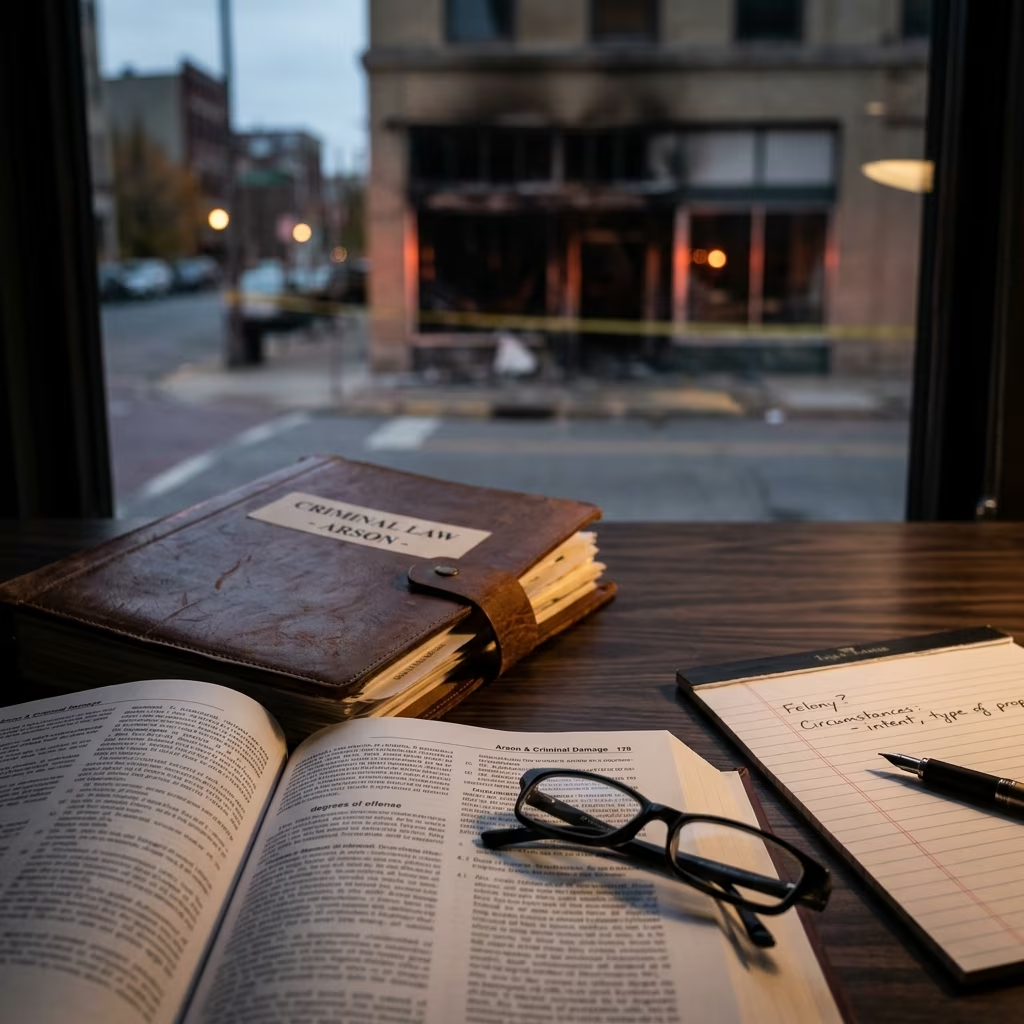
Is Arson Always a Felony?
Arson is usually treated as a serious felony, but it is not automatically charged the same way in every case. The exact charge depends on where the fire happened, what was burned, whether anyone was put in danger, and whether the act was intentional or reckless.
In many jurisdictions, arson statutes include multiple degrees of the offense, with the most serious versions punished as felonies and lesser versions sometimes carrying reduced penalties. Federal law also makes arson a felony when the fire involves certain protected property or affects interstate commerce.
What Makes Arson Different From an Ordinary Fire?
Arson is not just any fire-related incident. Prosecutors generally must show that a person intentionally started a fire or caused an explosion, and that the fire damaged property covered by the relevant statute. In many legal systems, the mental state matters just as much as the damage itself.
That means an accidental fire is not usually arson. The fire must be linked to a wrongful act, such as willful burning, malicious conduct, or in some states reckless behavior that creates the required harm.
- Intent matters because accidental fires are usually treated differently from deliberate ones.
- Property type matters because some statutes punish burning buildings more severely than burning other property.
- Risk to people matters because occupied buildings and injuries can raise the charge level.
Why Arson Is Commonly Charged as a Felony
Arson is often classified as a felony because fire creates a substantial risk of harm beyond the damaged property. A blaze can spread quickly, threaten neighboring structures, and endanger firefighters, residents, and bystanders.
That public danger is one reason many state laws treat arson as a felony even when the direct property loss is not extremely large. Courts and legislatures often focus on the potential for injury or death, not just the dollar amount of damage.
When Can Arson Be a Less Serious Offense?
Although arson is usually a felony, some state laws create different levels of severity. Lower-level conduct may receive a lighter sentence when the fire involves unoccupied property, less dangerous circumstances, or a lower degree of damage.
Some statutes also distinguish between burning a structure, burning forest land, and burning other property. California law, for example, sets different penalties depending on whether the offense involves property, a structure, forest land, or an inhabited structure, and the punishment increases when the fire causes great bodily injury.
| Factor | How It Can Affect the Charge |
|---|---|
| Intentional fire-setting | Usually supports an arson charge |
| Occupied building | Can increase the severity of the offense |
| Injury or death | Often leads to harsher felony penalties |
| Type of property | May determine whether the statute applies and how serious the charge is |
State Arson Laws Vary Widely
State law is the starting point for most arson cases. While the details differ, the common pattern is that arson statutes punish the willful or malicious burning of property, especially buildings and inhabited structures.
For example, Maryland first-degree arson requires proof that the defendant willfully and maliciously set fire to or burned a structure, and the offense carries a potential prison term of up to 30 years and a fine. Other states use different penalty ranges, but the basic structure is similar: the more dangerous the fire, the harsher the punishment.
Some state laws also treat fires involving homes, apartments, or other occupied structures more severely than fires involving vacant property. That distinction reflects the increased danger to human life.
How Federal Arson Charges Work
Arson can become a federal crime when the fire involves federal property or property used in or affecting interstate commerce. Federal law also covers fires within the special maritime and territorial jurisdiction of the United States.
Under federal law, a person who willfully and maliciously sets fire to or burns certain buildings, structures, vessels, machinery, or supplies can face up to 25 years in prison. If the building is a dwelling or if a person’s life is placed in jeopardy, the maximum penalty can rise to life imprisonment.
Federal law is therefore not limited to government offices or military property. It can also apply when the structure or business affected has the required commerce connection.
What Prosecutors Usually Have to Prove
To secure an arson conviction, prosecutors normally must prove more than just a fire occurred. They must connect the defendant to the act and show the required mental state and property element.
- The defendant started the fire, caused the explosion, or helped cause the burning.
- The act was intentional, willful, malicious, or reckless, depending on the statute.
- The damaged property fits the statute’s definition, such as a structure, dwelling, vessel, or federally protected property.
- The fire created any aggravating factor required by law, such as injury, occupancy, or danger to life.
In federal cases, prosecutors also must show the necessary jurisdictional link, such as federal ownership or a sufficient effect on interstate commerce.
Can a Person Be Charged Even If No One Was Hurt?
Yes. Arson charges do not always require an actual injury. Many laws punish the risk created by the fire itself, especially when the fire threatens occupied buildings or places people regularly use.
That said, injury or death can greatly increase the severity of the case. Federal law imposes harsher sentencing when a dwelling is involved or life is placed in jeopardy, and many state laws similarly raise the punishment range when the fire harms a person.
Common Defenses in Arson Cases
Because arson requires proof of intent and a connection between the defendant and the fire, defense strategies often focus on challenging those elements. A defense may argue that the fire was accidental, that the defendant did not start it, or that the prosecution cannot prove the required mental state.
Other defenses may focus on whether the damaged property fits the statute or whether federal jurisdiction is actually present. In some cases, the defense may also challenge forensic fire investigation methods or the reliability of witness testimony.
Why the Same Fire Can Lead to Different Charges
Two similar fires can produce different outcomes because criminal law looks at context. A fire in an empty shed may be treated very differently from a fire in an occupied apartment building or a federally owned facility.
The charge can also vary based on whether the defendant acted alone, attempted the fire but failed, or conspired with others. Federal law expressly covers attempts and conspiracies in certain arson cases.
How Sentencing Can Change the Outcome
Sentencing depends on the statute, the level of harm, and the defendant’s history. Federal penalties can include imprisonment, fines, and restitution, with harsher outcomes when the fire causes injury or death.
State sentencing rules can also be severe. For example, arson penalties in some states range from years in prison for lower-level offenses to decades for crimes involving homes, occupied buildings, or serious injury.
Frequently Asked Questions
Is arson always a felony?
In practice, arson is usually charged as a felony, but the exact classification depends on the state, the type of property, and the harm caused. Some jurisdictions use degrees of arson that carry different penalty ranges.
Does accidental burning count as arson?
Usually not. Arson generally requires intentional, willful, malicious, or reckless conduct, depending on the law being applied.
Can federal law apply to a fire on private property?
Yes, if the property is used in interstate commerce or the fire otherwise falls within federal jurisdiction.
What makes an arson charge more serious?
Occupied buildings, injuries, deaths, and certain types of property often increase the seriousness of the charge.
Can someone be charged for attempting arson?
Yes. Federal law explicitly covers attempts and conspiracies in covered arson cases.
Why Legal Representation Matters
Arson cases are fact-intensive and often depend on forensic evidence, eyewitness accounts, and detailed questions about intent and jurisdiction. Because the penalties can be severe, the stakes are high even before a case reaches trial.
A defense lawyer can examine whether the fire was accidental, whether the prosecution can prove malicious intent, and whether the charge matches the law that actually applies. In cases involving federal charges or occupied structures, those issues can determine the difference between dismissal, a reduced charge, or a lengthy prison sentence.
References
- 18 U.S. Code Chapter 5: Arson — Office of the Law Revision Counsel, U.S. House of Representatives. 2026-07-09. https://uscode.house.gov/view.xhtml?path=%2Fprelim%40title18%2Fpart1%2Fchapter5&edition=prelim
- CR 6-102: Arson in the First Degree — Towson, Maryland Criminal Defense Lawyer. 2026-07-09. https://www.mdtriallawyer.com/cr-6-102-arson-in-the-first-degree.html
- Federal Arson Defense Lawyer — Elizabeth Franklin-Best P.C.. 2026-07-09. https://federalcriminaldefenseattorney.com/federal-arson-defense-lawyer/
- 18 USC Chapter 5: Arson — Office of the Law Revision Counsel, U.S. House of Representatives. 2026-07-09. https://uscode.house.gov/view.xhtml?path=%2Fprelim%40title18%2Fpart1%2Fchapter5&edition=prelim
- Arson Laws — Justia. 2026-07-09. https://www.justia.com/criminal/offenses/violent-crimes/arson/
- Arson | Wex — Legal Information Institute, Cornell Law School. 2026-07-09. https://www.law.cornell.edu/wex/arson