
Do-It-Yourself Divorce: A Practical Guide To When It Works Now
A practical guide to self-managed divorce, when it works, and when legal help matters most.
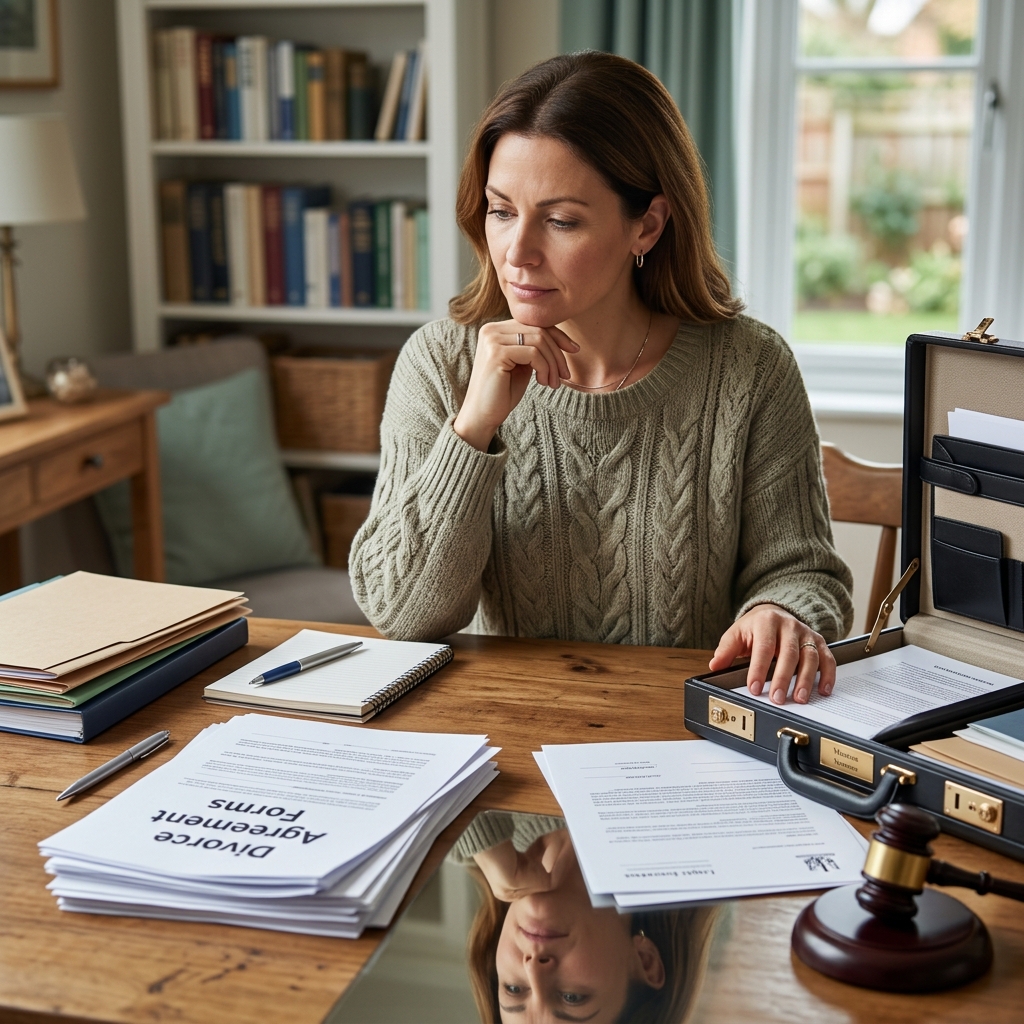
For some couples, divorce can be handled without a full-service attorney, especially when the case is straightforward, both spouses agree on the major issues, and the court forms are manageable. For others, trying to handle everything alone can create costly mistakes, delays, and long-term problems. A do-it-yourself divorce can work, but only when the facts, finances, and family dynamics are simple enough to support it.
This guide explains what a self-managed divorce usually involves, where it can save money, where it can go wrong, and how to decide whether it is a practical option for your situation.
What a DIY divorce actually means
A DIY divorce is a divorce handled mostly by the spouses themselves rather than through a retained attorney. In many cases, the process still involves filing court papers, exchanging financial information, serving documents, and waiting for a judge to approve the final agreement. Some people use court self-help centers or online form tools, while others rely on instructions from the local court system.
The phrase does not mean you are on your own in every sense. It usually means you are taking responsibility for preparation, filing, and follow-through instead of paying a lawyer to manage the process from start to finish.
When self-filing is most likely to work
Self-managed divorce tends to work best when the case is uncontested and the couple agrees on the core issues. That means both spouses understand the plan for property, debts, support, and any parenting arrangements. The more agreement there is, the less likely it is that legal strategy or courtroom advocacy will be needed.
It also helps when the marriage has limited assets, few debts, and no complicated financial holdings. A short marriage without real estate, retirement transfers, business interests, or disputed support issues is generally easier to untangle than a long marriage with multiple accounts and shared obligations.
- Both spouses want the divorce and are willing to cooperate.
- There are no serious disputes about money, custody, or support.
- The assets and debts are easy to identify and divide.
- Neither spouse needs emergency orders or aggressive litigation.
- The couple can communicate without escalating conflict.
Where the process begins
Before filing, a spouse usually needs to confirm that the court has jurisdiction and that local residency rules are satisfied. Divorce is filed in a specific court system, and the rules can vary by state and county. A court may also require that one spouse has lived in the state or county for a minimum period before the petition can be filed.
Once eligibility is confirmed, the filer completes the required forms. These papers typically ask for basic background information, the date of marriage, whether children are involved, and what the filer wants the court to decide. In some places, more documents are required if the spouses have children, own real estate, or request support.
The basic steps in a do-it-yourself divorce
Although the details vary by state, the path is usually similar from one jurisdiction to another. Most divorces begin with forms, move through service of process, and end with either a settlement or a final hearing.
- Check the local residency and filing rules.
- Complete the initial divorce petition and any required attachments.
- File the papers with the court and pay the filing fee or request a fee waiver if available.
- Serve the other spouse according to the court’s rules.
- Wait for a response, review any settlement terms, and complete additional paperwork if needed.
- Submit the final judgment for court approval.
Even in a simple case, each step matters. A missed signature, incorrect filing, or invalid service can force the process to start over or add weeks or months to the timeline.
Why people consider going without a lawyer
Cost is the most common reason people try to handle divorce on their own. Legal fees can rise quickly, especially if a case becomes contested. For couples who already agree on nearly everything, paying for full representation can feel unnecessary.
Some people also prefer the speed and privacy of a cooperative process. If both sides are calm and organized, a self-managed divorce can sometimes move more efficiently than a heavily negotiated one. Others simply want to retain control over decisions instead of outsourcing the process.
| Potential benefit | What it can mean in practice |
|---|---|
| Lower cost | Less money spent on attorney time and litigation |
| More control | The spouses manage the pace and presentation of the case |
| Less conflict | Cooperation can reduce the adversarial feel of the process |
| Faster resolution | Straightforward cases may finish sooner when both parties cooperate |
The hidden risks people underestimate
The biggest danger in a DIY divorce is not the paperwork itself; it is what can happen when the paperwork does not match the law, the facts, or the parties’ long-term needs. A settlement that looks fair on the surface may create tax problems, retirement account issues, or unclear parenting terms later on.
Another risk is emotional decision-making. A spouse who wants to end the process quickly may agree to an arrangement without understanding its consequences. Once the judgment is entered, changing it can be difficult and expensive. In other words, a rushed agreement may save money today but cost much more later.
- Property may be divided without a full inventory of assets and debts.
- Support terms may be too vague or too difficult to enforce.
- Parenting schedules may not address holidays, travel, or future changes.
- Retirement accounts may require special documents that are easy to overlook.
- Insurance, taxes, and beneficiary designations may be left unchanged.
When legal advice becomes especially valuable
Even people who start with a DIY approach often benefit from a limited consultation with a lawyer. A brief review can help spot hidden problems before the papers are filed or before a settlement is finalized. That kind of targeted advice may be more affordable than full representation while still reducing the chance of a serious mistake.
Professional help becomes especially important when the case includes children, significant debt, business ownership, retirement assets, or any history of abuse, coercion, or hidden finances. These circumstances can affect both the fairness of the agreement and the safety of the process itself.
Documents you should gather before filing
Preparation is one of the most important parts of a self-managed divorce. The more complete your records are, the easier it becomes to fill out the forms accurately and negotiate realistically.
- Recent pay stubs and tax returns
- Bank, credit card, and loan statements
- Mortgage documents and property records
- Retirement and investment account statements
- Insurance policies
- Child-related expenses and school information
- Any existing separation agreement or written exchange of terms
Having these records ready can also make it easier to identify what belongs to the marital estate, what may be separate property, and which debts still need to be addressed.
Questions to ask before choosing the DIY route
A good self-assessment can prevent disappointment later. If you answer no to several of these questions, a lawyer or mediator may be the smarter option.
- Do we agree on almost every major issue?
- Can we exchange information honestly and completely?
- Do we understand the financial consequences of the settlement?
- Can we follow local court procedures without help?
- Are there no urgent disputes requiring temporary court orders?
If the answer to one of these questions is uncertain, it does not automatically mean DIY is impossible. It does mean you should slow down and examine the weak points before filing.
How to reduce mistakes if you proceed on your own
Spouses who decide to proceed without full representation can still improve their chances of success by working carefully and methodically. Reading local instructions, using court-approved forms, and double-checking every detail can prevent avoidable delays.
It is also smart to treat the final agreement as a long-term financial document, not just a way to end the marriage. Every clause should be clear enough that a stranger could understand it months or years later. If language is ambiguous, a court may have difficulty enforcing it, and the spouses may end up back in conflict.
- Use only the forms required by your local court.
- Confirm filing fees, waiver rules, and service requirements in advance.
- Keep copies of everything you file and receive.
- Review every financial term for accuracy before signing.
- Consider a one-time attorney review before submitting final papers.
What happens after the paperwork is filed
After filing and service, the process may be simple or it may become more complicated depending on whether the other spouse responds and whether both sides agree on the terms. If the divorce is uncontested, the court may approve the final judgment with limited additional steps. If issues remain unresolved, the case may require more negotiation or a hearing.
Even after the divorce is final, there are practical tasks to complete. Beneficiary forms, insurance coverage, wills, and financial accounts often need to be updated. A final judgment ends the marriage, but it does not automatically update every other legal or financial record tied to that marriage.
FAQs about DIY divorce
Can I file for divorce without a lawyer?
Yes, many courts allow self-represented divorce filings, especially in uncontested cases. The key is following the local rules and submitting complete, accurate forms.
Is a DIY divorce always cheaper?
Usually, but not always. Filing fees, form preparation, notary costs, and correction of mistakes can add up. If the case becomes disputed, legal costs may rise later.
What is the biggest mistake people make?
A common mistake is assuming that agreement equals simplicity. Even when both spouses agree, the legal paperwork can still have lasting consequences for taxes, retirement, parenting, and debt.
Should I still talk to a lawyer if I want to do it myself?
A limited consultation can be useful even if you do most of the work yourself. It can help you understand risks before you sign anything final.
When is DIY divorce not a good idea?
It is usually a poor fit when there are disputed children issues, hidden assets, high conflict, domestic abuse, or complex finances such as business interests or retirement division.
References
- Do-It-Yourself Divorce — Michigan Legal Help. 2026-01-01. https://michiganlegalhelp.org/resources/family/do-it-yourself-divorce
- What are the basic steps for filing for divorce? — WomensLaw.org. 2026-01-01. https://www.womenslaw.org/laws/de/divorce/basic-info/what-are-basic-steps-filing-divorce
- Start a divorce case — California Courts Self Help Guide. 2026-01-01. https://selfhelp.courts.ca.gov/divorce/start-divorce
- Fill out your divorce forms — California Courts Self Help Guide. 2026-01-01. https://selfhelp.courts.ca.gov/divorce/start-divorce/forms
- Filing for Divorce — Texas State Law Library. 2026-01-01. https://guides.sll.texas.gov/divorce/filing-for-divorce
- 6 Things to Consider Before Filing for Divorce — MetLife. 2026-01-01. https://www.metlife.com/stories/legal/filing-for-divorce/
Similar Articles








Read full bio of Sneha Tete


