
Interest Rate vs. APR: What Borrowers Need to Know
Understand the real cost of borrowing by learning how interest rates and APR differ.
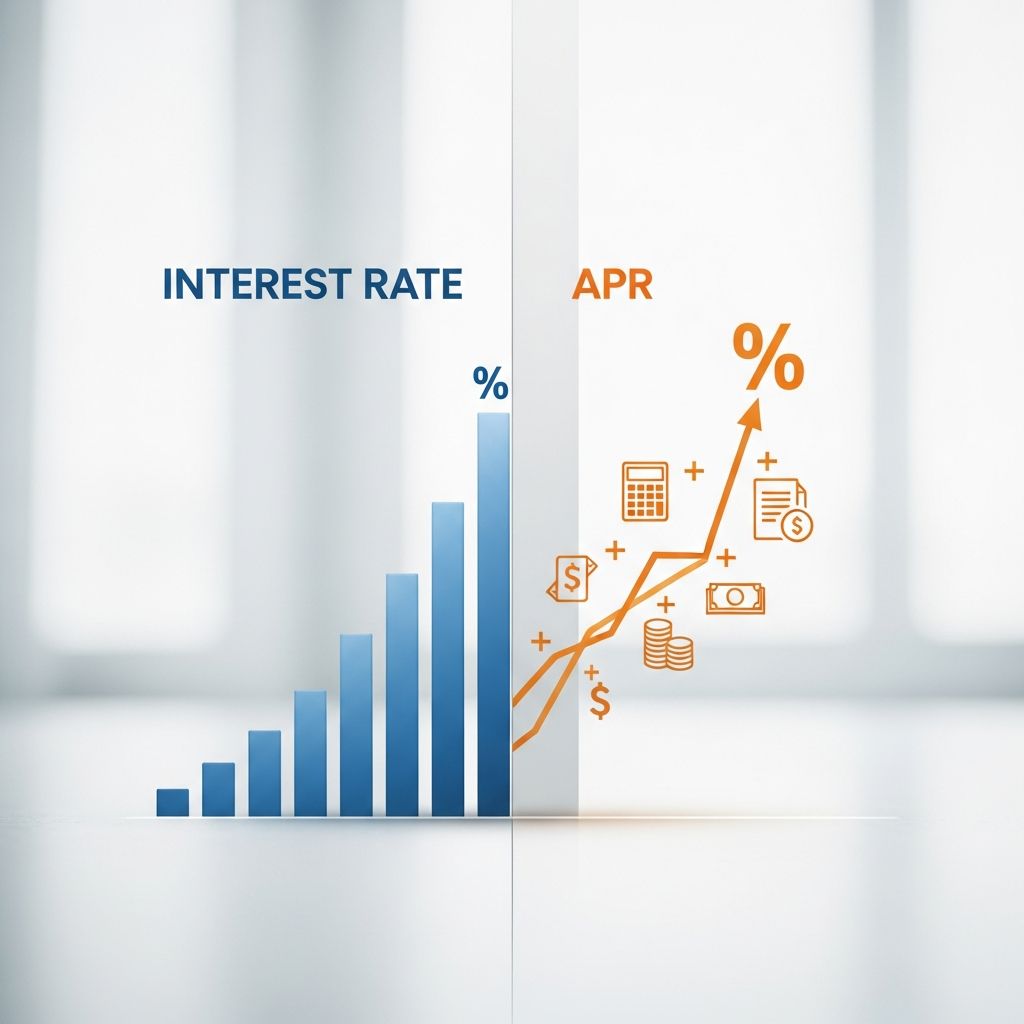
Understanding the True Cost of Borrowing
When shopping for a loan—whether it’s a mortgage, auto loan, or personal loan—you’ll see two important numbers: the interest rate and the APR. At first glance, they might seem similar, but they represent very different things. Knowing how they work and how they differ is essential for making informed financial decisions and avoiding surprises down the road.
What Is an Interest Rate?
The interest rate is the basic cost of borrowing money. It’s expressed as a percentage of the loan amount, or principal, and it determines how much extra you’ll pay each year just for using the lender’s money.
For example, if you borrow $10,000 at a 5% interest rate, you’ll pay $500 in interest over the first year, assuming simple interest and no compounding. In practice, most loans use compound interest, and payments are structured so that each payment covers both interest and a portion of the principal.
Interest rates are influenced by several factors, including:
- Your credit score and credit history
- The current state of the economy and central bank policies
- The type and term of the loan
- The lender’s own risk assessment and pricing model
The interest rate is used to calculate your regular monthly payment. It’s the starting point for understanding how much the loan will cost, but it doesn’t tell the whole story.
What Exactly Is APR?
APR stands for Annual Percentage Rate. Unlike the interest rate, which only reflects the cost of borrowing, the APR includes the interest rate plus certain fees and charges associated with the loan.
The purpose of APR is to give borrowers a more complete picture of the total annual cost of credit. It’s designed to make it easier to compare different loan offers on an apples-to-apples basis.
APR typically includes:
- Origination fees
- Discount points (prepaid interest)
- Some closing costs
- Other lender-imposed finance charges
Because APR incorporates these additional costs, it is almost always higher than the interest rate. In rare cases where a loan has no fees, the APR and interest rate might be the same, but the APR will never be lower than the interest rate.
Why APR Is Usually Higher Than the Interest Rate
The reason APR is higher comes down to what it includes. The interest rate is just the cost of borrowing the principal. APR, however, is a broader measure that spreads the total cost of the loan—including fees—over the life of the loan and expresses it as an annual percentage.
For example, imagine two mortgage offers:
- Loan A: 4.5% interest rate, $2,000 in fees
- Loan B: 4.7% interest rate, $500 in fees
Loan A has a lower interest rate, but the higher fees mean its APR might actually be higher than Loan B’s APR. If you only looked at the interest rate, you might think Loan A is cheaper, but comparing APRs would reveal which loan is truly less expensive over time.
How APR Helps You Compare Loan Offers
When evaluating multiple loan options, APR is one of the most useful tools for comparing the total cost. Because it includes both interest and certain fees, it gives a more realistic estimate of what you’ll pay each year.
Here’s how to use APR effectively:
- Compare APRs across similar loan types and terms (e.g., 30-year fixed mortgages vs. 30-year fixed mortgages).
- Look for the lowest APR, but also consider whether the loan structure fits your needs (e.g., fixed vs. adjustable rate).
- Be aware that APR is an annualized rate, so it’s most useful for comparing loans with the same term length.
APR is especially helpful when:
- Shopping for mortgages, where fees can vary significantly between lenders.
- Comparing personal loans or auto loans with different fee structures.
- Deciding between a lower rate with high fees and a slightly higher rate with low fees.
What APR Does Not Include
While APR is a more comprehensive measure than the interest rate, it doesn’t include every possible cost. Some fees and charges are not required to be included in the APR calculation, such as:
- Appraisal fees
- Title insurance
- Homeowners insurance
- Property taxes
- Penalties for late payments or early repayment
This means that even if two loans have the same APR, the total out-of-pocket costs could still differ based on these excluded fees. Always review the full loan estimate or disclosure to understand all potential costs.
APR and Different Types of Loans
APR is used for many types of loans, but its usefulness can vary depending on the product.
Mortgages
For home loans, APR is a critical tool. Mortgage APR includes the interest rate, origination fees, discount points, and some closing costs. Because mortgage fees can be substantial, APR gives a much clearer picture of the total cost than the interest rate alone.
However, be cautious with adjustable-rate mortgages (ARMs). The APR on an ARM is based on the initial interest rate and may not reflect how high the rate could rise after the introductory period ends. Always ask about rate caps and how future adjustments are calculated.
Auto Loans
Auto loan APR includes the interest rate plus certain lender fees. It’s a reliable way to compare offers from different dealerships or lenders. Keep in mind that dealer financing sometimes includes add-ons (like extended warranties) that may not be reflected in the APR, so read the contract carefully.
Personal Loans
Personal loan APR is usually straightforward and includes the interest rate and origination fees. Since personal loans are often unsecured, APR can vary widely based on creditworthiness. Comparing APRs helps identify the most affordable option.
Credit Cards
Credit card APR is different. It typically reflects only the interest rate on purchases, balance transfers, or cash advances, and may not include annual fees, late fees, or other charges. For credit cards, it’s important to look at both the APR and the fee structure to understand the full cost.
Fixed vs. Variable Rates and APR
Both interest rates and APR can be fixed or variable, depending on the loan.
- Fixed rates: Stay the same for the life of the loan (or for a set period, in the case of ARMs). Fixed APRs are based on this fixed rate plus fees.
- Variable rates: Can change over time based on an index (like the prime rate). Variable APRs will adjust as the underlying rate changes.
When comparing variable-rate loans, pay attention to how often the rate can adjust, what index it’s tied to, and any rate caps. The initial APR may look attractive, but future increases could make the loan much more expensive.
How to Use Both Numbers Together
Neither the interest rate nor the APR should be viewed in isolation. They serve different but complementary purposes:
- The interest rate tells you the base cost of borrowing and directly affects your monthly payment.
- The APR tells you the total annual cost, including fees, and is best for comparing offers.
A practical approach is:
- Use the interest rate to estimate your monthly payment and see if it fits your budget.
- Use the APR to compare different lenders and loan structures to find the most affordable overall option.
- Review all fees and terms in the loan documents to ensure there are no hidden costs.
Common Misconceptions About APR
Several myths about APR can lead to confusion:
- Myth: A lower interest rate always means a cheaper loan.
Reality: A loan with a lower rate but high fees can have a higher APR and cost more over time. - Myth: APR is the only number that matters.
Reality: APR is important, but you also need to consider monthly payments, loan term, and your own financial situation. - Myth: APR includes all fees.
Reality: APR includes many fees, but not all. Some third-party costs are excluded.
Key Differences at a Glance
| Feature | Interest Rate | APR |
|---|---|---|
| What it measures | Cost of borrowing the principal | Total annual cost of the loan, including interest and certain fees |
| Includes fees? | No | Yes (origination fees, points, some closing costs) |
| Used to calculate | Monthly payment | Overall cost for comparison |
| Typical relationship | Always ≤ APR | Always ≥ interest rate |
| Best for | Estimating monthly payments | Comparing loan offers |
Frequently Asked Questions
Is APR the same as the interest rate?
No. The interest rate is the cost of borrowing the principal, while APR includes the interest rate plus certain fees and charges. APR is usually higher than the interest rate.
Can APR be lower than the interest rate?
No. Because APR includes the interest rate plus additional costs, it cannot be lower than the interest rate. In rare cases with no fees, they may be equal.
Why is APR important when comparing loans?
APR gives a more complete picture of the total annual cost of a loan, making it easier to compare offers from different lenders, especially when fees vary.
Does APR include all loan fees?
No. APR includes many lender-imposed fees (like origination fees and points), but it does not include all possible costs, such as appraisal fees, title insurance, or property taxes.
Should I always choose the loan with the lowest APR?
Not necessarily. While a lower APR often means a cheaper loan, you should also consider the monthly payment, loan term, and whether the loan structure fits your financial goals. A very low APR on a long-term loan might still result in high total interest over time.
What does 0% APR mean?
0% APR means there is no interest or certain fees for a specified period, often used as a promotional offer. After the promotional period ends, the regular APR will apply, so it’s important to understand when and how the rate will change.
Final Thoughts
Understanding the difference between interest rate and APR is a fundamental part of being a smart borrower. The interest rate tells you the basic cost of borrowing, while APR gives you a broader view of the total cost, including fees.
When shopping for a loan, use the interest rate to gauge your monthly payment and the APR to compare offers. Always read the full loan terms and ask questions if anything is unclear. By paying attention to both numbers, you can make more informed decisions and avoid overpaying for credit.
References
- What is the difference between a loan interest rate and the APR? — Consumer Financial Protection Bureau. Accessed 2025-12-07. https://www.consumerfinance.gov/ask-cfpb/what-is-the-difference-between-a-loan-interest-rate-and-the-apr-en-733/
- APR vs. Interest Rate: What’s the Difference? — Bankrate. 2025-01-15. https://www.bankrate.com/mortgages/apr-and-interest-rate/
- APR vs. interest rate: What’s the difference? — Rocket Mortgage. 2025-02-10. https://www.rocketmortgage.com/learn/comparing-mortgage-options-apr-vs-interest-rate
Similar Articles








Read full bio of Sneha Tete




