
Inside a $13 Million Nigerian Scam: How One Couple Allegedly Defrauded Dozens
A detailed look at a Florida couple’s alleged $13 million Craigslist-based Nigerian scam, how it worked, and what it teaches about fraud.
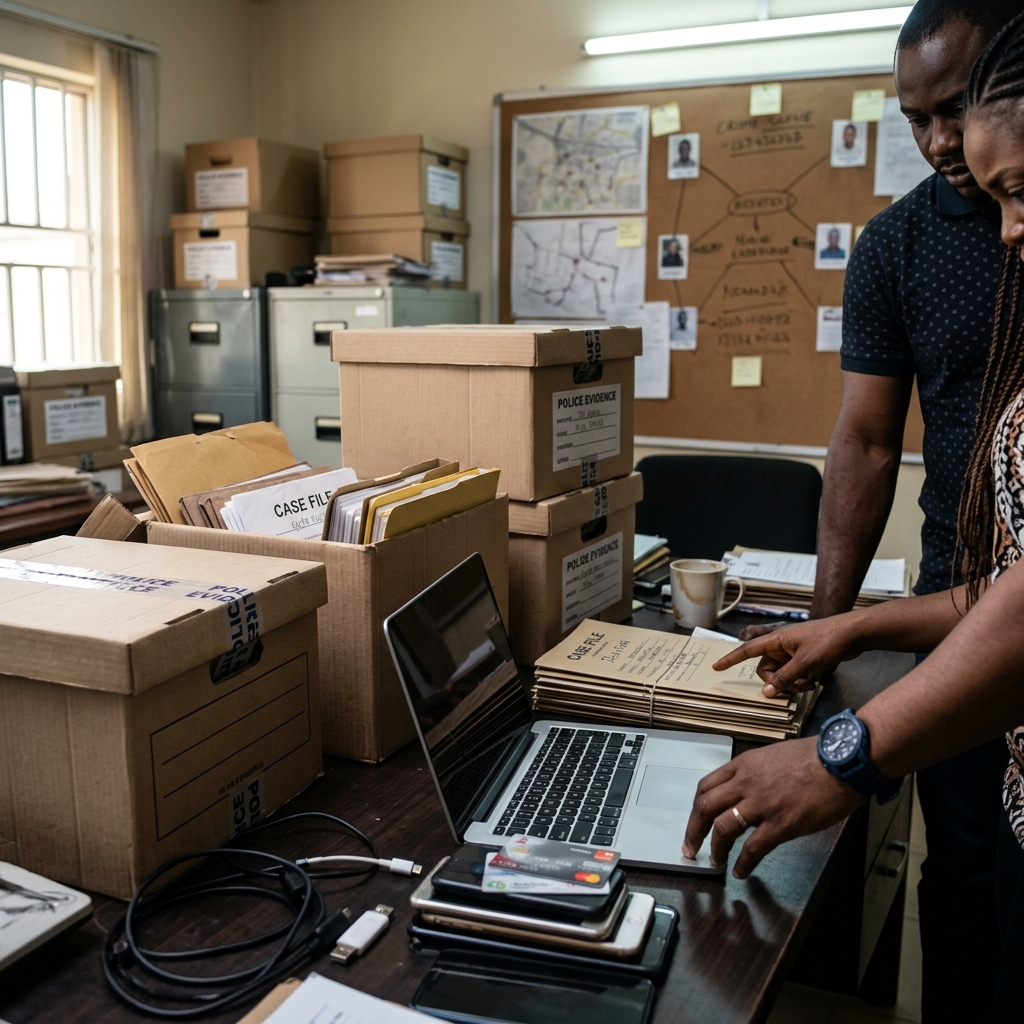
Nigerian-style email and online scams have been around for decades, but law enforcement continues to uncover sophisticated new versions that adapt to modern platforms. One such case involved a Fort Lauderdale, Florida couple accused of orchestrating a $13 million fraud scheme that blended classic “Nigerian” tactics with modern tools like Craigslist and online banking. The case illustrates how old fraud concepts evolve while exploiting the same underlying weaknesses: trust, urgency, and the global flow of money.
This article unpacks the alleged scheme, explains the criminal charges typically brought in such cases, and offers practical guidance on recognizing and avoiding similar scams.
Background: From Old-School Emails to Multi-Million Dollar Schemes
So-called “Nigerian scams” (often referred to as advance-fee or 419 scams) originally relied on unsolicited emails promising large sums of money in exchange for an upfront payment or help moving funds out of a foreign country. Over time, fraudsters have shifted to more targeted platforms:
- Online marketplaces, such as Craigslist, Facebook Marketplace, and classified ads.
- Dating sites and social media, fueling romance scams.
- Business email compromise schemes targeting company finance departments.
In the Fort Lauderdale case, prosecutors allege the couple used Craigslist and similar tools to locate victims and then funneled millions of dollars through bank accounts, some tied to Nigerian criminal associates, in a complex money-movement network.
The Accused Couple and the Alleged Fraud Network
According to reporting on the case, police arrested a North Lauderdale couple after an investigation revealed their alleged role as key facilitators in a $13 million scam with ties to Nigerian organized groups. While the couple were based in Florida, the alleged scam had clear international dimensions:
- Victims were located across different U.S. states.
- Funds allegedly moved through accounts linked to Nigerian contacts.
- Communications relied heavily on email, online ads, and digital banking records.
The couple were portrayed not merely as minor participants but as central coordinators who allegedly managed accounts, directed money transfers, and communicated with victims under false pretenses.
How the Alleged Craigslist-Based Scam Worked
Although each victim’s story may differ in detail, the core structure of the alleged scheme can be broken down into a series of repeating steps that echo traditional Nigerian scams.
1. Locating Victims Through Online Classifieds
Investigators reported that the couple’s operation exploited Craigslist, a popular online marketplace where people buy and sell goods, seek housing, or look for jobs. Scammers favor such platforms because they provide easy access to individuals who:
- Are actively looking to make or save money.
- May be willing to move quickly on what appears to be a good deal.
- Often expect informal transactions, making them less skeptical of unconventional payment methods.
In many online fraud cases, scammers either post fake ads (for items, jobs, or housing that do not exist) or respond to legitimate ads with seemingly generous offers. The Fort Lauderdale case reportedly involved communications initiated through this kind of online environment.
2. Creating a Plausible but False Story
Modern Nigerian-style schemes rely on believable narratives. While classic scams might claim a foreign prince needs help moving money, newer schemes often use more grounded stories. Examples include:
- A buyer allegedly overpaying and asking the seller to refund the difference via wire transfer.
- A purported employer sending a check for equipment and asking the new hire to send part of it onward.
- A supposed international partner requesting assistance moving funds through a U.S. bank account.
Authorities suggested that the Florida couple participated in scenarios where victims were induced to accept and move funds that were later found to be fraudulent, enabling the broader network to launder proceeds.
3. Moving Money Through Multiple Accounts
A key goal for any organized fraud group is turning stolen funds into money that looks legitimate. In cases like this, that often means using “money mules” and multiple accounts to obscure the origin of the funds.
According to law enforcement reports, the couple allegedly:
- Received deposits in local bank accounts controlled by them or their associates.
- Transferred funds to other accounts, some linked to individuals abroad, including suspected Nigerian partners.
- Used wire transfers, cashier’s checks, and possibly cash withdrawals to further obscure the trail.
This kind of layering is a classic money-laundering technique designed to make it difficult for investigators to trace funds back to the original fraud.
4. Leaving Victims with the Loss
In many scams, victims initially believe transactions are legitimate because their bank shows funds as “available.” Only later, when a check or transfer is reversed, do they discover:
- The underlying instrument was fraudulent or unauthorized.
- The bank reverses the credit, leaving the victim responsible for any money already sent out.
- Scammers have already moved the funds beyond easy recovery.
Authorities allege that the Florida couple’s actions contributed to cumulative losses of around $13 million across multiple victims.
Criminal Charges Typically Brought in Large Online Scam Cases
Although the exact charging documents in any particular case may vary, large-scale online scams of this type frequently involve the following federal offenses in the United States:
| Charge | Typical Statute | Key Elements |
|---|---|---|
| Wire fraud | 18 U.S.C. § 1343 | Scheme to defraud using interstate wire communications (such as emails, online transfers, phone calls). |
| Mail fraud | 18 U.S.C. § 1341 | Similar to wire fraud, but involving postal or commercial mail services. |
| Money laundering | 18 U.S.C. § 1956 / 1957 | Conducting financial transactions with proceeds of unlawful activity to conceal source or promote further crime. |
| Conspiracy | 18 U.S.C. § 371 or related | Agreement between two or more people to commit a federal crime, plus at least one overt act. |
In comparable romance and online fraud cases, U.S. federal courts have imposed multi-year prison sentences and ordered substantial restitution. For example, a Nigerian national convicted in a $3.5 million romance scam received a five-year prison sentence and an order to repay victims.
Why These Schemes Keep Working
Despite years of public warnings, Nigerian-style scams continue to generate huge losses globally. Several factors explain their persistence:
- Low cost for scammers: Sending emails, placing online ads, or messaging potential victims costs very little, allowing criminals to target large numbers of people.
- High potential payoff: Even if most targets ignore the messages, a small fraction may respond, leading to large cumulative losses.
- Emotional manipulation: Many scams exploit loneliness (romance scams), financial stress, or greed.
- Cross-border complexity: International elements can make investigation and prosecution more difficult and slower.
Law enforcement agencies such as the FBI, Secret Service, and U.S. Department of Justice regularly announce arrests and convictions in these cases, but warn that the volume of online fraud remains significant.
Red Flags: How to Recognize Nigerian-Style and Marketplace Scams
Understanding the common warning signs is critical for individuals and small businesses that use online marketplaces or communicate with unknown parties via email. Authorities and consumer protection experts emphasize several recurring red flags:
- Unsolicited offers promising unusually high returns, commissions, or easy money.
- Requests to move money through your bank account, especially involving international transfers.
- Overpayment schemes, where a buyer sends too much and asks you to wire back the difference.
- Urgent pressure to act quickly or secretly, discouraging you from talking to banks or law enforcement.
- Inconsistencies in names, addresses, or bank details, or reluctance to provide verified identity.
- Requests for gift cards or cryptocurrency as payment, which are difficult to reverse.
If any of these appear in an online interaction—especially involving substantial sums—it is wise to stop the transaction and independently verify before sending money or personal information.
How Law Enforcement Responds to Large Online Fraud Schemes
When losses reach into the millions and cross state or national borders, investigations often involve multiple agencies. In similar cases, authorities have used:
- Undercover communications with suspected scammers to gather evidence and track money movements.
- Bank records and subpoenas to reconstruct financial flows and identify co-conspirators.
- International cooperation through treaties and partnerships to arrest suspects abroad and extradite them for trial.
Federal prosecutors highlight these cases to deter would-be scammers and to show that even complex international schemes can be unraveled. For instance, in romance scam and business email compromise cases linked to Nigeria, U.S. authorities have successfully extradited defendants and secured convictions.
What Victims Can Do if They Suspect a Scam
Victims of online scams often feel embarrassed or ashamed, which can delay reporting. However, quick action can sometimes improve the chances of limiting losses or aiding an investigation. Consumer protection agencies and the FBI recommend the following steps when fraud is suspected:
- Contact your bank or card issuer immediately to report suspicious transfers and attempt to stop or reverse them.
- Preserve evidence, including emails, text messages, receipts, and account statements.
- File a police report with local authorities, especially for substantial losses.
- Report to federal agencies, such as the FBI’s Internet Crime Complaint Center (IC3) and the Federal Trade Commission (FTC), using their online complaint forms.
- Monitor credit reports if personal information may have been compromised.
While not all losses can be recovered, victim reports help law enforcement identify patterns, link cases, and prioritize large organized networks for investigation.
Legal Consequences: Sentencing and Restitution
In federal court, sentences for fraud and money laundering depend on many factors, including loss amount, number of victims, the defendant’s role, criminal history, and whether they accept responsibility. Under the U.S. Sentencing Guidelines, larger losses and leadership roles in a scheme typically increase the recommended prison term.
Comparable cases show the potential seriousness of penalties:
- In one online romance scam case, a Nigerian national involved in a $3.5 million scheme targeting eight victims received a five-year prison sentence and was ordered to pay restitution.
- Other large-scale fraud cases have produced sentences ranging from several years to over a decade, particularly when money laundering and conspiracy charges are added.
Defendants in the Fort Lauderdale Craigslist case faced serious exposure if convicted on all counts, given the alleged $13 million loss and the organized nature of the scheme.
Practical Tips to Stay Safe on Online Marketplaces
Because the alleged Florida scheme used Craigslist and similar platforms as entry points, it is worth highlighting specific precautions for buyers and sellers:
- Insist on local, in-person transactions with cash or secure, verifiable payment methods when possible.
- Avoid accepting checks or money orders from unknown buyers, especially if they are for more than the purchase price.
- Be wary of remote buyers who refuse video calls, verified profiles, or typical identity checks.
- Do not agree to move money for anyone you met through a classified ad, regardless of how convincing the story sounds.
- Use official channels for shipping, escrow, and payment when dealing with high-value items.
Simple skepticism and verification can significantly reduce the risk of becoming entangled in another person’s fraud or money-laundering scheme.
FAQs About Nigerian-Style Online Scams
Are all “Nigerian scams” actually run from Nigeria?
No. The term “Nigerian scam” has become a shorthand for a particular advance-fee or online fraud style. While many schemes have connections to Nigeria, similar frauds are run from multiple countries. Some cases involve networks with members located in the United States and other nations.
How do authorities link a local couple to an international scam network?
Investigators commonly use bank records, email headers, IP addresses, and communication logs to trace connections. When individuals in the U.S. receive, move, or control funds that can be linked to foreign scammers, they may be charged as co-conspirators or money launderers, even if they did not initiate contact with all victims.
If my bank shows a deposit as “available,” does that mean it is safe?
Not necessarily. “Available” usually means you can access funds before the bank has fully cleared the check or transfer. If a deposit later proves fraudulent, the bank can reverse it, leaving you responsible for any money you have already spent or transferred. This timing gap is frequently exploited in overpayment and marketplace scams.
Can victims of these scams get all their money back?
Recovery is often partial at best. Some funds may be frozen if authorities act quickly or if banks detect suspicious patterns. Courts can order restitution after conviction, but if a defendant has spent or moved the money, collecting full repayment can be difficult. That is why early reporting and rapid contact with financial institutions are so important.
What should I do if I think someone is using me as a “money mule”?
Stop moving money immediately and contact your bank to explain the situation. Consider consulting a lawyer to understand your potential exposure. Then report what happened to law enforcement or federal agencies such as the FBI’s IC3. Acting quickly can reduce your risk of criminal liability and help investigators target the organizers behind the scheme.
References
- Couple Charged in $13 Million Nigerian Scam — FindLaw (Legal Blog, citing news and law enforcement reports). 2011-02-17. https://www.findlaw.com/legalblogs/criminal-defense/couple-charged-in-13-million-nigerian-scam/
- Couple Charged in $13 Million Nigerian Scam — KHQ Spokane News. 2011-02-17. https://www.khq.com/news/couple-charged-in-13-million-nigerian-scam/article_1335485b-9dfb-5d08-940e-17199c41a8d1.html
- Nigerian National Sentenced to Five Years in Prison for $3.5 Million Romance Scam — U.S. Department of Justice, U.S. Attorney’s Office, Western District of Washington. 2022-05-19. https://www.justice.gov/usao-wdwa/pr/nigerian-national-sentenced-five-years-prison-35-million-romance-scam
- Internet Crime Report — Federal Bureau of Investigation, Internet Crime Complaint Center (IC3). 2022-03-23. https://www.ic3.gov/Media/PDF/AnnualReport/2021_IC3Report.pdf
Similar Articles








Read full bio of Sneha Tete




