
Injured While Working in Another State: What To Do
A practical guide to handling work-related injuries that occur outside your home state, from first steps to benefits and legal rights.
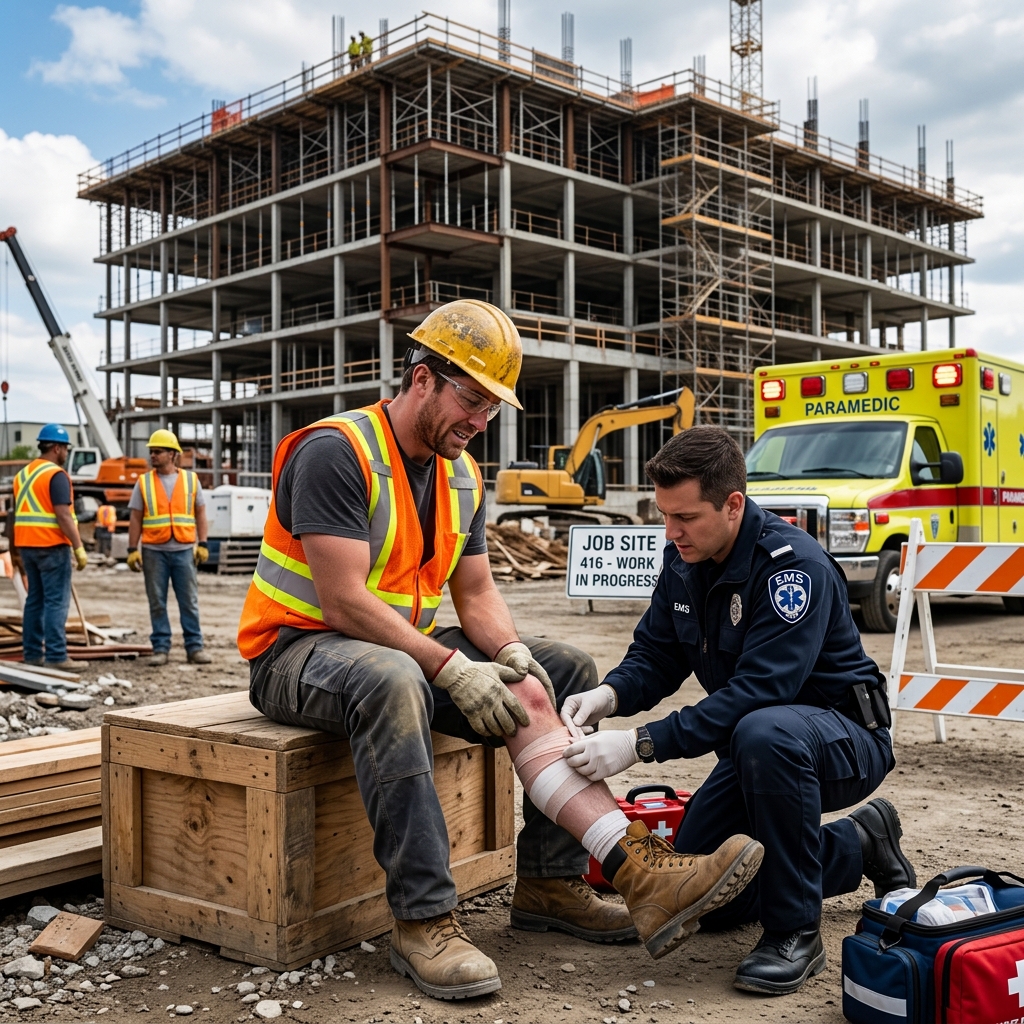
Modern work often crosses state lines. You might travel for a conference, cover a client visit in another region, or work remotely from a different state. If you are injured while working in a state other than where you usually live or work, the situation can feel confusing. Different state laws, unfamiliar medical providers, and multiple insurance systems can raise urgent questions about your rights and what to do next.
This guide explains how workers’ compensation and other legal protections apply when a job-related injury occurs in another state. You will learn the immediate steps to take, how jurisdiction works, what benefits might be available, and why timelines and documentation matter.
Understanding Work-Related Injuries Across State Lines
Workers’ compensation in the United States is regulated state by state, not at the federal level. Each state sets its own rules about who is covered, how to file claims, what benefits are available, and how disputes are resolved. When an injury happens away from your usual work location, two or more states’ laws may potentially apply.
In most cases, a worker can receive benefits for a job-related injury even if the accident happens outside the state where their employer is based, as long as the injury arose out of and in the course of employment.
- Work-related injury: An injury or occupational disease that occurs because of your job duties or conditions at work.
- Jurisdiction: The legal authority of a state’s workers’ compensation system to handle your claim and award benefits.
- Choice of state: In some situations, more than one state may legally hear your claim, and the choice can affect benefit levels and procedures.
Immediate Steps After an Out-of-State Workplace Injury
Your first actions after an injury have a direct impact on your health and on the strength of any workers’ compensation claim. Acting promptly helps satisfy legal reporting requirements and builds a clear record of what happened.
1. Focus on Medical Care and Safety
If you are injured while traveling or working outside your usual state:
- Call emergency services if the injury is serious or life-threatening.
- Seek treatment at the nearest appropriate medical facility.
- Tell healthcare providers that the injury occurred at work and describe your job duties.
- Keep copies of all medical records, discharge summaries, and bills.
In many workers’ compensation systems, medical care that is reasonable, necessary, and related to the work injury is covered as a benefit.
2. Report the Injury to Your Employer Quickly
Every state sets deadlines for reporting a workplace injury to your employer, and missing those deadlines can jeopardize your eligibility for benefits.
- Notify your supervisor or HR as soon as possible, ideally in writing.
- Include the date, time, location, and details of the incident.
- Identify any witnesses who saw what happened.
- Keep a copy of your report or email for your records.
For example, some states require notice to the employer within 30 days from the date of injury or when you realized it was work-related. While each state’s deadline differs, reporting immediately is the safest approach.
3. Ask Your Employer About Workers’ Compensation Coverage
Employers covered by workers’ compensation insurance must follow state procedures to report your injury to the insurer or state agency.
- Ask whether the company carries workers’ compensation in your home state, the state where the injury occurred, or both.
- Request information about the insurer, claim numbers, and any managed care or preferred provider networks for medical treatment.
- Clarify whether you need to complete any internal forms or incident reports.
Which State Has Jurisdiction Over Your Claim?
Jurisdiction determines which state’s workers’ compensation law will govern your claim. This can affect the type and amount of benefits available to you, as well as timelines and dispute procedures.
Key Factors That Affect Jurisdiction
Although each state uses its own test, common factors that may give a state authority over your claim include:
- Location of the injury: The state where the accident occurred often has jurisdiction under its workers’ compensation statutes.
- Place of employment contract: Some states extend jurisdiction if your employment contract was formed in that state and your employer has a business location there.
- Employer’s principal place of business: A state may cover injuries occurring elsewhere if the employer is primarily based in that state and you have significant work ties there.
- Nature of your assignment: Employees hired specifically to work only outside a particular state may not be covered by that state’s system for injuries abroad.
| Factor | How it can create jurisdiction |
|---|---|
| Injury location | The state where you are physically hurt generally applies its workers’ compensation law to the claim. |
| Employment contract | If your employment agreement was made in a state and the employer has a business there, that state may cover injuries even outside its borders. |
| Employer’s business base | States sometimes extend coverage to traveling employees whose employers are primarily located in that state. |
| Assignment terms | If you are hired to work exclusively outside a state, that state may lack jurisdiction for injuries in other locations. |
Multiple States May Be Options
In some situations, more than one state has a legitimate claim to jurisdiction over your workers’ compensation case. For instance, you might be:
- Employed by a company based in State A,
- Hired under a contract signed in State B, and
- Injured while working in State C.
Where multiple states have jurisdiction, you may be able to choose where to file your workers’ compensation claim. Legal advice is crucial here, because benefit levels, timelines, and procedural protections differ from state to state, and filing in one state can impact your ability to pursue benefits elsewhere.
Filing a Workers’ Compensation Claim After an Out-of-State Injury
Reporting the injury to your employer is not always the same as filing a formal workers’ compensation claim. States usually require a separate claim or application to be submitted to a government agency within specific time limits.
Typical Claim Filing Requirements
While exact rules vary, many states follow patterns similar to the examples below:
- Notice to employer: Often within about 30 days of injury or when you discover it is related to work.
- Formal claim filing: A written claim or form must be filed with the state workers’ compensation agency within a set period (commonly around one or two years from the date of injury or diagnosis of an occupational disease).
- Statute of limitations: Missing the claim filing deadline can result in losing the right to benefits, with limited exceptions.
For example, one state requires injured workers to file a Claim Form with its commission within two years of the accident or communication of an occupational disease, even if the employer has voluntarily paid benefits. Another state requires a claim form to be submitted to the workers’ compensation division within one year of the injury or the date the worker learned the illness was job-related.
Practical Tips for Filing From Another State
- Ask your employer which state’s workers’ compensation system will be used and request the relevant forms.
- Contact the appropriate state agency for guidance on filing requirements and deadlines.
- Submit forms as early as possible and keep copies of everything you send.
- Consider consulting an attorney familiar with multistate workers’ compensation issues.
Types of Benefits You May Receive
Workers’ compensation systems generally aim to provide two core protections: medical treatment and income replacement for work-related injuries and illnesses. Specific benefits vary by state.
Medical Benefits
- Payment for hospital visits, doctor consultations, surgery, and other necessary medical care related to the work injury.
- Coverage for prescriptions and certain therapies when they are reasonable and connected to the injury.
- Sometimes, access to preferred provider networks or managed care plans for treatment.
Wage Replacement and Income Benefits
If you are unable to work because of your injury, you may qualify for temporary or permanent income benefits. These are generally calculated as a percentage of your average weekly wage, subject to state-specific maximums and minimums.
- Temporary disability benefits for time away from work during recovery.
- Permanent disability benefits if you have lasting impairment or restrictions.
- Waiting periods (for example, no payment for the first seven days unless disability extends beyond a certain threshold).
Benefits for Dependents
In the event of a work-related fatality, workers’ compensation laws typically provide benefits to surviving dependents such as spouses and children.
- Weekly payments to children for a defined period or until they reach a specified age or remain dependent.
- Payments to other beneficiaries when there is no surviving spouse or child, for a set duration.
Working in One State, Living or Moving to Another
It is increasingly common for employees to live in one state and work in another, or to move after a workplace injury. Generally, if your claim has already been accepted, relocating to another state does not automatically cancel your workers’ compensation benefits, but it can complicate administration and medical care.
If You Are Injured in State A and Move to State B
- Workers’ compensation laws of State A will usually continue to govern your claim.
- You must still follow State A’s rules for medical treatment, reporting, and dispute resolution.
- You may need authorization to change doctors or receive care in your new state.
- Benefit checks may be mailed or deposited where you now live, but legal disputes remain tied to State A’s system.
Coordination Between States
In some cases, workers might have overlapping rights in more than one state, particularly if they frequently cross borders for work. Legal counsel can help determine whether filing in multiple states is allowed or advisable, and how doing so interacts with jurisdiction and benefit payments.
Common Pitfalls and How to Avoid Them
Out-of-state injuries add complexity to an already detailed workers’ compensation process. These are frequent mistakes and how to prevent them:
- Delaying reporting: Waiting weeks to notify your employer can make it harder to prove the injury was work-related and may violate state notice deadlines.
- Assuming your employer filed everything: In many states, reporting to your employer is not enough—you must submit a claim form to the appropriate agency.
- Ignoring jurisdiction issues: Choosing a state without understanding how benefits and procedures differ may undermine your long-term recovery and financial security.
- Failing to keep records: Without medical reports, wage information, and correspondence copies, defending your claim in hearings or appeals becomes harder.
- Not seeking legal advice: Multistate claims involve complex rules; an experienced attorney can identify strategic options you might miss.
When to Consult a Lawyer or State Agency
While many straightforward claims are processed without major disputes, out-of-state injuries raise special questions that often warrant professional guidance.
- Contact the workers’ compensation agency in the state where your injury occurred for official forms and instructions.
- If the claim is denied or benefits seem inadequate, look into appeal processes. Some states allow appeals first to an internal panel and then to state courts, with strict deadlines.
- Seek a lawyer experienced in workers’ compensation, particularly in cases involving multiple states, to help with jurisdiction choices, hearings, and appeals.
FAQs: Out-of-State Work Injuries and Workers’ Compensation
Does workers’ compensation apply if I’m traveling for work?
Generally, if you are traveling for job-related reasons and you are injured in the course of that travel, you may be covered by workers’ compensation, even if the injury occurs in another state. Coverage depends on state law, the nature of your trip, and your employment relationship.
What if my employer doesn’t carry workers’ compensation in the state where I was hurt?
Some states do not require all employers to carry workers’ compensation insurance, and rules differ on how uncovered employers are treated. If your employer lacks coverage, you may still have legal options, including potential claims in court. Consult a lawyer or the state agency to understand your specific situation.
Can I choose which state to file my claim in?
In certain circumstances, more than one state may legally have jurisdiction over your workers’ compensation claim, based on where the injury occurred, where you were hired, and where your employer does business. When multiple states are options, you might have a choice, but selecting a state without professional advice can be risky.
Will my benefits stop if I move to a different state after the injury?
Moving to another state usually does not automatically terminate an accepted workers’ compensation claim; you typically continue to receive benefits as long as you comply with the original state’s rules. However, changing residence may affect medical providers, communication with the insurer, and how hearings or appeals are handled.
What deadlines should I be most concerned about?
You must pay close attention to:
- The deadline to notify your employer of the injury (often around 30 days).
- The deadline to file a formal claim with the relevant state agency (commonly about one or two years, depending on the state and whether it is an accident or occupational disease).
- Any appeal deadlines if your claim is disputed or partially denied.
Missing these deadlines can lead to loss of rights, so it is important to act quickly.
Key Takeaways for Workers Injured in Another State
- Act immediately to secure medical care and report the injury.
- Understand that workers’ compensation is governed by state law, and more than one state may potentially be involved.
- Identify which state or states have jurisdiction and how that affects your benefits.
- File a formal claim with the correct agency before statutory deadlines expire.
- Maintain detailed records and seek guidance from state agencies or qualified attorneys when needed.
With prompt actions, informed decisions about jurisdiction, and careful attention to deadlines, you can protect your rights and access the benefits intended to help you recover from a work-related injury—no matter which state you happen to be in when it occurs.
References
- Workers’ Compensation Fact Sheet — TexasLawHelp.org. 2023-05-01. https://texaslawhelp.org/article/workers-compensation-fact-sheet
- The Texas State Employees’ Workers’ Compensation System — State Office of Risk Management (Texas). 2022-06-30. https://www.sorm.state.tx.us/claims-operations/the-texas-state-employees-workers-compensation-system/
- Workers’ Compensation Insurance Guide — Texas Department of Insurance. 2022-09-15. https://www.tdi.texas.gov/pubs/consumer/cb030.html
- Injured Workers — Virginia Workers’ Compensation Commission. 2023-04-10. https://workcomp.virginia.gov/content/injured-workers
- Workers’ Compensation – Texas Guidebook for Employers — Texas Workforce Commission. 2022-03-20. https://efte.twc.texas.gov/workers_compensation.html
- I Was Injured in an Accident Out-of-State. What State Has Jurisdiction? — Kalfus & Nachman, P.C. 2019-08-09. https://www.kalfusnachman.com/blog/2019/august/i-was-injured-in-an-accident-out-of-state-what-s/
- Working and Living in Different States with a Workers’ Comp Claim — Rooth Law Firm. 2021-11-02. https://www.roothlawyer.com/blog/working-living-in-different-states-workers-comp-claim/
Similar Articles








Read full bio of medha deb




